
Nissan Leaf vs Toyota Prius PHV: Full Electric or Plug-In Hybrid for an Irish Commute
The Leaf runs entirely on electricity. The Prius PHV runs short journeys on battery and long ones on petrol. Which one suits you depends on where you live and how far you drive.
By the Japan to Ireland editors · · 4 min read
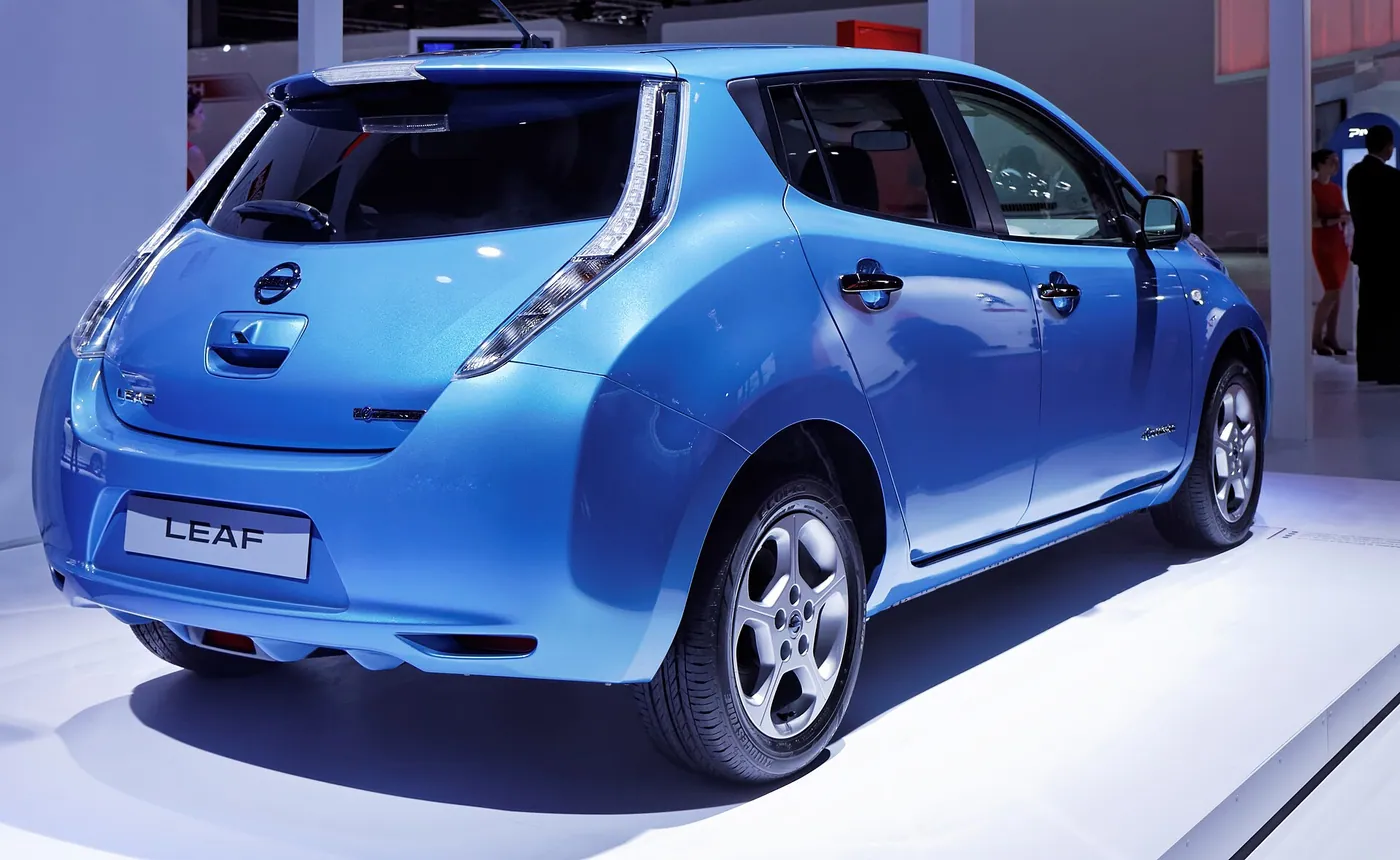
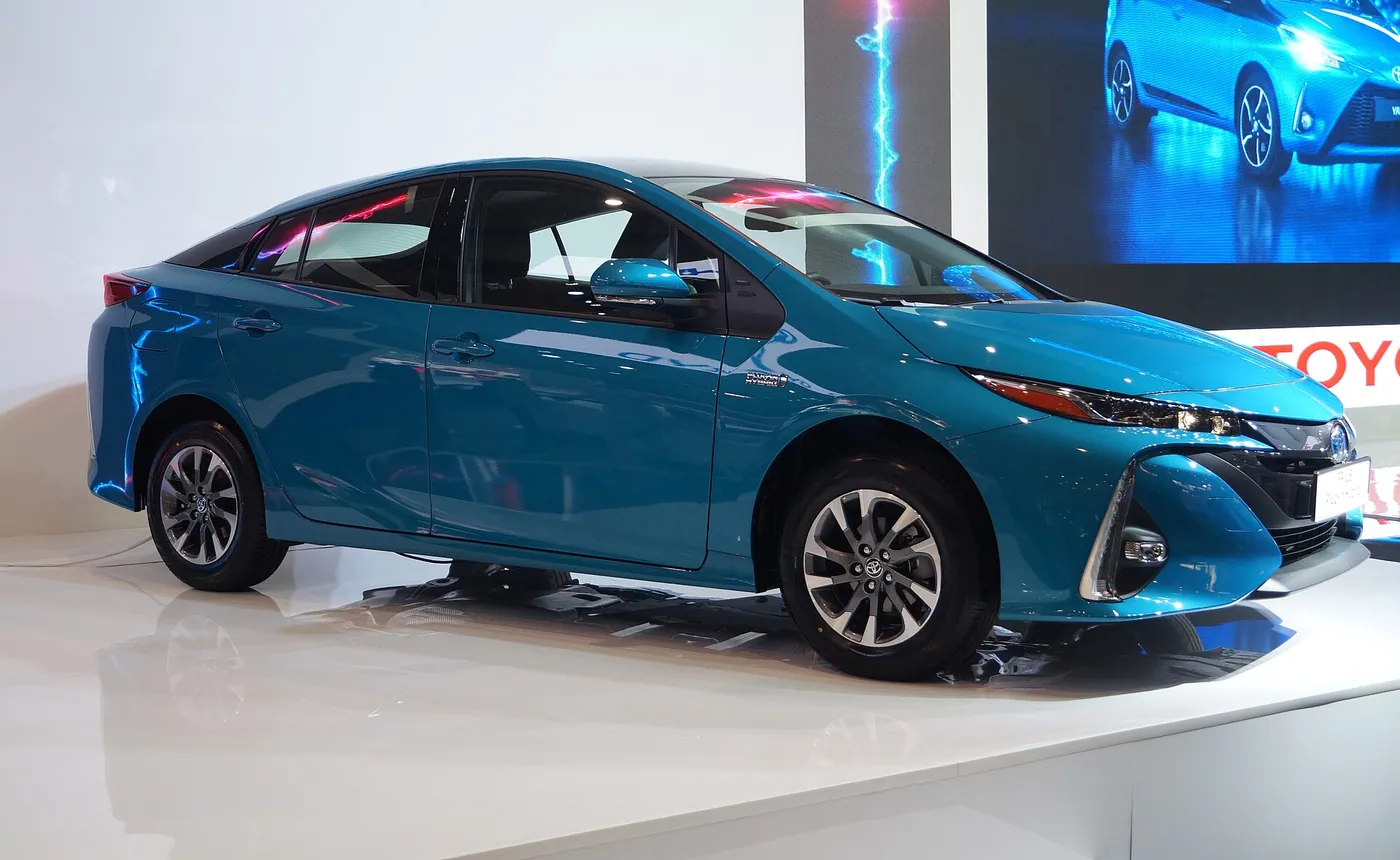
In short: In the three months to 19 September 2026, 2,651 Nissan Leafs sold at Japanese auctions at a median of €2,524, against 1,219 Toyota Prius PHVs at €5,678. The Nissan Leaf is the cheaper buy by about €3,155 at auction, before shipping, VAT, VRT and fees. Our verdict is at the end of this article.
The Nissan Leaf was one of the first mass-produced electric cars, launched in 2010, and in Japan it became a familiar sight in cities and suburbs. The second generation, launched in 2017, increased the range and modernised the design. Japanese-market cars are offered with a 40 kWh battery or a larger 62 kWh battery in the e+ version.
The Toyota Prius PHV is a plug-in hybrid version of the Prius. The second generation, launched in 2017, uses an 8.8 kWh battery that allows short journeys on electricity alone, with the familiar 1.8-litre hybrid system taking over on longer trips. Early cars had only four seats; a 2019 update added a fifth.
For Irish buyers, these cars represent two answers to the same question: how to reduce fuel costs and emissions without buying a new car.
The honest starting point is your driveway. A car that plugs in makes most sense when it can be charged at home overnight, and both of these cars are at their best in that routine. Without a driveway, the calculation changes, and it changes more for the Leaf than for the Prius.
The specs
| Nissan Leaf | Toyota Prius PHV | |
|---|---|---|
| Generation most imported | 2nd gen (ZE1), 2017 on | 2nd gen (ZVW52), 2017–2022 |
| Power source | Battery electric | 1.8 petrol hybrid plus plug-in battery |
| Battery | 40 kWh or 62 kWh (e+) | 8.8 kWh |
| Drive | Front | Front |
| Seats | 5 | 4 until 2019, then 5 |
| Length (approx.) | 4,480 mm | 4,645 mm |
| Quick charging | CHAdeMO | Optional on some Japanese cars |
| Import duty to Ireland | 0% possible (Japan-built, with proof of origin) | 0% possible (Japan-built, with proof of origin) |
Different approaches
The Leaf is a fully electric car. It has no petrol engine, no exhaust and no fuel tank. Its range depends on battery size, age and weather, but a healthy 40 kWh car covers a typical Irish commute comfortably, and the e+ version allows longer trips between charges. It uses the CHAdeMO quick-charging standard, which is still supported on many Irish public chargers, though newer chargers increasingly favour CCS.
The Prius PHV is a hybrid with a larger battery that can be charged from the mains. It can cover short distances on electricity alone, then switches to hybrid mode. That makes it more flexible for long journeys and for drivers without easy access to charging. Some Japanese-market cars have an optional quick-charging port, and some have a solar roof panel that tops up the battery.
How they drive
The Leaf is quiet, smooth and quick off the line. Electric motors deliver instant torque, and the Leaf feels lively in town. The e-Pedal function allows one-pedal driving, slowing the car strongly when you lift off the accelerator. The ride is comfortable, though the handling is not especially engaging.
The Prius PHV drives like a Prius. Smooth, quiet and efficient, with a comfortable ride and light steering. In electric mode it is silent and responsive; in hybrid mode it is economical and relaxed. It is not a fast car, but it is calm and easy to live with.
Inside and practicality
The Leaf is a practical hatchback with a good-sized boot and a comfortable rear seat. The cabin is simple and functional, with a digital display and a straightforward layout.
The Prius PHV's cabin is more futuristic, with a large central touchscreen on many versions. The boot is smaller than the standard Prius because of the larger battery. Early four-seat versions limit practicality for families.
Running costs and reliability
Both are economical to run, especially if you can charge at home. The Leaf has no fuel costs and fewer moving parts, though battery health is the critical factor. The Leaf's battery does not have active liquid cooling, so it can degrade faster in hot conditions or with frequent rapid charging.
The Prius PHV benefits from Toyota's proven hybrid system and excellent reliability record. Fuel costs depend on how often you charge, but it remains efficient even when the battery is depleted.
What to check at auction
For the Leaf, battery health is everything. Check the state of health shown on the battery capacity bars and ask for a battery report if possible. The auction sheet may note battery capacity, and a car with a strong reading is worth paying more for.
For the Prius PHV, check the condition of the plug-in battery, any notes on the hybrid system and whether the car has quick charging and the solar roof. Confirm the number of seats. Rust is rarely an issue on either car.
For both, ask whether the charging cable is included and what type it is. Japanese home charging runs on a different supply from Irish homes, so a cable or wall unit suited to Irish use is a sensible early purchase. Grade 4 and better cars with clear battery information are common enough that there is no reason to take a chance on an unknown.
The verdict
Buy the Nissan Leaf if you have home charging, your daily driving fits comfortably within its range and you want to stop buying petrol altogether. Choose the e+ if you need more range.
Buy the Toyota Prius PHV if you want electric driving for short trips but the freedom of petrol for long journeys, or if you cannot rely on charging. It is the more flexible car for rural Ireland.
Frequently asked questions
What charging standard does the Leaf use?
The Leaf uses CHAdeMO for rapid charging and Type 1 for AC charging.
How far can the Prius PHV go on electricity?
Short journeys only. It is designed for commuting and errands on battery, with petrol for longer trips.
Does the Prius PHV have five seats?
Cars from the 2019 update onwards have five seats. Earlier cars have four.
Keep reading
- Mercedes-Benz C-Class vs Volvo S60: A Small Mercedes Meets Sweden's Answer to German Formality
- Toyota Camry vs Honda Accord Hybrid: Two Big, Quiet Saloons That Japan Kept for Itself
- Toyota Land Cruiser vs Land Cruiser 250: The Flagship and the New Workhorse, Side by Side
- Nissan Juke vs Mitsubishi RVR: The Showman and the Quiet Survivor of the Small Crossover Boom
- MINI Hatch vs Volkswagen Beetle: Two Icons Brought Back to Life, and Only One Built for Driving
- Importing a Nissan Leaf: prices and costs
Photo credits
- Nissan Leaf: Photo: Thesupermat / Wikimedia Commons, CC BY-SA 3.0
- Toyota Prius PHV: Photo: Jakub "flyz1" Maciejewski / Wikimedia Commons, CC BY-SA 3.0