
Mazda CX-3 vs Mazda CX-30: Two Small Mazdas, One Lesson in How Much Size Really Matters
The CX-3 is the compact crossover Mazda built on its Demio. The CX-30 came later, from the Mazda3. Ten centimetres of length change the whole car.
By the Japan to Ireland editors · · 4 min read
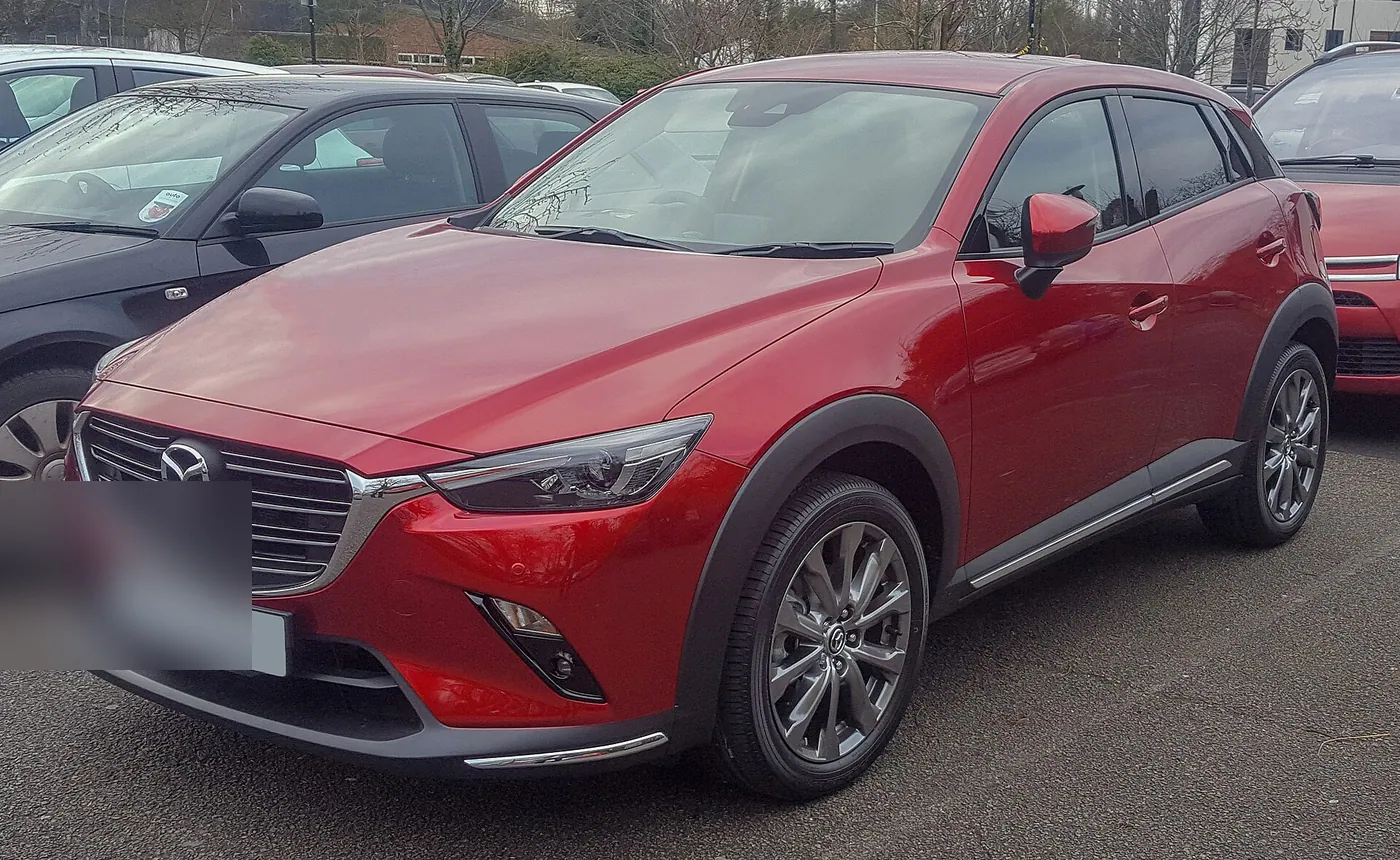
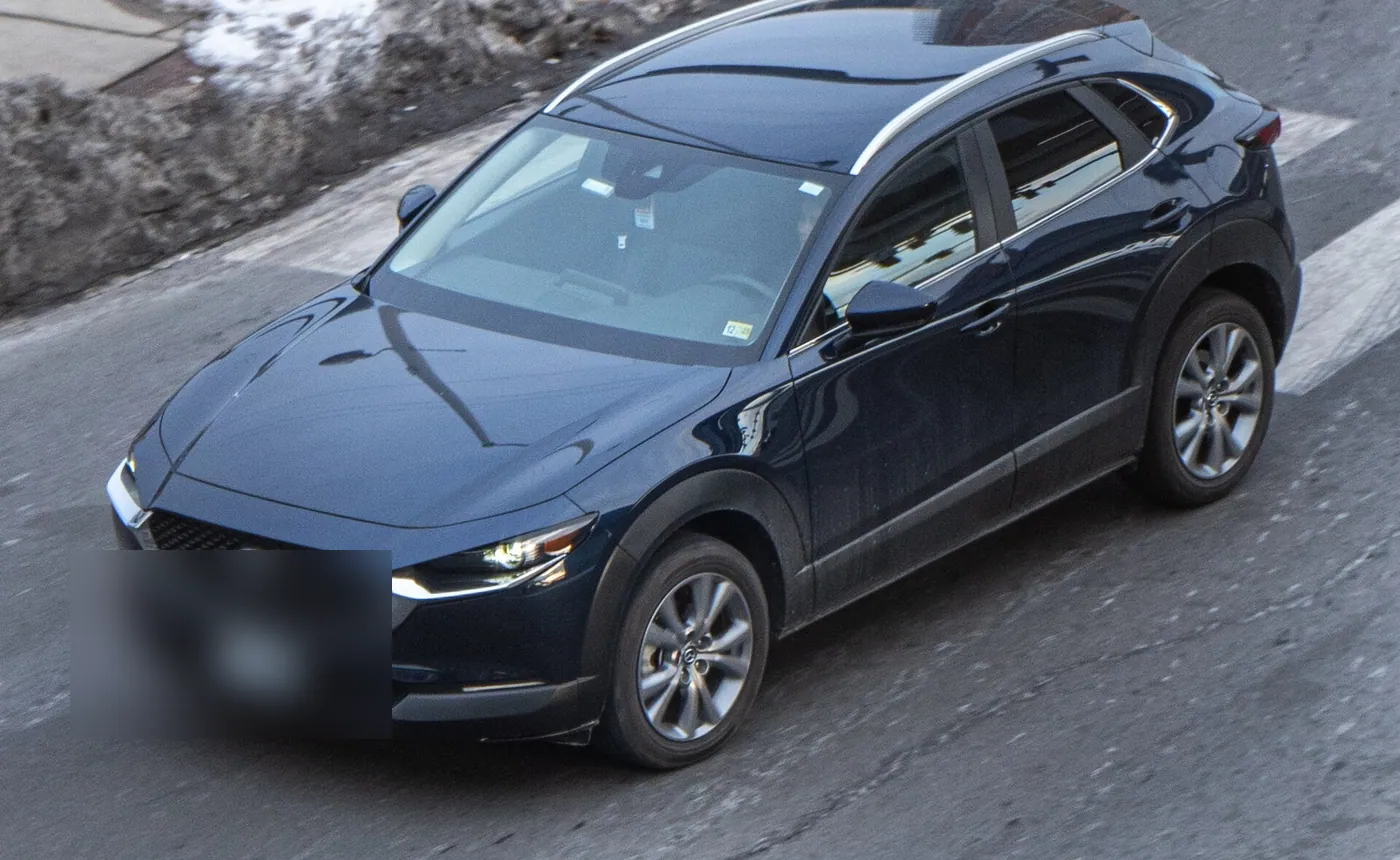
In short: In the three months to 19 September 2026, 2,327 Mazda CX-3s sold at Japanese auctions at a median of €4,130, against 1,260 Mazda CX-30s at €9,326. The Mazda CX-3 is the cheaper buy by about €5,196 at auction, before shipping, VAT, VRT and fees. Our verdict is at the end of this article.
Mazda has a habit of building small cars that look more expensive than they are. The CX-3 and the CX-30 are both examples. Long bonnets, clean flanks, cabins that feel a class above the price. Put them side by side and it takes a moment to work out which is which.
The difference is underneath. The CX-3, launched in 2015, is built on the Demio, the car sold in Europe as the Mazda2. The CX-30, which arrived in 2019, uses the platform of the newer Mazda3. That makes it longer, wider and a generation more modern, and it explains most of what separates the two in daily use.
For an Irish buyer the choice usually comes down to two things: how many people sit in the back, and how far you drive.
The specs
| Mazda CX-3 | Mazda CX-30 | |
|---|---|---|
| Generation most imported | DK, 2015 on | DM, 2019 on |
| Engine(s) | 1.5 or 1.8 diesel; 2.0 or 1.5 petrol | 2.0 petrol; 1.8 diesel; 2.0 Skyactiv-X |
| Gearbox | 6-speed auto or 6-speed manual | 6-speed auto or 6-speed manual |
| Drive | Front, or AWD | Front, or AWD |
| Seats | 5 | 5 |
| Length | About 4,275 mm | About 4,395 mm |
| Based on | Demio (Mazda2) | Mazda3 |
| Import duty to Ireland | 0% possible (Japan-built, with proof of origin) | 0% possible (Japan-built, with proof of origin) |
Where they come from
When the CX-3 went on sale in Japan, it was offered only with a 1.5-litre diesel. Mazda later added a 2.0-litre petrol, replaced the 1.5 diesel with a 1.8, and eventually offered a 1.5 petrol as well. That variety shows up at auction, so it matters which year and engine you are looking at.
The CX-30 slotted between the CX-3 and the CX-5 in Mazda's range. In Japan it came with a 2.0-litre petrol, a 1.8-litre diesel and the Skyactiv-X, a 2.0-litre petrol engine that uses compression ignition under some conditions and a mild hybrid system. Both cars were offered with front-wheel drive or AWD, and both with manual or automatic gearboxes, though automatics make up most of the cars on offer.
How they drive
Both feel like Mazdas, which means precise steering, a well-placed driving position and a sense that someone cared about how the car responds. The CX-3 is the more agile of the pair. It is light and compact, turns in sharply and feels at home on a twisting back road. Its ride is firm, and on larger wheels it can be busy over potholes.
The CX-30 is quieter and more grown-up. Its newer platform and extra sound insulation make it calmer on the motorway, and it rides with more composure. It is not as darting as the CX-3, but it is the better car for a long run down the M7 in the rain.
Inside and practicality
This is where the CX-3 shows its small-car roots. The front of the cabin is attractive and well finished, but the rear seat is cramped for adults and the boot is modest. It works well for one or two people, or a young family with a small child. It is less convincing as the only car in a family of four.
The CX-30 is more useful without being large. The back seat is still not generous, as the swooping roofline takes some headroom, but it is clearly roomier than the CX-3, and the boot is a proper size for a weekly shop or a pushchair. The interior, with its sweeping dashboard and quality materials, is one of the best in its class.
Running costs and reliability
Mazda's Skyactiv petrol engines have a good record, and the 2.0 in either car is an easy recommendation. The diesels are economical but prefer longer journeys. Cars that have done mostly short urban trips can suffer from soot build-up, and the 1.5 diesel in early CX-3s needs regular oil changes and occasional runs at motorway speed to stay healthy. If most of your driving is around town, a petrol is the safer bet.
The Skyactiv-X is the most complex engine in either line-up. It is efficient, but parts and expertise are thinner on the ground, and Irish independent garages are less familiar with it. In tax terms, the petrol and diesel versions of both cars sit in reasonable bands for their size, with AWD versions a little higher.
What to check at a Japanese auction
On the auction sheet, look for the engine code and year. For a diesel CX-3, look for notes on warning lights or engine noise, and favour cars with a clear maintenance record. For both cars, check the infotainment system works and is not stuck in Japanese, which can usually be resolved but is worth knowing in advance.
Grade 4 and 4.5 cars are common, as many of these were owned by private buyers who looked after them. Rust is rarely an issue on cars from central and southern Japan, but AWD versions from Hokkaido or the north-east can have underbody corrosion. Large-wheel grades are worth a close look at tyres and suspension.
The verdict
Buy the CX-3 if you are a single driver or a couple who drive mostly in town, value a car that is easy to park and still want something that looks special. Choose a petrol unless you cover long distances.
Buy the CX-30 if you need a car that can do everything: carry a small family, handle the motorway in comfort and feel modern for years to come. It is the better car, and for most Irish buyers it is the one worth stretching for.
Frequently asked questions
Is the CX-30 bigger than the CX-3?
Yes. It is roughly 12 centimetres longer and is built on the Mazda3 platform, giving it a roomier back seat and a bigger boot.
Should I choose diesel or petrol?
Petrol suits mostly urban driving. The diesels are best for buyers who regularly drive longer distances at motorway speeds.
Are both available with AWD?
Yes. Both were sold in Japan with front-wheel drive or AWD.
Keep reading
- Nissan Juke vs Mitsubishi RVR: The Showman and the Quiet Survivor of the Small Crossover Boom
- Toyota Land Cruiser vs Land Cruiser 250: The Flagship and the New Workhorse, Side by Side
- Nissan Kicks vs Honda WR-V: A Small Electric-Driven Crossover Meets Honda's No-Frills Newcomer
- MINI Hatch vs Volkswagen Beetle: Two Icons Brought Back to Life, and Only One Built for Driving
- Volvo V60 vs Volkswagen Passat: Two Sensible Estates, One With a Sense of Style
- Importing a Mazda CX-3: prices and costs
- Importing a Mazda CX-30: prices and costs
Photo credits
- Mazda CX-3: Photo: Vauxford / Wikimedia Commons, CC BY-SA 4.0
- Mazda CX-30: Photo: OWS Photography / Wikimedia Commons, CC BY 4.0