
Nissan Kicks vs Honda WR-V: A Small Electric-Driven Crossover Meets Honda's No-Frills Newcomer
One is driven by an electric motor and charged by a petrol engine. The other is a plain, roomy SUV with a familiar 1.5-litre petrol. Both are new to Japanese auctions, and both reward a careful buyer.
By the Japan to Ireland editors · · 4 min read
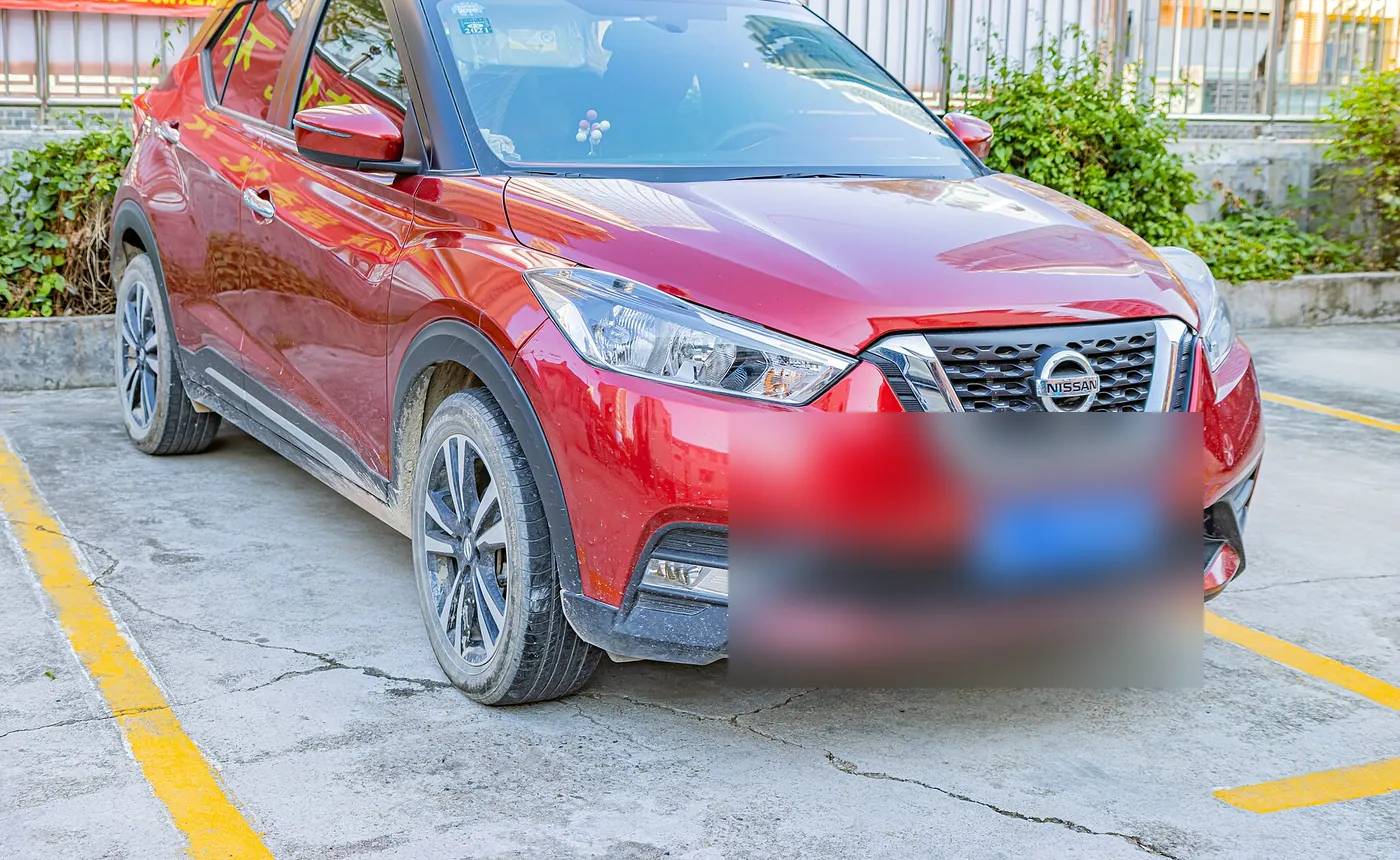
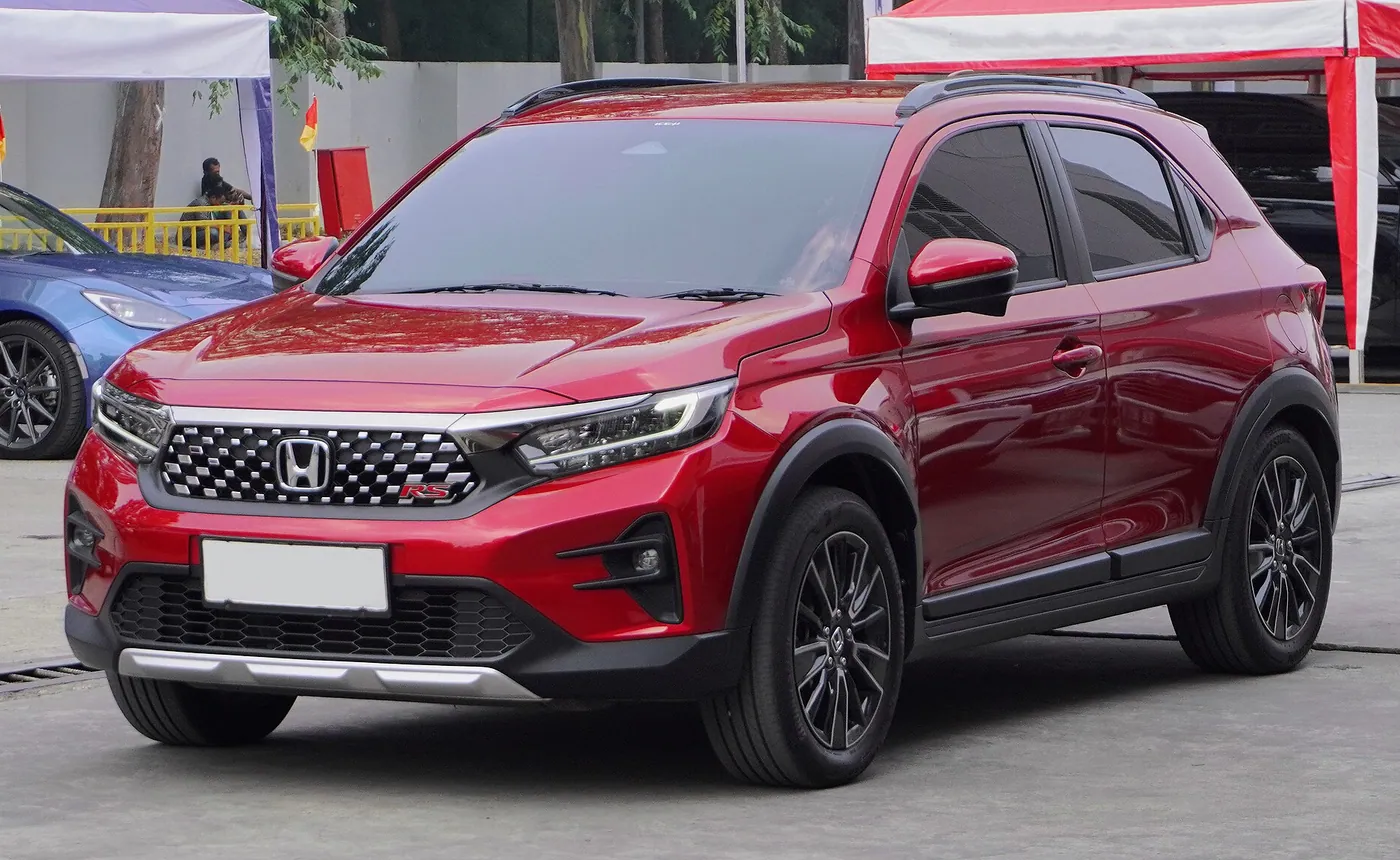
In short: In the three months to 19 September 2026, 1,367 Nissan Kickss sold at Japanese auctions at a median of €8,821, against 479 Honda WR-Vs at €12,102. The Nissan Kicks is the cheaper buy by about €3,281 at auction, before shipping, VAT, VRT and fees. Our verdict is at the end of this article.
Neither of these cars has been on Japanese roads for long, and both came from outside Japan. The Nissan Kicks for Japan was built in Thailand and went on sale in 2020. The Honda WR-V, built in India, arrived in Japan at the end of 2023. They are newcomers in a market where most small crossovers have years of history behind them.
They are also very different cars. The Kicks in Japan is sold only with e-POWER, Nissan's system in which a small petrol engine charges a battery and an electric motor drives the wheels. The WR-V is a straightforward petrol SUV with a CVT and front-wheel drive, built to a price and proud of its simplicity.
For an Irish buyer, that makes this comparison a choice between a quiet, electric feel and a plain, roomy box. Both are interesting. Neither is perfect.
The specs
| Nissan Kicks | Honda WR-V | |
|---|---|---|
| Generation most imported | P15, Japan 2020 on | Japan 2023 on |
| Powertrain | e-POWER: 1.2 petrol generator, electric drive | 1.5 petrol |
| Gearbox | Single-speed (electric drive) | CVT |
| Drive | Front, or e-POWER 4WD (from 2022) | Front |
| Seats | 5 | 5 |
| Length | About 4,290 mm | About 4,325 mm |
| Built in | Thailand | India |
| Import duty to Ireland | 0% possible (Japan-built, with proof of origin) | 0% possible (Japan-built, with proof of origin) |
Two different approaches
Nissan's e-POWER arrived in Japan in the Note and was then fitted to the Serena and the Kicks. The engine never drives the wheels directly, so the car always feels electric when you pull away: smooth, quiet and responsive. In 2022 Nissan added a 4WD version of the Kicks with a second motor at the rear, which is a sensible option for anyone living somewhere wet and hilly.
The WR-V takes the opposite view. Honda used a 1.5-litre i-VTEC engine, a CVT and front-wheel drive, and kept the specification simple. There is no hybrid and no AWD. What it offers instead is space, ground clearance and a boxy body that is easy to see out of.
How they drive
The Kicks is pleasant around town. The electric drive gives it a quick, smooth pull from a standstill, and a one-pedal mode lets you slow the car without touching the brake in most traffic. On the motorway, the petrol engine runs more often and becomes audible, especially when the battery needs charge on a long climb. The ride is reasonably settled, though the car does not feel particularly sporty.
The WR-V is more conventional. The engine is willing, the CVT does its job, and the steering is light and accurate. It feels less refined than the Kicks at low speeds, as there is no electric motor to smooth the start, but it is honest and predictable. Its higher ground clearance is welcome on rural roads and farm lanes.
Inside and practicality
The Kicks has a neat, modern cabin with a good driving position. The rear seat is adequate for two adults, and the boot is a fair size for the class. The finish is fine rather than special, with harder plastics in places.
The WR-V is more spacious. Honda put the emphasis on the rear seat and the boot, and both are generous for a car of this length. The dashboard is plain and the materials are basic, but the cabin is airy and practical. For a family carrying children, a buggy and shopping, it makes a strong case.
Running costs and reliability
The Kicks e-POWER is efficient around town, where the electric drive does most of the work. On the motorway, its advantage narrows. The system is more complex than a simple petrol engine, but e-POWER has been in Nissan's Japanese range for several years without widespread problems, and its battery is much smaller than a full EV's.
The WR-V's mechanicals are familiar. The 1.5 engine and CVT are well understood, and any garage can service them. In tax terms, the Kicks sits in a lower CO2 band than the WR-V, which tends to favour it on motor tax and VRT. Both are new enough that very few have reached Ireland, so parts may need to be ordered, especially for the WR-V.
What to check at a Japanese auction
For the Kicks, check the auction sheet for warning-light notes and the condition of the e-POWER system, and favour cars with full service records. Low-mileage cars from private owners are common, and grades of 4 or higher are easy to find. On 4WD versions, check the rear motor is noted as working.
The WR-V is so new that supply is limited, and most cars at auction will be very young, low-mileage examples. Check the grade carefully for cosmetic damage, which can be more noticeable on dark colours. Rust is not an issue on cars this young, but early used examples may carry more pre-registration or dealer-use mileage than you expect.
The verdict
Buy the Kicks if you drive mostly in town and want a quiet, smooth and economical car that feels close to an EV without needing a charger. The 4WD version is a good choice for rural and western counties.
Buy the WR-V if space is the priority and you want a simple, reliable petrol crossover with room for a family. It is the more practical car, and the easier one to maintain, but expect fewer of them at auction for now.
Frequently asked questions
Does the Nissan Kicks need charging?
No. The petrol engine charges the battery, and the electric motor drives the wheels.
Is the Honda WR-V available with AWD?
No. The Japanese WR-V is front-wheel drive only.
Which has more space?
The WR-V. It has a roomier rear seat and a larger boot than the Kicks.
Keep reading
- Mazda CX-3 vs Mazda CX-30: Two Small Mazdas, One Lesson in How Much Size Really Matters
- Nissan Juke vs Mitsubishi RVR: The Showman and the Quiet Survivor of the Small Crossover Boom
- MINI Hatch vs Volkswagen Beetle: Two Icons Brought Back to Life, and Only One Built for Driving
- Fiat 500 vs Volkswagen up!: Two Tiny European City Cars, One Big Question About Their Gearboxes
- Toyota Crown vs Nissan Skyline: Japan's Two Grand Old Saloons, in Their Last Classic Form
Photo credits
- Nissan Kicks: Photo: Dinkun Chen / Wikimedia Commons, CC BY-SA 4.0
- Honda WR-V: Photo: Andra Febrian / Wikimedia Commons, CC BY-SA 4.0