
Toyota Mark X vs Lexus IS: The Last Rear-Drive Toyota Saloon and Its Polished Cousin
Japan's businessman's V6 saloon meets Lexus's compact sports saloon. Both drive the rear wheels, both are rare in Ireland, and both are better than their reputations.
By the Japan to Ireland editors · · 4 min read
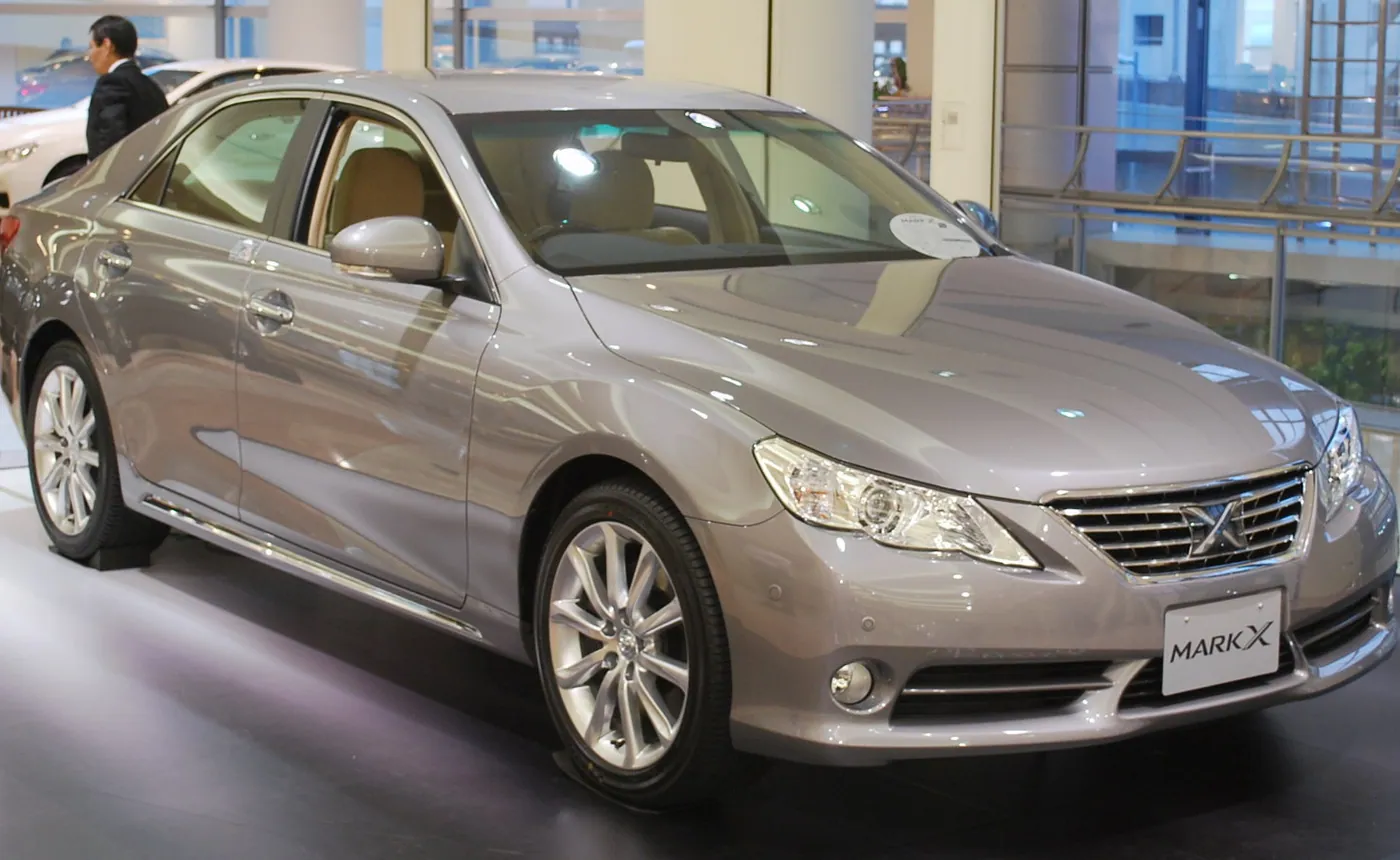
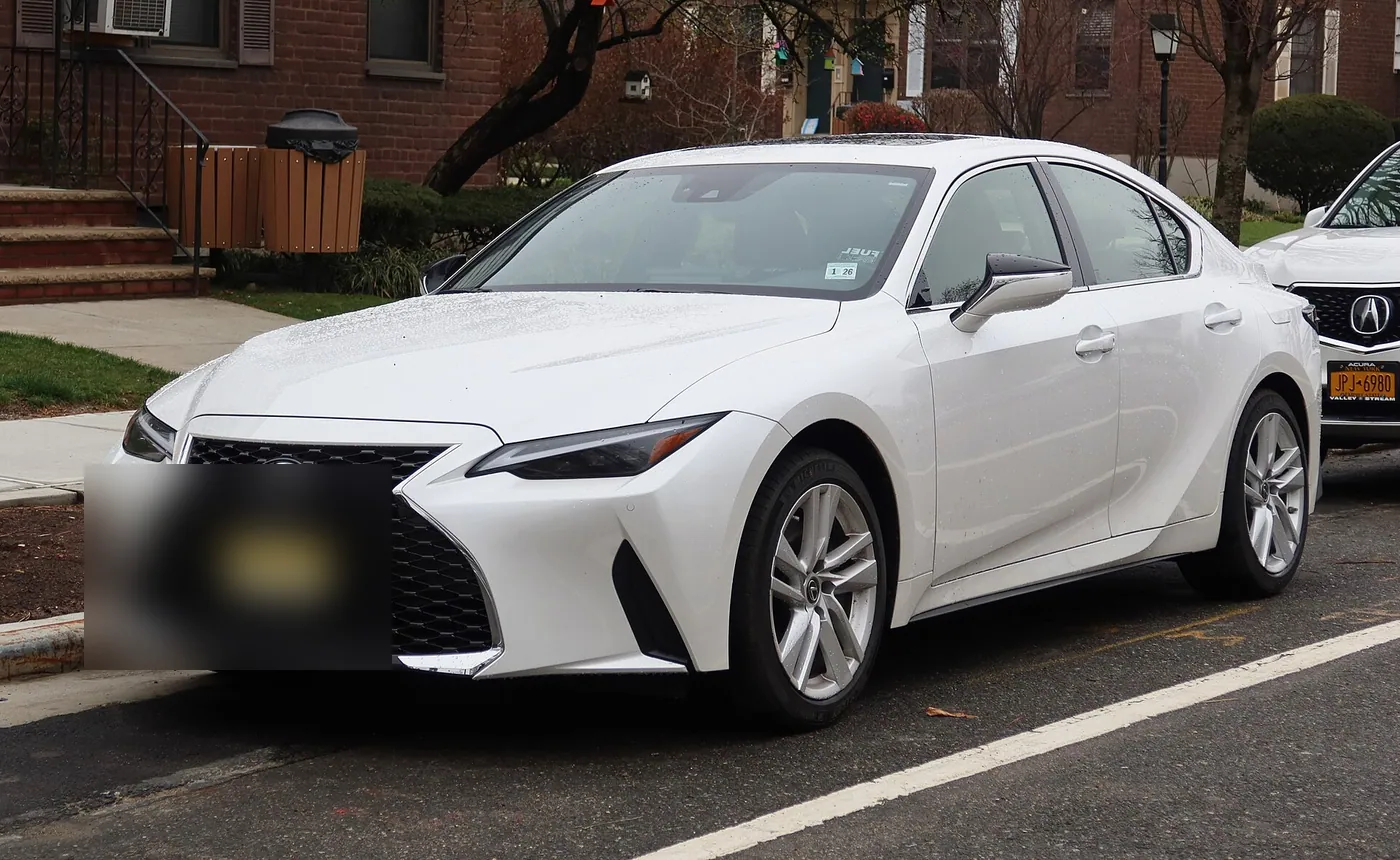
In short: In the three months to 19 September 2026, 2,551 Toyota Mark Xs sold at Japanese auctions at a median of €1,652, against 948 Lexus ISs at €3,447. The Toyota Mark X is the cheaper buy by about €1,795 at auction, before shipping, VAT, VRT and fees. Our verdict is at the end of this article.
For half a century, the Toyota Mark II and its successor, the Mark X, were the cars Japanese middle managers bought once they had outgrown a Corolla. Rear-wheel drive, six cylinders, a soft ride and a dignified silhouette. When the Mark X ended production in 2019, it closed a long chapter in Toyota history: the mainstream, rear-drive saloon for ordinary professionals.
The Lexus IS shares much of that DNA. It is built on related rear-drive architecture, uses some of the same engines, and offers a more precise, premium experience in a more compact body. In Japan it is the entry point to Lexus saloons, popular with younger buyers who want the badge without the size of a GS or LS.
For Irish buyers interested in something different, both cars offer rear-wheel drive, Toyota engineering and an unusual alternative to a German compact executive.
There is also a practical reason to look at them. Rear-drive saloons with six-cylinder engines are becoming rare as new cars, and both of these were sold in Japan in large numbers to owners who tended to keep them garaged, serviced and polished. That leaves a deep pool of tidy, right-hand-drive examples, and a Japanese auction is one of the few places where a buyer can still choose between several of them on the same afternoon.
The specs
| Toyota Mark X | Lexus IS | |
|---|---|---|
| Generation most imported | 2nd gen (GRX130), 2009–2019 | 3rd gen (XE30), 2013 on |
| Engines | 2.5 or 3.5 V6 petrol | 2.5 hybrid; 2.0 turbo; 3.5 V6 |
| Gearbox | 6-speed automatic | e-CVT (hybrid); 8-speed automatic on others |
| Drive | Rear, or AWD on some 2.5 cars | Rear on most Japanese cars |
| Seats | 5 | 5 |
| Length (approx.) | 4,750 mm | 4,680 mm |
| Best-known version | 250G | IS 300h |
| Import duty to Ireland | 0% possible (Japan-built, with proof of origin) | 0% possible (Japan-built, with proof of origin) |
Positioning
The second-generation Mark X, launched in 2009, is the one to look for. Japanese versions use either a 2.5-litre V6, the most common, or a 3.5-litre V6 with serious performance. Some 2.5-litre cars were fitted with all-wheel drive. The design was updated in 2012 with a larger, more aggressive front grille.
The third-generation IS appeared in 2013 and was updated in 2016 and 2020. In Japan the most common version is the IS 300h, combining a 2.5-litre petrol engine with a hybrid system. The IS 200t, later renamed IS 300, uses a 2.0-litre turbo engine, and the IS 350 has a 3.5-litre V6.
How they drive
The Mark X is smooth and comfortable. The V6 is refined and sounds good when revved, and the rear-wheel-drive balance gives it a natural, flowing feel on country roads. It is softer than a BMW and less precise in its steering, but it is a satisfying car to drive at a relaxed pace.
The IS is tighter, more focused and better built. The chassis is stiffer and the steering more responsive. The IS 300h is economical but not especially sporty, and its CVT-like hybrid transmission can make the engine drone under hard acceleration. The IS 350 is the enthusiast's choice, with a strong V6 and a conventional automatic gearbox.
Inside and practicality
The Mark X is roomy and practical, with a large rear seat and a deep boot. The interior is solid but conservative, with an older-generation design that can feel dated.
The IS is more stylish inside, with better materials and a sportier driving position. The rear seat is tighter and the boot is smaller, particularly in the hybrid, where the battery takes up space. The infotainment system can be frustrating to use, with a touchpad controller on many versions.
Running costs and reliability
Both cars use proven engines and transmissions. Toyota's GR-family V6 is robust, and many Mark X models have covered high mileage without major issues. The water pump is a common wear part and worth checking, as are engine mounts on older cars.
The IS 300h is the cheapest to run thanks to its hybrid system, and it sits in a lower CO2 band than the V6 cars. Lexus reliability is excellent across the range. Parts and servicing are easily available through Toyota and Lexus channels.
What to check at auction
The Mark X has a strong following among Japanese modifiers. Many cars have been lowered, fitted with large wheels or given aftermarket body kits. The auction sheet will usually note these changes. For a comfortable road car, choose a standard example.
For the IS, check service history and the condition of leather seats. F Sport versions often have larger wheels and firmer suspension, which can be harsh on Irish roads. Look for grade 4 or better cars, and inspect the underbody of any car that spent its life in the north of Japan. Hybrid cars should carry no notes about the hybrid system or warning lights, and a clean, recent inspection record in the paperwork is a good sign of a car that was looked after rather than simply used.
One more point applies to both. Rear-wheel-drive cars on worn or cheap tyres can feel nervous on a greasy Irish road in winter, so budget for a good set of tyres on arrival if the car comes on tired rubber.
The verdict
Buy the Toyota Mark X if you want a spacious, comfortable rear-drive saloon with a smooth V6 and a bit of old-school character. It is the more practical car and the better value.
Buy the Lexus IS if you want a sharper, more modern compact saloon with excellent build quality. Choose the IS 300h for economy and the IS 350 for performance.
Frequently asked questions
Is the Mark X still made?
No. Production ended in 2019. Many second-generation cars remain available at Japanese auctions.
Is the Lexus IS rear-wheel drive?
Yes. The great majority of Japanese-market IS saloons drive the rear wheels.
Which is more economical?
The Lexus IS 300h, thanks to its hybrid system.
Keep reading
- Subaru Levorg vs Mazda Atenza Wagon: Two Estate Cars Built by Japanese Engineers Who Still Care
- Lexus RX vs Volvo XC60: Two Quiet Premium SUVs, One Japanese and One Swedish
- Toyota Corolla Touring vs Honda Civic: An Estate and a Hatchback Answer the Same Question
- BMW 3 Series vs Audi A4: The Oldest Rivalry in the Compact Executive Class, Bought in Japan
- Nissan Juke vs Mitsubishi RVR: The Showman and the Quiet Survivor of the Small Crossover Boom
- Importing a Lexus IS: prices and costs
Photo credits
- Toyota Mark X: Photo: Mytho88 / Wikimedia Commons, CC BY-SA 3.0
- Lexus IS: Photo: Kevauto / Wikimedia Commons, CC BY-SA 4.0