
Fiat 500 vs Volkswagen up!: Two Tiny European City Cars, One Big Question About Their Gearboxes
Both are small, cheap to run and easy to park, and both came to Japan with automated manual gearboxes. Choosing between them is mostly about style, space and patience.
By the Japan to Ireland editors · · 4 min read
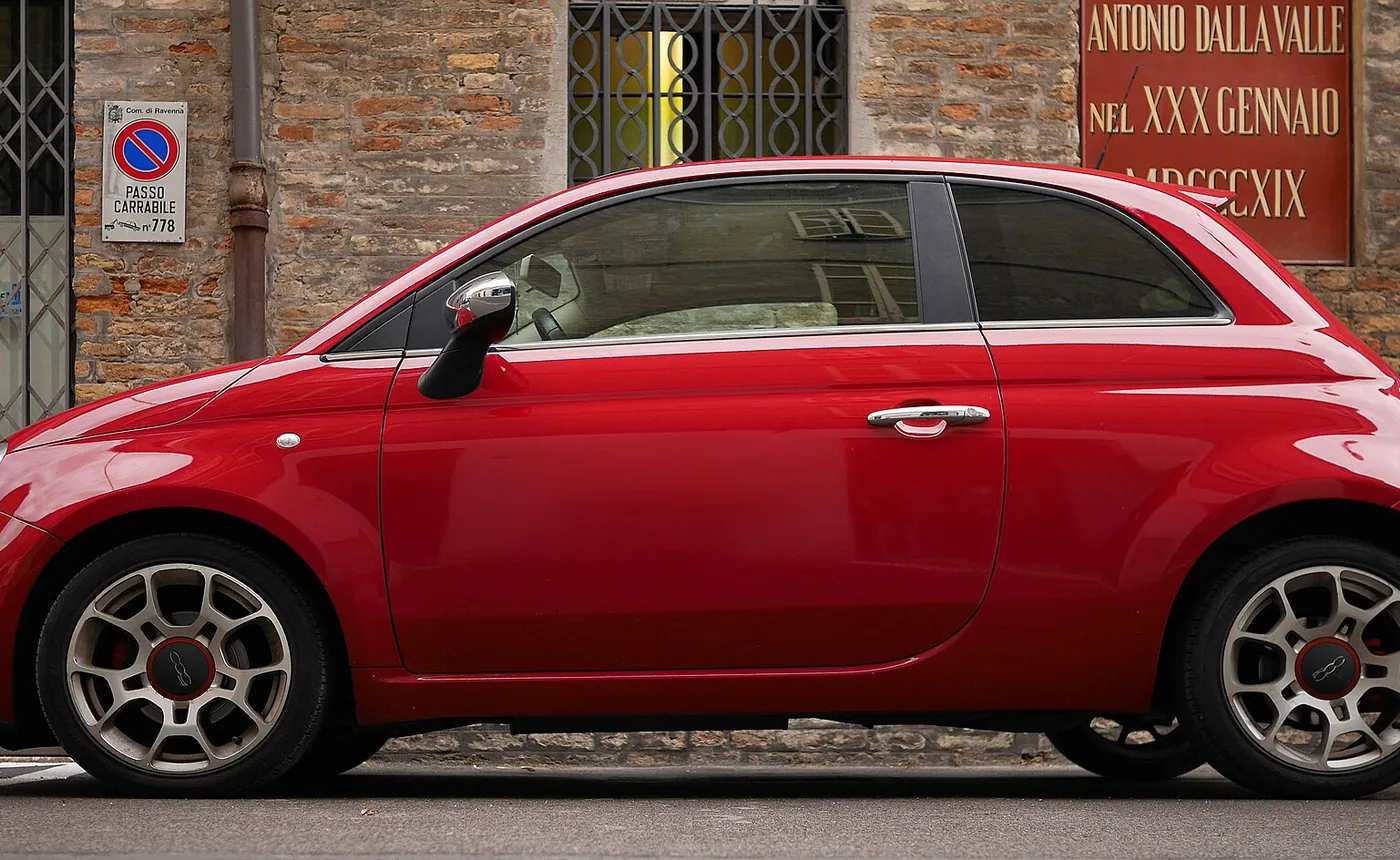
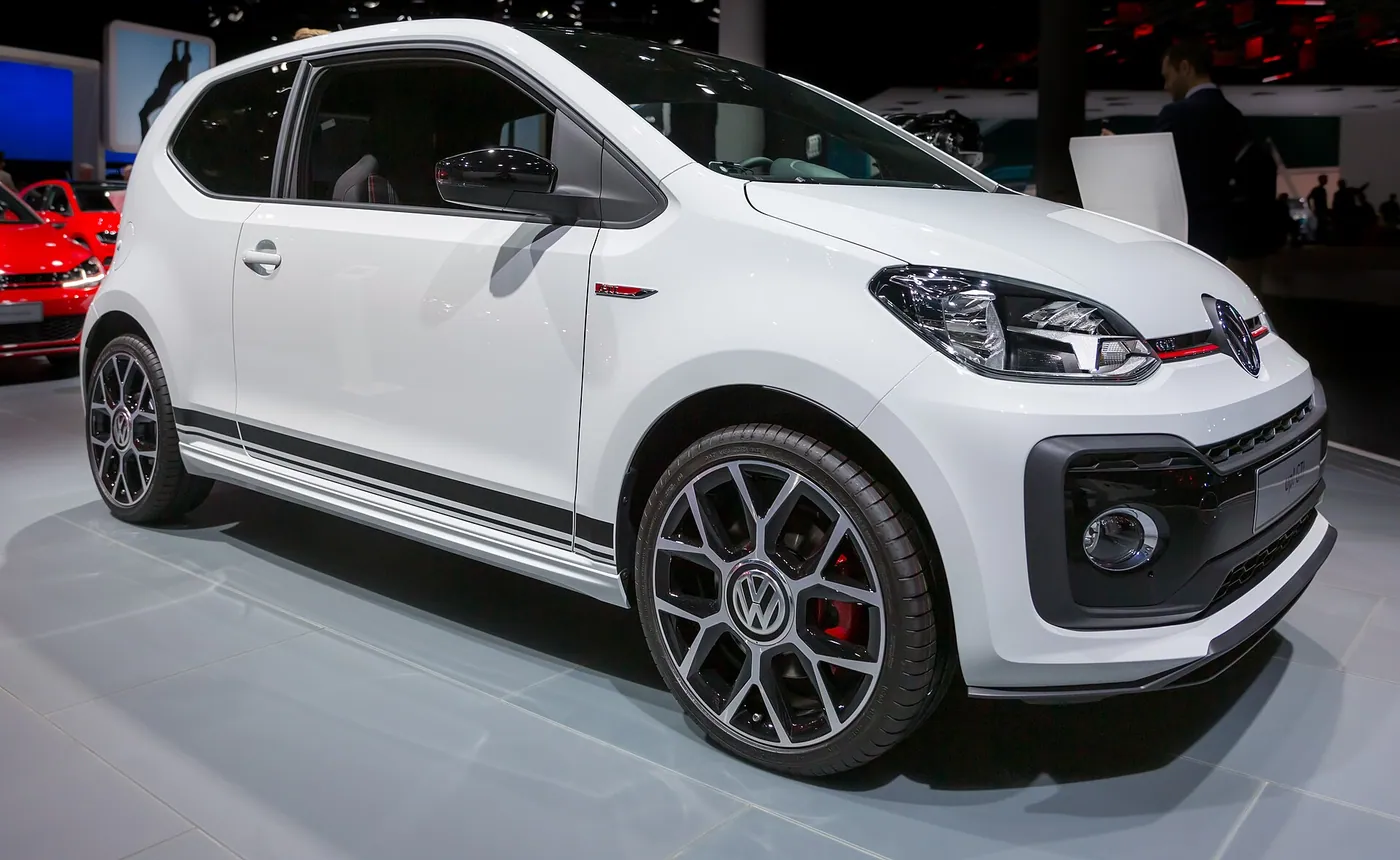
In short: In the three months to 19 September 2026, 632 Fiat 500s sold at Japanese auctions at a median of €1,388, against 516 Volkswagen up!s at €1,150. The Volkswagen up! is the cheaper buy by about €238 at auction, before shipping, VAT, VRT and fees. Our verdict is at the end of this article.
At a Japanese auction, the Fiat 500 stands out for its colour. Pastel blues, cream and bright red. The Volkswagen up! is more restrained: often white or silver, sometimes with contrasting roof stripes. Both are city cars, under 3.6 metres long, and both were popular in Japan with buyers who wanted something European and different from the domestic kei cars.
They share one significant feature. Most of the Japanese-market cars use automated manual gearboxes: a conventional manual operated by a computer, without a clutch pedal. These are not proper automatics, and they behave differently. Understanding that is the key to choosing between these two cars.
For Irish buyers, both make sense as second cars or city cars, and both are right-hand drive in Japan.
The specs
| Fiat 500 | Volkswagen up! | |
|---|---|---|
| Generation most imported | Japan-market 500, 2008 on | Japan-market up!, 2012–2020 |
| Engine(s) | 1.2 petrol; 0.9 TwinAir turbo petrol | 1.0 three-cylinder petrol |
| Gearbox | Dualogic automated manual (manual on some) | ASG automated manual (manual on GTI) |
| Drive | Front | Front |
| Seats | 4 | 4 |
| Length | About 3,550 mm | About 3,600 mm |
| Doors | 3 | 3 or 5 |
| Import duty to Ireland | 10% (not built in Japan) | 10% (not built in Japan) |
What each car is
The modern Fiat 500 was launched in 2007 and went on sale in Japan in 2008. It is styled after the original 1957 car, with round headlamps and a cheerful face. In Japan it was mostly sold with a 1.2-litre petrol engine or the 0.9-litre TwinAir two-cylinder turbo, both paired with Dualogic, Fiat's automated manual. It has been facelifted rather than replaced, so cars from a wide range of years are available.
The up! came from Volkswagen's small-car project, along with the SEAT Mii and Skoda Citigo. In Japan it was sold from 2012 to 2020 with a 1.0-litre three-cylinder petrol and the ASG automated manual. Both three-door and five-door versions were offered. A small number of up! GTIs with a six-speed manual were also sold in Japan.
How they drive
The 500 feels charming. Its steering is light, it parks easily, and it is easy to drive in town. The 1.2 is slow but adequate in traffic; the TwinAir has more character and more pull, with a distinctive engine note. The ride is fairly firm, and the car feels less stable at motorway speeds.
The up! is better resolved. Its steering is accurate, the ride is composed, and it feels more grown-up on the motorway than its size suggests. The three-cylinder engine is smooth and economical. It is one of the best-driving city cars of its generation.
The gearboxes need understanding. Both pause between gears, causing the car to nod forward on each shift. The trick is to lift off the accelerator slightly as the gearbox changes, as you would with a manual. Some drivers adapt quickly; others never like it. Try both before you buy.
Inside and practicality
The 500's cabin is stylish, with a body-coloured dashboard and retro dials. The front seats are comfortable, but the driving position is high and the rear seats are small. The boot is limited.
The up! is more spacious. It is a little longer, the rear seats are more usable, and the boot is bigger. The five-door version adds rear doors, a real advantage for anyone carrying children. The interior is plainer than the 500's but well built.
Running costs and reliability
Both cars are cheap to run. They are light, use little fuel, and sit in low motor tax and VRT bands. The TwinAir's official figures look excellent, but real-world economy is usually less impressive if it is driven hard.
The automated manual gearboxes are the main concern. Dualogic units can suffer from hydraulic pump and actuator problems, and the clutch wears like any manual. The up!'s ASG is generally considered simpler, though the clutch still wears. Both cars are mechanically simple otherwise, and parts are widely available in Europe.
What to check at a Japanese auction
Check the auction sheet for notes on the gearbox or warning lights, and favour cars with service records. Many of these cars were used for short city trips, so check the clutch condition and gearbox operation carefully.
On the 500, look for interior wear and check the electrics. On the up!, check the five-door versions, which are more practical. Rust is rarely an issue, but inspect sills and wheel arches on older 500s. Grade 4 cars are common, as both were often second cars driven sparingly.
The verdict
Buy the Fiat 500 if style matters most and you want a small, cheerful car for short city trips. It is the more fashionable choice and the TwinAir adds character, though it is less practical and less refined.
Buy the up! if you want the better car to drive and the more practical one to live with. Choose the five-door if you carry passengers. It is the more sensible choice for Irish roads, and the one more likely to keep you happy over years of ownership.
Frequently asked questions
Are these cars automatic?
Most Japanese-market cars use automated manual gearboxes, which shift automatically but feel different from a conventional automatic.
Which is more practical?
The up!, especially the five-door version, which offers more rear space and a bigger boot.
Which is cheaper to run?
Both are cheap to run, with low fuel use and low tax bands. The up! is often more economical in real driving.
Keep reading
- MINI Hatch vs Volkswagen Beetle: Two Icons Brought Back to Life, and Only One Built for Driving
- Nissan Kicks vs Honda WR-V: A Small Electric-Driven Crossover Meets Honda's No-Frills Newcomer
- Subaru XV vs Subaru Crosstrek: Same Recipe, New Name, and a Few Changes That Actually Matter
- Mazda CX-8 vs Mazda CX-60: The Seven-Seat Family Hauler and the Six-Cylinder Upstart
- Peugeot 208 vs Peugeot 2008: The Same French Idea in Two Different Heights
Photo credits
- Fiat 500: Photo: Petar Milošević / Wikimedia Commons, CC BY-SA 4.0
- Volkswagen up!: Photo: Matti Blume / Wikimedia Commons, CC BY-SA 4.0