
Mitsubishi Eclipse Cross vs Toyota C-HR: Two Coupé-Crossovers With Very Different Engineering Under the Skin
They look like cousins, with sloping roofs and bold creases. One was built for grip and the other for economy, and the gap shows once you drive them.
By the Japan to Ireland editors · · 4 min read
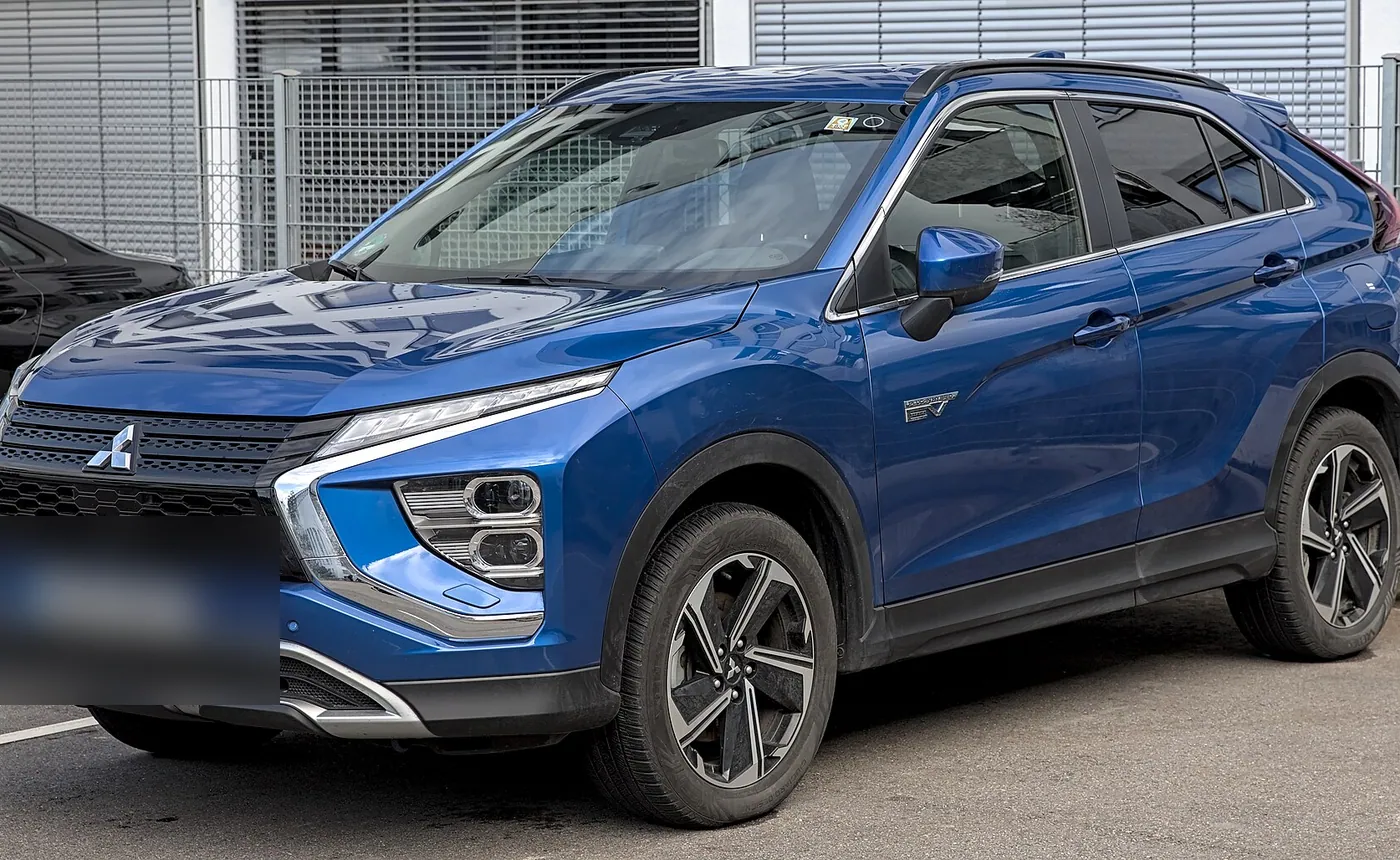
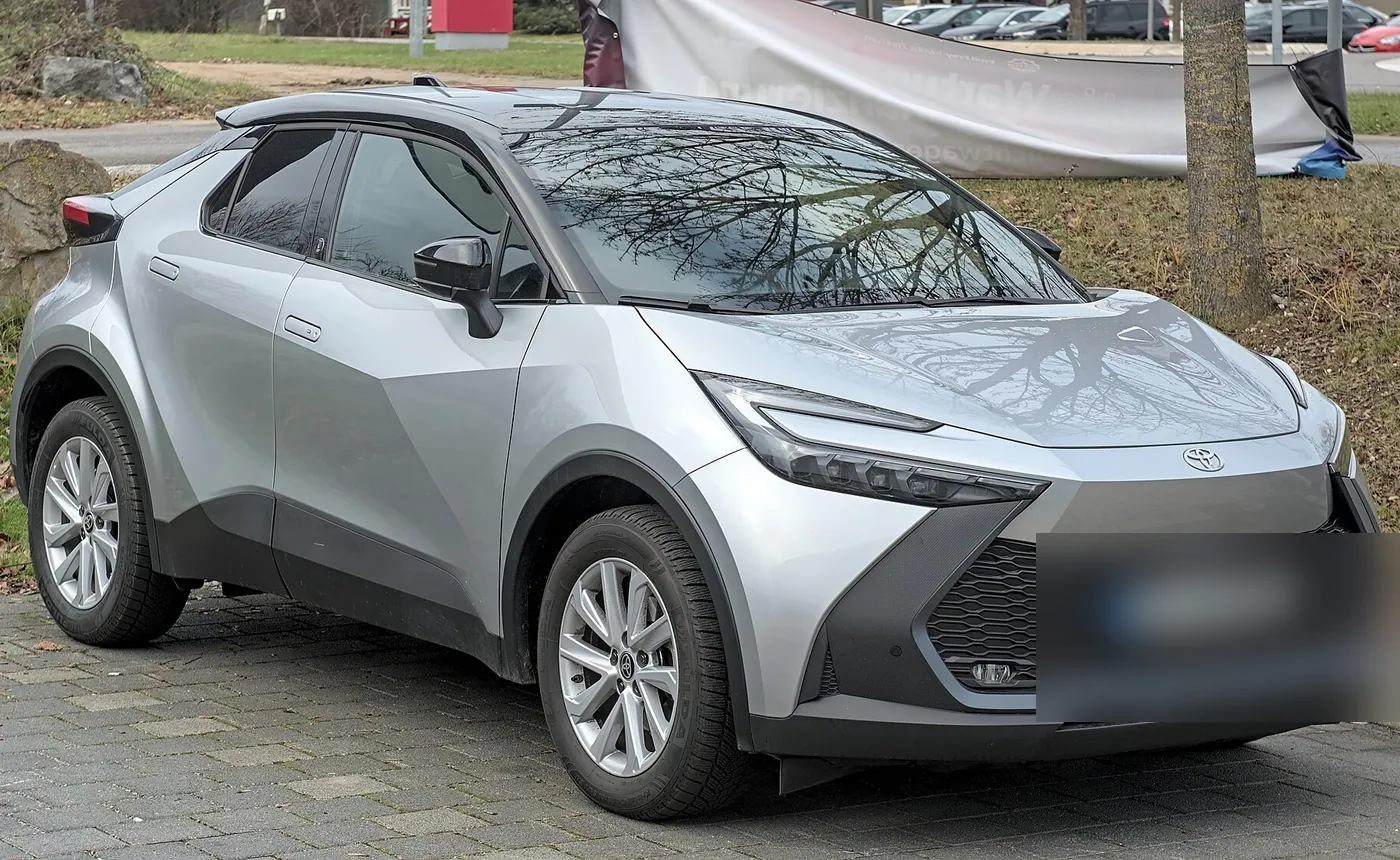
In short: In the three months to 19 September 2026, 834 Mitsubishi Eclipse Crosss sold at Japanese auctions at a median of €12,332, against 4,485 Toyota C-HRs at €7,835. The Toyota C-HR is the cheaper buy by about €4,497 at auction, before shipping, VAT, VRT and fees. Our verdict is at the end of this article.
The Toyota C-HR was the first crossover many Irish drivers saw and thought: that is a strange-looking car. Launched in 2016, it was low, crouched and covered in angles, with rear door handles hidden in the pillars. It sold very well, in Japan and in Ireland, and it remains one of the most common crossovers at Japanese auctions.
The Mitsubishi Eclipse Cross arrived a year later with a similar idea and an even more dramatic rear end, its tailgate split by a horizontal bar of glass and light. It borrowed a name from a sports coupé and paired it with Mitsubishi's long experience of four-wheel drive.
Both are compact, five-seat crossovers built for style first. For an Irish buyer the choice tends to come down to how much weight you give to fuel economy against grip and towing.
The specs
| Mitsubishi Eclipse Cross | Toyota C-HR | |
|---|---|---|
| Generation most imported | 1st gen (GK), 2018 on, facelift 2020 | 1st gen (ZYX10/NGX50), 2016–2023 |
| Engines | 1.5 petrol turbo; 2.2 diesel; 2.4 PHEV (facelift) | 1.8 petrol hybrid; 1.2 petrol turbo |
| Gearbox | CVT (petrol); 8-speed automatic (diesel) | e-CVT (hybrid); CVT or 6-speed manual (turbo) |
| Drive | Front, or S-AWC four-wheel drive | Front, or AWD on turbo cars |
| Seats | 5 | 5 |
| Body | 5-door crossover | 5-door crossover |
| Rear window | Split glass on early cars | Single, small glass |
| Import duty to Ireland | 0% possible (Japan-built, with proof of origin) | 0% possible (Japan-built, with proof of origin) |
Two engineering philosophies
The C-HR sits on Toyota's TNGA platform, shared with the Prius of the same era, and most Japanese cars are hybrids using the same 1.8-litre system. The 1.2 turbo version offers all-wheel drive in Japan, but the hybrid is overwhelmingly the one you will find.
The Eclipse Cross took a different route. Early cars use a 1.5-litre turbocharged petrol engine with a CVT, and Japan also got a 2.2-litre diesel with an eight-speed automatic. The 2020 facelift lengthened the rear, replaced the split window with a conventional tailgate and added a plug-in hybrid version using the drivetrain from the Outlander PHEV. Four-wheel-drive versions use Mitsubishi's S-AWC system, which manages torque between the wheels with real sophistication.
On the road
The C-HR drives better than its looks suggest. Toyota tuned its suspension with care, and it feels planted and comfortable at speed, with a ride that absorbs bad surfaces well. The hybrid is quiet in town but noisy when pushed, and it is not quick.
The Eclipse Cross feels taller and softer. It leans more in corners and the steering is lighter, but the four-wheel-drive versions have a sure-footedness on wet, greasy surfaces that the front-drive C-HR cannot match. The diesel has the pulling power for a small trailer or a caravan in a way the Toyota hybrid simply does not.
Inside and practicality
The C-HR is the more cramped car. Its rear windows are small and set high, so children in the back see very little, and the boot is modest. The front of the cabin is well finished, with a driver-focused dashboard, but rear visibility is genuinely poor and a reversing camera is essential.
The Eclipse Cross is roomier in the back, with a rear seat that slides and reclines on many versions. Early cars have the split rear window, which looks striking but cuts the view behind you in half. Facelift cars fix this and gain boot space. The dashboard is plainer than the Toyota's, with a head-up display on some grades and a touchpad on early cars that is fiddly to use.
Running costs and reliability
The C-HR hybrid is the clear winner on running costs. Its fuel economy is far better than any Eclipse Cross except perhaps the PHEV used on short charged trips, and its low CO2 output helps it in the Irish tax system. Toyota's hybrid system has an excellent reliability record.
The Eclipse Cross is reliable in its own way, but the 1.5 turbo and the CVT are less frugal, and the diesel is best suited to drivers who do long distances. The PHEV is the most complex version, and its battery health needs to be checked with care.
What to check at a Japanese auction
Look at the inspector's notes for scrapes on the lower bumpers and wheel arch trims, both easily scuffed on crossovers parked in tight spaces. Check the grade and mileage together; both cars are young enough that you should expect grade 4 or above.
For the C-HR, confirm that the car is the hybrid and not the 1.2 turbo (or the reverse, if that is what you want), and check the hybrid system warning lights in the condition notes. For the Eclipse Cross, look for any notes about the CVT behaving roughly or the four-wheel-drive system, and on PHEV cars, ask about battery capacity if available. Rust underneath is a possibility on four-wheel-drive cars from Japan's snowier regions, so read the underbody notes carefully.
The verdict
Buy the Toyota C-HR hybrid if you want a stylish crossover that costs little to run and you mostly carry adults in the front. It is the economical and dependable choice.
Buy the Mitsubishi Eclipse Cross if you need four-wheel drive, a roomier back seat or the ability to tow. A facelift diesel with S-AWC is the more capable all-rounder for rural Ireland.
Frequently asked questions
Which is more economical?
The C-HR hybrid is far more economical than the petrol or diesel Eclipse Cross.
Does the Eclipse Cross have four-wheel drive?
Many Japanese cars use Mitsubishi's S-AWC four-wheel-drive system. Front-wheel-drive versions also exist.
Is rear visibility a problem?
Both have limited rear visibility. Early Eclipse Cross cars have a split rear window; the C-HR has small rear side windows.
Can either tow?
The diesel Eclipse Cross is the better choice for towing. Check the documented limit for the exact car.
Keep reading
- Toyota Corolla Sport vs Mazda3: The Sensible Hatchback Meets the Beautiful One
- BMW X1 vs Audi Q3: Two German Crossovers That Spent Their Early Years in Tokyo Traffic
- Mercedes-Benz A-Class vs Audi A3: The Small Premium Hatchback, Two Ways
- Lexus GS vs Nissan Fuga: Japan's Executive Saloons, Quietly Waiting at Auction
- Jeep Wrangler vs Toyota FJ Cruiser: Two Off-Road Icons, One American and One That Only Looks It
- Importing a Mitsubishi Eclipse Cross: prices and costs
- Importing a Toyota C-HR: prices and costs
Photo credits
- Mitsubishi Eclipse Cross: Photo: Alexander Migl / Wikimedia Commons, CC BY-SA 4.0
- Toyota C-HR: Photo: Alexander Migl / Wikimedia Commons, CC BY-SA 4.0