
Lexus GS vs Nissan Fuga: Japan's Executive Saloons, Quietly Waiting at Auction
Both were built to take on the German executive saloon. Neither quite won, and that is exactly why they are now among the best-value big cars at Japanese auctions.
By the Japan to Ireland editors · · 4 min read
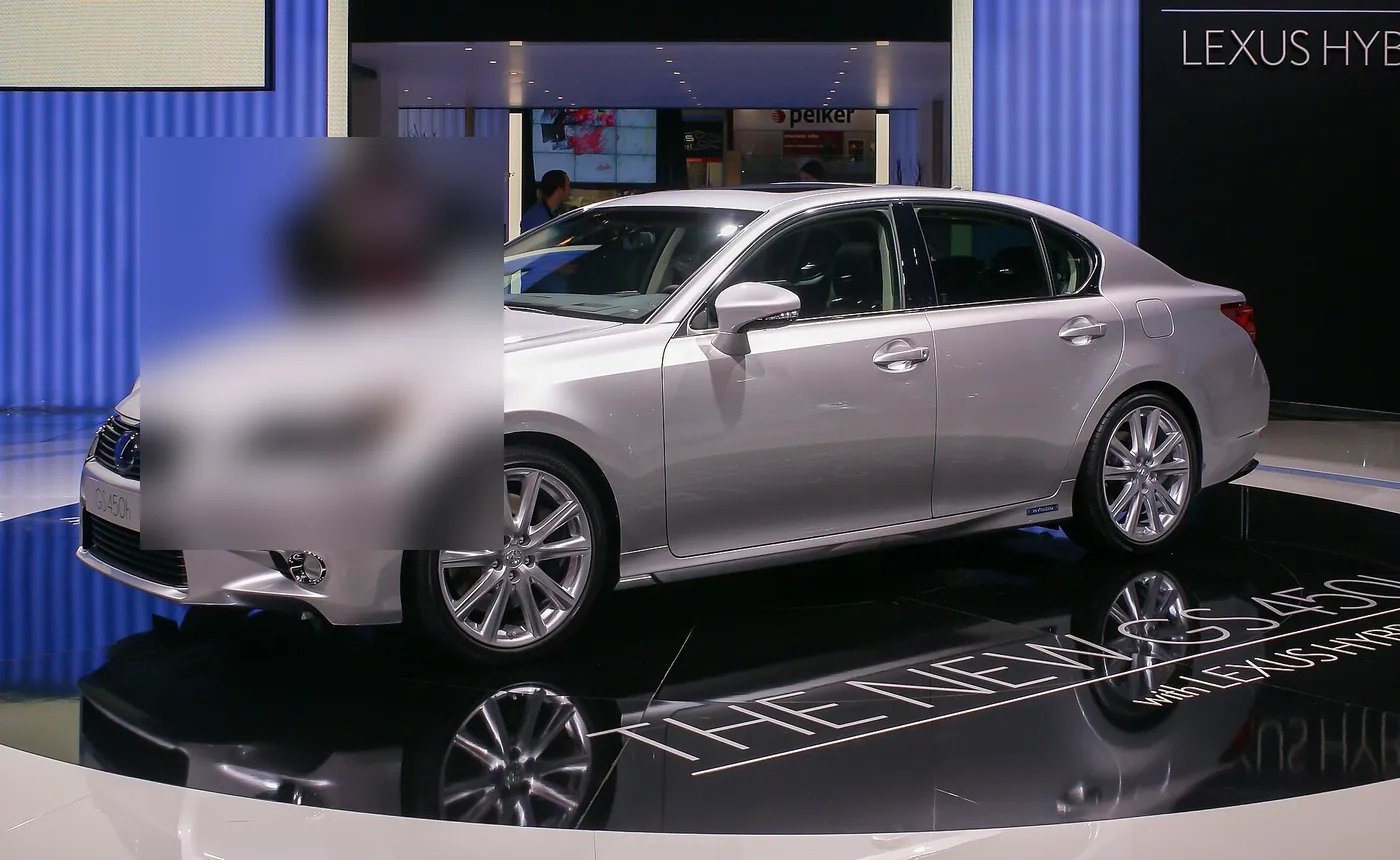
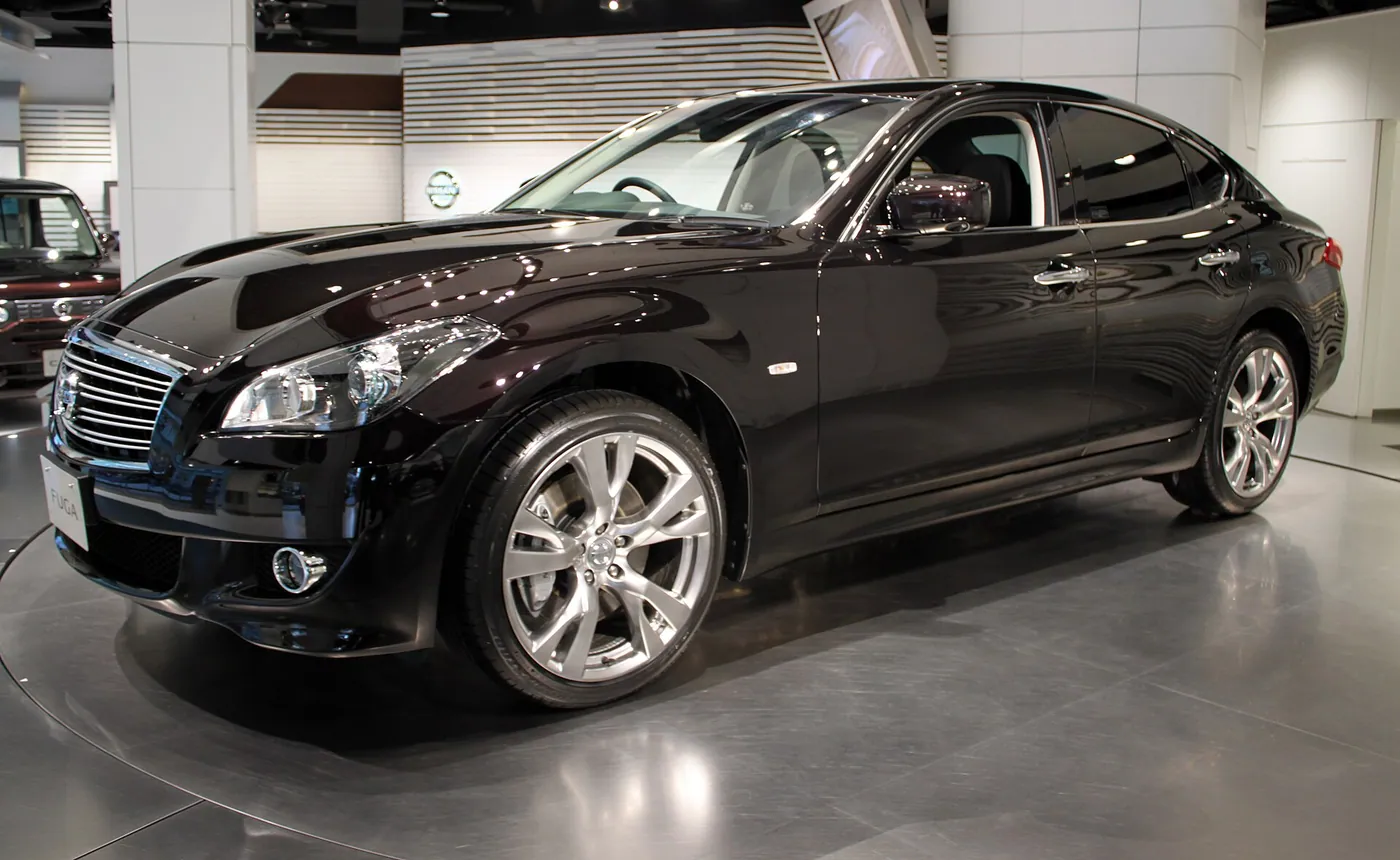
In short: In the three months to 19 September 2026, 821 Lexus GSs sold at Japanese auctions at a median of €3,814, against 773 Nissan Fugas at €1,612. The Nissan Fuga is the cheaper buy by about €2,202 at auction, before shipping, VAT, VRT and fees. Our verdict is at the end of this article.
The Japanese executive saloon has always been an underdog. For years, the Lexus GS and Nissan Fuga tried to win buyers from the BMW 5 Series and Mercedes E-Class, and both did well enough at home. Abroad, they never quite broke through. The Fuga, sold in other markets as the Infiniti M, barely reached Ireland at all, and the GS remained a niche choice.
At Japanese auctions today both are plentiful and, for big, well-built saloons, often surprisingly good value. They are rear-wheel drive in most versions, quiet, comfortable and loaded with equipment. The question for an Irish buyer is which offers the better balance of character, cost and practicality.
This comparison covers the fourth-generation GS, sold from 2012 to 2020, and the second-generation Fuga, which ran in Japan from 2009 all the way to 2022.
The specs
| Lexus GS | Nissan Fuga | |
|---|---|---|
| Generation most imported | 4th gen (L10), 2012–2020 | 2nd gen (Y51), 2009–2022 |
| Engines | 2.5 and 3.5 V6; 2.0 turbo; 2.5 and 3.5 hybrid | 2.5 and 3.7 V6; 3.5 V6 hybrid |
| Gearbox | 6- or 8-speed automatic; e-CVT (hybrid) | 7-speed automatic |
| Drive | Rear, or AWD on some versions | Rear, or AWD on some versions |
| Seats | 5 | 5 |
| Body | 4-door saloon | 4-door saloon |
| Sold abroad as | Lexus GS | Infiniti M, later Q70 |
| Import duty to Ireland | 0% possible (Japan-built, with proof of origin) | 0% possible (Japan-built, with proof of origin) |
History and positioning
The fourth-generation GS was Lexus's most serious attempt at a driver's saloon. It introduced the spindle grille, a stiffer body and an F Sport version with sharper suspension, and it came with a wide range of engines, from a 2.5-litre V6 to a 3.5 V6, two hybrids and later a 2.0 turbo.
The Fuga took a more traditional approach. Its long bonnet, curvy shape and V6 engines gave it a classic big-saloon feel. The hybrid version, using a 3.5-litre V6 and an electric motor with a clever clutch system rather than Toyota's planetary gear, was one of the fastest hybrid saloons of its time.
On the road
The GS is the sharper car. Its steering is precise, the chassis balanced, and F Sport versions with adaptive suspension feel genuinely agile for a big saloon. The hybrid versions are smooth and relaxed. The 3.5 V6 is a fine engine, quiet at a cruise and eager when pushed.
The Fuga is softer and more traditional. Its V6 engines are strong and vocal, especially the 3.7, and the seven-speed automatic shifts smoothly. It is comfortable on a long motorway run and composed at speed, but it feels bigger and heavier than the Lexus on a twisting road. The hybrid is quick, though its behaviour at low speed is less polished than Toyota's systems.
Inside and practicality
The GS's interior is beautifully made, with a wide central screen controlled by a mouse-style joystick that takes some practice. The seats are excellent and there is plenty of space for four adults. The boot is reasonable, a little smaller in the hybrid.
The Fuga's cabin is more traditional, with wood, leather and an analogue clock. It is roomy and comfortable, and the rear seat is generous. The infotainment feels older than the Lexus's, and the overall design is less modern, but it is well screwed together and pleasant to sit in.
Running costs and reliability
Both cars carry big engines, and in the Irish tax system the petrol V6 versions sit in the upper CO2 bands, which matters for both VRT and annual motor tax. The hybrid versions of each are the sensible choice for anyone sensitive to running costs, though the Fuga hybrid is still a large, thirsty car by modern standards.
The GS has an excellent reliability record. Its V6 engines and hybrid systems are durable, and parts are shared with other Lexus and Toyota models. The Fuga's V6 engines are robust, but the hybrid is a more specialised system with fewer specialists who know it well, and parts can take longer to source.
What to check at a Japanese auction
Both cars often come to auction with low mileage and good grades. Check the inspector's notes for kerbed wheels and wear on the leather, and look for notes about the suspension on cars with adaptive dampers.
For the GS, confirm the exact engine and drivetrain, since several were offered. Hybrid cars should be checked for any battery or system warnings. For the Fuga, read any notes on the hybrid system carefully, and on V6 cars, check for oil leaks around the engine. Rust is rarely a problem on either, but four-wheel-drive cars from northern Japan deserve a closer look underneath.
The verdict
Buy the Lexus GS, ideally a GS300h or GS450h, if you want a big saloon with modern refinement, sharp handling and running costs that make sense in Ireland. It is the better all-round car and the safer long-term choice.
Buy the Nissan Fuga if you want a rare, old-school V6 saloon with plenty of space and character, and you are comfortable with the running costs. It is a genuine bargain for the right enthusiast, but not a sensible daily car for most.
Frequently asked questions
Is the Nissan Fuga the same as the Infiniti M?
Yes. The Y51 Fuga was sold abroad as the Infiniti M and later the Infiniti Q70.
Which GS is best for Ireland?
The hybrid versions, GS300h and GS450h, have lower CO2 output, which helps with VRT and motor tax.
Are parts easy to find?
GS parts are widely available through Lexus and Toyota. Fuga parts can take longer, especially for the hybrid.
Which is more comfortable?
Both are comfortable. The Fuga is softer; the GS is sharper but still refined.
Keep reading
- Mercedes-Benz A-Class vs Audi A3: The Small Premium Hatchback, Two Ways
- Mitsubishi Eclipse Cross vs Toyota C-HR: Two Coupé-Crossovers With Very Different Engineering Under the Skin
- BMW 2 Series Active Tourer vs Mercedes-Benz B-Class: The German Family Car That Nobody Expected
- Toyota SAI vs Lexus HS 250h: Twin Hybrid Saloons That Japan Kept to Itself
- Toyota Corolla Axio vs Honda Grace: Two Quiet Saloons for People Who Hate Fuss
Photo credits
- Lexus GS: Photo: Matti Blume / Wikimedia Commons, CC BY-SA 4.0
- Nissan Fuga: Photo: MIKI Yoshihito / Wikimedia Commons, CC BY 2.0