
Suzuki Every vs Honda N-Van: Small Vans for Small Businesses and Big Adventures
Kei vans are the smallest commercial vehicles Japan makes, and they have found a following in Ireland among tradespeople, market traders and micro-camper builders.
By the Japan to Ireland editors · · 4 min read
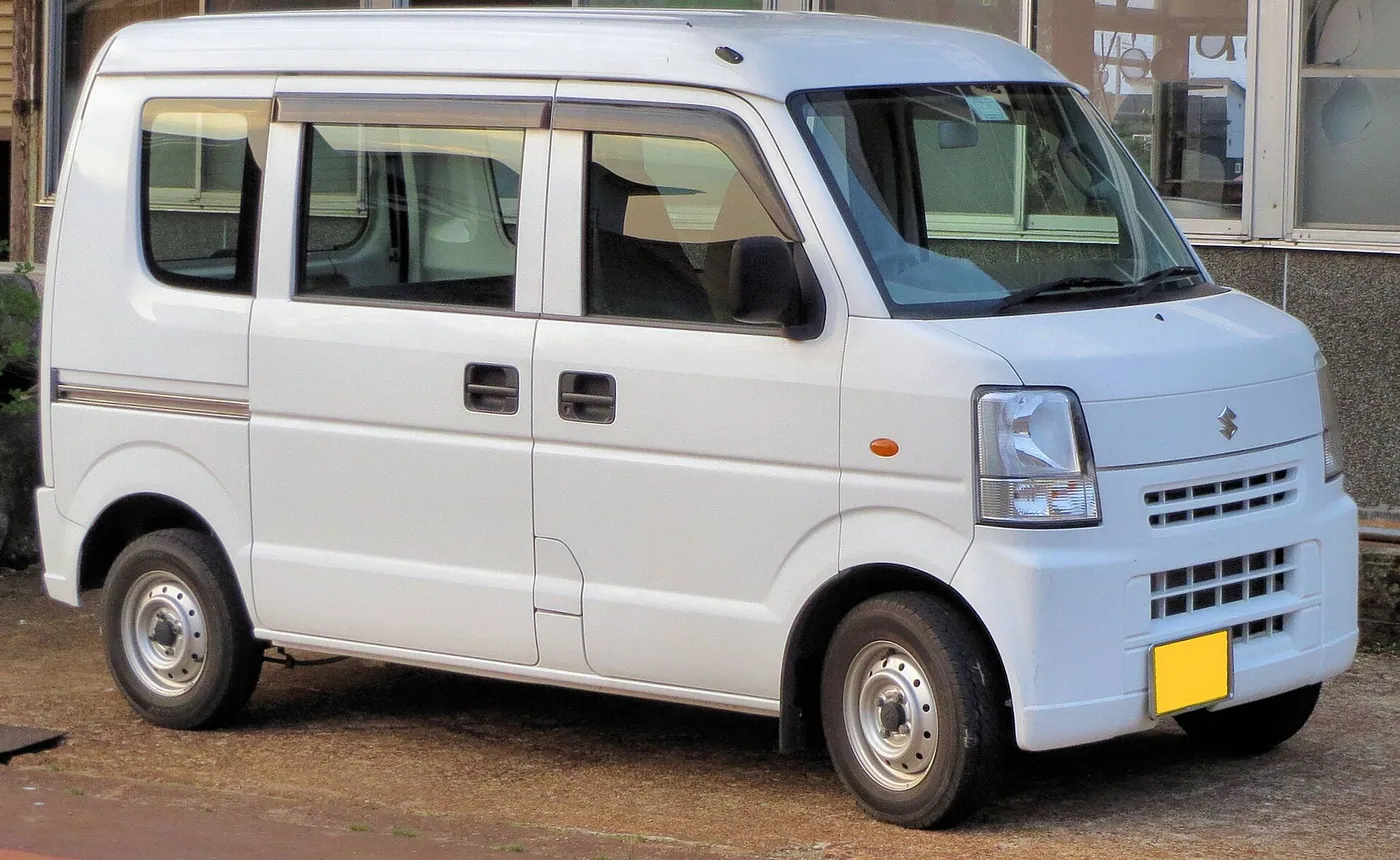
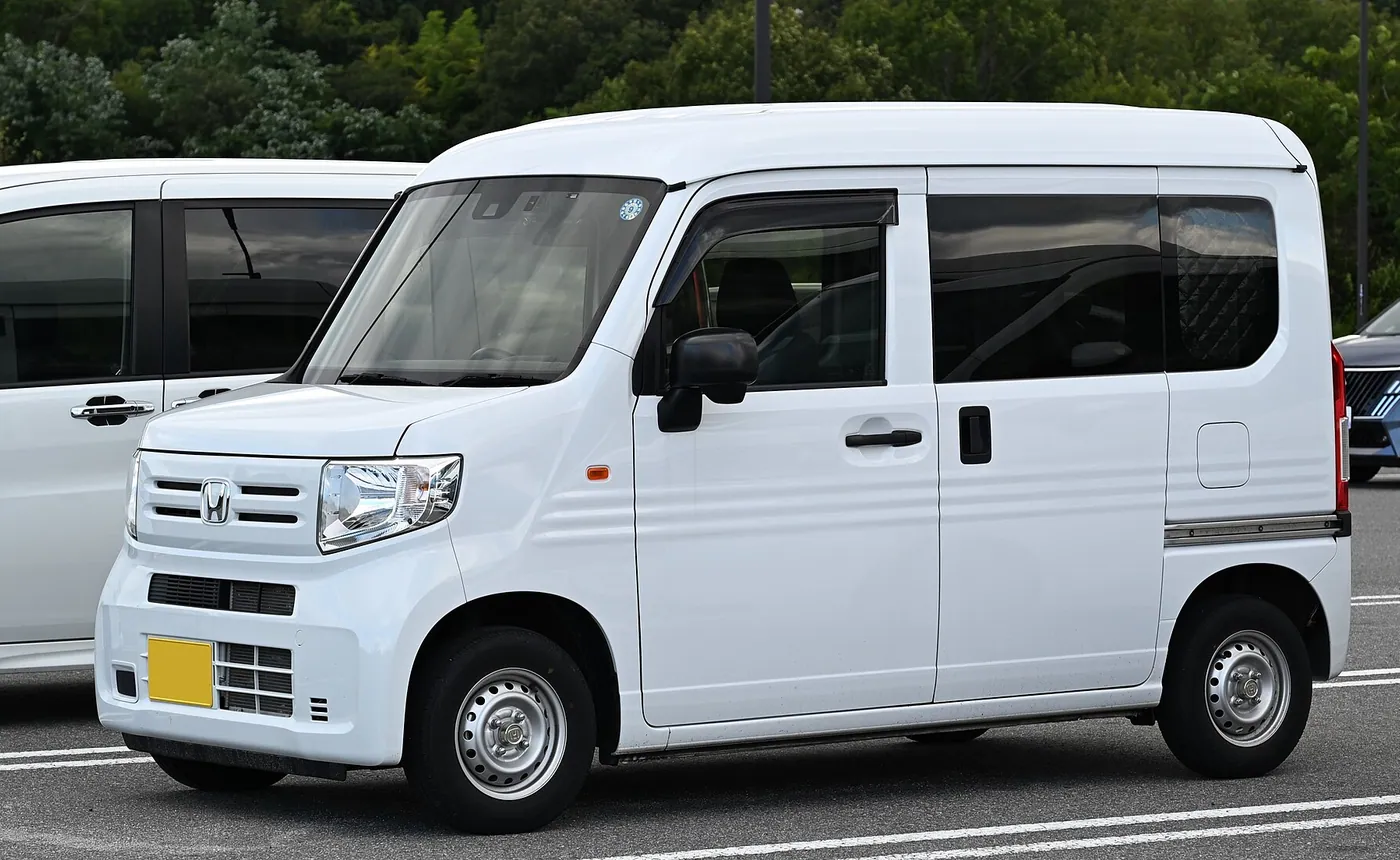
In short: In the three months to 19 September 2026, 9,354 Suzuki Everys sold at Japanese auctions at a median of €1,239, against 2,096 Honda N-Vans at €3,112. The Suzuki Every is the cheaper buy by about €1,873 at auction, before shipping, VAT, VRT and fees. Our verdict is at the end of this article.
Drive through rural Japan and the kei van is everywhere: parked beside rice fields, outside village shops, wedged into alleys too narrow for anything larger. These tiny, boxy vehicles carry tools, vegetables, parcels and cleaning equipment, and they do it on engines of less than 660 cc.
The Suzuki Every and the Honda N-Van are two of the best of the breed, and they could hardly be more different underneath. The Every is a traditional kei van, built the way such vans have been built for decades. The N-Van is a modern rethink based on a passenger car.
In Ireland they have found two audiences. One is the small business owner who needs a cheap, easily parked van for city deliveries or a market stall. The other is the camper and hobbyist, who sees in their square cargo bays the makings of a bed, a cupboard and a small stove.
The specs
| Suzuki Every | Honda N-Van | |
|---|---|---|
| Generation most imported | 6th gen (DA17V), 2015 on | 1st gen (JJ1/JJ2), 2018 on |
| Engine | 658 cc three-cylinder, turbo optional | 658 cc three-cylinder, turbo optional |
| Layout | Engine under front seats, rear-wheel drive | Front engine, front-wheel drive |
| Drive | Rear, or 4WD | Front, or 4WD |
| Gearbox | 5-speed manual, 4-speed auto or AGS; CVT on later vans | CVT or 6-speed manual |
| Seats | 2 or 4 | 1 to 4 |
| Party piece | Long, flat load floor | Pillarless passenger side |
| Import duty to Ireland | 0% possible (Japan-built, with proof of origin) | 0% possible (Japan-built, with proof of origin) |
Two layouts, two philosophies
The Every puts its engine under the front seats and drives the rear wheels, an arrangement that gives it the longest possible flat load floor within kei dimensions. Its body is tough, its mechanicals simple, and the Every has been a staple of Japanese commerce for generations. The Every Wagon is the passenger version, with more comfortable trim.
The N-Van arrived in 2018, effectively replacing Honda's long-running Acty Van, and it is based on the N-Box. The engine sits at the front and drives the front wheels. Its clever trick is the passenger side: there is no central pillar, so with the front and sliding rear doors open you get a huge side opening for loading long items. Every seat except the driver's folds flat into the floor.
How they drive
The N-Van feels like a car. The ride is smoother, the cabin quieter and the driving position more natural. The Every feels like a van: firmer, noisier, with the engine thrumming beneath you, though it turns in a remarkably small circle.
Both are happiest in town and on regional roads. On the motorway the non-turbo versions are strained; turbo models of either cope far better with Irish N-roads and the occasional run on the M50.
Inside and practicality
The Every has the bigger, squarer load space, with a flat floor running from the tailgate to the backs of the front seats when the rear bench is folded. It takes more boxes, more tools and longer timber.
The N-Van's floor is shorter but more versatile, thanks to that wide side opening and the fold-flat passenger seat. For a micro camper, its car-like comfort and quieter cabin make long trips more pleasant.
Both vans have high roofs and nearly vertical sides, which means the usable volume is far larger than the footprint suggests. Builders fit shelving racks along the walls; campers fit a raised platform bed with storage beneath. Interior trim in both is basic, with bare metal or hard plastic in the load bay, so most owners add a floor liner and some insulation before winter. The Every's cab is narrow and upright, while the N-Van's driver sits in an environment almost identical to an N-Box, with a modern dashboard and better seats.
Running costs and reliability
Both are cheap to run, with small engines and modest servicing costs. The Every's traditional layout is easy to work on, and its manual and automatic gearboxes are robust; the automated manual AGS is the one to approach with care. The N-Van's CVT is smooth and well proven in Honda's kei cars.
Small vans can be registered as commercial vehicles in Ireland if they meet the requirements on seating and load area, which is treated very differently from passenger car registration. We check this before buying.
What to check at auction
Kei vans work hard. Expect high mileages and plenty of marks on the auction sheet, and do not be put off by a sprinkling of A and U letters. Focus instead on rust: inspect the notes for corrosion on the sills, rear arches, floor and underbody, especially on 4WD vans from snowy prefectures. On the Every, ask about the condition of the load floor and the rear doors. On the N-Van, check the sliding door mechanism and the passenger-side door seals.
The verdict
The Every is the tougher, more traditional van, with the bigger load space and the simpler mechanicals. Buy it if the van is a working tool first. The N-Van is more comfortable and more versatile, and it makes the better base for a small camper or a mixed-use vehicle. Both are clever, characterful machines that make sense on crowded Irish streets.
Frequently asked questions
Can a kei van be registered as a commercial vehicle in Ireland?
Often yes, if it meets the commercial vehicle requirements. We check before you buy.
Which is better for a micro camper?
The Honda N-Van, thanks to its flat-folding seats, wide side opening and quieter cabin.
Are kei vans suitable for motorways?
They can cope, especially turbo versions, but they are designed for urban and regional roads.
Which has the larger load space?
The Suzuki Every, whose under-seat engine layout gives it a longer, flatter load floor.
Keep reading
- Toyota Corolla Fielder vs Honda Shuttle: The Compact Estates Ireland Forgot It Wanted
- Daihatsu Mira e:S vs Suzuki Alto: The Cheapest Cars in Japan, and Why They Are Clever
- Nissan X-Trail vs Toyota RAV4: The Family SUV Question, Answered for Irish Buyers
- Nissan Dayz vs Mitsubishi eK Wagon: The Kei Car Twins Born From a Joint Venture
- Toyota Celsior vs Nissan Cima: Japan's V8 Executive Saloons, Twenty Years On
Photo credits
- Suzuki Every: Photo: DY5W-sport / Wikimedia Commons, CC BY-SA 3.0
- Honda N-Van: Photo: TTTNIS / Wikimedia Commons, CC0