
Suzuki Spacia Custom vs Nissan Roox: Japan's Tall Kei Wagons, Dressed in Chrome
Two 660 cc cars with sliding doors, vast cabins and the bold, chromed face Japanese buyers love. One is Suzuki's own design. The other comes from a Nissan and Mitsubishi joint venture, and has an unexpected Suzuki past.
By the Japan to Ireland editors · · 4 min read
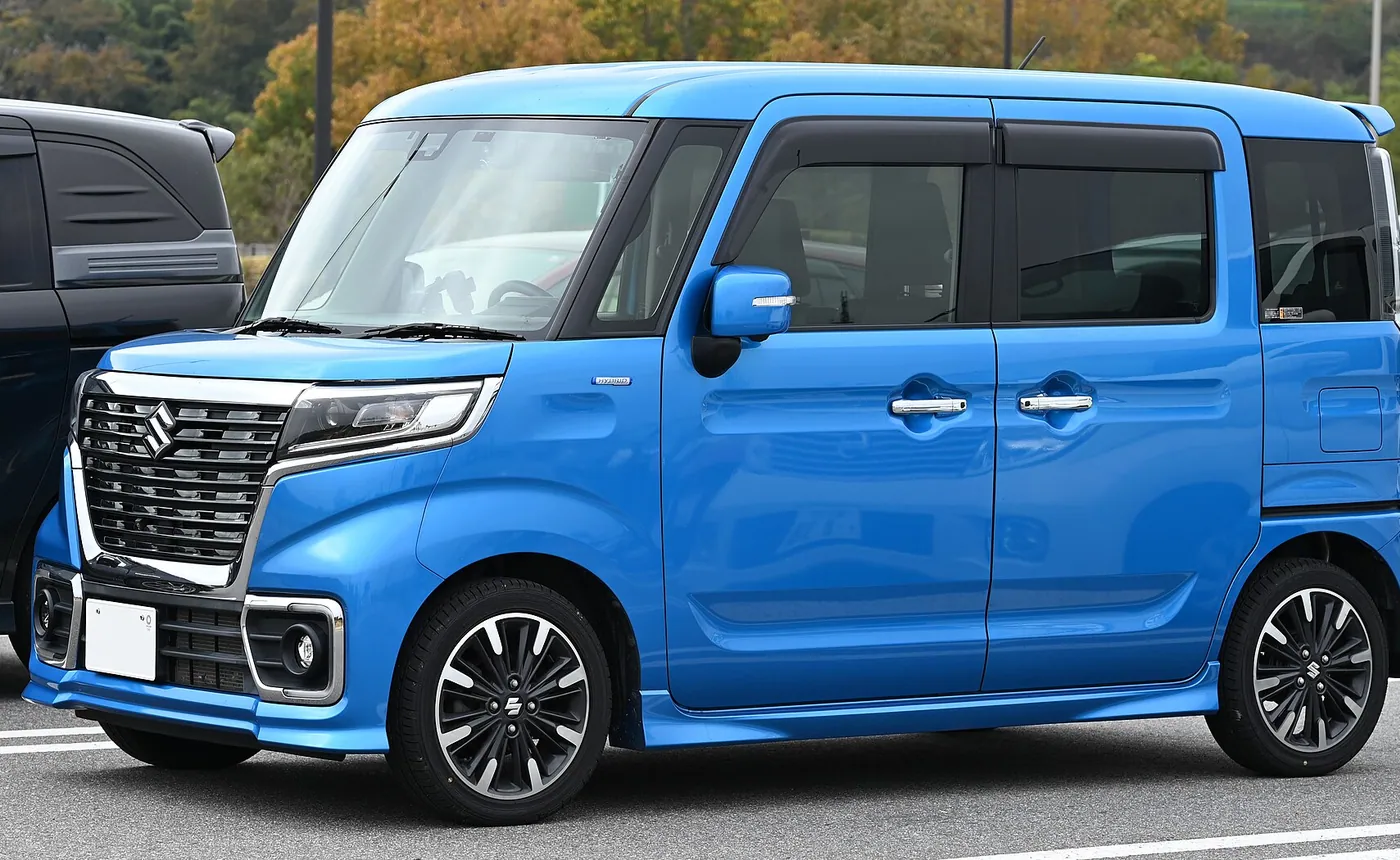
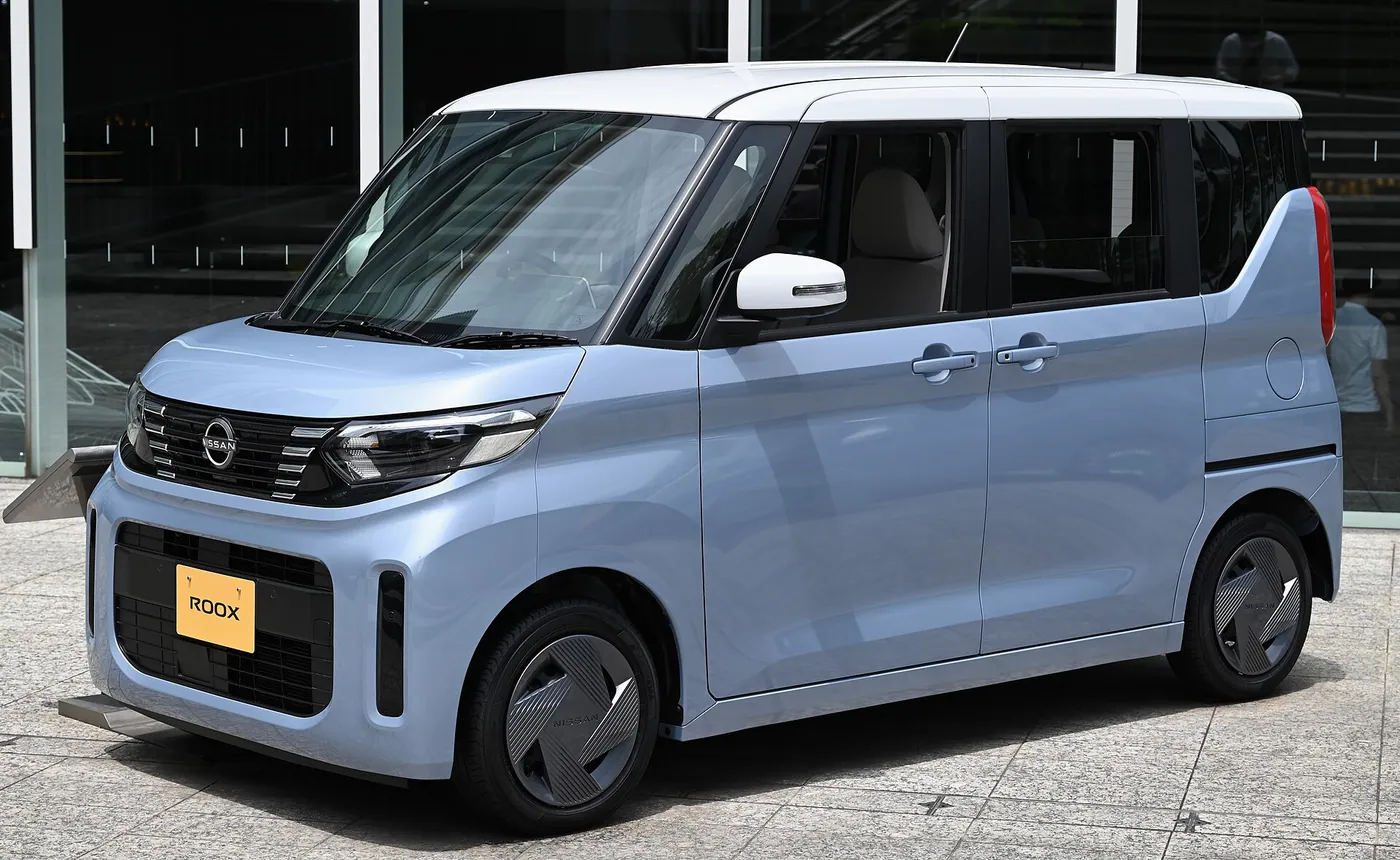
In short: In the three months to 19 September 2026, 5,944 Suzuki Spacia Customs sold at Japanese auctions at a median of €1,893, against 5,524 Nissan Rooxs at €4,545. The Suzuki Spacia Custom is the cheaper buy by about €2,653 at auction, before shipping, VAT, VRT and fees. Our verdict is at the end of this article.
The best-selling cars in Japan are not hatchbacks, saloons or SUVs. Year after year the top of the sales charts is dominated by tall kei wagons: cars no longer than 3.4 metres, with roofs high enough for a small child to stand under and sliding rear doors on both sides. On a residential street in Osaka or Saitama they are parked outside nearly every second house.
The Suzuki Spacia and the Nissan Roox are two of the leaders of the class. In their dressed-up forms, the Spacia Custom and the Roox Highway Star, they wear large chrome grilles, slim LED lamps and darker cabins, a look the Japanese market calls "custom" and buys in enormous numbers. The aim is to make a 660 cc car look like a scaled-down luxury people carrier, and it largely works.
For Irish buyers these cars are a specialist choice, and an intriguing one. They are not built for long motorway hauls. But for a family whose week is school, shops, sports pitches and grandparents, they offer the cabin of a much bigger car in a body that slots into any parking space in town.
The specs
| Suzuki Spacia Custom | Nissan Roox | |
|---|---|---|
| Generation most imported | 2nd gen (MK53S), 2017–2023 | 2020 generation (B44A/B45A/B47A/B48A) |
| Engine(s) | 660 cc three-cylinder mild hybrid; turbo optional | 660 cc three-cylinder mild hybrid; turbo optional |
| Power | 52 PS, or 64 PS (turbo) | 52 PS, or 64 PS (turbo) |
| Gearbox | CVT | CVT |
| Drive | Front, or 4WD | Front, or 4WD |
| Seats | 4 | 4 |
| Length | 3,395 mm | 3,395 mm |
| Badge twin | None (Spacia Gear is a styled sibling) | Mitsubishi eK Space |
| Import duty to Ireland | 0% possible (Japan-built, with proof of origin) | 0% possible (Japan-built, with proof of origin) |
Where they come from
The Spacia replaced Suzuki's Palette in 2013, and the Custom version arrived the same year. The second generation, launched at the end of 2017 and built until 2023, is the one most commonly found at Japanese auctions today, and it is the one this comparison means. It made Suzuki's mild-hybrid system standard, grew taller and squarer, and added a crossover-styled sibling, the Spacia Gear, in 2018. A third generation followed in late 2023.
The Roox has a more tangled family tree. The first Roox, sold from 2009, was in fact a rebadged Suzuki Palette, so the two rivals here were once the same car. In 2014 it was replaced by the Dayz Roox, the first tall wagon from NMKV, the joint venture Nissan and Mitsubishi formed to develop kei cars. The current Roox, launched in 2020, is NMKV's second design and is sold by Mitsubishi as the eK Space. Highway Star is Nissan's name for the chromed versions.
How they drive
Both are light and easy to drive in town, with soft suspension, a tight turning circle and a high driving position that gives a clear view over parked cars. The non-turbo engines are adequate for urban use and the mild-hybrid assistance smooths away the shudder of starting off. On a hill with four adults aboard, or on a motorway slip road, they run out of breath quickly.
The turbos change the picture. Both pull cleanly through the middle of the rev range and will hold 100 km/h without sounding desperate. The Spacia is the lighter car, and it feels a touch more nimble and uses a little less fuel. The Roox is the quieter at speed, with better insulation from wind and road noise, and the turbo Highway Star offers ProPILOT, Nissan's adaptive cruise control with lane-centring, a remarkable feature in a kei car. Both are tall and narrow, so crosswinds on exposed roads are felt.
Inside and practicality
The cabins are the point. Rear legroom in both is extraordinary for the size, the rear seats slide to trade legroom for boot space, and the flat floor and wide door openings make fitting a child seat far easier than in a conventional hatchback. Power sliding doors are common on mid and upper grades, and many cars have a one-touch close function.
The Spacia's interior is cleverly packaged, with plenty of storage and a dashboard laid out for practicality. The Roox's interior is the more upmarket of the two, with nicer materials and larger screens on higher grades. Both are legally limited to four seats, which is worth remembering for a growing family.
Running costs and reliability
Kei cars are cheap to keep. Fuel use is low, CO2 output places them in gentle motor tax and VRT bands, and tyres and brakes are small and inexpensive. Both engines are used across their makers' kei ranges and have good records.
The costly parts are the conveniences. Power sliding door motors, cables and catches can be expensive to repair, and both CVTs reward regular fluid changes. Turbo engines need disciplined oil changes, particularly on cars that have lived on short trips.
What to check at auction
Read the auction sheet for panel repairs and replaced bumpers, which are common on cars that spend their lives in supermarket car parks. Kerbed wheels and scuffed corners are normal; repairs to the floor or pillars are not.
Check both sliding doors carefully in the photos or inspection notes, and look for scuffing on the door rails. On turbo cars, look for oil weeping and any mention of smoke. Four-wheel-drive cars from snowy prefectures should be checked underneath for rust on the subframe, brake lines and sills. Grade 4 cars with clean interiors are widely available, so there is no need to compromise.
The verdict
Buy the Spacia Custom if you want the lighter, slightly more economical car with clever packaging and a huge choice at auction.
Buy the Roox Highway Star if refinement matters more, and especially if you want ProPILOT on the turbo version for regular motorway runs. In either case, choose the turbo if your driving goes beyond town, and keep in mind that these remain kei cars: brilliant in the city, merely adequate on the open road.
Frequently asked questions
Are the Spacia Custom and Roox kei cars?
Yes. Both are built to Japan's kei car limits, with 660 cc engines and a length of 3,395 mm.
Is the Nissan Roox the same as the Mitsubishi eK Space?
Yes. Both are developed by NMKV, the Nissan and Mitsubishi joint venture, and differ mainly in styling and trim.
Do they have sliding doors?
Yes, on both sides, and power sliding doors are common on mid and upper grades.
Can they handle motorways?
They can, especially in turbo form, but they are best suited to town and regional driving.
Keep reading
- Toyota Crown vs Nissan Skyline: Japan's Two Grand Old Saloons, in Their Last Classic Form
- Suzuki Hustler vs Daihatsu Taft: Two Tiny Crossovers That Dress for Adventure
- Honda N-WGN vs Daihatsu Mira Tocot: Two Kei Hatchbacks for People Who Simply Want to Get There
- Subaru Forester vs Mitsubishi Outlander PHEV: Two Four-Wheel-Drive Answers to a Wet Country
- Toyota Vitz vs Mazda Demio: The Sensible Choice Meets the Stylish One
Photo credits
- Suzuki Spacia Custom: Photo: TTTNIS / Wikimedia Commons, CC0
- Nissan Roox: Photo: TTTNIS / Wikimedia Commons, CC0