
Honda N-WGN vs Daihatsu Mira Tocot: Two Kei Hatchbacks for People Who Simply Want to Get There
Neither is tall, flashy or fast. Both are frugal, easy to park and honest about what they are. One is a carefully engineered Honda; the other is Daihatsu's lighter, plainer take on the city car.
By the Japan to Ireland editors · · 4 min read
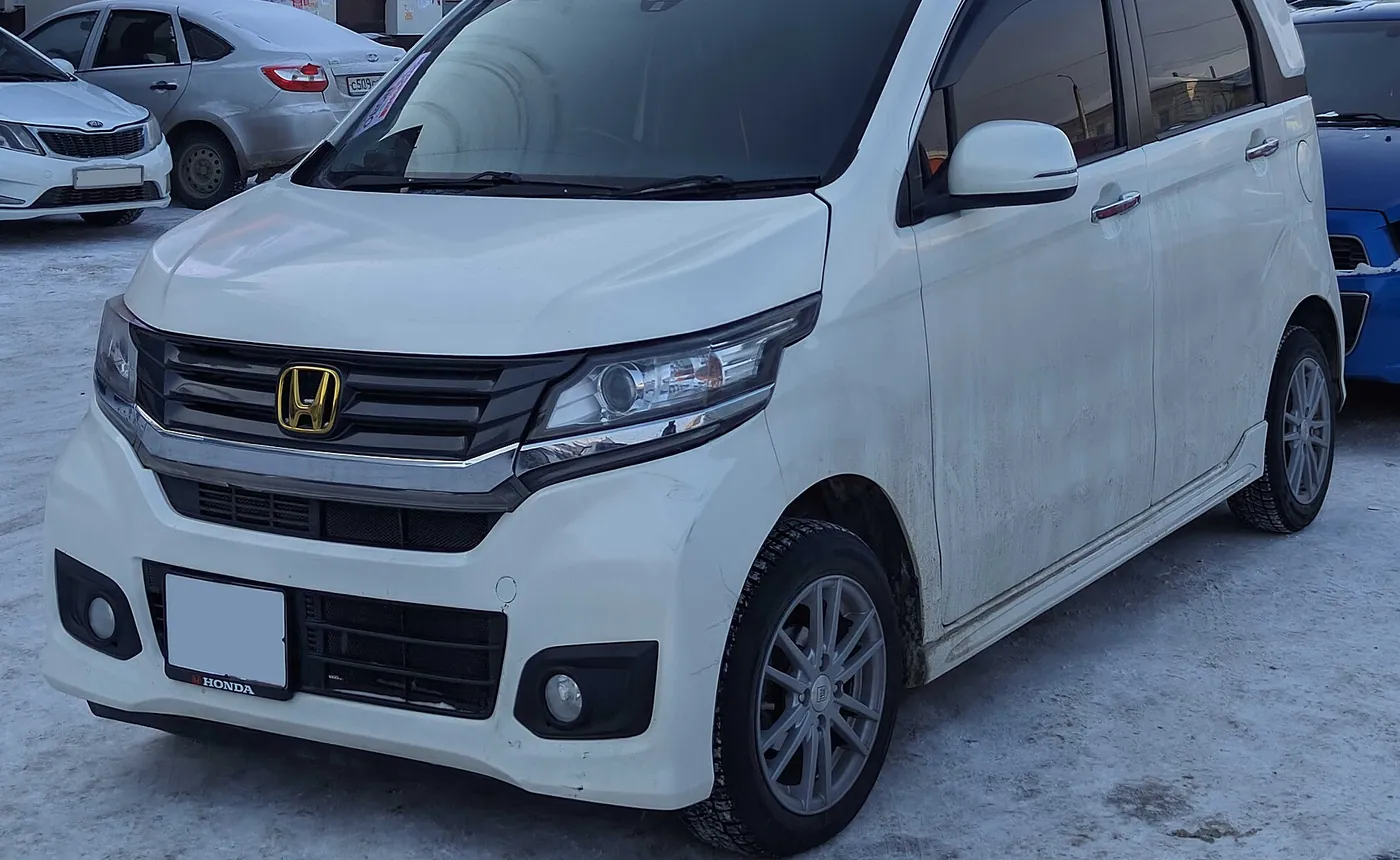
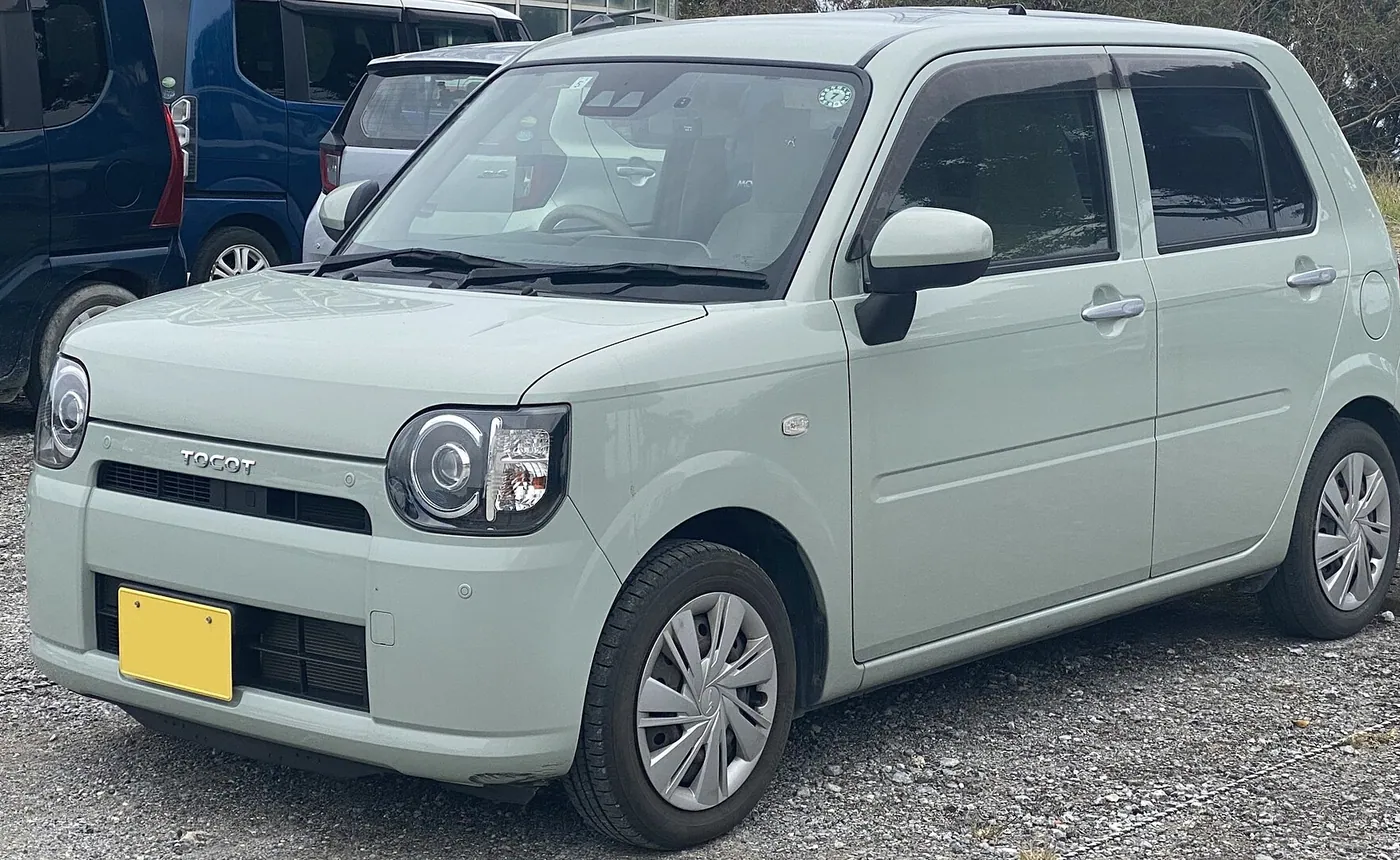
In short: In the three months to 19 September 2026, 5,913 Honda N-WGNs sold at Japanese auctions at a median of €1,514, against 314 Daihatsu Mira Tocots at €3,470. The Honda N-WGN is the cheaper buy by about €1,956 at auction, before shipping, VAT, VRT and fees. Our verdict is at the end of this article.
Not every kei car is a tall box with sliding doors. Below the towering family wagons that dominate Japanese sales charts sits a quieter group: kei hatchbacks with conventional hinged doors, lower roofs and simpler ambitions. They are bought by commuters, students and older drivers who want a small, frugal car and have no use for a cabin the size of a garden shed.
The Honda N-WGN and the Daihatsu Mira Tocot are two of the better examples. The N-WGN is the more engineered car, with a stronger engine and a long list of safety equipment. The Tocot is lighter, simpler and plainer, designed to be easy to live with and nothing more.
For Irish buyers they make sense as a second car, a first car for a new driver or a town runabout for someone who rarely leaves the city. Their appeal is in what they do not ask of you: little fuel, little tax, little maintenance and no stress in a tight parking space.
The specs
| Honda N-WGN | Daihatsu Mira Tocot | |
|---|---|---|
| Generation most imported | 2nd gen (JH3/JH4), 2019 on; 1st gen (JH1/JH2), 2013–2019 | LA550S/LA560S, 2018–2023 |
| Engine | 660 cc three-cylinder; turbo optional | 660 cc three-cylinder, non-turbo only |
| Power | 58 PS, or 64 PS (turbo) | 52 PS |
| Gearbox | CVT | CVT |
| Drive | Front, or 4WD | Front, or 4WD |
| Seats | 4 | 4 |
| Length | 3,395 mm | 3,395 mm |
| Safety system | Honda Sensing (standard on 2nd gen) | Smart Assist III |
| Import duty to Ireland | 0% possible (Japan-built, with proof of origin) | 0% possible (Japan-built, with proof of origin) |
Where they come from
The N-WGN belongs to Honda's N series of kei cars, which began with the N-Box in 2011 and revived the N name Honda first used on its kei cars of the late 1960s. The first N-WGN arrived in 2013. The second generation, launched in 2019 and the main focus here, is a more serious car. It made Honda Sensing standard, including automatic emergency braking and adaptive cruise control, and added an electric parking brake and a steering column that adjusts for reach as well as height, an unusual feature in a kei car. The N-WGN Custom is the dressed-up version, with sharper lamps and a darker cabin.
The Mira Tocot was launched in 2018, built on the light platform of the Mira e:S. Daihatsu aimed it particularly at younger drivers who wanted something friendlier than a bargain-basement kei car, and gave it a square, cheerful body and a simple, uncluttered interior. It was offered only with a non-turbo engine, and production ended in 2023.
How they drive
The N-WGN is the more refined car. It rides more smoothly over broken tarmac, the cabin is quieter at speed, and the steering has a reassuring weight. The non-turbo engine is willing in town; the turbo makes it a car that can manage a motorway run without drama, holding 100 km/h with something left for overtaking.
The Tocot is lighter by a noticeable margin, and in town that makes it feel quick on its feet and very easy to place. Its engine is fine at city speeds but needs to be worked hard on hills and feels stretched on a motorway. The ride is firmer and less settled over potholes, and wind noise rises sharply above 90 km/h. It is a car that rewards gentle use.
Inside and practicality
The N-WGN's cabin is cleverly arranged. Four adults fit without complaint, the rear seats split and fold, and the second-generation car's boot has a two-level board that can hide shopping or create a flat floor. The higher roof than many kei hatchbacks helps headroom.
The Tocot's interior is simpler and more open, with a flat dashboard, easy-to-read instruments and a boot that is generous for its size. There is less clever storage and fewer soft surfaces, but everything is where you expect it to be.
Running costs and reliability
Both are very cheap to run. Fuel use is low, CO2 output places them in gentle motor tax and VRT bands, and servicing is simple. The Tocot's lighter weight gives it a slight economy edge in town.
Both engines are well proven: Honda's across its N series, Daihatsu's KF across most of its kei range. CVTs on both benefit from fluid changes at sensible intervals, and the N-WGN turbo needs regular oil changes to keep its turbocharger healthy.
What to check at auction
Read the auction sheet for panel repairs and replaced bumpers, which are common on city kei cars. Kerbed wheels and scratched corners are normal; damage to the floor or pillars is not.
Four-wheel-drive cars from snowy northern Japan should be checked underneath for rust. On the N-WGN, confirm the safety equipment fitted to the specific car, since first-generation cars had less as standard. On the Tocot, check interior wear on younger-driver cars, which can be harder used. Grade 4 cars are common for both.
The verdict
Buy the N-WGN if you want the more refined, better-equipped car, especially in second-generation form with Honda Sensing as standard. The turbo is the version to choose if you ever leave town.
Buy the Mira Tocot if you want the simplest, lightest and most economical car for purely local use. It asks for very little, and for a short daily commute or a first car on quiet roads, that is exactly the point.
Frequently asked questions
Are the N-WGN and Mira Tocot kei cars?
Yes. Both are built to Japan's kei car limits, with 660 cc engines and a length of 3,395 mm.
Does the Mira Tocot have a turbo?
No. It was offered only with a non-turbo engine.
Which is safer?
The second-generation N-WGN, which has Honda Sensing, including automatic emergency braking and adaptive cruise control, as standard.
Which is better on the motorway?
The N-WGN turbo. The Tocot is best kept for town and regional roads.
Keep reading
- Suzuki Spacia Custom vs Nissan Roox: Japan's Tall Kei Wagons, Dressed in Chrome
- Toyota Crown vs Nissan Skyline: Japan's Two Grand Old Saloons, in Their Last Classic Form
- Subaru Forester vs Mitsubishi Outlander PHEV: Two Four-Wheel-Drive Answers to a Wet Country
- Toyota Corolla Axio vs Honda Grace: Two Quiet Saloons for People Who Hate Fuss
- Toyota Sienta vs Honda Freed: The Small Seven-Seaters That Make Big SUVs Look Silly
Photo credits
- Honda N-WGN: Photo: Throwawayacc222 / Wikimedia Commons, CC0
- Daihatsu Mira Tocot: Photo: Oq10pass / Wikimedia Commons, CC0