
Subaru Forester vs Mitsubishi Outlander PHEV: Two Four-Wheel-Drive Answers to a Wet Country
One is a rugged, petrol-fed SUV built around Subaru's symmetrical all-wheel drive. The other is the plug-in hybrid that taught Europe to charge an SUV at home. Both suit Irish weather; they suit very different drivers.
By the Japan to Ireland editors · · 5 min read
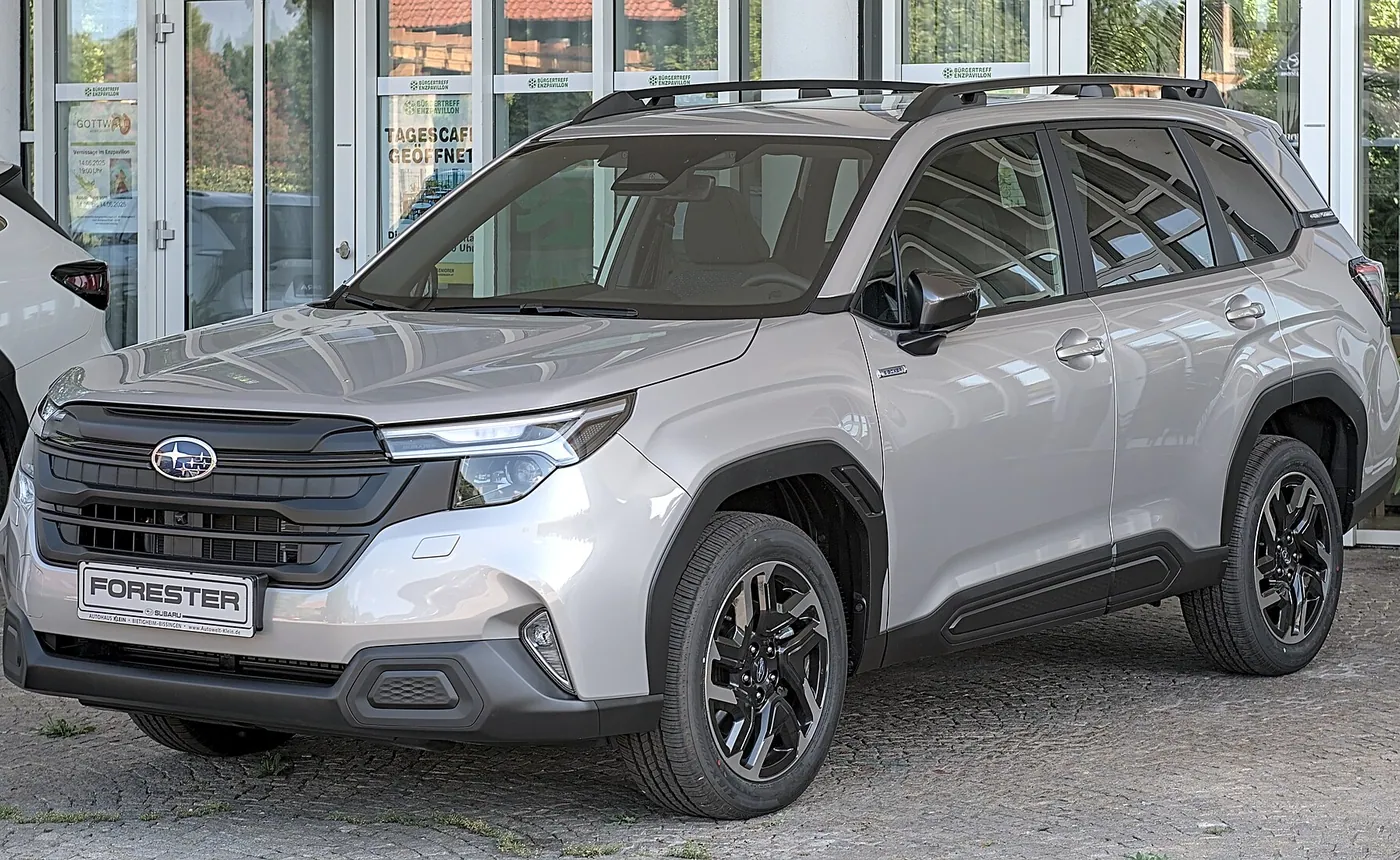
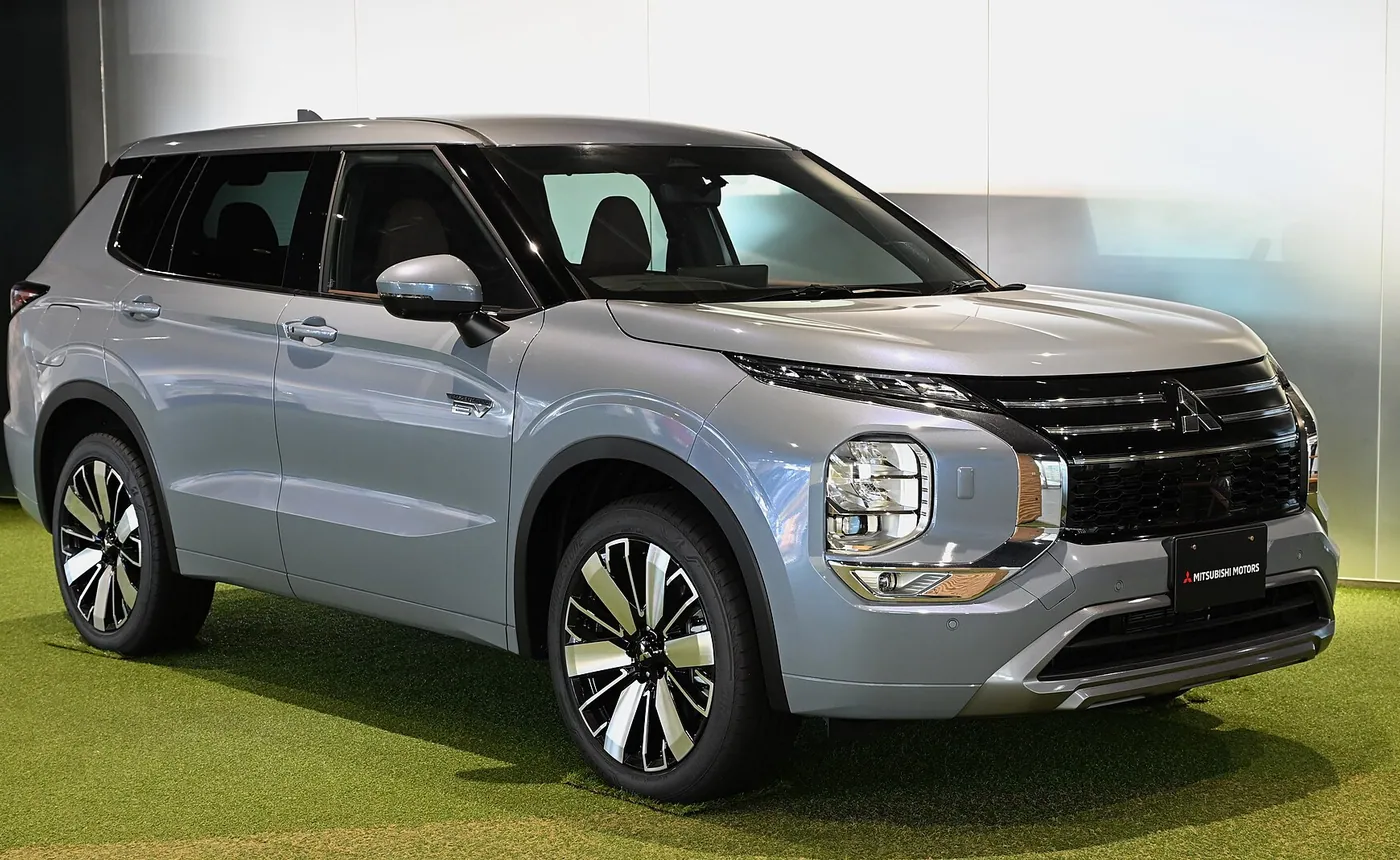
In short: In the three months to 19 September 2026, 5,861 Subaru Foresters sold at Japanese auctions at a median of €3,665, against 995 Mitsubishi Outlander PHEVs at €3,935. The Subaru Forester is the cheaper buy by about €270 at auction, before shipping, VAT, VRT and fees. Our verdict is at the end of this article.
Ireland is a country that tests four-wheel drive gently but constantly. There is rarely deep snow, but there are wet fields at matches, gravel lanes to holiday homes, flooded dips on N-roads and frost on the boreen in January. The Subaru Forester and the Mitsubishi Outlander PHEV both answer that need, and both are common at Japanese auctions, but they do it in completely different ways.
The Forester is a conventional SUV, petrol-powered, built around Subaru's symmetrical all-wheel drive and a flat boxer engine set low in the chassis. The Outlander PHEV is a plug-in hybrid with an electric motor driving each axle and a battery large enough for short trips on electricity alone.
For an Irish buyer the question is not which is more capable. It is how you drive, how far, and whether you can plug in at home.
The specs
| Subaru Forester | Mitsubishi Outlander PHEV | |
|---|---|---|
| Generation most imported | 4th gen (SJ), 2012–2018; 5th gen (SK), 2018 on | 1st gen (GG2W), 2013–2021 |
| Engine(s) | 2.0 petrol or 2.0 turbo (SJ); 2.5 petrol, 2.0 e-Boxer hybrid, 1.8 turbo (SK) | 2.0 petrol plug-in hybrid; 2.4 from 2018 |
| Gearbox | CVT | Fixed reduction gear, no conventional gearbox |
| Drive | Permanent 4WD | 4WD, one electric motor per axle |
| Seats | 5 | 5 |
| Length | 4,595 mm (SJ); 4,625–4,640 mm (SK) | 4,655–4,695 mm |
| Ground clearance | 220 mm | Moderate |
| Sold new in Ireland | Yes | Yes |
| Import duty to Ireland | 0% possible (Japan-built, with proof of origin) | 0% possible (Japan-built, with proof of origin) |
Where they come from
The Forester has been a Subaru staple since 1997, and it has been sold new in Ireland for most of its life. The fourth generation, the SJ, was launched in 2012 and offered in Japan with a 2.0-litre petrol engine and a 2.0-litre turbo making 280 PS. The fifth generation, the SK, arrived in 2018 on Subaru's newer Global Platform, with a 2.5-litre petrol, the 2.0-litre e-Boxer with a small electric motor and, from 2020, a 1.8-litre turbo. A sixth generation followed in 2025, but the SJ and SK are the cars found at auction in numbers.
The Outlander PHEV was launched in 2013 and was one of the first plug-in hybrid SUVs on sale anywhere. For several years it was Europe's best-selling plug-in hybrid, and many Irish buyers know it from new. It uses a petrol engine that mostly acts as a generator, with electric motors on the front and rear axles. In 2018 the engine grew from 2.0 to 2.4 litres, the battery capacity increased and the rear motor gained power. A second generation arrived in Japan at the end of 2021, larger and with an optional third row, built on a platform shared with the Nissan X-Trail.
How they drive
The Forester is a calm, honest car to drive. Its steering is accurate, its suspension soaks up broken roads and its 220 mm ground clearance and X-Mode traction system let it walk across a muddy field or up a loose track with no drama. The 2.5 SK is smooth; the 2.0 turbo SJ is properly quick. The e-Boxer helps a little in town but is not a full hybrid, and its fuel economy is closer to a petrol car's.
The Outlander PHEV is quieter and quicker off the line. In electric mode it glides away silently, and with a charged battery the petrol engine may not start on a short trip at all. On a long motorway run the engine takes over, the noise rises and fuel economy falls closer to an ordinary petrol SUV. The twin-motor system is genuinely effective on wet roads, though the car's lower ground clearance makes it less at home off tarmac than the Forester.
Inside and practicality
The Forester's cabin is spacious, square and practical. Thin pillars and a big glass area give excellent visibility, and the boot is large and easy to load. The SK in particular has a wide tailgate opening and good rear legroom.
The Outlander PHEV's cabin is also roomy for five, though the battery under the floor raises the boot floor and reduces load space a little. Most Japanese-spec cars have a household power socket in the cabin and boot, and many have a rapid-charging port alongside the standard charging socket.
Running costs and reliability
This is where the cars diverge most. The Forester's higher CO2 output places it in more expensive VRT and motor tax bands, and on fuel it is thirsty by modern standards. The Outlander PHEV's low official CO2 places it in much kinder bands, and if charged daily for a short commute it can use very little petrol.
Both are durable. Early SJ engines were the subject of oil consumption complaints, so check oil level history. The Forester's CVT should be serviced. The Outlander PHEV's weak points are battery capacity loss over time, the 12-volt battery and occasional hybrid-system warnings; the drivetrain itself is generally robust.
What to check at auction
On the Forester, read the auction sheet for underbody notes. Cars from Hokkaido and the snowy north can show rust on the subframes and brake lines. Check the CVT for judder and confirm all four tyres match, because Subaru's all-wheel drive is sensitive to mismatched tyres.
On the Outlander PHEV, ask for a battery health reading, check that both charging ports and their flaps work, and look for any warning lights on the inspection report. Grade 4 cars are plentiful for both, so there is no need to compromise.
The verdict
Buy the Forester if you need genuine four-wheel-drive ability for rural roads, tracks and fields, or if you cannot charge at home. It is the more capable car once the tarmac ends, and the SK is the better-made of the two generations.
Buy the Outlander PHEV if you can charge at home and most of your journeys are short. It is quieter, quicker in town and far cheaper to register and tax, and for a commuter in the suburbs it makes more sense than any petrol SUV.
Frequently asked questions
Can the Outlander PHEV run on electricity alone?
Yes, for short journeys with a charged battery. On longer trips the petrol engine starts to generate power.
Is the Forester good off-road?
It has 220 mm of ground clearance and Subaru's X-Mode, which make it capable on fields, gravel and loose tracks.
Which is cheaper to tax in Ireland?
The Outlander PHEV, thanks to its much lower official CO2 output.
Was the Outlander PHEV sold in Ireland?
Yes. The first-generation car was sold new in Ireland and was one of Europe's best-selling plug-in hybrids.
Keep reading
- Honda N-WGN vs Daihatsu Mira Tocot: Two Kei Hatchbacks for People Who Simply Want to Get There
- Suzuki Spacia Custom vs Nissan Roox: Japan's Tall Kei Wagons, Dressed in Chrome
- Toyota Corolla Axio vs Honda Grace: Two Quiet Saloons for People Who Hate Fuss
- Suzuki Swift vs Nissan March: The Featherweight and the Familiar Face
- Mercedes-Benz A-Class vs Audi A3: The Small Premium Hatchback, Two Ways
- Importing a Subaru Forester: prices and costs
- Importing a Mitsubishi Outlander PHEV: prices and costs
Photo credits
- Subaru Forester: Photo: Alexander Migl / Wikimedia Commons, CC BY-SA 4.0
- Mitsubishi Outlander PHEV: Photo: TTTNIS / Wikimedia Commons, CC0