
Toyota Passo vs Daihatsu Boon: One Small Car, Two Badges, and a Lesson in Doing Less Well
Daihatsu builds both. Toyota sells one of them. For an Irish driver who wants a light, simple one-litre runabout, the choice comes down to supply, condition and a few letters on the tailgate.
By the Japan to Ireland editors · · 5 min read
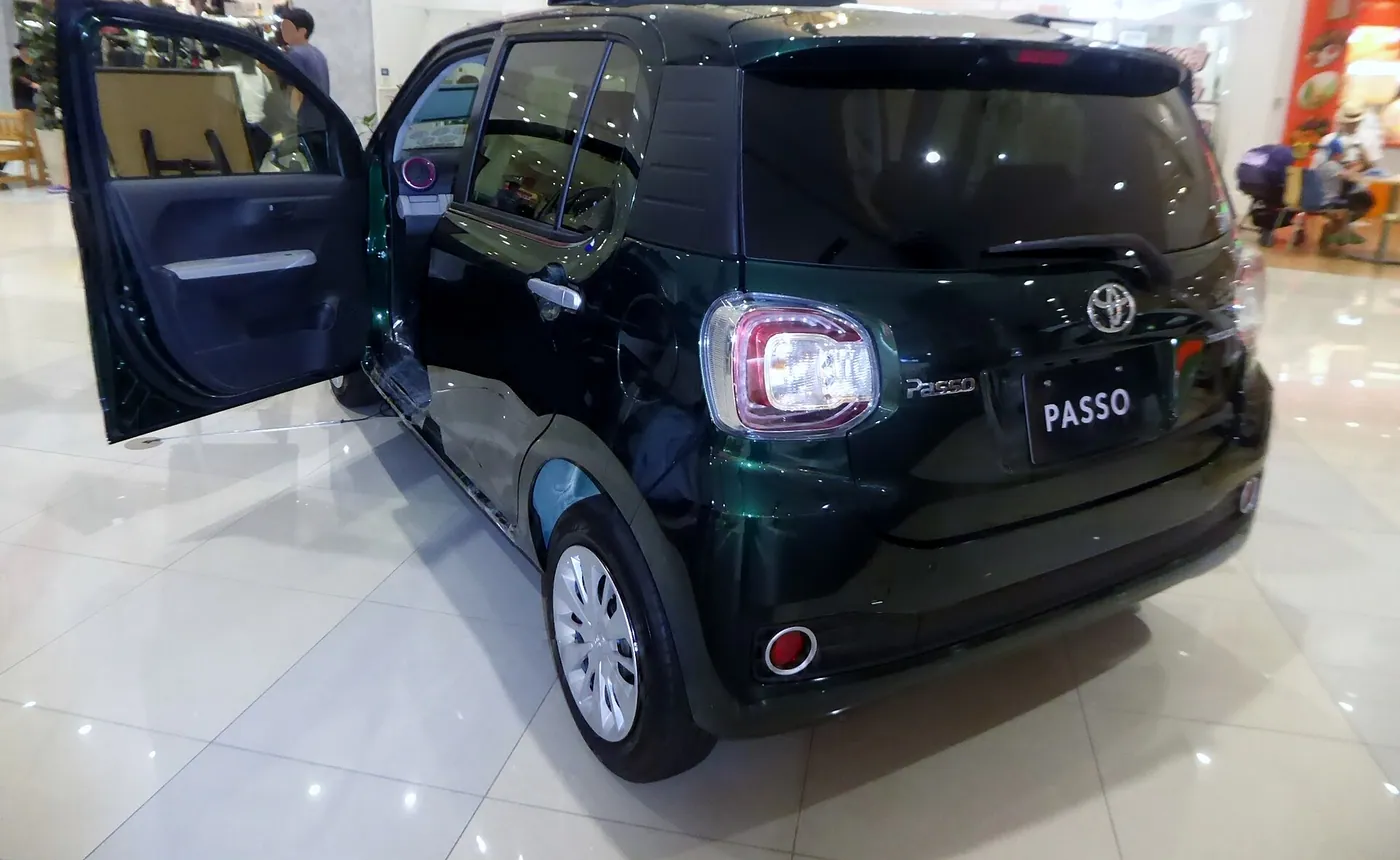
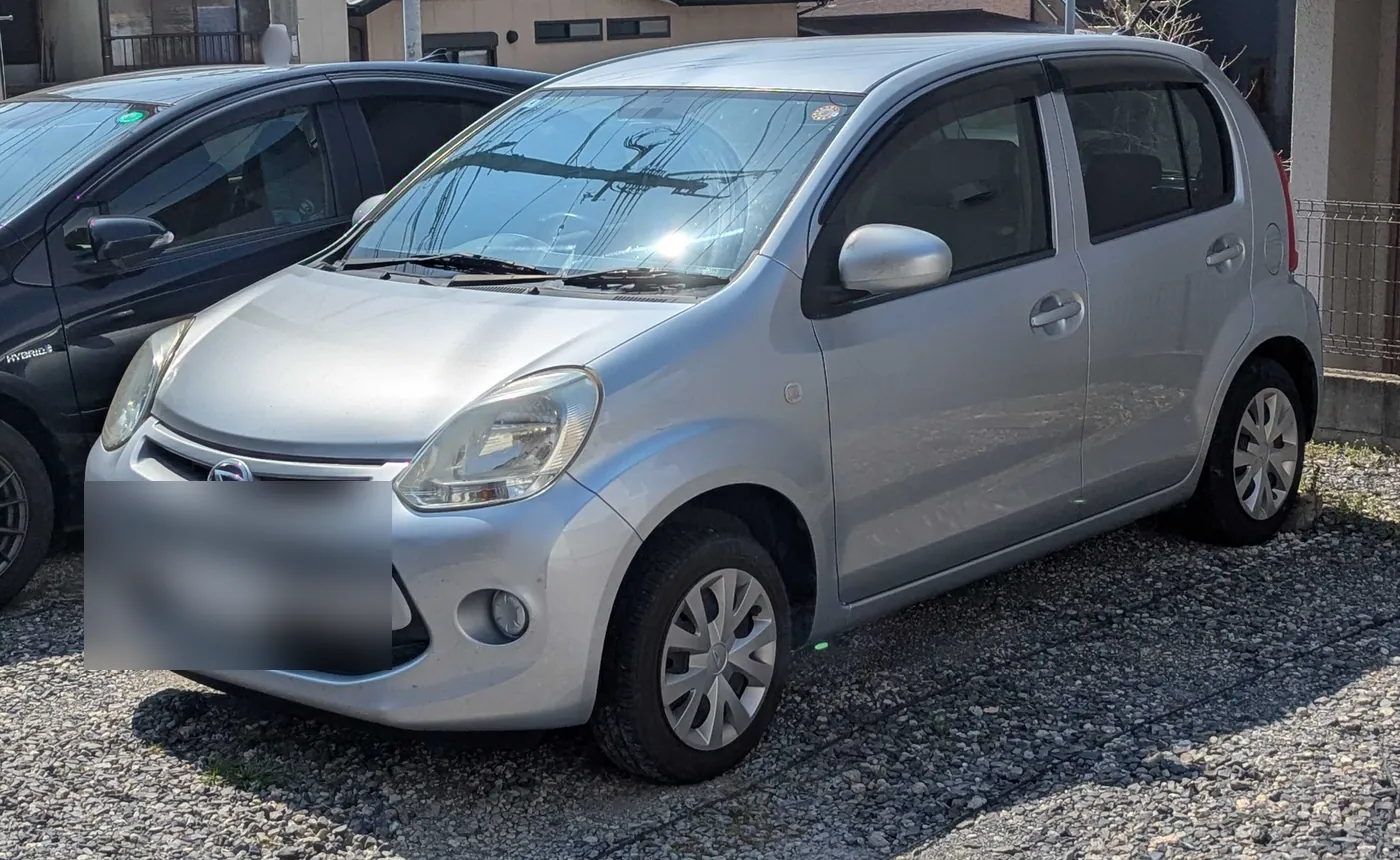
In short: In the three months to 19 September 2026, 7,664 Toyota Passos sold at Japanese auctions at a median of €774, against 503 Daihatsu Boons at €1,589. The Toyota Passo is the cheaper buy by about €814 at auction, before shipping, VAT, VRT and fees. Our verdict is at the end of this article.
Japanese car parks are full of cars that nobody photographs. The Passo and the Boon belong to that quiet majority. They are short, upright five-door hatchbacks with a one-litre engine and a cabin built around shopping bags and school runs, and for most of their lives they are driven a few kilometres at a time through towns where the speed limit rarely passes 60 km/h.
They are the same car. Daihatsu designs and builds both; Toyota sells its version as the Passo through its enormous dealer network, and Daihatsu sells the Boon through its own. The sheet metal, the engine, the gearbox and nearly every switch are shared. What changes is the badge, a few trim details and, in practice, how many of each turn up at auction.
For an Irish buyer that makes this an unusual comparison. You are not choosing between two engineering philosophies. You are choosing between two supply lines for one honest little car, and learning what separates a good example from a tired one.
The specs
| Toyota Passo | Daihatsu Boon | |
|---|---|---|
| Generation most imported | 3rd gen (M700A/M710A), 2016–2023 | 3rd gen (M700S/M710S), 2016–2023 |
| Engine | 1.0 three-cylinder petrol (1KR) | 1.0 three-cylinder petrol (1KR) |
| Power | 69 PS | 69 PS |
| Gearbox | CVT | CVT |
| Drive | Front, or 4WD | Front, or 4WD |
| Seats | 5 | 5 |
| Length | 3,650–3,680 mm | 3,650–3,680 mm |
| Styled variant | Passo Moda | Boon Cilq |
| Import duty to Ireland | 0% possible (Japan-built, with proof of origin) | 0% possible (Japan-built, with proof of origin) |
Where they come from
The partnership began in 2004, when the first Passo and Boon were launched together as Toyota's entry car, smaller and cheaper than the Vitz. A second generation followed in 2010. The third, launched in 2016, is the one worth importing, and it marked a shift: Daihatsu took full charge of development, with Toyota stepping back to the role of reseller.
The 2016 car is lighter than the model it replaced and more carefully packaged. Its wheelbase is long for its length, which is why the back seat is more usable than the car's size suggests. Both brands also offered a softer, more decorated version: the Passo Moda and the Boon Cilq, with a different grille, two-tone colour options and nicer upholstery. A facelift in late 2018 brought the more capable Smart Assist III safety package.
How they drive
In town, this car makes sense immediately. The steering is light, the turning circle is tight and the thin pillars give a clear view of kerbs and cyclists. The three-cylinder engine thrums at idle and pulls cleanly from low speed, and the CVT keeps it in its comfortable range without fuss.
Out on an N-road the picture changes. With one litre and well under a tonne to carry, it is not slow, but overtaking needs planning and a long climb with four people aboard has the engine working hard. It will hold motorway speed on the M50 or the M7, though wind and tyre noise rise steadily above 100 km/h. The ride is soft and the body leans in bends; it is comfortable rather than tidy. Four-wheel-drive versions, built for snowy northern Japan, are rarer, a little heavier and a little thirstier.
Inside and practicality
The cabin is plain but well thought through. The front seats are broad, there are useful cubbies, and rear legroom is genuinely good for a car under 3.7 metres long. The boot is small, enough for a weekly shop or a pair of carry-on cases, and the rear seat folds to make a flat-enough load floor for a flat-pack chair.
Equipment depends on grade. Most cars have keyless entry and a reversing camera; higher grades add automatic climate control and LED headlamps. The Moda and Cilq versions feel noticeably warmer inside, with fabric and colour that make the cabin feel less like a rental car.
Running costs and reliability
This is where the twins earn their place. The 1KR engine is used across Toyota and Daihatsu's small cars and has a long record of durability. Fuel use is low in town and reasonable on the open road, and the car's modest CO2 output keeps it in the gentler motor tax and VRT bands. Tyres are small and cheap, brakes last, and there is little complicated hardware to fail.
The CVT is the part to respect. It needs its fluid changed at sensible intervals, and a car that has done most of its mileage in stop-start traffic should be checked for any shudder from rest.
What to check at auction
Because supply is plentiful, there is no reason to settle. Look for grade 4 or 4.5 cars with clean interior grades, and read the auction sheet for notes about panel repairs and replaced bumpers, which are common on city cars that have lived in tight car parks. Scrapes on corners and kerbed wheels are normal; frame or pillar repairs are not, and should end the conversation.
Underbody rust is rarely serious on two-wheel-drive cars from central and southern Japan. Four-wheel-drive cars from Hokkaido or the northern prefectures can show corrosion on the subframe and brake lines, so ask for underside photographs. Confirm which Smart Assist version is fitted, since post-2018 cars have the better system. Mileage on these cars is usually low and well documented, but check service records where the sheet mentions them.
The verdict
Buy whichever one is in better condition. The Passo appears at auction far more often, which gives you more choice of colour, grade and mileage; the Boon is rarer and can sometimes be the sharper deal for that reason. The Moda or Cilq is worth seeking if you want a cabin with some character.
Either way, this is a car for an Irish driver whose days are mostly local: a second car, a first car, or a town car for someone who wants to spend as little as possible on fuel, tax and worry. If your week includes long motorway runs with passengers, look one size up.
Frequently asked questions
Are the Toyota Passo and Daihatsu Boon the same car?
Yes. Both are designed and built by Daihatsu, and they differ only in badges and minor trim details.
Is the Passo comfortable on Irish motorways?
It can hold motorway speeds, but it is noisy above 100 km/h and works hard on hills. It is happiest in towns and on regional roads.
What are the Passo Moda and Boon Cilq?
They are the styled versions of each car, with a different front end, two-tone paint options and a warmer interior.
Which safety system should I look for?
Cars from the late 2018 facelift onwards have Smart Assist III, the more capable version of Daihatsu's automatic braking system.
Keep reading
- Toyota Harrier vs Mazda CX-5: The Premium-Feeling SUVs Without the Premium Badge
- Toyota Vellfire vs Nissan Elgrand: Japan's Luxury Vans for Big Irish Families
- Toyota Prius Alpha vs Toyota Wish: The Hybrid Estate and the Petrol MPV Japan Grew Up In
- Toyota Roomy vs Suzuki Solio: Two Tall Boxes That Carry More Than Their Size Allows
- Lexus RX vs Volvo XC60: Two Quiet Premium SUVs, One Japanese and One Swedish
Photo credits
- Toyota Passo: Photo: Tokumeigakarinoaoshima / Wikimedia Commons, CC BY-SA 4.0
- Daihatsu Boon: Photo: Kalmarle / Wikimedia Commons, CC BY-SA 4.0