
Toyota Vellfire vs Nissan Elgrand: Japan's Luxury Vans for Big Irish Families
The Vellfire is the Alphard's edgier sibling and the modern king of the class. The Elgrand is the van that once ruled it, lower, sleeker and usually far cheaper at auction.
By the Japan to Ireland editors · · 4 min read
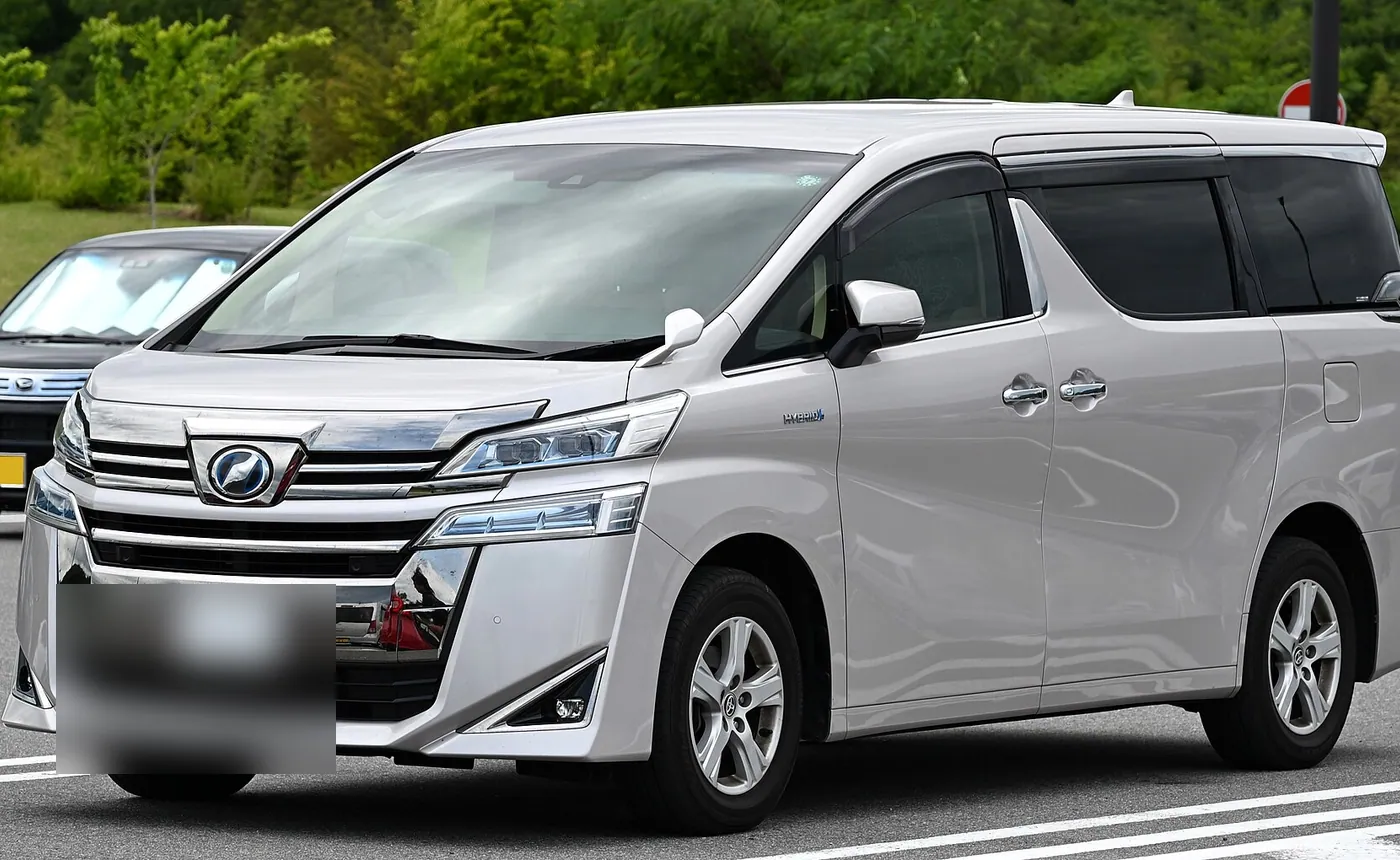

In short: In the three months to 19 September 2026, 7,824 Toyota Vellfires sold at Japanese auctions at a median of €4,497, against 3,357 Nissan Elgrands at €1,262. The Nissan Elgrand is the cheaper buy by about €3,235 at auction, before shipping, VAT, VRT and fees. Our verdict is at the end of this article.
At a Japanese wedding hotel or a Tokyo office tower, the vehicle waiting by the kerb is very often a large, glossy van with powered sliding doors and a chauffeur in white gloves. For many years that van was a Nissan Elgrand. Today it is almost always a Toyota, either an Alphard or its sibling, the Vellfire.
The Elgrand, first launched in 1997, effectively created Japan's luxury van class. Toyota answered with the Alphard in 2002, and in 2008 added the Vellfire, mechanically the same but sold through a different dealer channel with a more aggressive face. The second-generation Vellfire of 2015 to 2023 is the one most often imported. The Elgrand's third generation, the E52, has been in production since 2010.
For big Irish families, people who run airport or wedding transport, and anyone who wants a seven-seater that feels like a first-class lounge, these are compelling alternatives to European people carriers.
The specs
| Toyota Vellfire | Nissan Elgrand | |
|---|---|---|
| Generation most imported | 2nd gen (AH30), 2015–2023 | 3rd gen (E52), 2010 on |
| Engines | 2.5 petrol; 2.5 hybrid; 3.5 V6 | 2.5 petrol; 3.5 V6 |
| Hybrid | Yes, with E-Four all-wheel drive | No |
| Seats | 7 or 8 | 7 or 8 |
| Drive | Front, or 4WD | Front, or 4WD |
| Length | About 4,935 mm | About 4,975 mm |
| Height | 1,880–1,950 mm | About 1,815 mm |
| Rear doors | Twin powered sliding doors | Twin powered sliding doors |
| Import duty to Ireland | 0% possible (Japan-built, with proof of origin) | 0% possible (Japan-built, with proof of origin) |
Two approaches to luxury
The Vellfire is tall and imposing. Its split headlights and huge grille were aimed at younger buyers, and its cabin is cavernous, with a high roof and a flat floor. Top grades offer second-row captain's chairs with powered leg rests, and the Executive Lounge versions are among the most lavish seats fitted to any car.
The Elgrand takes a lower, sleeker approach. Its floor and roof are lower, its driving position more car-like, and it looks more like a big estate than a bus. The interior is well finished, though its design has aged.
How they drive
The Vellfire is soft, quiet and calm. Its size is always apparent, and it rolls in corners, but on a motorway it is serene. The 2.5 hybrid with E-Four is the sensible choice: smooth, adequate rather than fast, and far more economical than the alternatives. The 3.5 V6 is silky and quick, but thirsty.
The Elgrand handles noticeably better. Its lower centre of gravity keeps it flatter through bends, and it feels more planted at speed. The 2.5 petrol is adequate when the van is full; the 3.5 V6 is strong but drinks fuel.
Inside and practicality
Both have twin powered sliding doors, three rows of seats and room for seven adults. The Vellfire's extra height gives it more headroom and a more open feel, and its third row is roomier. Luggage space behind the third row is modest in both, so families on holiday may fold part of the last row.
The Elgrand's lower height is a quiet advantage in multi-storey car parks, some of which have height limits that a Vellfire will struggle with.
The details are where both vans earn their reputation. Rear passengers get their own climate controls, sunblinds and reading lights, and many cars carry a roof-mounted screen for long journeys. Second-row seats slide a long way on rails, so the cabin can be arranged for legroom, for a buggy between the rows, or for easy access to the back. Japanese families use these vans as mobile living rooms, and it shows in how carefully the interiors are thought out.
Running costs and reliability
This is where the hybrid Vellfire stands apart. Its CO2 figure is far lower than any petrol Elgrand, which matters a great deal on Irish registration and motor tax bands, and its fuel bills are lower too. The V6 versions of both carry heavy running costs.
Both are generally reliable. Toyota's hybrid system is well proven. On both vans, the electrical comfort features, from sliding door motors to seat mechanisms, are the most common sources of trouble with age.
What to check at auction
Test every powered feature you can, or ask for it to be checked: sliding doors, tailgate, seat motors, rear climate control and screens. Read the auction sheet for interior grade, as rear seats in a family or hire van can be worn. Look for W marks on the long sliding-door panels, which are easily damaged.
Many of these vans worked in hire or chauffeur fleets and carry high mileages. On 4WD versions from snowy regions, ask about underbody and subframe corrosion.
The verdict
The Vellfire hybrid is the better all-rounder, with lower running costs, a more spacious cabin and the stronger resale value. Buy it if you can. The Elgrand is the great-value, better-handling alternative for buyers who do not mind a petrol engine, want a van that drives more like a car, or need to fit under a low car park barrier.
Frequently asked questions
Is the Vellfire the same as the Alphard?
Mechanically, yes. They differ in styling and some trim.
Does the Nissan Elgrand come as a hybrid?
No. The E52 Elgrand is petrol only, which places it in a higher CO2 band in Ireland.
Which is cheaper?
The Elgrand is usually significantly cheaper at auction.
Which seats adults better in the third row?
The Vellfire, thanks to its extra height and longer cabin.
Keep reading
- Toyota Raize vs Daihatsu Rocky: The Small SUV Twins Where Daihatsu Does the Hard Work
- Nissan Dayz vs Mitsubishi eK Wagon: The Kei Car Twins Born From a Joint Venture
- Toyota Harrier vs Mazda CX-5: The Premium-Feeling SUVs Without the Premium Badge
- Toyota Passo vs Daihatsu Boon: One Small Car, Two Badges, and a Lesson in Doing Less Well
- Honda N-Box vs Daihatsu Tanto: Inside Japan's Battle of the Tall Little Boxes
- Importing a Toyota Vellfire: prices and costs
- Importing a Nissan Elgrand: prices and costs
Photo credits
- Toyota Vellfire: Photo: TTTNIS / Wikimedia Commons, CC0
- Nissan Elgrand: Photo: TTTNIS / Wikimedia Commons, CC0