
Toyota Roomy vs Suzuki Solio: Two Tall Boxes That Carry More Than Their Size Allows
Japan's tall-wagon class sits one step above the kei car: short, upright, with sliding doors at the back. These two lead it, and both make quiet sense on narrow Irish streets.
By the Japan to Ireland editors · · 5 min read
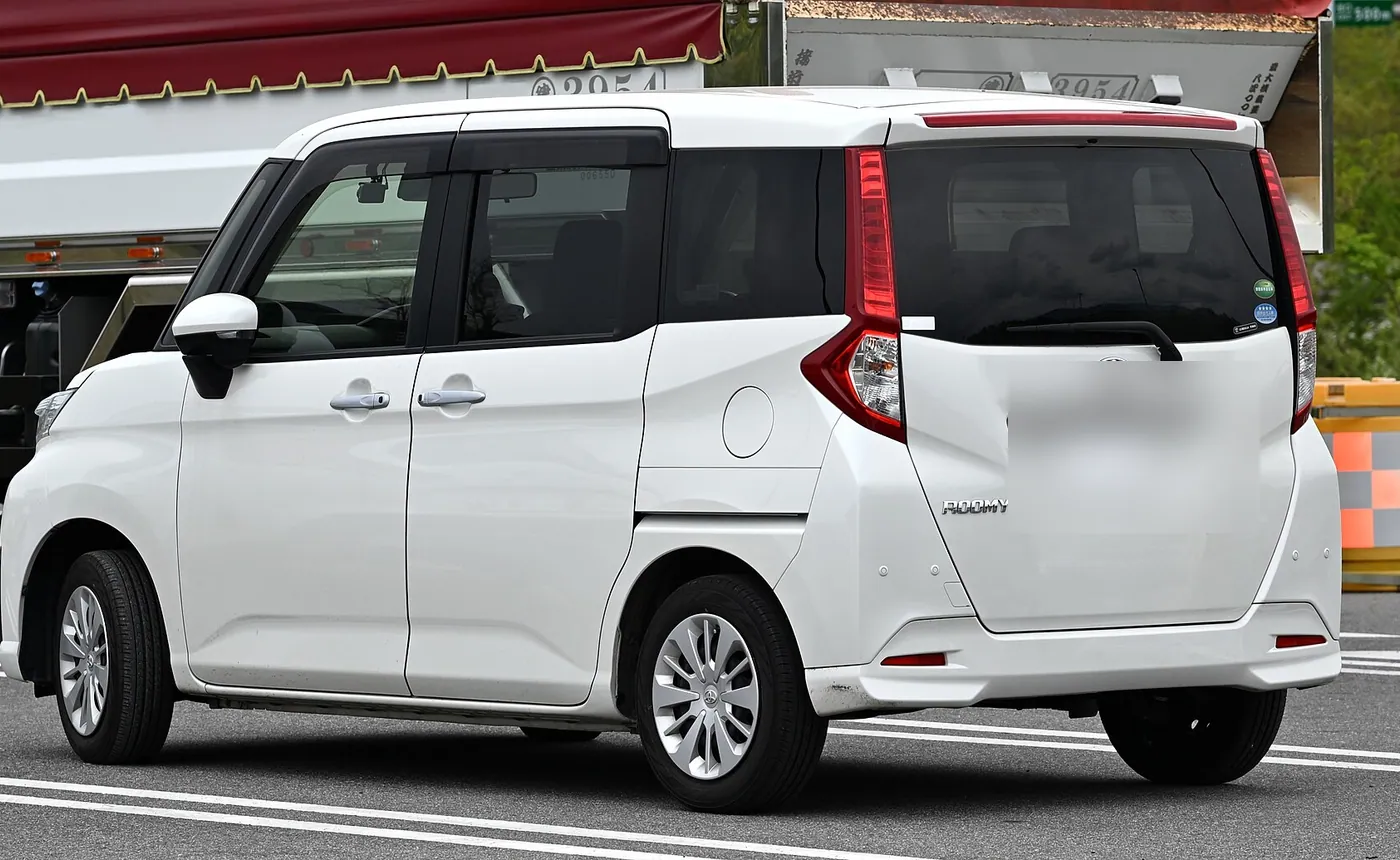
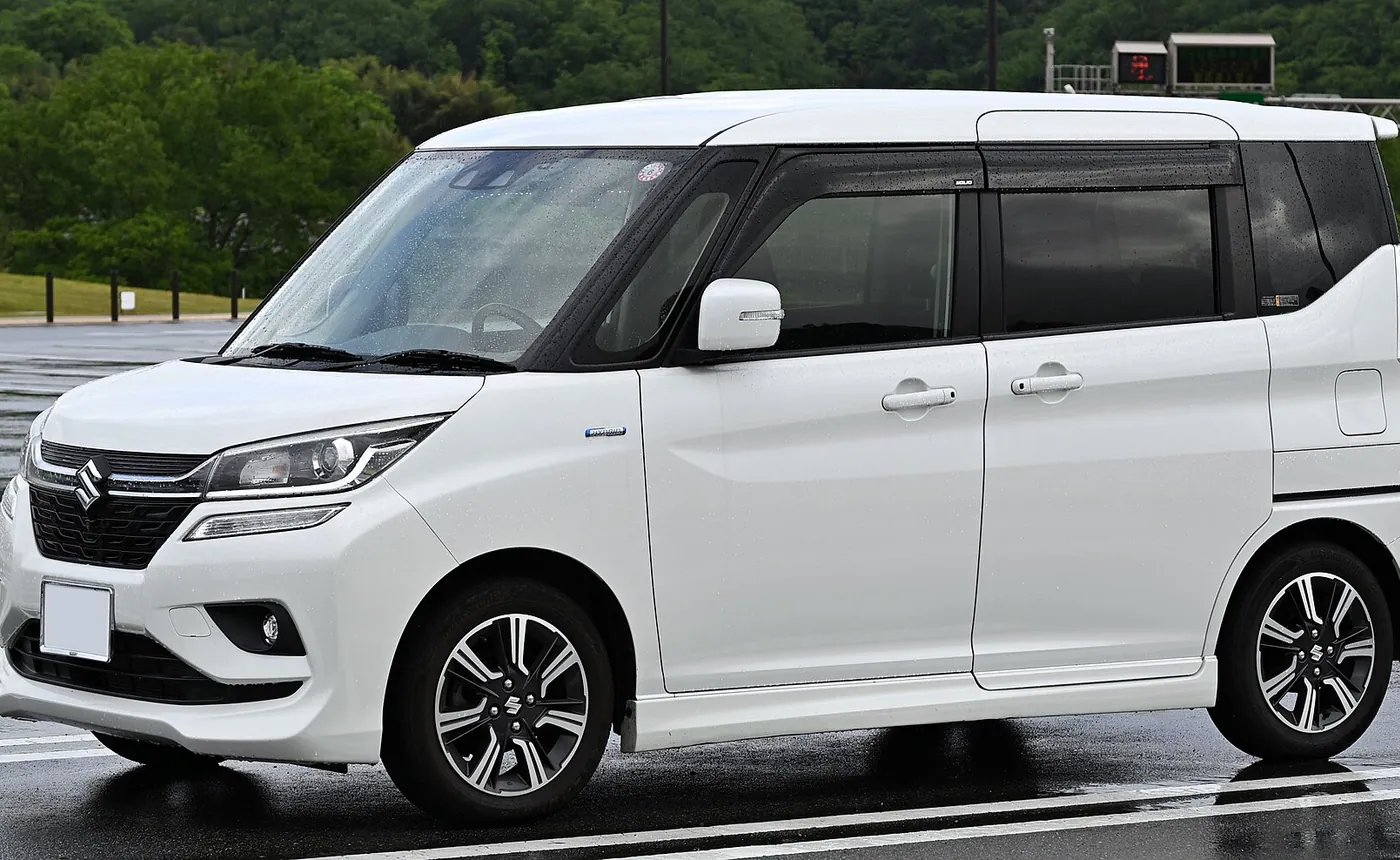
In short: In the three months to 19 September 2026, 7,220 Toyota Roomys sold at Japanese auctions at a median of €4,947, against 4,536 Suzuki Solios at €1,609. The Suzuki Solio is the cheaper buy by about €3,338 at auction, before shipping, VAT, VRT and fees. Our verdict is at the end of this article.
Japanese towns have shaped their own kind of car. Streets are narrow, parking bays are tight, and a large share of drivers are parents with small children or older people who want to step in rather than climb. The answer is the tall wagon: a car barely longer than a kei car, with a roof high enough for a child to stand under and sliding rear doors that open without touching the car alongside.
The Toyota Roomy and the Suzuki Solio are the two leaders of this class. They are registered cars rather than kei cars, with engines over 660 cc and proper five-seat cabins, but they keep the kei car's tiny footprint and its fixation on interior space. In Japan they sell to families who have outgrown a kei car but do not want a full-size people carrier on a street built for bicycles.
On a Dublin terrace, a Galway side street or a Cork multi-storey, the same logic holds. These are cars that park in a gap a family hatchback would pass by, then swallow a buggy, the weekly shop and two adults in the back.
The specs
| Toyota Roomy | Suzuki Solio | |
|---|---|---|
| Generation most imported | 1st gen (M900A/M910A), 2016 on | 3rd gen, 2015–2020; 4th gen, late 2020 on |
| Engine(s) | 1.0 three-cylinder, or 1.0 turbo | 1.2 four-cylinder; mild hybrid or full hybrid |
| Power | 69 PS, or 98 PS turbo | 91 PS (petrol engine) |
| Gearbox | CVT | CVT; AGS automated manual on 3rd-gen full hybrid |
| Drive | Front, or 4WD | Front, or 4WD |
| Seats | 5 | 5 |
| Length | 3,700–3,725 mm | 3,710 mm (3rd gen), 3,790 mm (4th gen) |
| Sliding rear doors | Both sides | Both sides |
| Import duty to Ireland | 0% possible (Japan-built, with proof of origin) | 0% possible (Japan-built, with proof of origin) |
Two different origins
The Roomy arrived in 2016 and, like many small Toyotas, it is designed and built by Daihatsu. It launched with a crowd of twins: the Toyota Tank, the Daihatsu Thor and the Subaru Justy. In 2020 the Tank was dropped and the Roomy absorbed its role, gaining a facelift and Daihatsu's newer Smart Assist safety system. Power comes from a 1.0-litre three-cylinder engine, offered with or without a turbocharger.
The Solio is Suzuki's own design and has a longer lineage, growing out of the Wagon R family around the turn of the century. The third generation, from 2015, offered a 1.2-litre four-cylinder petrol engine, a mild hybrid and, from late 2016, a full hybrid that paired an electric motor with Suzuki's AGS automated manual gearbox. The fourth generation, launched in late 2020, grew by about 80 mm, almost all of it given to the boot. The more aggressive-looking version of each generation is the Solio Bandit.
How they drive
The Solio is the better car to drive. Its four-cylinder engine is smoother than the Roomy's three-cylinder, and Suzuki's habit of building light makes it feel livelier than its modest output suggests. It steers neatly, rolls less in bends and feels more settled at 100 km/h. The mild hybrid is the easiest version to live with: the small motor fills in at low revs and the CVT is smooth. The full hybrid is more economical in town, but its AGS gearbox pauses between gears, a nod of the head that some drivers never warm to.
The Roomy is softer and more top-heavy. The non-turbo engine is adequate around town but sounds strained on an N-road climb with passengers aboard. The turbo transforms it, pulling cleanly up hills and holding motorway speed with far less noise and effort. Both cars are tall and narrow, so a gusty crosswind on an exposed stretch of the M6 is felt through the wheel.
Inside and practicality
Space is the reason to buy either. The Roomy's cabin is startling for a car 3.7 metres long. The rear seats slide and recline, the floor is nearly flat, and tall adults sit in the back with headroom to spare. Power sliding doors are fitted to most mid and upper grades, and the low step makes life easier for small children and older passengers alike.
The Solio is slightly less cavernous but cleverly arranged, with a rear seat that slides to trade legroom for boot space and plenty of trays and pockets. The fourth-generation car's longer tail makes it the better choice if the boot matters as much as the back seat. Both give a high, upright driving position and wide glass that make parking simple.
Running costs and reliability
The Solio's hybrids use the least fuel here, especially in stop-start traffic, and their modest CO2 output keeps them in kinder motor tax and VRT bands. The non-turbo Roomy is frugal in town; the turbo uses more, particularly on faster roads.
Both are built from well-proven parts. The Roomy's 1.0-litre engine runs through much of the Daihatsu and Toyota small-car range, and the Solio's 1.2 powers half of Suzuki's line-up. The weak points are the conveniences: power sliding door motors and catches can be costly to fix, and CVTs reward regular fluid changes.
What to check at auction
On the Roomy, open and close both sliding doors on the inspection report or in photos, and look for scuffing on the lower door rails. Check turbo cars for oil weeping around the turbo and any note of smoke. Four-wheel-drive cars sold in snowy northern Japan deserve underbody photos before you bid.
On the Solio, confirm the powertrain from the model code and the auction sheet, because petrol, mild hybrid and full hybrid cars look almost identical. On full hybrids, ask whether the AGS shifts cleanly. Small panel repairs from car park knocks are common on both and rarely matter; grade 4 cars with interior grade B are easy to find.
The verdict
Buy the Solio if refinement, economy and the way the car drives matter most. The mild hybrid is the sensible choice for most Irish drivers; the full hybrid suits mostly urban use and a driver who does not mind its gearbox.
Buy the Roomy if the cabin is the point: young children, car seats, a buggy and grandparents in the back. Choose the turbo if your week takes you beyond the town limits, and keep the non-turbo car for the school run and the supermarket.
Frequently asked questions
Do the Roomy and Solio have sliding doors?
Yes, on both sides. Many cars have power sliding doors, especially in mid and upper grades.
Is the Toyota Roomy the same as the Tank?
Yes. Both were built by Daihatsu and differed mainly in front-end styling. The Tank was dropped in 2020.
Are they kei cars?
No. Both use engines over 660 cc and are registered as normal small cars, although they are close to kei size.
Which is better on Irish motorways?
The Solio or the Roomy turbo. The non-turbo Roomy is best kept for town driving.
Keep reading
- Toyota Prius Alpha vs Toyota Wish: The Hybrid Estate and the Petrol MPV Japan Grew Up In
- Toyota Passo vs Daihatsu Boon: One Small Car, Two Badges, and a Lesson in Doing Less Well
- Toyota Probox vs Nissan AD Van: The Plain White Estates That Do Japan's Real Work
- Mitsubishi Delica D:5 vs Mazda Biante: The People Carrier That Climbs and the One That Glides
- Toyota Isis vs Honda Stream: Two Seven-Seaters for Families Who Hate Big Cars
- Importing a Toyota Roomy: prices and costs
- Importing a Suzuki Solio: prices and costs
Photo credits
- Toyota Roomy: Photo: TTTNIS / Wikimedia Commons, CC0
- Suzuki Solio: Photo: TTTNIS / Wikimedia Commons, CC0