
Toyota SAI vs Lexus HS 250h: Twin Hybrid Saloons That Japan Kept to Itself
They share a platform and a hybrid drivetrain. One wears a Toyota badge and the other a Lexus one, and the difference is in the details.
By the Japan to Ireland editors · · 4 min read
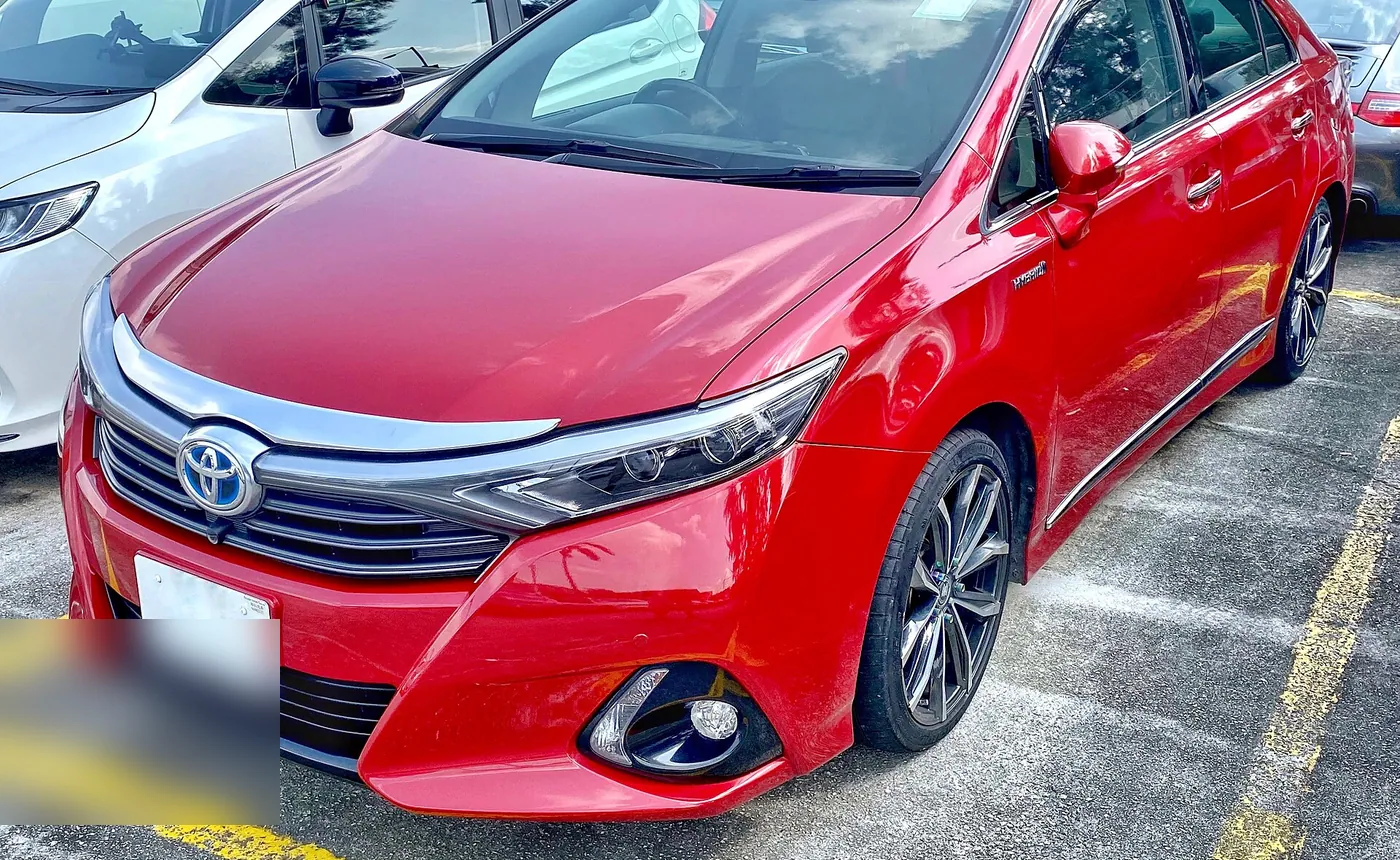
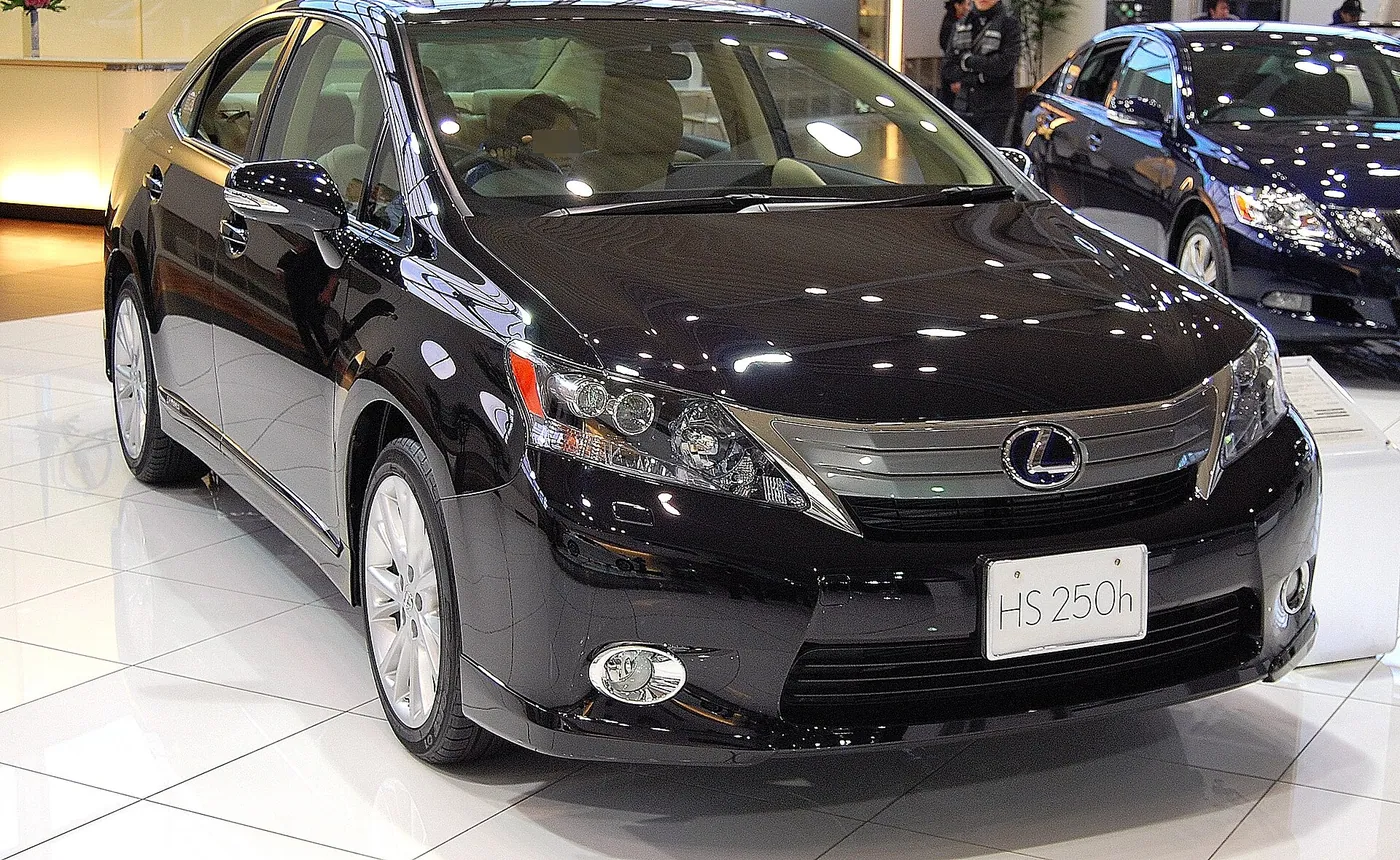
In short: In the three months to 19 September 2026, 1,416 Toyota SAIs sold at Japanese auctions at a median of €1,632, against 648 Lexus HSs at €2,409. The Toyota SAI is the cheaper buy by about €777 at auction, before shipping, VAT, VRT and fees. Our verdict is at the end of this article.
The Toyota SAI and Lexus HS 250h are two of the less familiar hybrids from Japan. Neither was sold new in Ireland or the rest of Europe, and few Irish drivers have seen one. In Japan, though, both were popular with buyers who wanted a quiet, comfortable saloon that used less fuel than a Crown or a Lexus GS.
They were built on the same platform, with the same 2.4-litre hybrid system. The HS arrived first, in 2009, as Lexus's first hybrid-only model. The SAI followed a few months later as a Toyota-badged version with different styling and a slightly lower price.
For an Irish buyer looking for a comfortable, economical saloon with a little more space and refinement than a Prius, both are worth a look. The choice is mostly about badge, interior and the condition of the individual car.
The specs
| Toyota SAI | Lexus HS | |
|---|---|---|
| Generation most imported | AZK10, 2009–2017 | ANF10, 2009–2018 |
| Engine | 2.4 petrol hybrid | 2.4 petrol hybrid |
| Gearbox | e-CVT | e-CVT |
| Drive | Front | Front |
| Seats | 5 | 5 |
| Body | 4-door saloon | 4-door saloon |
| Sold in Europe | No | No |
| Import duty to Ireland | 0% possible (Japan-built, with proof of origin) | 0% possible (Japan-built, with proof of origin) |
History and positioning
The HS 250h was aimed at buyers who wanted a smaller Lexus with hybrid economy. It was sold in North America as well as Japan, but sales outside Japan were modest, and it was dropped in most export markets after a few years. In Japan it carried on until 2018.
The SAI was positioned as a more mature alternative to the Prius, aimed at older buyers who wanted a traditional saloon shape. A heavy facelift in 2013 gave it a new front end, a better interior and improved refinement, and later cars are noticeably nicer than early ones.
How they drive
Both cars drive in much the same way, which is no surprise given what they share. The 2.4-litre engine and electric motor work together smoothly, and around town both are quiet, with plenty of electric-only running at low speeds. On the motorway they are calm and refined, with a soft, comfortable ride that suits Irish roads well.
Neither is sporty. The steering is light, the body leans in corners and the CVT-style transmission makes the engine drone under hard acceleration. The HS has slightly more sound insulation and feels a little more expensive, but the difference is small. The facelift SAI closes much of the gap.
Inside and practicality
The HS's interior is better finished, with softer materials, more leather and a Remote Touch controller for the screen. It feels like a proper Lexus inside. The SAI's interior is plainer, though the facelift version is much improved and some higher grades are well equipped.
Both have generous rear seat space and a reasonable boot, though the hybrid battery takes some room behind the rear seat. For a family, both are more practical than they first appear, and the boot is large enough for a weekly shop or luggage for a holiday.
Running costs and reliability
Both cars use the same hybrid system and return good fuel economy for their size. They sit in low to moderate CO2 bands, which helps with VRT and motor tax compared with conventional petrol saloons of the same size.
The hybrid system is durable, and both cars share parts with other Toyota hybrids. The 2.4-litre engine belongs to a family that has a history of oil consumption in some versions, so it is worth checking oil level and any notes on the auction sheet. Hybrid batteries on older cars can need replacement, and a battery health check is advisable on cars approaching ten years or more.
What to check at a Japanese auction
Both cars often come to auction with low mileage and good grades, but many are now well over ten years old. Look for grade 4 cars with documented mileage, and read the inspector's notes for interior wear, especially on the driver's seat.
Check for any hybrid system warning lights, and ask about the battery if possible. On the SAI, the facelift model from 2013 is worth paying more for, both for its improved cabin and because it is simply a younger car. On the HS, check that the Remote Touch controller and screen work properly. Rust is rarely a problem, but older cars from northern Japan should have their underbody notes read carefully.
The verdict
Buy the Lexus HS 250h if you want the more refined, better-finished cabin and the reassurance of the Lexus badge. It is the more pleasant car to spend time in, and a well-kept example is a quiet, comfortable daily driver.
Buy the Toyota SAI, ideally a facelift car from 2013 on, if you want the same hybrid comfort and economy for less. It is the more sensible choice, and in good condition it gives up little to the Lexus.
Frequently asked questions
Are the SAI and HS the same car?
They share a platform and a 2.4-litre hybrid system. Styling, interior and equipment differ.
Were they sold in Ireland?
No. Both were sold new mainly in Japan; the HS was also sold in North America.
Is the 2.4 hybrid reliable?
Generally yes. Check for oil consumption and hybrid battery health on older cars.
Which is better value?
The SAI usually costs less. The facelift version from 2013 on is the one to look for.
Keep reading
- BMW 2 Series Active Tourer vs Mercedes-Benz B-Class: The German Family Car That Nobody Expected
- Lexus GS vs Nissan Fuga: Japan's Executive Saloons, Quietly Waiting at Auction
- Nissan Lafesta vs Mazda Premacy: The Seven-Seater That Was Sometimes the Same Car
- Toyota Isis vs Honda Stream: Two Seven-Seaters for Families Who Hate Big Cars
- Daihatsu Mira e:S vs Suzuki Alto: The Cheapest Cars in Japan, and Why They Are Clever
Photo credits
- Toyota SAI: Photo: User3204 / Wikimedia Commons, CC BY-SA 4.0
- Lexus HS: Photo: Toshinori baba / Wikimedia Commons, CC BY-SA 3.0