
Toyota Spade vs Toyota Porte: The Same Clever Car Wearing Two Different Faces
Toyota sold this tall city car under two names. Both have one huge sliding door on the left side, which happens to be the kerb side in Ireland too.
By the Japan to Ireland editors · · 4 min read
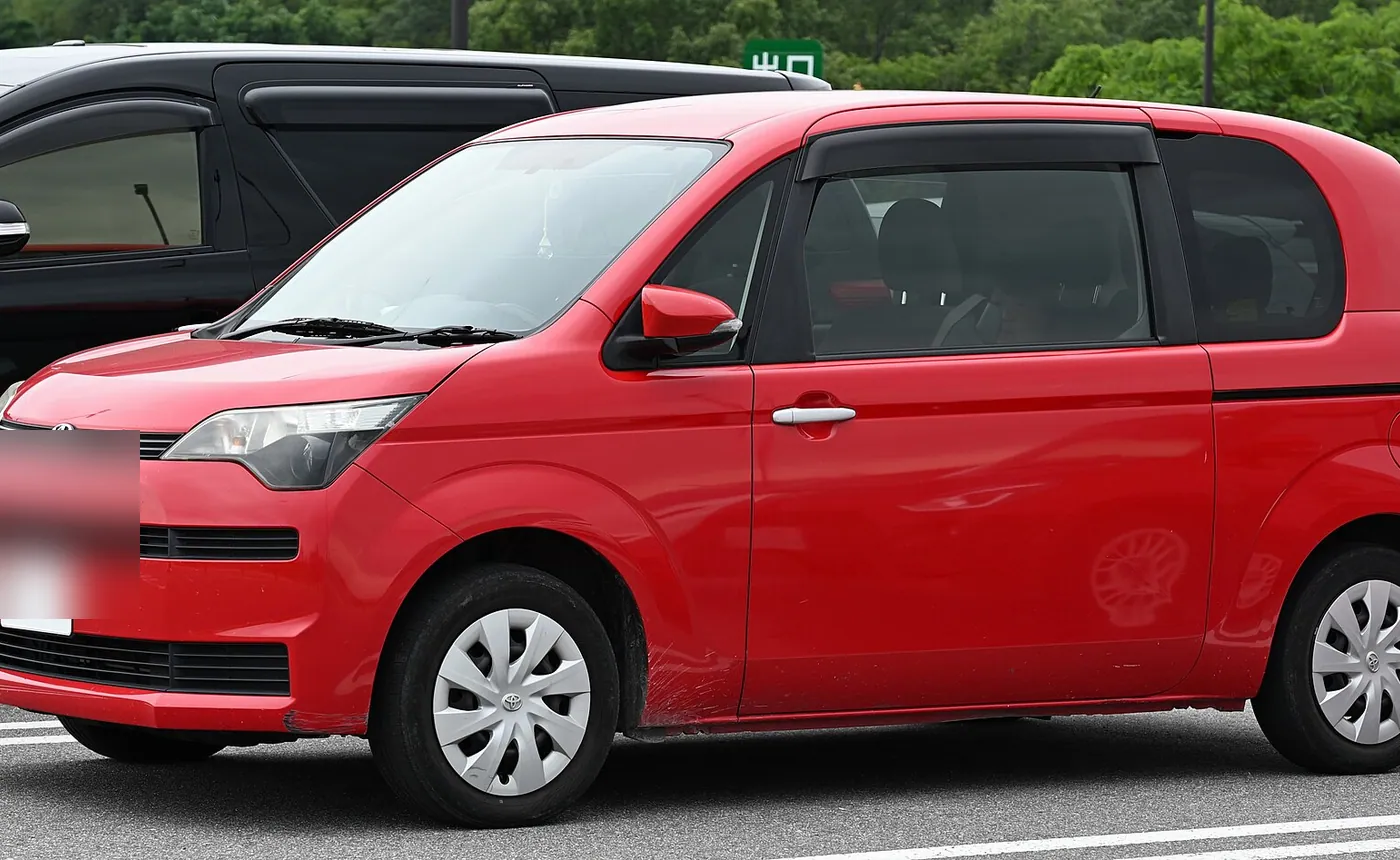
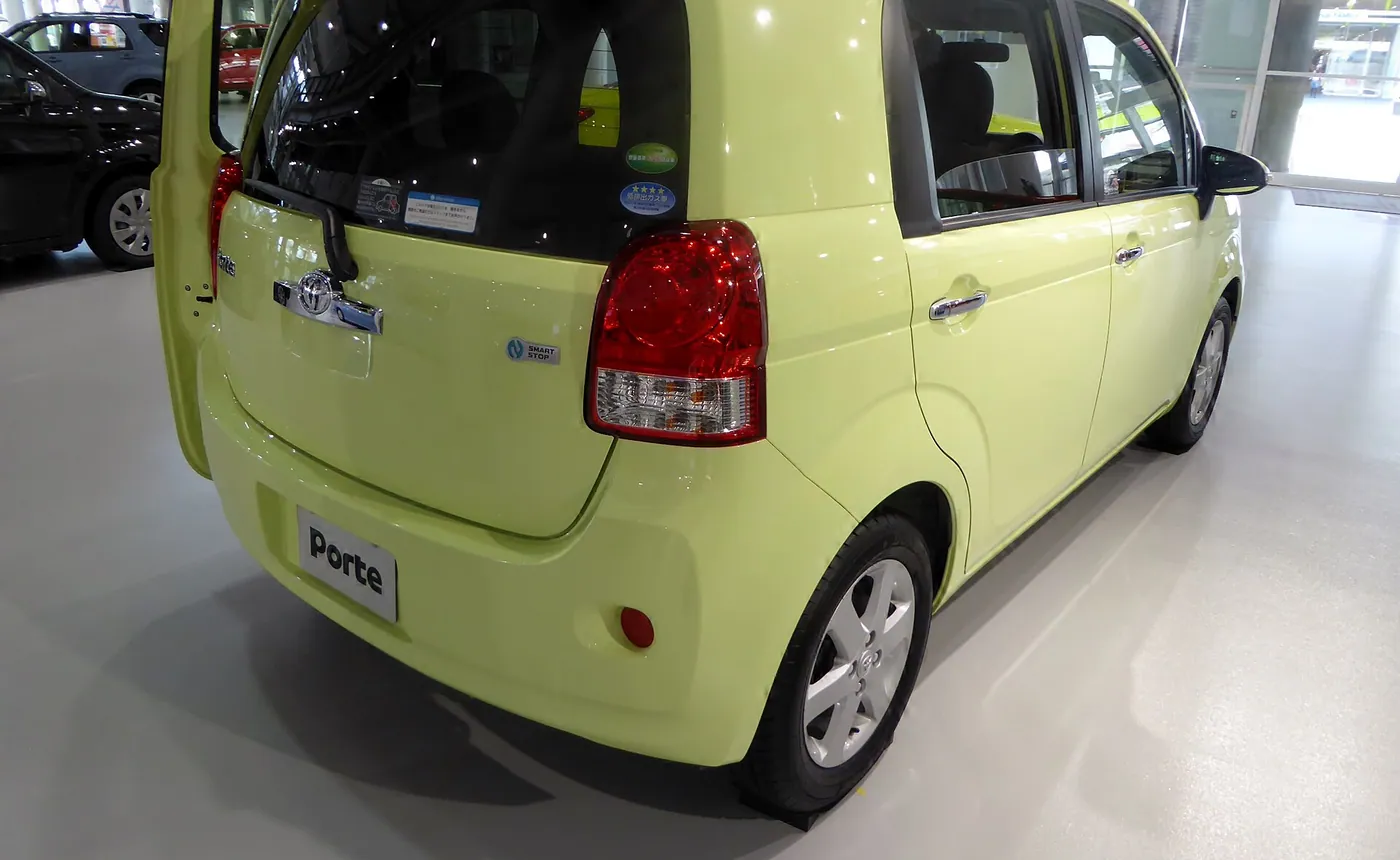
In short: In the three months to 19 September 2026, 2,710 Toyota Spades sold at Japanese auctions at a median of €1,055, against 3,158 Toyota Portes at €1,038. The Toyota Porte is the cheaper buy by about €17 at auction, before shipping, VAT, VRT and fees. Our verdict is at the end of this article.
Toyota has long sold the same car under different names in Japan, each badge assigned to a different dealer network. The Spade and the second-generation Porte are a textbook case. They arrived together in 2012 and share their platform, engines, gearboxes and, most importantly, the odd and brilliant door arrangement that defines them. What separates them is the face, the trim and very little else.
That door is the reason to consider either car. On the left side there is a single, very large power sliding door that opens the front and rear of the cabin in one go, with no pillar in between. On the right there are two conventional hinged doors. Japan drives on the left, as Ireland does, so the big opening faces the footpath. For a parent strapping a toddler into a car seat on a busy Dublin street, or an older passenger who needs room to turn and sit, it is one of the most useful features any small car offers.
Because the two are mechanically identical, this comparison comes down to taste, trim and availability.
The specs
| Toyota Spade | Toyota Porte | |
|---|---|---|
| Generation most imported | 1st gen (NCP141/NSP140), 2012–2020 | 2nd gen (NCP141/NSP140), 2012–2020 |
| Engines | 1.3 and 1.5 petrol | 1.3 and 1.5 petrol |
| Gearbox | CVT | CVT |
| Drive | Front, or 4WD on 1.5 | Front, or 4WD on 1.5 |
| Seats | 5 | 5 |
| Doors | One large power sliding door on the left, two hinged doors on the right | One large power sliding door on the left, two hinged doors on the right |
| Styling | Sharper, more angular | Softer, rounder |
| Import duty to Ireland | 0% possible (Japan-built, with proof of origin) | 0% possible (Japan-built, with proof of origin) |
Design
The Spade is the sharper of the pair. Its nose is more upright and angular, with a squarer grille and headlamps, and the overall look is more modern and a little more assertive. Darker interior trims were common.
The Porte has a softer, rounder face and a friendlier expression. Its interiors more often came in lighter colours, which make a small cabin feel more open. Neither is a beauty, but both are honest about what they are: tall, short boxes designed around the people inside.
How they drive
Mechanically there is nothing between them. Both use Toyota's 1.3 or 1.5-litre petrol engines with a CVT, and four-wheel drive was offered with the 1.5. Performance is modest. Around town the cars feel nippy enough, and on the motorway they will hold 120 km/h, though the engine is busy and audible and the tall body is pushed about by crosswinds on exposed stretches.
The ride is soft and the steering light. The turning circle is tight, the driving position is high and the glass area is enormous, so placing the car in a narrow car park or a supermarket space is easy. It is not a car to enjoy on a mountain road. It is a car to get in and out of with no fuss.
Inside
The cabin is the main attraction. The front passenger seat can fold up out of the way, and with the sliding door open the whole left side of the car becomes accessible. The floor is low and flat, the roof is high, and adults sit comfortably in the back with plenty of headroom.
The boot is modest with all seats in use, but the rear seats fold to create a long, tall load space. A bicycle with the front wheel removed, a folded pushchair or a set of flat-pack shelves will go in without much argument.
Running costs and reliability
Both are cheap to run. CO2 figures are low, which keeps motor tax down, and fuel consumption is modest in mixed driving. The 1.3 and 1.5 engines are shared with many other Toyotas, from the Vitz to the Corolla, and have a long record of durability. Parts are easy to find.
The CVT is generally reliable when its fluid has been changed. The real weak point is the sliding door. Its motor, cables and latch take a lot of use, especially in a family car, and repairs can cost more than owners expect.
What to check at auction
Start with the door. If the inspection allows, open and close it several times and listen for grinding, slipping or hesitation. Check the auction sheet for notes about the door, the door seals or damage to the sill beneath it, which is easily scuffed by careless loading.
Then look at the interior. Many of these cars carried children for years, so check for stains, scuffed trim and worn seat fabric. Four-wheel-drive versions come mostly from snowy prefectures and should be inspected underneath for rust. Grade 4 cars with documented mileage are common, so there is little reason to accept less.
The verdict
Buy the Toyota Spade if you prefer its sharper styling and darker, more modern cabin. Buy the Toyota Porte if you like the softer face and lighter interiors. The decision is mostly about taste.
Either way, the better buy is the better car, not the better badge. Choose the one with the cleanest sheet, a healthy sliding door and the lowest documented mileage. For a family in town, or anyone who helps an elderly parent in and out of a car, both are among the most practical small cars Japan has produced.
Frequently asked questions
Are the Spade and Porte the same car?
Mechanically, yes. They share the same platform, engines and door layout, with different styling and trim.
Which side is the sliding door on?
The left side, which is the kerb side in Ireland as well as in Japan.
Is the sliding door reliable?
Generally, but the motor and mechanism wear with heavy use. Check it carefully before buying.
Keep reading
- Subaru Impreza Sport vs Mazda Axela Sport: The Grip Specialist and the Driver's Hatchback
- Toyota Corolla Cross vs Honda ZR-V: Two Nearly New Hybrid Crossovers, Two Temperaments
- Volkswagen Golf vs BMW 1 Series: Europe's Benchmark Hatchbacks, by Way of Japan
- Volkswagen Polo vs Audi A1: Same Bones, Different Suit, and a Choice About What You Pay For
- Toyota Corolla Fielder vs Honda Shuttle: The Compact Estates Ireland Forgot It Wanted
Photo credits
- Toyota Spade: Photo: TTTNIS / Wikimedia Commons, CC0
- Toyota Porte: Photo: Tokumeigakarinoaoshima / Wikimedia Commons, CC0