
Honda N-Box vs Daihatsu Tanto: Inside Japan's Battle of the Tall Little Boxes
They are Japan's two most popular tall kei cars, built to tight legal limits on length, width and engine size. In Ireland they make unusual, clever city cars, with some honest caveats.
By the Japan to Ireland editors · · 4 min read
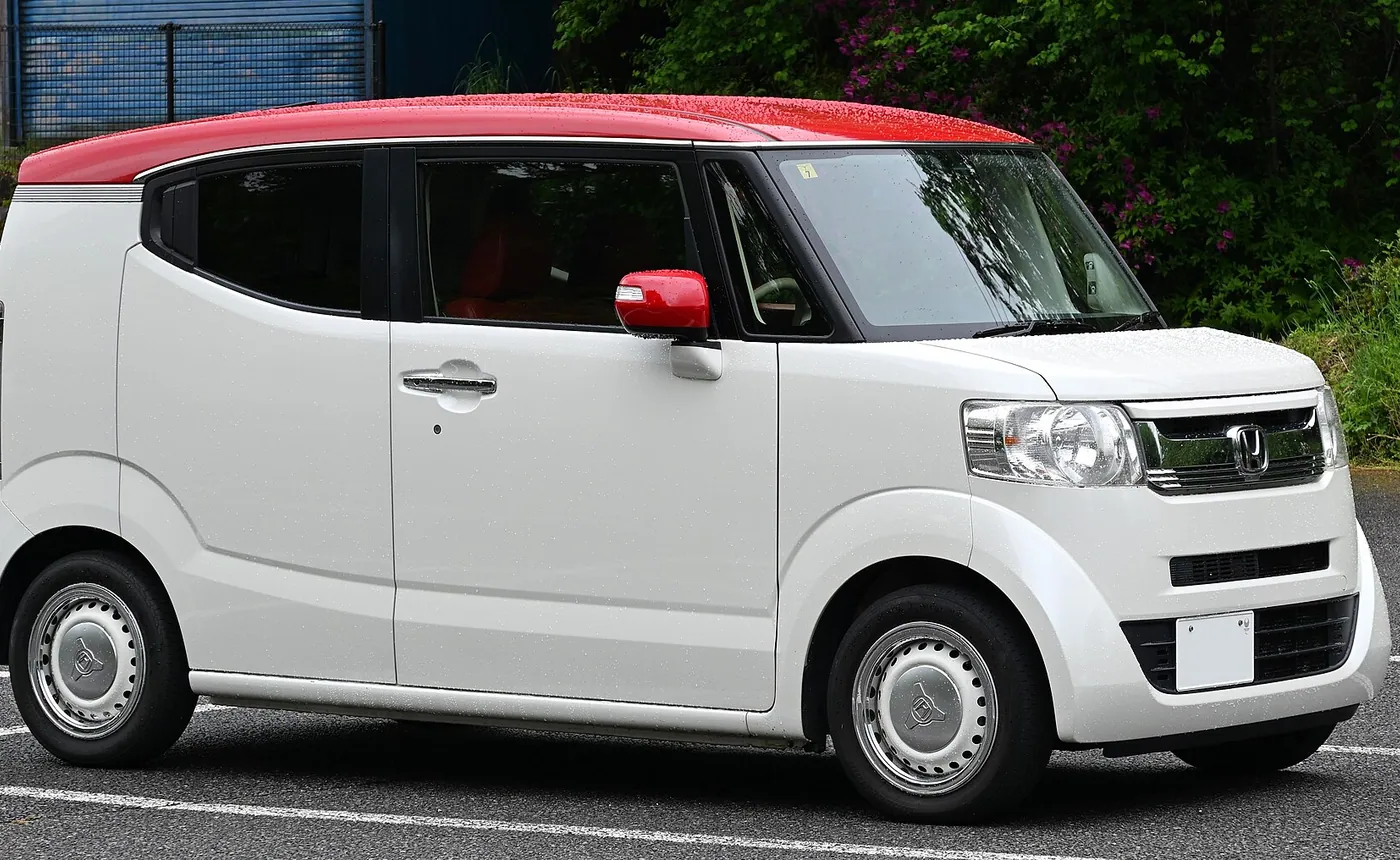
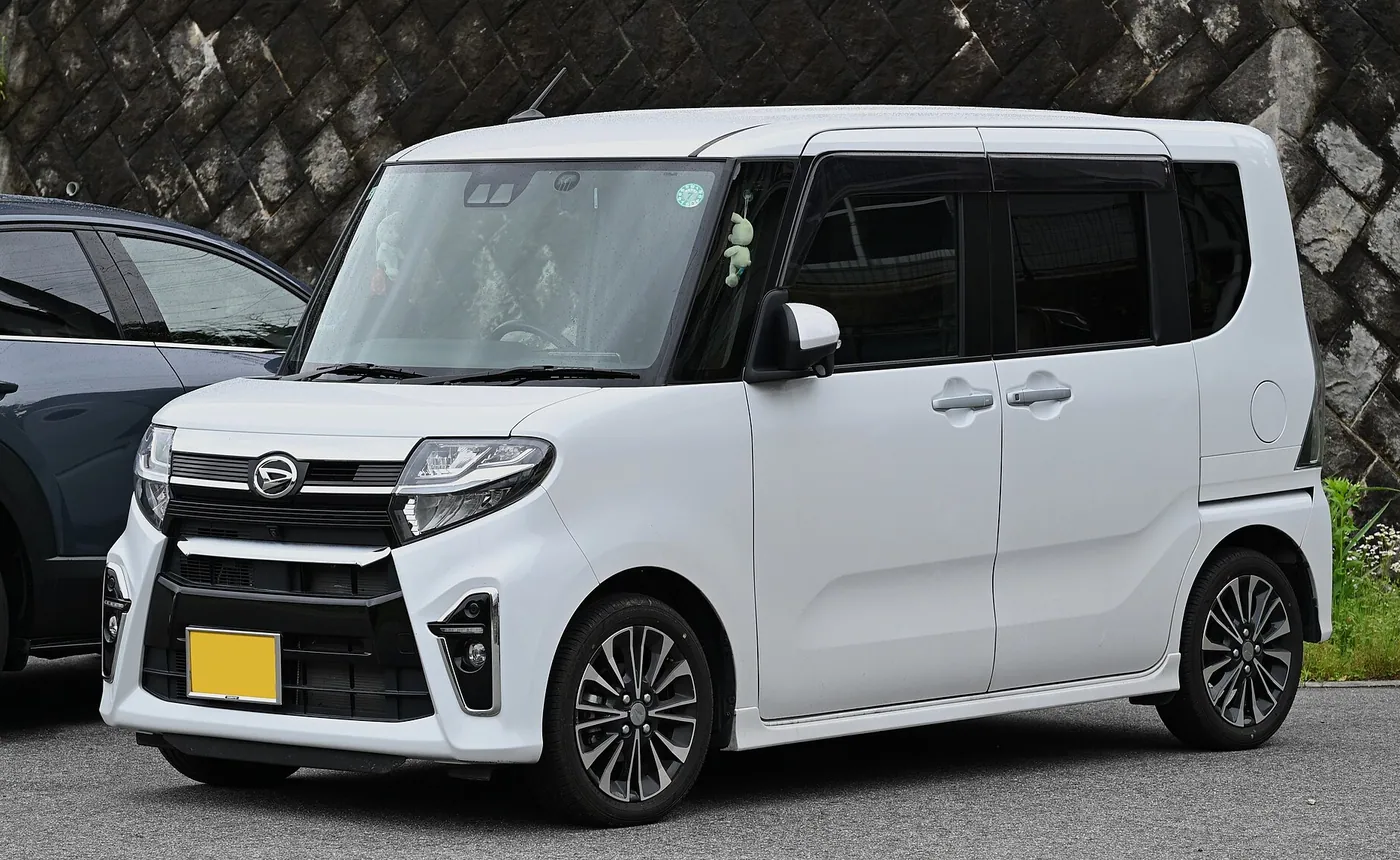
In short: In the three months to 19 September 2026, 23,541 Honda N-Boxs sold at Japanese auctions at a median of €2,575, against 18,098 Daihatsu Tantos at €1,107. The Daihatsu Tanto is the cheaper buy by about €1,468 at auction, before shipping, VAT, VRT and fees. Our verdict is at the end of this article.
Japanese law draws a box, and the kei car fills it. No more than 3.4 metres long, 1.48 metres wide and two metres high, with an engine of 660 cc or less. In exchange, owners in Japan pay lower taxes and, in many areas, are excused the parking certificate that bigger cars need.
The Honda N-Box and Daihatsu Tanto are what happens when engineers push every wall of that box outward. They are tall, flat-sided and almost absurdly roomy inside, with sliding rear doors and back seats that would shame a family saloon. The N-Box has been Japan's best-selling new car, of any size, for most of the past decade. The Tanto, which pioneered the formula, has been its most persistent rival.
For an Irish buyer, the appeal is obvious on a narrow Dublin terrace or a tight market-town square. The questions are subtler: how they cope beyond the town limits, and which of the two is the better buy.
The specs
| Honda N-Box | Daihatsu Tanto | |
|---|---|---|
| Generation most imported | 2nd gen (JF3/JF4), 2017–2023 | 4th gen (LA650S), 2019 on |
| Engine | 658 cc three-cylinder, turbo optional | 658 cc three-cylinder, turbo optional |
| Power | 58 PS (64 PS turbo) | 52 PS (64 PS turbo) |
| Gearbox | CVT | CVT |
| Drive | Front, or 4WD | Front, or 4WD |
| Seats | 4 | 4 |
| Length | 3,395 mm | 3,395 mm |
| Party piece | Huge cabin, quality fit and finish | Pillarless passenger side |
| Import duty to Ireland | 0% possible (Japan-built, with proof of origin) | 0% possible (Japan-built, with proof of origin) |
Who started it
Daihatsu got there first. The original Tanto of 2003 took the kei car's height to its logical limit, and in 2007 the second generation added the pillarless passenger side that became its signature. Honda arrived late, with the first N-Box at the end of 2011, and built it around a centre-mounted fuel tank borrowed from the Fit that let the floor sit unusually low.
The second-generation N-Box, launched in 2017, was all new and lighter, and it came with Honda's safety package as standard. The fourth-generation Tanto followed in 2019 as the first car on Daihatsu's new DNGA platform, a stiffer, more modern structure.
The Tanto's clever door
Daihatsu calls it the Miracle Open Door. On the passenger side there is no central pillar, so with the front and rear doors both open you get an opening wide enough to step into the car sideways, set down a child seat without contortion or lift in a week's worth of shopping. The strength is built into the doors themselves.
It is a genuinely useful idea, and in daily use it changes how the car feels. Loading a toddler on a wet evening in November becomes a different job entirely. The current Tanto also lets the driver's seat slide a long way back, so a parent can reach a child in the rear without getting out.
The N-Box's quality
Honda answered with sheer finish. The N-Box feels like a more expensive car than it is: the plastics are better, the seats more supportive and the rear legroom enormous. The engine is smooth for a three-cylinder, and the turbocharged versions, most often found in Custom grades, are genuinely relaxed at Irish motorway speeds.
Honda Sensing, standard on almost all second-generation cars, includes automatic braking and, on higher grades, adaptive cruise control.
Living with a kei car in Ireland
Here is the honest part. A kei car is narrow and light, and on a gusty day on an exposed national road you feel it. The non-turbo versions are fine around town but run out of breath on long hills and motorways. If your life includes regular trips on the M50 or the M7, buy a turbo.
The rewards are just as real. They are cheap to buy, sip fuel, fit into almost any parking space in the country and have a low CO2 output that keeps VRT and motor tax small. As second cars, city cars or first cars for confident new drivers, they make a lot of sense. Insurance is usually manageable, though it is worth getting a quote on the specific model before bidding.
Reliability and what to check at auction
Both cars are mechanically simple and have good records. The parts that fail are the clever ones: powered sliding door motors and their cables, and the latch mechanisms on the Tanto's pillarless side. Ask for the auction inspector's notes on door operation, and treat any comment about doors with suspicion.
Turbo engines are only as healthy as their oil changes, so favour cars with consistent service records. CVTs should be smooth from rest; a note of judder or slipping is a reason to walk away. Kei cars are plentiful enough to be choosy, so look for grade 4 or better with an interior grade of B. Many have very low mileage. Cars from Hokkaido and the snowy north deserve a careful look at the sills, rear arches and subframe mounts, since salted roads are hard on thin steel.
The verdict
The N-Box is the better car overall: more refined, better finished and more comfortable on longer journeys, especially in turbo form. For most Irish buyers it is the safer recommendation.
The Tanto wins on one thing, but it is a big thing. If you are lifting a child in and out several times a day, the pillarless door is the most practical feature in this class, and it might be all the reason you need.
Frequently asked questions
Can you register a kei car in Ireland?
Yes. Kei cars register and pass the NCT like any other car. Their low CO2 output usually means low VRT and motor tax.
Are kei cars safe on Irish motorways?
They meet Japanese crash standards and turbo versions cruise comfortably, but they are light and narrow, so they feel crosswinds more than larger cars.
Should I buy the turbo version?
For most Irish driving, yes. The non-turbo engines are fine in town but feel strained on hills and motorways.
What goes wrong most often?
The powered sliding doors. Check that both sides open and close smoothly, and read the auction sheet for any door notes.
Keep reading
- Toyota Aqua vs Toyota Yaris Hybrid: Toyota's Two Answers to the Same Small Question
- Toyota Prius vs Lexus CT 200h: One Hybrid Heart, Two Very Different Characters
- Nissan Serena vs Honda Step WGN Spada: The Family Van Showdown Japan Takes Seriously
- Nissan Note e-Power vs Honda Fit: Two Clever Small Cars That Went Their Own Way
- Honda N-WGN vs Daihatsu Mira Tocot: Two Kei Hatchbacks for People Who Simply Want to Get There
- Importing a Honda N-Box: prices and costs
Photo credits
- Honda N-Box: Photo: TTTNIS / Wikimedia Commons, CC0
- Daihatsu Tanto: Photo: TTTNIS / Wikimedia Commons, CC0