
Volkswagen T-Cross vs Volkswagen T-Roc: Polo on Stilts or Golf in Boots
Two small Volkswagen crossovers, one built on the Polo and one on the Golf. In Japan both were sold as quiet, well-kept town cars, and that is exactly why they make sense here.
By the Japan to Ireland editors · · 4 min read
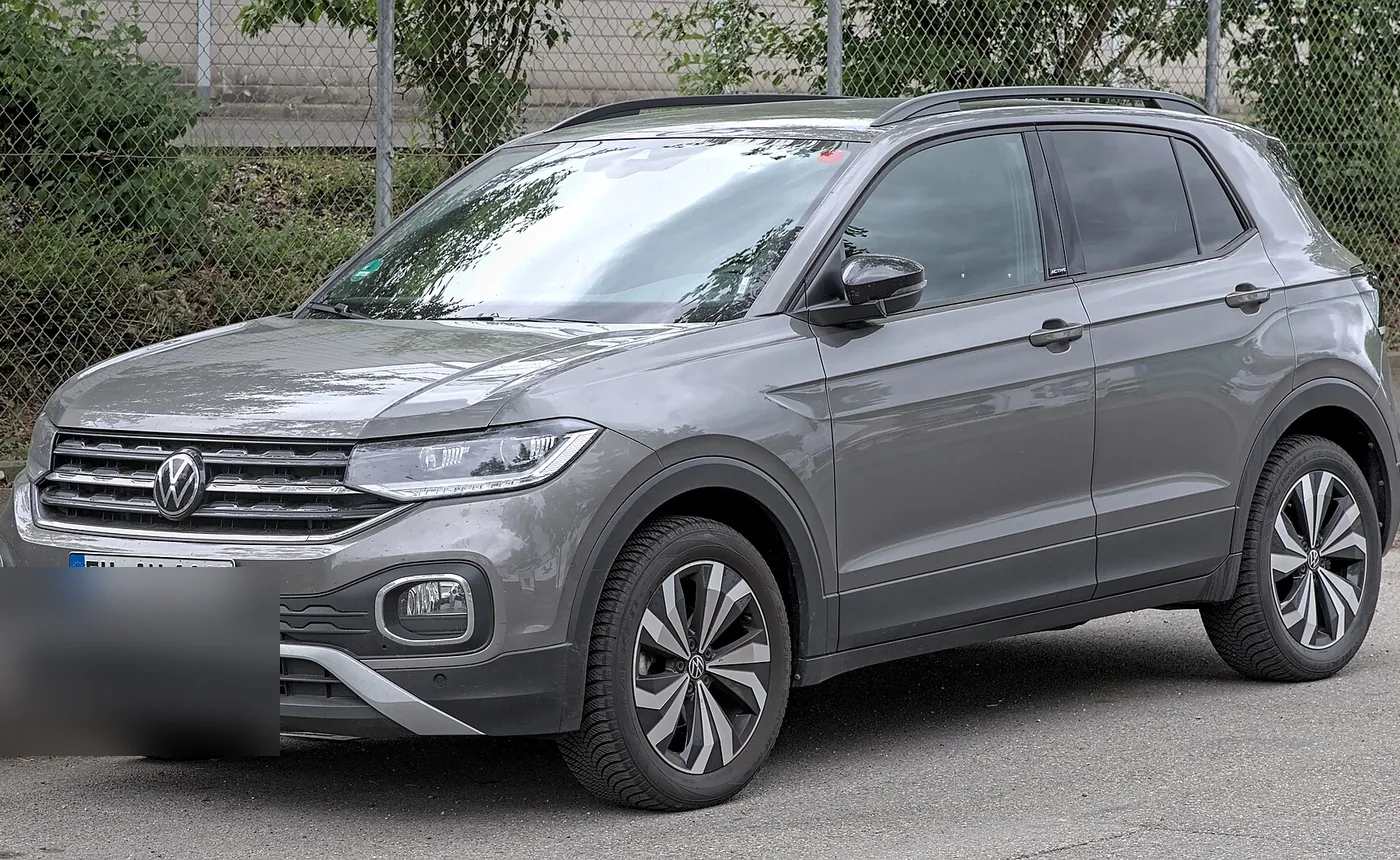
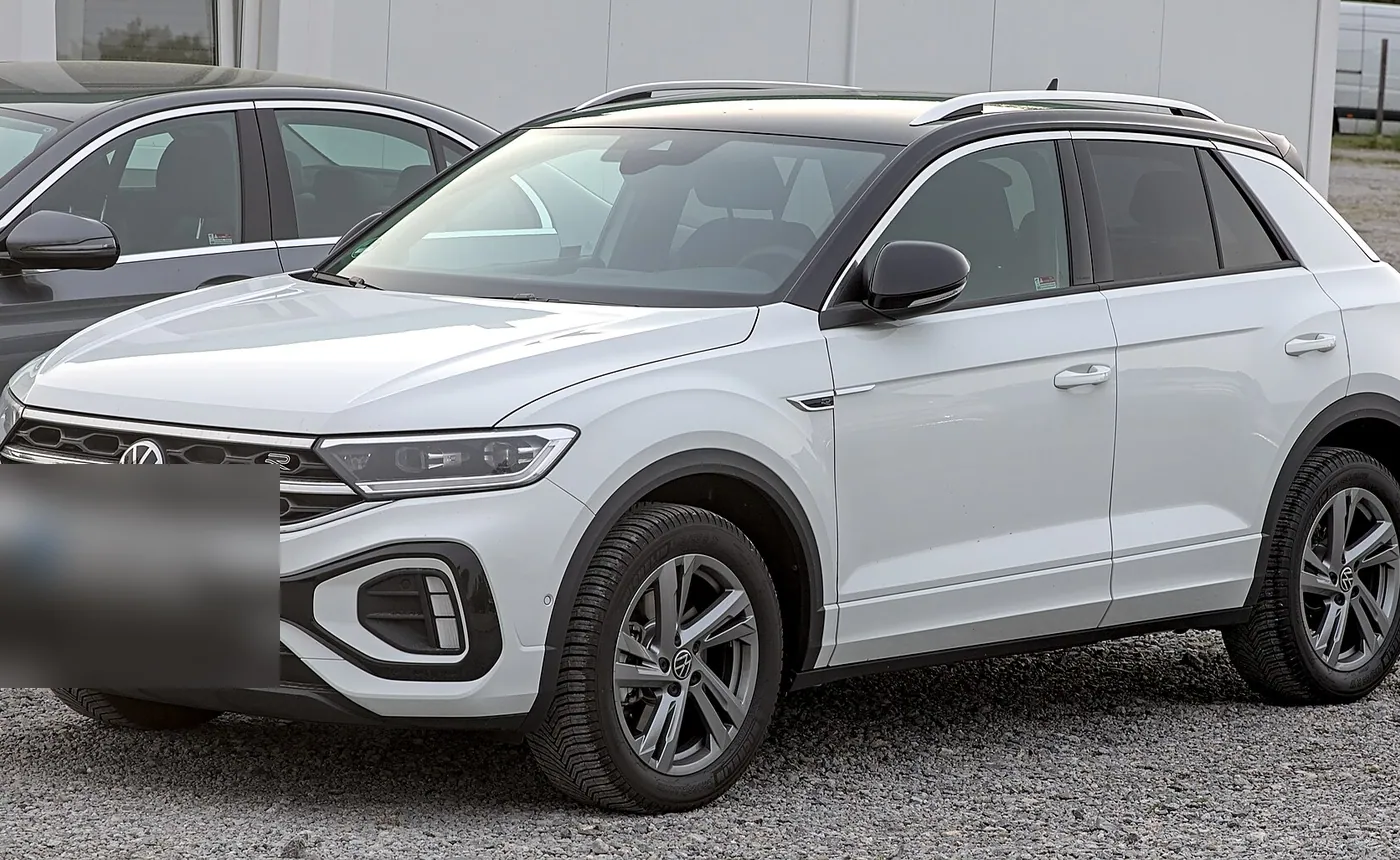
In short: In the three months to 19 September 2026, 519 Volkswagen T-Crosss sold at Japanese auctions at a median of €8,449, against 416 Volkswagen T-Rocs at €10,640. The Volkswagen T-Cross is the cheaper buy by about €2,191 at auction, before shipping, VAT, VRT and fees. Our verdict is at the end of this article.
European cars at Japanese auctions have a reputation that surprises people in Ireland. They are not cast-offs. Many of them were bought by careful owners who used them for weekend shopping and the occasional drive into the mountains, serviced them at the dealer and sold them before the first big bill. Two of the most common small Volkswagens in those lanes now are the T-Cross and the T-Roc.
They look like members of the same family, and they are, but they come from different branches. The T-Cross is a raised Polo. The T-Roc is a raised Golf. That single fact explains most of what separates them: size, engine choice, refinement and how they feel on a fast road. For an Irish buyer, the question is whether the extra Golf-ness is worth having, or whether the smaller car does the job.
The specs
| Volkswagen T-Cross | Volkswagen T-Roc | |
|---|---|---|
| Generation most imported | 1st gen, Japan from late 2019 | 1st gen, Japan from 2020 |
| Engine(s) | 1.0 TSI three-cylinder petrol | 1.5 TSI petrol or 2.0 TDI diesel |
| Power | 116 PS | 150 PS (both main engines) |
| Gearbox | 7-speed DSG | 7-speed DSG |
| Drive | Front | Front (4Motion on the T-Roc R) |
| Seats | 5 | 5 |
| Length | 4,115 mm | 4,240 mm |
| Underpinnings | Polo (MQB A0) | Golf (MQB) |
| Import duty to Ireland | 10% (not built in Japan) | 10% (not built in Japan) |
Where each one sits
Volkswagen launched the T-Roc in Europe in 2017 and the T-Cross in 2019, and both arrived in Japan a little later. The Japanese cars are right-hand drive, built in Europe and specified for a market that likes equipment, so most come with adaptive cruise control, automatic emergency braking and a digital instrument panel on mid and upper grades.
The T-Cross in Japan uses one engine, the 1.0 TSI three-cylinder petrol, paired with a seven-speed DSG. The T-Roc is broader in its line-up. Most imported cars have either the 1.5 TSI petrol or the 2.0 TDI diesel, both with 150 PS, and there is the T-Roc R, a 300 PS four-wheel-drive car that is a very different proposition and rarely appears.
How they drive
The T-Cross is light, easy and willing. The three-cylinder engine has a slightly gruff note when cold and settles into a hum, and around town it pulls cleanly from low revs. On the M50 at motorway speed it is adequate rather than relaxed, and a full load of passengers and luggage on a hill near Wicklow will have it working. The ride is firm but well damped, and the steering is accurate if a little numb.
The T-Roc feels like a bigger, heavier car, because it is. The 1.5 TSI is smooth and noticeably stronger, and the TDI has the kind of mid-range shove that makes long N-road trips effortless. It sits more squarely on the road and is quieter at speed. The cost is a slightly stiffer ride on the larger wheels that many Japanese grades wear.
Inside and practicality
This is where the T-Cross fights back. It has a sliding rear bench, which lets you trade legroom for boot space, and its upright body makes it surprisingly roomy for four adults. The cabin plastics are hard and plain, but the layout is sensible and the seating position is high.
The T-Roc is more stylish inside, with coloured dash panels on some grades and a more substantial feel, though early cars were criticised for hard plastics too, and Volkswagen improved the materials with the later facelift. Its boot is a little larger in fixed form, the back seat is broadly similar, and the overall feeling is of a slightly more grown-up car.
Running costs and reliability
Both cars use widely shared Volkswagen Group engines and gearboxes, which keeps parts easy to source and any independent VW specialist in Ireland familiar with them. The T-Cross will use less fuel in town. The T-Roc TDI is the economical choice for drivers who do long distances, although a diesel that only does short trips will need its particulate filter watched.
The seven-speed dry-clutch DSG used on the smaller engines can feel hesitant when creeping in traffic, and a service history showing gearbox software updates is reassuring. None of this is a reason to avoid either car. It is a reason to buy a well-documented one.
What to check at a Japanese auction
Japanese auction sheets are thorough, and on cars this young you should expect grade 4 or 4.5 with low mileage. Read the inspector's notes for kerbed alloys, which are common, and for marks on the lower bumper plastics. Rust is rarely a concern on cars of this age that have lived in Japan, but look at the sheet for any repair or panel replacement notes.
Ask for the service record book, which Japanese Volkswagen dealers stamp diligently. On a TDI, check that it has not lived a pure city life. On any DSG car, the sheet sometimes notes a jerky gearbox on the test drive: take that seriously. Confirm the infotainment unit and digital dash work fully, since these can be costly to replace.
The verdict
Buy the T-Cross if most of your driving is in and around a town, if you value a clever, flexible cabin and if you want the simplest, lightest car of the two. It is the better small family runabout, and it does not pretend to be anything more.
Buy the T-Roc if you cover real distances on Irish motorways and national roads, if you want the stronger engine or the diesel, and if a more solid, more refined drive matters to you. It is the more complete car, and for many buyers the one they will be happier with three years in.
Frequently asked questions
Is the T-Cross smaller than the T-Roc?
Yes. The T-Cross is based on the Polo and is about 12 centimetres shorter. Its sliding rear bench makes it more flexible inside than its size suggests.
Is there a diesel T-Cross from Japan?
No. Japanese T-Cross models use the 1.0 TSI petrol engine. The T-Roc was offered with a 2.0 TDI diesel in Japan.
Are Japanese-market Volkswagens right-hand drive?
Yes. Japan drives on the left like Ireland, so these cars are right-hand drive from the factory.
Are four-wheel-drive versions available?
Only the T-Roc R has 4Motion four-wheel drive among Japanese cars. The standard T-Cross and T-Roc are front-wheel drive.
Keep reading
- Lexus UX vs Audi Q2: The Smallest Premium Crossovers, and the Very Different Ways They Get There
- Toyota Isis vs Honda Stream: Two Seven-Seaters for Families Who Hate Big Cars
- Peugeot 208 vs Peugeot 2008: The Same French Idea in Two Different Heights
- Volvo V60 vs Volkswagen Passat: Two Sensible Estates, One With a Sense of Style
- Honda N-One vs Suzuki Alto Lapin: Retro Kei Cars With Very Different Hearts
- Importing a Volkswagen T-Roc: prices and costs
Photo credits
- Volkswagen T-Cross: Photo: Alexander Migl / Wikimedia Commons, CC BY-SA 4.0
- Volkswagen T-Roc: Photo: Alexander Migl / Wikimedia Commons, CC BY-SA 4.0