
Honda N-One vs Suzuki Alto Lapin: Retro Kei Cars With Very Different Hearts
One borrows the face of a 1960s Honda and offers a turbo. The other is a soft-edged box designed for gentle town driving. Both make charming little Irish city cars.
By the Japan to Ireland editors · · 4 min read
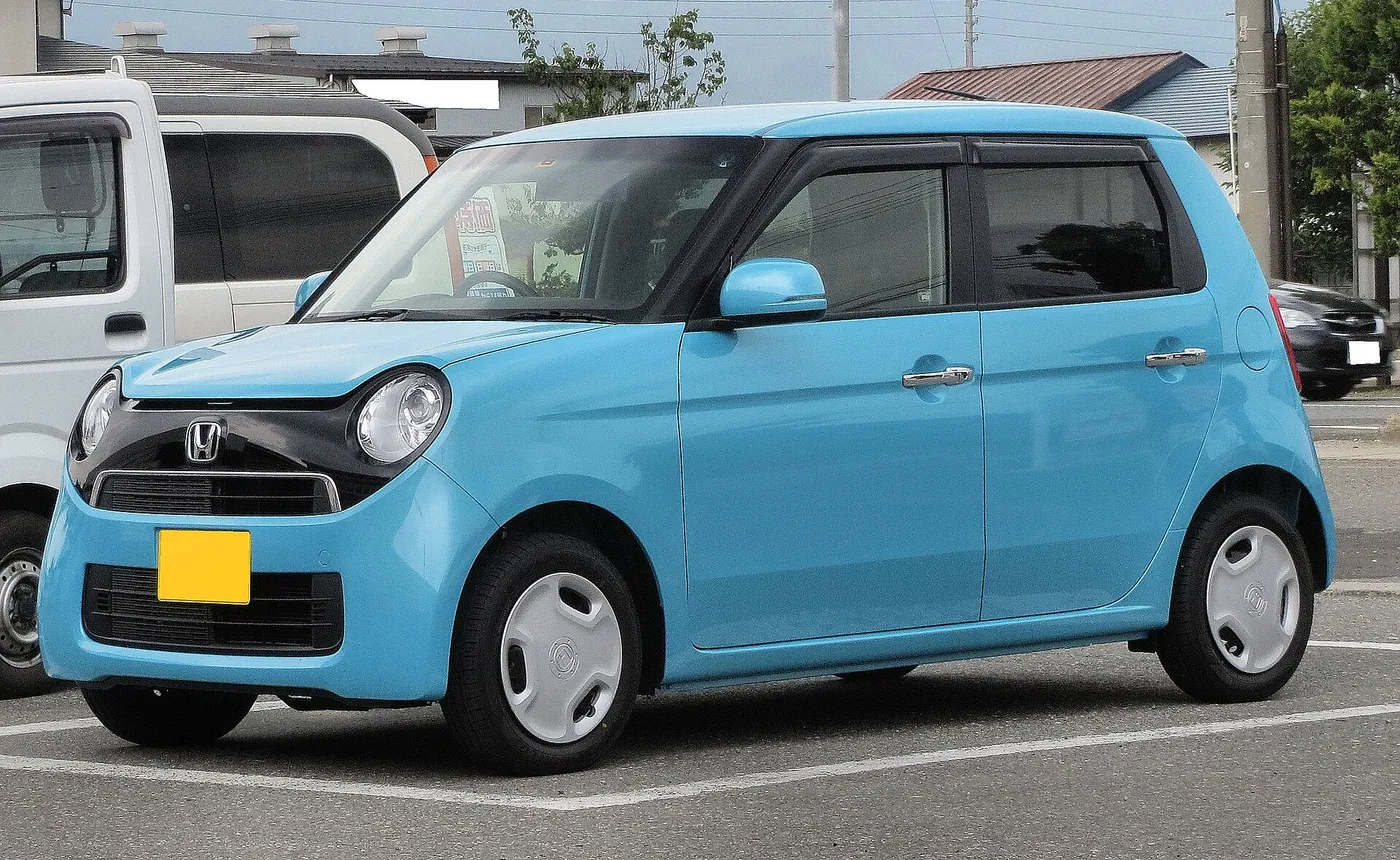
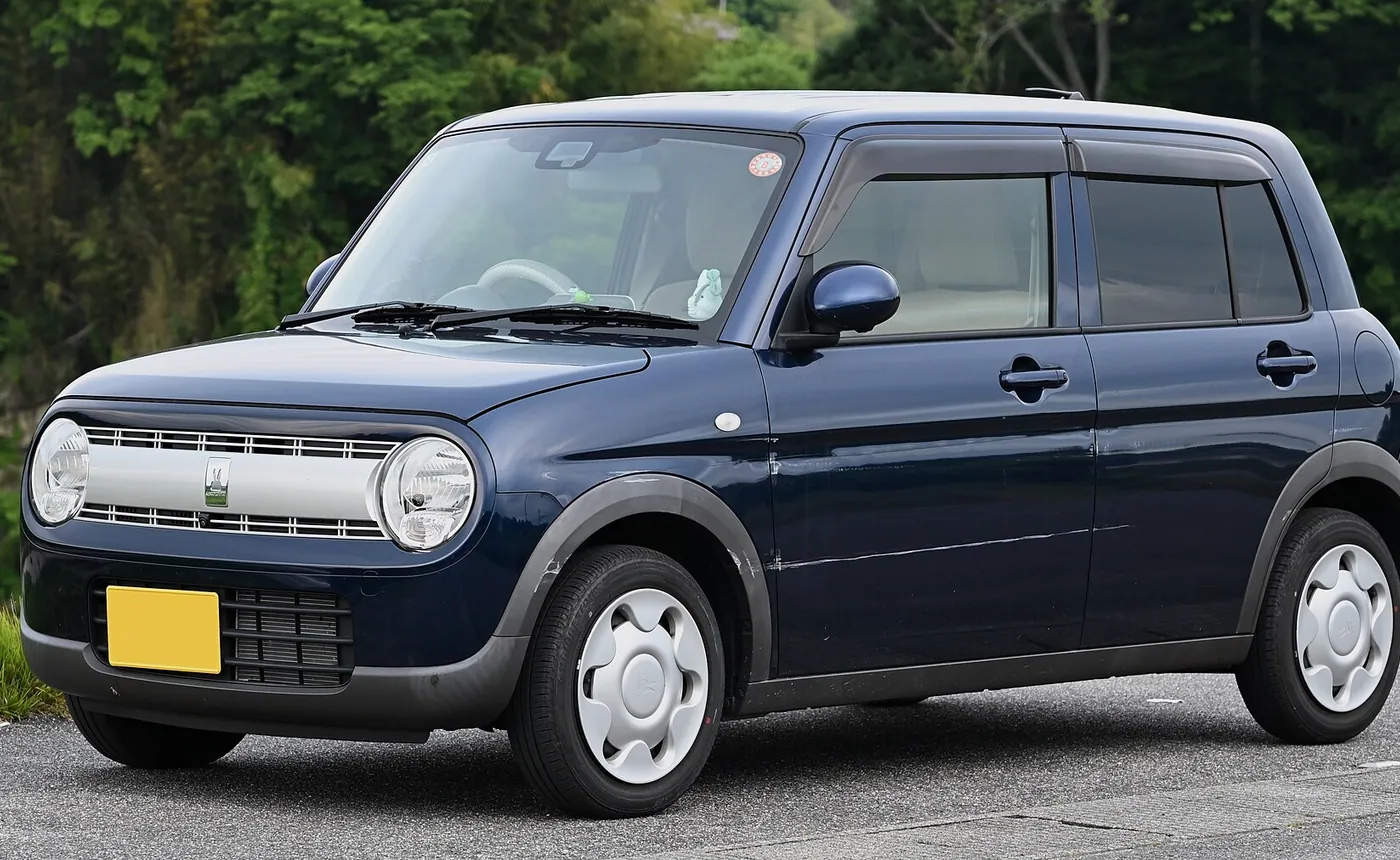
In short: In the three months to 19 September 2026, 3,176 Honda N-Ones sold at Japanese auctions at a median of €961, against 2,552 Suzuki Alto Lapins at €1,970. The Honda N-One is the cheaper buy by about €1,009 at auction, before shipping, VAT, VRT and fees. Our verdict is at the end of this article.
Kei cars are often dismissed as appliances, and many of them are. The Honda N-One and the Suzuki Alto Lapin are exceptions. They are small, unhurried and practical in the usual way, but they were designed to be liked, and they have a character that most of their tall, square rivals lack.
Both are a familiar sight at Japanese auctions, both seat four and both fit the same tiny footprint dictated by Japan's kei rules. They appeal to the same kind of Irish buyer: someone who wants a second car or a city runabout that costs little to run and still raises a smile in a car park. Yet they come at the idea from opposite directions. The N-One is a small car with a hint of sportiness and a nostalgic face. The Lapin is soft, gentle and homely, all rounded corners and pastel paint.
The specs
| Honda N-One | Suzuki Alto Lapin | |
|---|---|---|
| Generation most imported | 1st gen (JG1/JG2), 2012–2020 | 3rd gen (HE33S), 2015 onward |
| Engine | 658cc three-cylinder, NA or turbo | 658cc three-cylinder, NA |
| Gearbox | CVT | CVT |
| Drive | Front, or 4WD | Front, or 4WD |
| Seats | 4 | 4 |
| Length | 3,395 mm | 3,395 mm |
| Styling cue | The Honda N360 of 1967 | Rounded box with a rabbit emblem |
| Import duty to Ireland | 0% possible (Japan-built, with proof of origin) | 0% possible (Japan-built, with proof of origin) |
Two kinds of nostalgia
Honda launched the N-One in 2012 as part of its N-series of kei cars, sharing its engine with the hugely successful N-Box. Its styling deliberately recalls the N360 of 1967, the car that established Honda as a carmaker, with round headlamps, an upright grille and a tall, rounded roof. The first generation, coded JG1 for front-wheel drive and JG2 for four-wheel drive, ran until 2020 and is the one this comparison focuses on, because it is by far the most numerous at auction. A second generation followed in late 2020, looking almost identical but offering a turbo with a six-speed manual in RS form.
Suzuki's Alto Lapin has been around since 2002. It was built on the Alto's mechanicals but aimed at a different buyer, with a boxy shape softened at every edge and a small rabbit as its emblem. The third generation, HE33S, arrived in 2015 and is the most common version at auction now. It is lighter and more modern than the older cars, with Suzuki's newer platform underneath.
How they drive
The N-One feels like the more substantial car. It is heavier, and the steering has a reassuring weight at speed. The non-turbo engine is fine in town but works hard on a hill or a motorway slip road. The turbo transforms it: there is enough mid-range pull to keep up with traffic on the M50 or a busy N-road, and the car settles into a quieter cruise than most kei cars manage.
The Lapin is lighter and simpler. This generation has no turbo, and its engine is tuned for economy rather than urgency. In town it is perfectly brisk, helped by that low weight, but on open roads it is noisier and you plan overtakes with care. The steering is light, the turning circle is tight and the view out through its upright windows is excellent. For narrow streets and supermarket car parks, it is close to ideal.
Inside and practicality
The N-One's cabin is well finished for a kei car, with a dashboard that echoes the retro theme of the exterior. The tall roof gives generous headroom, and the rear seat is usable by adults on short trips. The boot is small, though the rear seats fold to create a useful load area.
The Lapin's interior is where it wins hearts. Suzuki styled the dashboard more like a piece of furniture than a car part, with round dials and warm colours, and the effect is closer to a small sitting room than a cockpit. It feels light and airy. The rear seat is fine for short journeys and the boot is modest, but for one or two people it is more than enough.
Running costs and reliability
Both are cheap to run. The Lapin, being lighter and naturally aspirated, is the more economical of the two, and both sit in the lowest CO2 bands. Honda and Suzuki kei engines have strong reputations for reliability when serviced on time, and both use timing chains rather than belts.
Servicing either car in Ireland means finding a garage comfortable with Japanese imports, but neither is mechanically complicated. Tyres are small and inexpensive, and insurance is typically modest, as it is for most small-engined cars.
What to check at a Japanese auction
Kei cars spend their lives in towns, so expect small dents and bumper scuffs, which the auction sheet will usually mark on its diagram. On the N-One, check the CVT for smooth operation and pay attention to high-mileage turbo cars, which should have had regular oil changes. On the Lapin, look for wear and staining on the light-coloured trim and seats.
Four-wheel-drive versions of both cars were often sold in Japan's snowy north, and their sheets may note underbody rust. Front-wheel-drive cars from milder regions are usually cleaner underneath. Grade 4 cars with verified mileage are plentiful for both models, so there is no reason to settle for a tired one.
The verdict
Buy the N-One, ideally with the turbo, if you want a kei car that can cope with Irish roads beyond the town limits. It is the more solid, more capable car on a motorway and the better all-rounder.
Buy the Alto Lapin if your driving is mostly urban and you want the most charming, economical and easy-to-park car possible. It is gentler and slower, but within its world few small cars are as pleasant to live with.
Frequently asked questions
Is there a turbo Alto Lapin?
Not in the third generation (HE33S), which is naturally aspirated only. The N-One offers a turbo.
Which is better for motorway driving?
The N-One with the turbo engine. It is heavier, steadier and has more pulling power at speed.
Which generation of N-One is most common at auction?
The first generation, built from 2012 to 2020, coded JG1 for front-wheel drive and JG2 for four-wheel drive.
Keep reading
- Honda S660 vs Daihatsu Copen: Two Tiny Roadsters, One Big Difference in Philosophy
- Toyota Allion vs Nissan Bluebird Sylphy: The Quiet Saloons Japan Kept for Itself
- Daihatsu Mira Cocoa vs Nissan Moco: Two Gentle Kei Cars Built for the School Run
- Suzuki Xbee vs Suzuki Ignis: Two Small Crossovers From One Family, With Different Goals
- Toyota Prius Alpha vs Toyota Wish: The Hybrid Estate and the Petrol MPV Japan Grew Up In
Photo credits
- Honda N-One: Photo: DY5W-sport / Wikimedia Commons, CC BY-SA 3.0
- Suzuki Alto Lapin: Photo: TTTNIS / Wikimedia Commons, CC0