
Daihatsu Hijet Cargo vs Nissan Clipper Van: Japan's Smallest Working Vans, Head to Head
Two kei vans built for deliveries, trades and farm lanes. The Nissan is a Suzuki under the badge, and the choice comes down to gearbox, condition and how hard the van has worked.
By the Japan to Ireland editors · · 4 min read
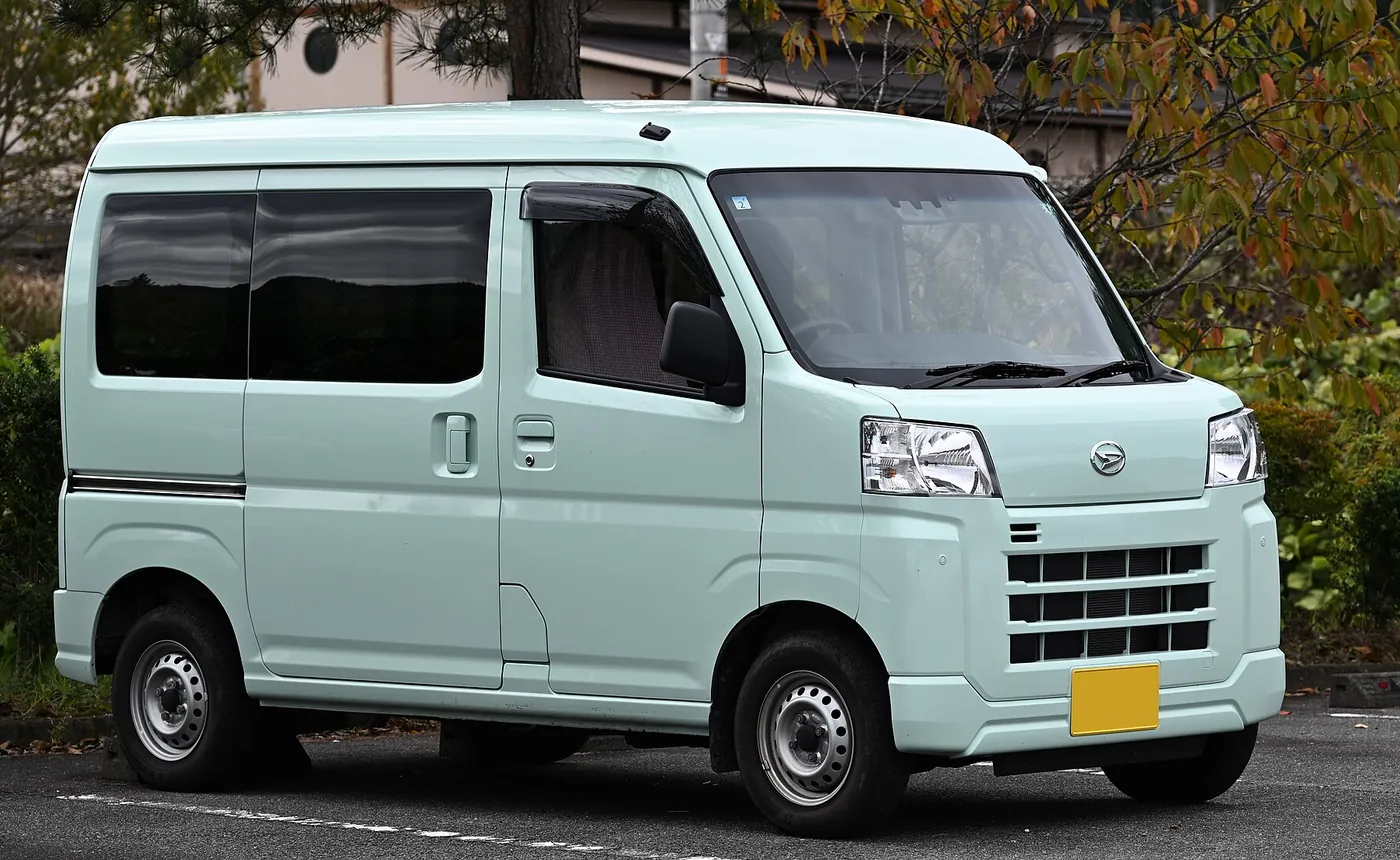
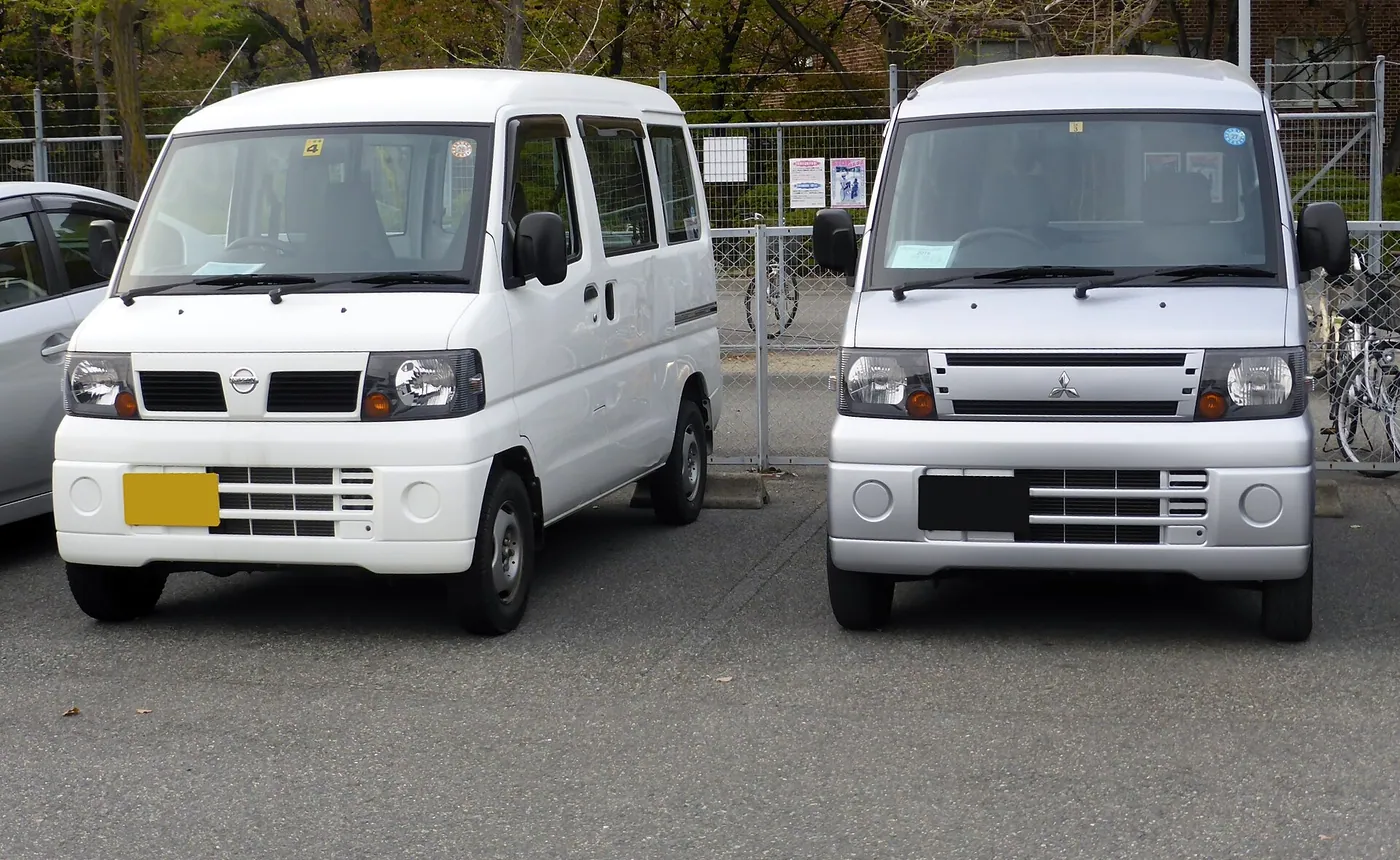
In short: In the three months to 19 September 2026, 7,596 Daihatsu Hijet Cargos sold at Japanese auctions at a median of €1,204, against 3,950 Nissan Clipper Vans at €1,772. The Daihatsu Hijet Cargo is the cheaper buy by about €568 at auction, before shipping, VAT, VRT and fees. Our verdict is at the end of this article.
Drive through any Japanese town at eight in the morning and you will see them: small, square vans carrying parcels, tools, vegetables and paint tins, threading through streets too narrow for anything larger. They are kei vans, and the Daihatsu Hijet Cargo and Nissan Clipper Van are two of the most common.
In Ireland they have a growing following among tradespeople, farmers, market traders and small businesses who need a cheap, tough, economical van that can fit down a boreen or into a city lane. They are also popular with people converting tiny campers. Both are plentiful at Japanese auctions, and both can be found with low mileage and plenty of working life ahead.
One practical point comes first. Whether a kei van can be registered as a commercial vehicle in Ireland depends on it meeting the commercial vehicle requirements, which cover matters such as the load area and the seating layout. Check this for the specific van before you buy, because it affects how the vehicle is registered and taxed.
The specs
| Daihatsu Hijet Cargo | Nissan Clipper Van | |
|---|---|---|
| Generation most imported | S321V/S331V, 2004–2021 | DR17V, 2015 onward |
| Engine | 658cc three-cylinder, NA (turbo on some) | 658cc three-cylinder, NA (turbo on some) |
| Gearbox | 5-speed manual or automatic | 5-speed manual, automatic or AGS |
| Drive | Rear, or part-time 4WD | Rear, or part-time 4WD |
| Seats | 2 or 4 | 2 or 4 |
| Length | 3,395 mm | 3,395 mm |
| Built by | Daihatsu | Suzuki (twin of the Every) |
| Import duty to Ireland | 0% possible (Japan-built, with proof of origin) | 0% possible (Japan-built, with proof of origin) |
Two makers, one brief
Daihatsu has built the Hijet since 1960, and the Hijet Cargo is the van version of one of Japan's oldest nameplates. The tenth generation, coded S321V for rear-wheel drive and S331V for four-wheel drive, ran from 2004 to 2021 and is by far the most common at auction. Like most kei vans, it carries its engine under the front seats and drives the rear wheels, with part-time four-wheel drive as an option.
The Clipper Van is a Nissan in name only. Since 2013, Nissan has sourced it from Suzuki, and the DR17V version on sale from 2015 is essentially a Suzuki Every with different badges. The basic layout matches the Hijet's: engine under the seats, rear-wheel drive, four-wheel drive available. Older Clipper Vans, built before 2013, were based on the Mitsubishi Minicab and are a different vehicle entirely, so check the model code on the auction sheet.
How they drive
Neither van is a pleasure to drive in the conventional sense, but both are honest. You sit right at the front, with a superb view of the road and a turning circle tight enough for a farmyard gate. The ride is firm when empty and settles with a load in the back. Motorway speeds are possible but noisy, and both are happiest on town streets and regional roads.
The Hijet's naturally aspirated engine works hard on hills, and the turbo is worth seeking if you plan to cover longer distances. The Clipper feels slightly more modern. Suzuki's R06A engine is smooth and economical, and the cab is a touch quieter. Automatic versions use either a conventional automatic or, on some vans, Suzuki's AGS automated manual, which can feel jerky between gears until you learn to ease off the throttle as it shifts.
The load area
Both vans offer a long, square load area behind the front seats, and on four-seat versions the rear seats fold flat into the floor. Sliding side doors and a wide rear hatch make loading easy, and floor heights are low enough to slide in a pallet of tiles or a mower without a ramp.
Inside the cab, both are basic. Hard plastics, simple controls and practical storage are the rule. Better-equipped passenger versions exist, but most vans at auction are the working models, with vinyl seats and rubber floor mats.
Running costs and reliability
These are among the cheapest vehicles to run on Irish roads. Fuel economy is good, tyres are small and inexpensive, and the engines are simple. Both Daihatsu and Suzuki engines use timing chains, and both have a strong reputation for longevity when oil changes are kept up.
The main costs tend to be wear items: clutches on manual vans, brakes, suspension bushes and exhausts. Parts for the Every-based Clipper are especially easy to source because the Every is one of the best-selling vans in Japan, and the Hijet's long production run gives it a similar advantage.
What to check at a Japanese auction
The working life of a kei van is the main risk. Read the auction sheet closely for notes on rust, dents, scratches in the load area and interior wear. A van used for city deliveries may have high mileage, while one from a farm may have rust from damp and muck. Vans from snowy prefectures will have spent winters on salted roads. Grade 3.5 is common for working vans; grade 4 is worth paying for.
Check the clutch on manual vans and the AGS gearbox on the Clipper. Look for oil leaks around the engine, and on four-wheel-drive versions make sure the system engages properly. Examine the sills, door bottoms, rear arches and chassis rails for corrosion, because these are the places where hard-worked kei vans give up first.
The verdict
Buy the Hijet Cargo if you want a simple, proven workhorse with a huge choice of examples. Its long production run means you can be fussy about condition, and a turbo version is the pick for anyone who regularly leaves town.
Buy the Clipper Van if you want a slightly more modern, more refined van with excellent parts support. Avoid the AGS gearbox unless you are happy with its manners, and look for a conventional automatic or a manual. Either van, carefully chosen, will work hard for years.
Frequently asked questions
Is the Nissan Clipper Van a Suzuki?
Since 2013 it has been built by Suzuki; the DR17V is essentially a rebadged Suzuki Every. Earlier Clipper Vans were based on the Mitsubishi Minicab.
Can a kei van be registered as a commercial vehicle in Ireland?
It depends on the van meeting the commercial vehicle requirements, including its load area and seating layout. Check the specific van before buying.
What is the AGS gearbox?
It is Suzuki's automated manual gearbox. It is economical but can feel jerky between gears compared with a conventional automatic.
Keep reading
- Suzuki Xbee vs Suzuki Ignis: Two Small Crossovers From One Family, With Different Goals
- Daihatsu Mira Cocoa vs Nissan Moco: Two Gentle Kei Cars Built for the School Run
- Toyota Townace Van vs Mazda Bongo Van: The Small Commercial Vans That Became Twins
- Honda Life vs Daihatsu Mira: Two Plain Kei Hatchbacks That Asked Very Little of Their Owners
- Jeep Wrangler vs Toyota FJ Cruiser: Two Off-Road Icons, One American and One That Only Looks It
Photo credits
- Daihatsu Hijet Cargo: Photo: TTTNIS / Wikimedia Commons, CC0
- Nissan Clipper Van: Photo: Tokumeigakarinoaoshima / Wikimedia Commons, CC0