
Daihatsu Mira Cocoa vs Nissan Moco: Two Gentle Kei Cars Built for the School Run
Soft styling, simple engines and cabins designed for comfort over speed. The Daihatsu is the more charming; the Nissan, a Suzuki underneath, is the roomier.
By the Japan to Ireland editors · · 4 min read
In short: In the three months to 19 September 2026, 2,726 Daihatsu Mira Cocoas sold at Japanese auctions at a median of €419, against 3,704 Nissan Mocos at €281. The Nissan Moco is the cheaper buy by about €138 at auction, before shipping, VAT, VRT and fees. Our verdict is at the end of this article.
Some cars are built to impress the neighbours. The Daihatsu Mira Cocoa and the Nissan Moco were built to make an ordinary day a little easier. In Japan they were bought in large numbers by people who needed a car for the shop, the station and the school gate, and who wanted it to feel friendly rather than merely functional.
They turn up regularly at Japanese auctions, often in soft colours, with modest mileage and tidy interiors. For an Irish buyer looking for a first car, a town car or a second car for the household, they represent an unusual option: a car designed from the start to be gentle, easy and economical.
There is a twist worth knowing. The Moco is not really a Nissan. Like several of Nissan's kei cars, it was built by Suzuki and is closely related to the Suzuki MR Wagon. So this is, mechanically, a contest between Daihatsu and Suzuki, two of the most experienced kei car makers in Japan.
The specs
| Daihatsu Mira Cocoa | Nissan Moco | |
|---|---|---|
| Generation most imported | L675S/L685S, 2009–2018 | 3rd gen (MG33S), 2011–2016 |
| Engine | 658cc three-cylinder, NA | 658cc three-cylinder |
| Gearbox | Automatic | CVT |
| Drive | Front, or 4WD | Front, or 4WD |
| Seats | 4 | 4 |
| Length | 3,395 mm | 3,395 mm |
| Built by | Daihatsu | Suzuki (twin of the MR Wagon) |
| Import duty to Ireland | 0% possible (Japan-built, with proof of origin) | 0% possible (Japan-built, with proof of origin) |
Origins and intent
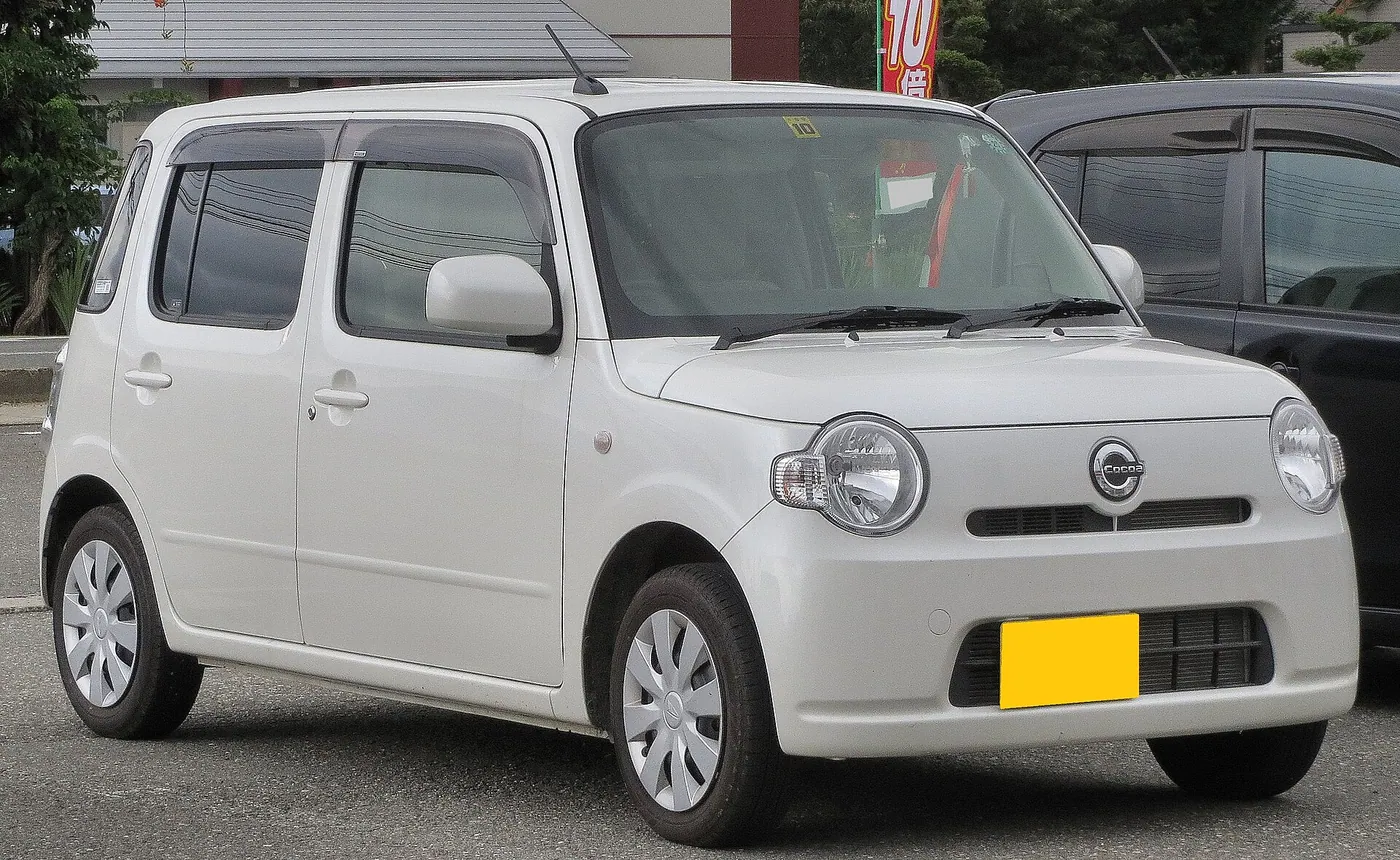
The Mira Cocoa arrived in 2009 as a stylish offshoot of Daihatsu's long-running Mira. It has a boxy, slightly retro shape with round headlamps and a chrome-trimmed face, and it was offered in a range of pastel and two-tone colours. It was built until 2018, coded L675S for front-wheel drive and L685S for four-wheel drive.
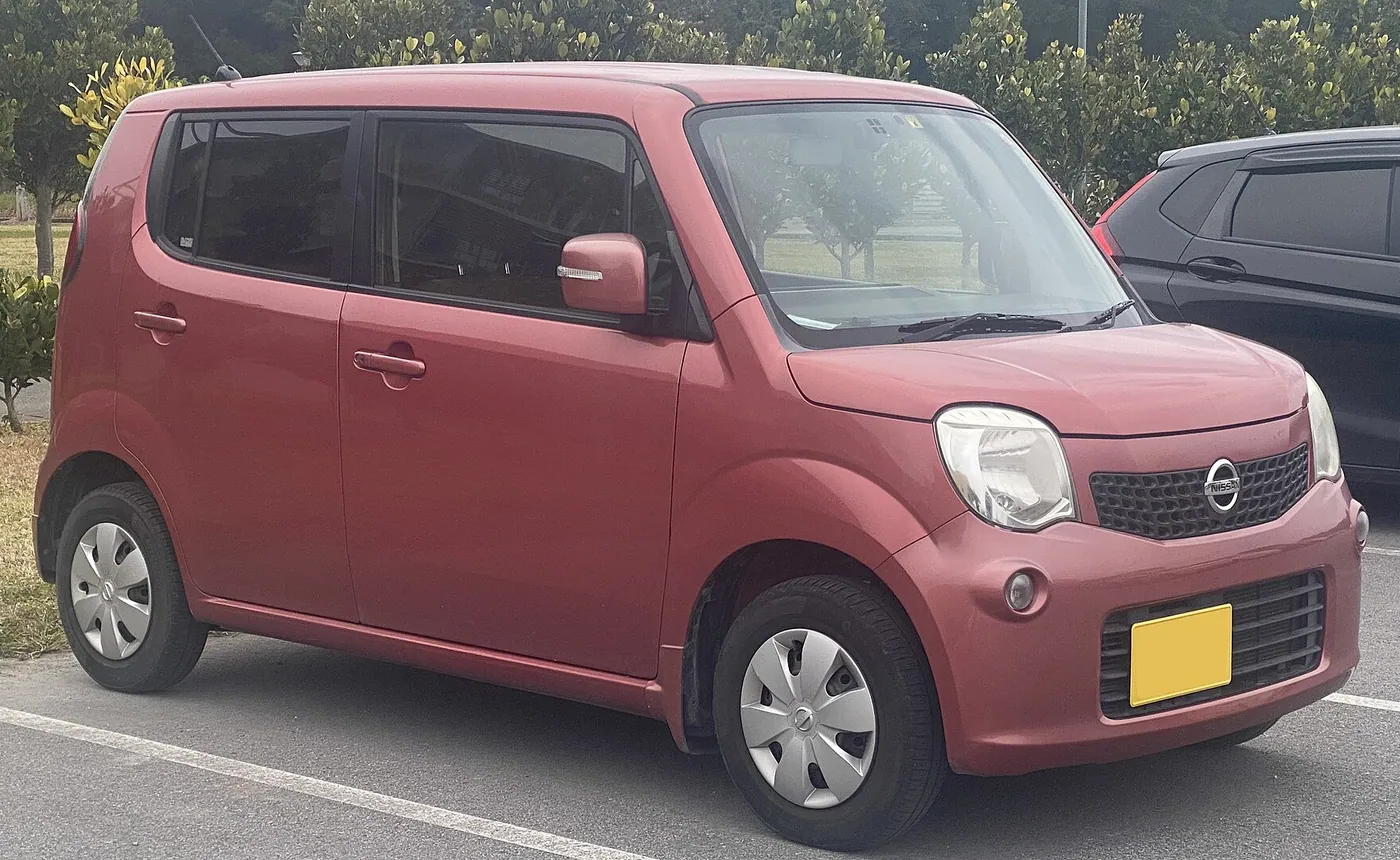
The Moco ran through three generations from 2002 to 2016. The third generation, coded MG33S and launched in 2011, is the one most commonly seen at auction today and the one this comparison discusses. It used Suzuki's then-new R06A engine with a CVT, and its design is softer and rounder than the Cocoa's, with a tall roof and a cheerful, smiling front end.
How they drive
Neither car is about performance. The Cocoa's engine is small and naturally aspirated, and it feels perfectly lively in town, darting through traffic and into parking spaces with ease. On an open road it feels its size: wind noise rises, the engine works hard and it is happiest at moderate speeds. The ride is soft and the steering light.
The Moco feels a little more modern on the road. Suzuki's R06A is smooth for a three-cylinder, and the CVT keeps it in its most efficient range. The taller body means it leans more through corners and can be pushed about by crosswinds on exposed roads, but it is comfortable and quiet enough for an occasional longer run down the motorway.
Inside and practicality
This is where the two cars diverge most. The Cocoa has a charming interior, with soft colours, round air vents and a homely, almost toy-like feel. Space is fine for two in the front and acceptable for two in the back on short trips, but the boot is small.
The Moco's taller body pays off inside. Headroom is generous, the rear seat is roomier and the cabin feels more spacious overall. Storage pockets and trays are plentiful, and the large door openings make it easy to get in and out. For a parent fitting a child seat, the extra height is a real help.
Running costs and reliability
Both are very cheap to run. Fuel consumption is low, insurance is usually modest and both sit in the lowest CO2 bands. Daihatsu and Suzuki kei engines have good reputations for durability, with timing chains and simple mechanical layouts.
Most examples are now a decade or more old, so age-related wear matters more than design faults. Rubber components, suspension bushes and, on the Moco, the CVT should be considered on any higher-mileage car. Parts for both are readily available from Japan.
What to check at a Japanese auction
The auction sheet will tell most of the story. Look for grade 4 cars with low mileage; these cars were usually driven gently over short distances, so very high kilometres are unusual and worth questioning. Scrapes and parking dents on bumpers are common and usually cosmetic.
On the Moco, pass over any car where the sheet mentions transmission noise. On the Cocoa, check the interior notes for faded or worn trim, because its pale fabrics show their age. For both, four-wheel-drive cars from snowy prefectures may have rust underneath, and the sheet will sometimes record it. Front-wheel-drive cars from central or southern Japan are generally cleaner.
The verdict
Buy the Mira Cocoa if you want a small, characterful car with a retro face and a cosy cabin, mainly for town driving. It is the more charming of the two and feels light and nimble on narrow streets.
Buy the Moco if space and comfort matter more. Its taller body, roomier rear seat and smoother Suzuki engine make it the better all-rounder, particularly for someone carrying a child seat or the weekly shopping. It is the more practical car, even if it is the less distinctive one.
Frequently asked questions
Is the Nissan Moco really a Suzuki?
Yes. The Moco was built by Suzuki and is closely related to the Suzuki MR Wagon.
Which is roomier inside?
The Moco. Its taller body gives more headroom and a more spacious rear seat than the Mira Cocoa.
Are these cars suitable for motorway driving?
They can manage it, but both are happiest in town and on slower roads. Expect wind and engine noise at motorway speeds.
Keep reading
- Honda N-One vs Suzuki Alto Lapin: Retro Kei Cars With Very Different Hearts
- Honda S660 vs Daihatsu Copen: Two Tiny Roadsters, One Big Difference in Philosophy
- Suzuki Xbee vs Suzuki Ignis: Two Small Crossovers From One Family, With Different Goals
- Daihatsu Hijet Cargo vs Nissan Clipper Van: Japan's Smallest Working Vans, Head to Head
- Toyota Isis vs Honda Stream: Two Seven-Seaters for Families Who Hate Big Cars
Photo credits
- Daihatsu Mira Cocoa: Photo: DY5W-sport / Wikimedia Commons, CC BY-SA 3.0
- Nissan Moco: Photo: Oq10pass / Wikimedia Commons, CC0