
Daihatsu Wake vs Mitsubishi eK Space: How Tall Can a Kei Car Get Before It Stops Making Sense?
The Wake is one of the tallest kei cars ever sold, drawn up around bikes, boards and camping gear. The eK Space is a gentler, more conventional box. Both live inside the same strict Japanese size limits.
By the Japan to Ireland editors · · 4 min read
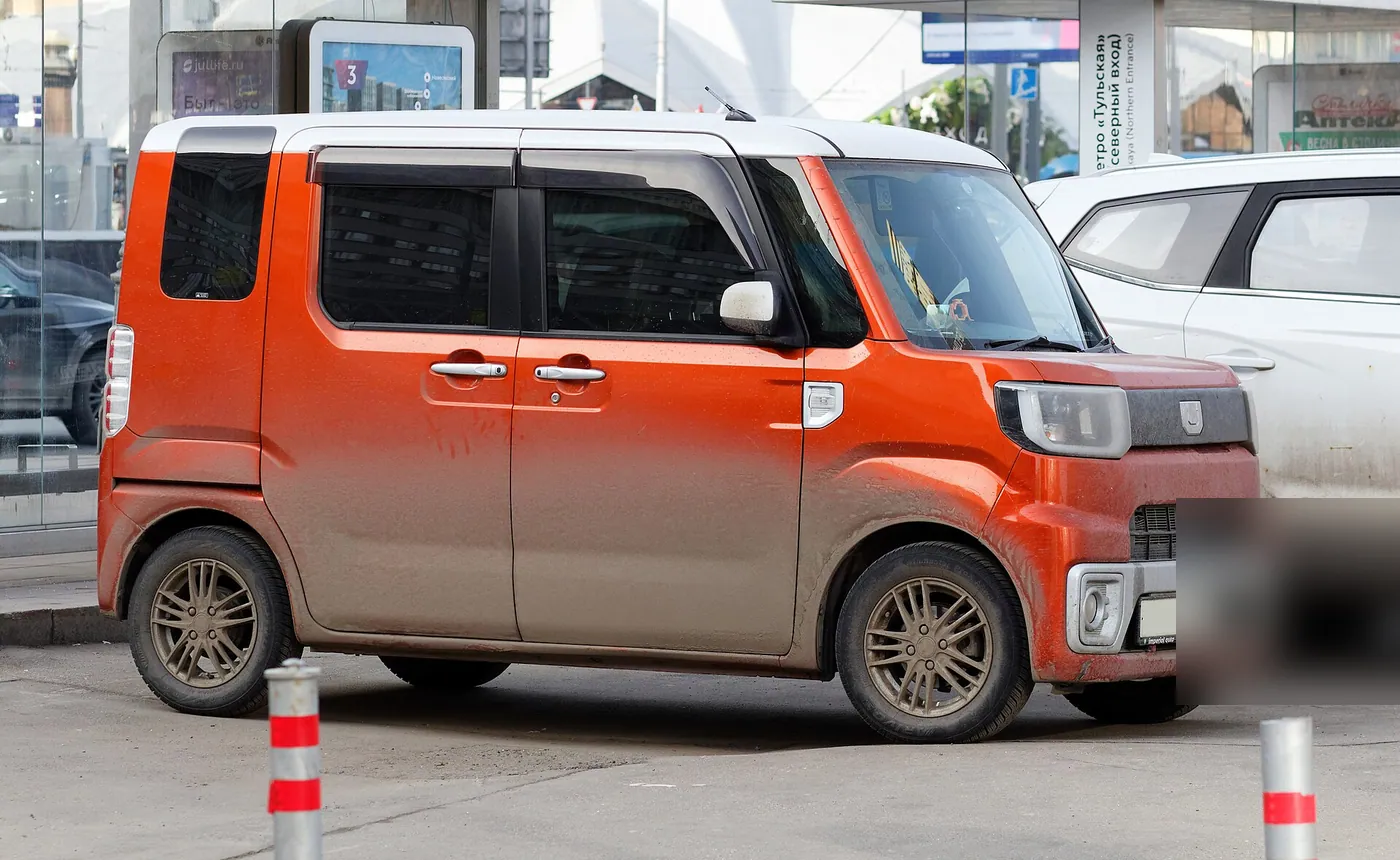
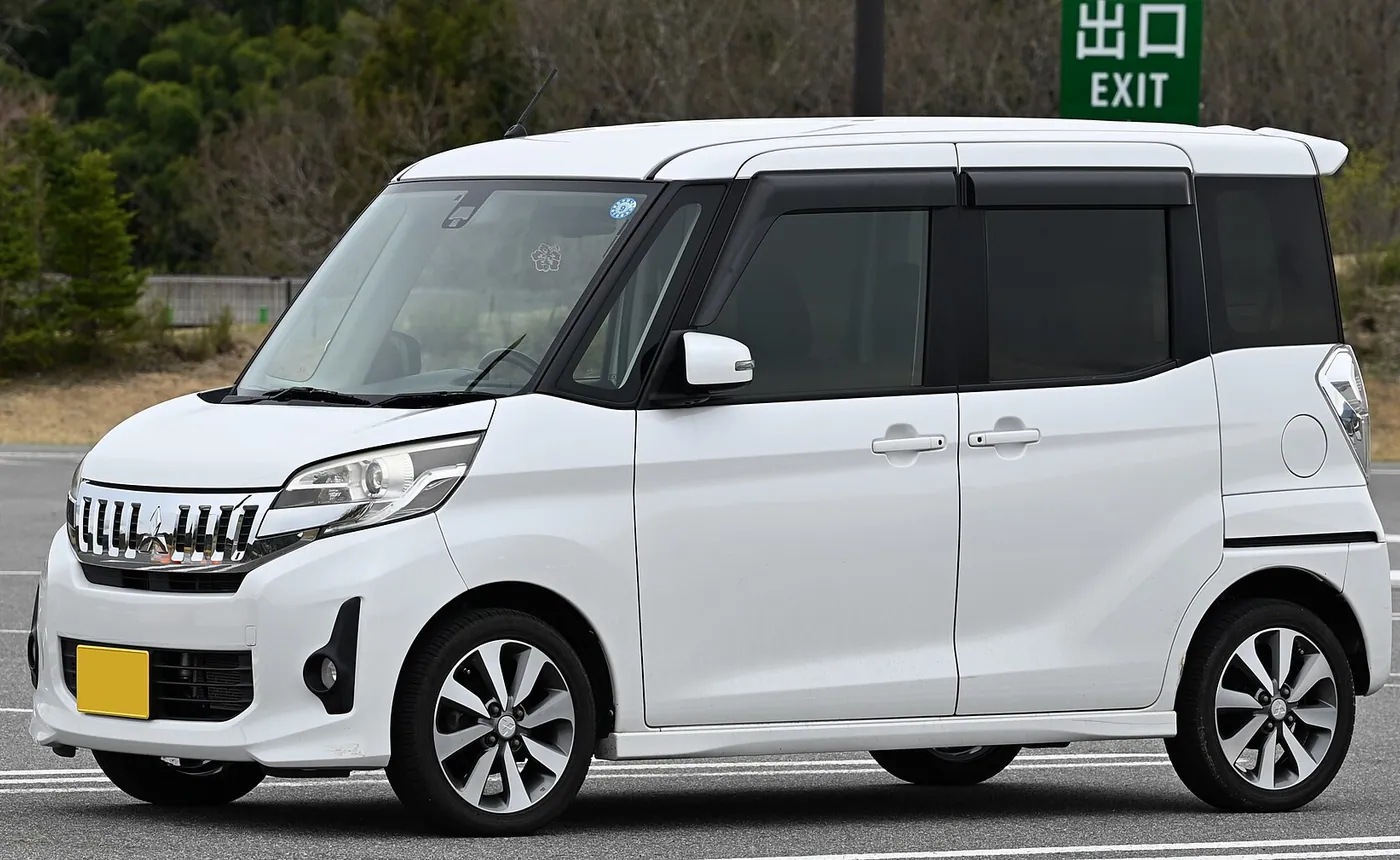
In short: In the three months to 19 September 2026, 1,613 Daihatsu Wakes sold at Japanese auctions at a median of €2,243, against 1,042 Mitsubishi eK Spaces at €1,434. The Mitsubishi eK Space is the cheaper buy by about €809 at auction, before shipping, VAT, VRT and fees. Our verdict is at the end of this article.
Kei cars are built to rules that fix their length, their width and the size of their engines. Height is the dimension the rules leave relatively open, and over the past two decades Japanese makers have used it with real ingenuity. The result is a class of cars that are short enough to park almost anywhere and tall enough to stand a child up inside.
The Daihatsu Wake pushed that idea further than nearly anything else on the road. Launched in 2014, it stands around 1,835 mm tall, which places it among the tallest kei cars ever sold. Daihatsu pitched it at people with outdoor hobbies: the cyclist with a road bike, the surfer with a board, the family with a tent and four sleeping bags.
The Mitsubishi eK Space comes at the same class from a calmer angle. It was developed through Mitsubishi's joint venture with Nissan, and it shares its bones with the Nissan Dayz Roox and, in its second generation, the Nissan Roox. It is a tall-wagon kei car with sliding rear doors, aimed at families and everyday errands.
For an Irish buyer, the comparison comes down to two things. How much space do you genuinely need, and how comfortable will a very tall, very light car feel on an exposed Irish road in a westerly gale?
The specs
| Daihatsu Wake | Mitsubishi eK Space | |
|---|---|---|
| Generation most imported | LA700/LA710, 2014–2022 | 1st gen 2014–2020, 2nd gen 2020 on |
| Engine | 660cc three-cylinder, turbo or non-turbo | 660cc three-cylinder, turbo or non-turbo |
| Power | 52 PS, or 64 PS turbo | Up to 64 PS turbo |
| Gearbox | CVT | CVT |
| Drive | Front, or 4WD | Front, or 4WD |
| Seats | 4 | 4 |
| Length | 3,395 mm | 3,395 mm |
| Height | About 1,835 mm | Noticeably lower |
| Import duty to Ireland | 0% possible (Japan-built, with proof of origin) | 0% possible (Japan-built, with proof of origin) |
Two versions of the box
The Wake has a long, flat load floor, a deep boot with an adjustable deck board on many grades, and rear seats that slide and fold. Its surfaces were chosen to be wiped down after a muddy day. Sliding rear doors are standard, with power operation on at least one side on most cars.
The first-generation eK Space, from 2014, is a sensible, slightly anonymous design. The second generation, launched in 2020, is the one to look for if budget allows. It brought a more upmarket cabin, stronger safety equipment and, on higher grades, Mitsubishi's MI-PILOT system, which combines adaptive cruise control with lane-keeping assistance.
How they drive
Both drive like kei cars, which is to say they are at their best in town and on secondary roads and work hard on the motorway. For Irish use the turbo versions are strongly preferable. The non-turbo engines cope with a flat commute, but a long climb, a headwind and two passengers will have them roaring without much to show for it.
The Wake's height is its weakness on the move. Its centre of gravity is high, it leans noticeably through roundabouts and it is sensitive to crosswinds. On a blustery coastal road or an exposed stretch of motorway it asks for a firm hand. The eK Space is lower, more settled and a little more comfortable at a steady 100 km/h.
Inside and practicality
This is where the Wake earns its place. The cabin is cavernous for the footprint, with headroom that tall drivers will notice immediately and enough vertical space to stand a bicycle upright with the rear seats folded. It is a niche car, but within that niche it is remarkable. A wheelchair, a large dog crate or a stack of camping boxes all go in without drama.
The eK Space strikes a more even balance. It is still very roomy, with a rear bench that slides far back for generous legroom and a boot that works for a weekly shop. The seats are softer and the cabin, particularly in the later car, feels more like a small family car than a utility.
Running costs and reliability
Both cars are cheap to keep. Fuel use is modest, insurance is usually low and the small engines keep motor tax at the bottom of the scale. The turbo versions use a little more fuel and repay it in calmer, quieter progress.
Kei engines are generally durable, but they spin hard for their living. Regular oil changes matter, particularly on turbo cars. The CVT should pull away smoothly without shudder. Powered sliding doors are convenient and, like any motor and cable system, can fail with age.
What to check at auction
Read the auction sheet for rust notes, especially on four-wheel-drive cars from Hokkaido and the snowy north, where kei cars are popular. Look for an interior grade of B or better, since the Wake was often bought for sport and outdoor use and may show scuffs in the load area.
Ask for both sliding doors to be checked and look for inspector comments about their operation. On the second-generation eK Space, confirm that the camera and radar safety systems are free of warning lights. A grade 4 turbo car with documented mileage is the target for either.
The verdict
Buy the Wake if you need the most interior volume possible in the smallest footprint, for bikes, boards, a big dog or a mobility aid, and you accept that its height makes it less composed on windy roads.
Buy the eK Space if you want a practical, comfortable kei car for family and town use, with a more settled ride and better safety equipment. The second-generation turbo is the best all-round choice of the two.
Frequently asked questions
Is the Daihatsu Wake taller than other kei cars?
Yes. At around 1,835 mm it is among the tallest kei cars ever built.
Do both have sliding doors?
Yes. Both have sliding rear doors, with power operation on many versions.
Should I buy a turbo kei car for Ireland?
For motorway driving and hilly roads, the turbo versions are much the better choice.
Keep reading
- Suzuki Jimny Sierra vs Suzuki Escudo: The Little Mountain Goat and the Sensible Vitara
- Toyota Hilux Surf vs Toyota Hilux: The Old Family Off-Roader and the Modern Working Pickup
- Subaru Stella vs Daihatsu Move Conte: Two Small Cars From One Factory, With Very Different Moods
- Mercedes-Benz GLC vs BMW X3: Comfort Against Agility in the German Mid-Size SUV Class
- Toyota Prius vs Lexus CT 200h: One Hybrid Heart, Two Very Different Characters
Photo credits
- Daihatsu Wake: Photo: Retired electrician / Wikimedia Commons, CC0
- Mitsubishi eK Space: Photo: TTTNIS / Wikimedia Commons, CC0