
Toyota Hilux Surf vs Toyota Hilux: The Old Family Off-Roader and the Modern Working Pickup
The Surf is the SUV Europe knew as the 4Runner. The eighth-generation Hilux is the pickup Toyota brought back to Japan in 2017. One is a classic. The other is a tool.
By the Japan to Ireland editors · · 4 min read
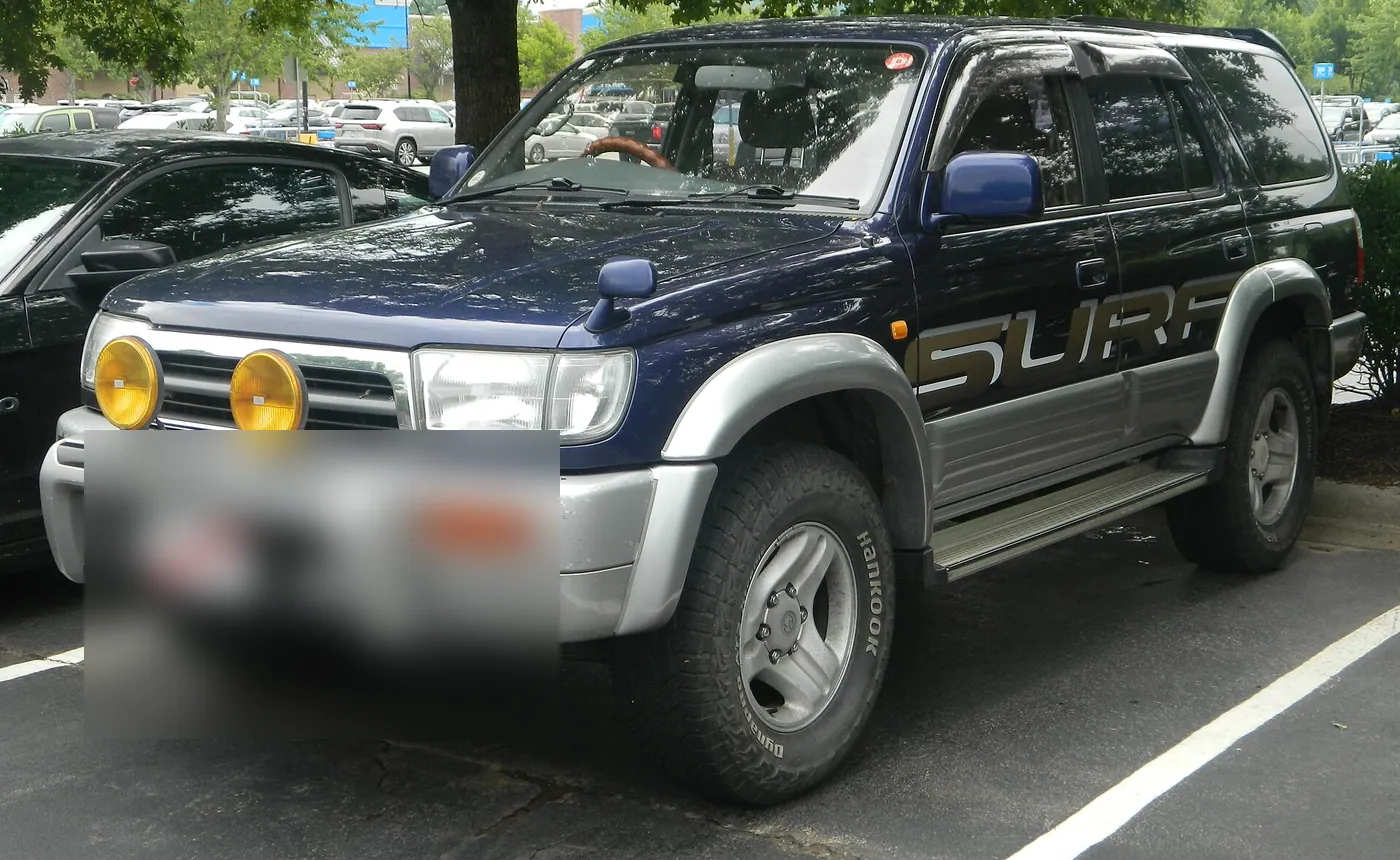
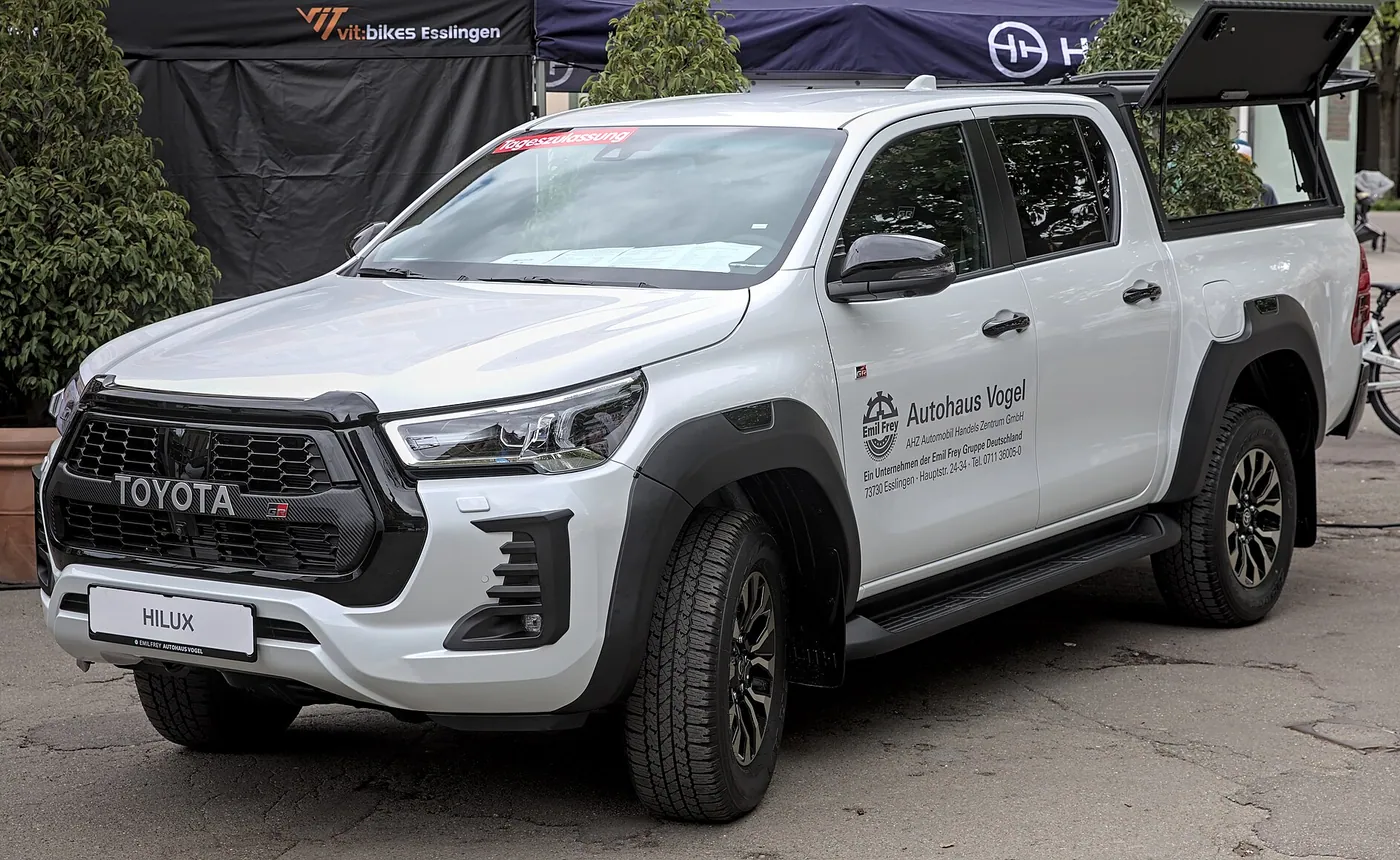
In short: In the three months to 19 September 2026, 742 Toyota Hilux Surfs sold at Japanese auctions at a median of €5,965, against 1,523 Toyota Hiluxs at €21,342. The Toyota Hilux Surf is the cheaper buy by about €15,377 at auction, before shipping, VAT, VRT and fees. Our verdict is at the end of this article.
The Hilux name has meant tough Toyota hardware since the late 1960s, and the Hilux Surf was the comfortable branch of the family. Built on pickup underpinnings but closed in as a five-door estate, it was sold in Europe as the 4Runner and became a staple of Irish farms and towing yards in the 1990s and 2000s.
The Surf most commonly found at Japanese auctions today is either the 185 series, built from 1995 to 2002, or the 215 series that followed until 2009. After that, Toyota stopped selling the Surf in Japan.
The modern Hilux took a different path. Toyota stopped selling the pickup in Japan in 2004 and reintroduced it in 2017 with the eighth generation. This is the double-cab truck with a 2.4-litre turbo diesel, sold in Japan as a working vehicle and, increasingly, as a lifestyle one. For an Irish buyer the question is whether you want an older, enclosed family off-roader or a newer pickup with a load bed.
The specs
| Toyota Hilux Surf | Toyota Hilux | |
|---|---|---|
| Generation most imported | 185 series (1995–2002) and 215 series (2002–2009) | 8th gen (GUN125), Japanese sales from 2017 |
| Engines | 3.0 or 3.0 turbo diesel, 2.7 petrol, V6 petrol | 2.4 turbo diesel |
| Gearbox | Mostly 4-speed automatic | 6-speed automatic |
| Drive | 4WD (some rear-drive) | Part-time 4WD with low range |
| Seats | 5 | 5 |
| Body | 5-door SUV | Double-cab pickup |
| Rear window | Winds down into the tailgate | Fixed |
| Import duty to Ireland | 0% possible (Japan-built, with proof of origin) | 0% possible (Japan-built, with proof of origin) |
Two generations, two purposes
The 185 Surf is old enough now that the earliest examples have passed 30 years, which makes them collectible and changes how they are treated on import. It was available with a 3.0 turbo diesel, a 2.7 petrol and a 3.4 V6. The 215 series brought a 3.0 common-rail diesel, a 2.7 petrol and a 4.0 V6, along with a more refined interior.
The eighth-generation Hilux is a simpler proposition. Japanese cars have the 2.4 diesel, a six-speed automatic and part-time four-wheel drive, usually in Z trim with good equipment.
How they drive
The Surf rides like an older ladder-frame SUV: soft, a little vague in the steering and happiest at a steady pace. The 215 series improved refinement and handling, and the V6 versions are pleasantly smooth. Off-road, both generations are very capable with low-range gearing.
The Hilux is more modern in every way, but it is still a pickup. Unladen, its leaf-sprung rear end skips over bumps. Loaded, it settles. The diesel has strong low-down pull and the automatic is smooth. It feels larger and more truck-like than the Surf, which matters in a narrow town street.
Inside and practicality
The Surf is the better family car. It has a closed, weatherproof boot, a rear bench that folds, and a power rear window in the tailgate that lowers to let long loads through or air into the cabin. Seats are comfortable for long journeys.
The Hilux offers a load bed for dirty, bulky cargo, and its double cab has proper room for four adults. Anything in the bed is exposed to Irish weather unless you fit a canopy or cover. For farm work, building sites or carrying a quad, it is the better tool.
Running costs and reliability
Both are known for durability, but age matters most here. A Surf of 20 to 30 years needs careful assessment of rubber, bushes, cooling and the condition of its diesel engine. The older 3.0 turbo diesel can suffer cylinder head cracking if overheated, and the later common-rail diesel has a record of injector problems.
The Hilux's diesel is a newer design. Early versions were known to build up soot in the particulate filter when used only on short trips, and Toyota later added a manual regeneration function. Fuel economy is reasonable for the size, though not small-car frugal.
What to check at auction
On both, the chassis is everything. Cars from northern Japan may have been driven on salted roads, and older Surfs should be checked for corrosion on the frame, rear arches and tailgate. Read auction sheet notes for rust, and ask for photographs of the underside.
On the Surf, check the rear window mechanism and the condition of the interior. On the Hilux, look for signs of hard working life, such as damage in the load bed or overloaded rear springs, and notes about aftermarket lifts. Prefer grade 4 Hiluxes and the best grade you can find in a Surf.
The verdict
Buy the Hilux Surf if you want an enclosed, comfortable off-roader with classic appeal and you accept that you are buying an older vehicle that needs mechanical attention. An early 185 can be an enjoyable classic.
Buy the Hilux if you need a modern, reliable working vehicle with a load bed, a strong diesel and up-to-date safety, for farm, trade or towing use.
Frequently asked questions
Is the Hilux Surf the same as the 4Runner?
Yes. The Hilux Surf was sold in Europe and other markets as the Toyota 4Runner.
When did the Hilux return to Japan?
Toyota reintroduced the Hilux pickup in Japan in 2017, with the eighth generation and a 2.4 diesel.
Which Surf generation is best?
The 215 series is more refined and modern. The 185 series has classic appeal, and the earliest examples are now over 30 years old.
Keep reading
- Jeep Wrangler vs Toyota FJ Cruiser: Two Off-Road Icons, One American and One That Only Looks It
- Volkswagen Touran vs Volkswagen Sharan: Seven Seats, Two Very Different Ideas of a Family Car
- Suzuki Jimny Sierra vs Suzuki Escudo: The Little Mountain Goat and the Sensible Vitara
- Daihatsu Wake vs Mitsubishi eK Space: How Tall Can a Kei Car Get Before It Stops Making Sense?
- Toyota 86 vs Subaru BRZ: Twins From the Same Factory, Separated by Suspension and Personality
- Importing a Toyota Hilux: prices and costs
Photo credits
- Toyota Hilux Surf: Photo: 2001FordRangerXLT / Wikimedia Commons, CC BY-SA 4.0
- Toyota Hilux: Photo: Alexander-93 / Wikimedia Commons, CC BY-SA 4.0