
Honda Fit Shuttle Hybrid vs Nissan Wingroad: Two Small Estates, One Hybrid Advantage
Both are compact Japanese estates with big boots and modest running costs. The Honda adds a hybrid system and a clever cabin; the Nissan is simpler and offers four-wheel drive.
By the Japan to Ireland editors · · 4 min read
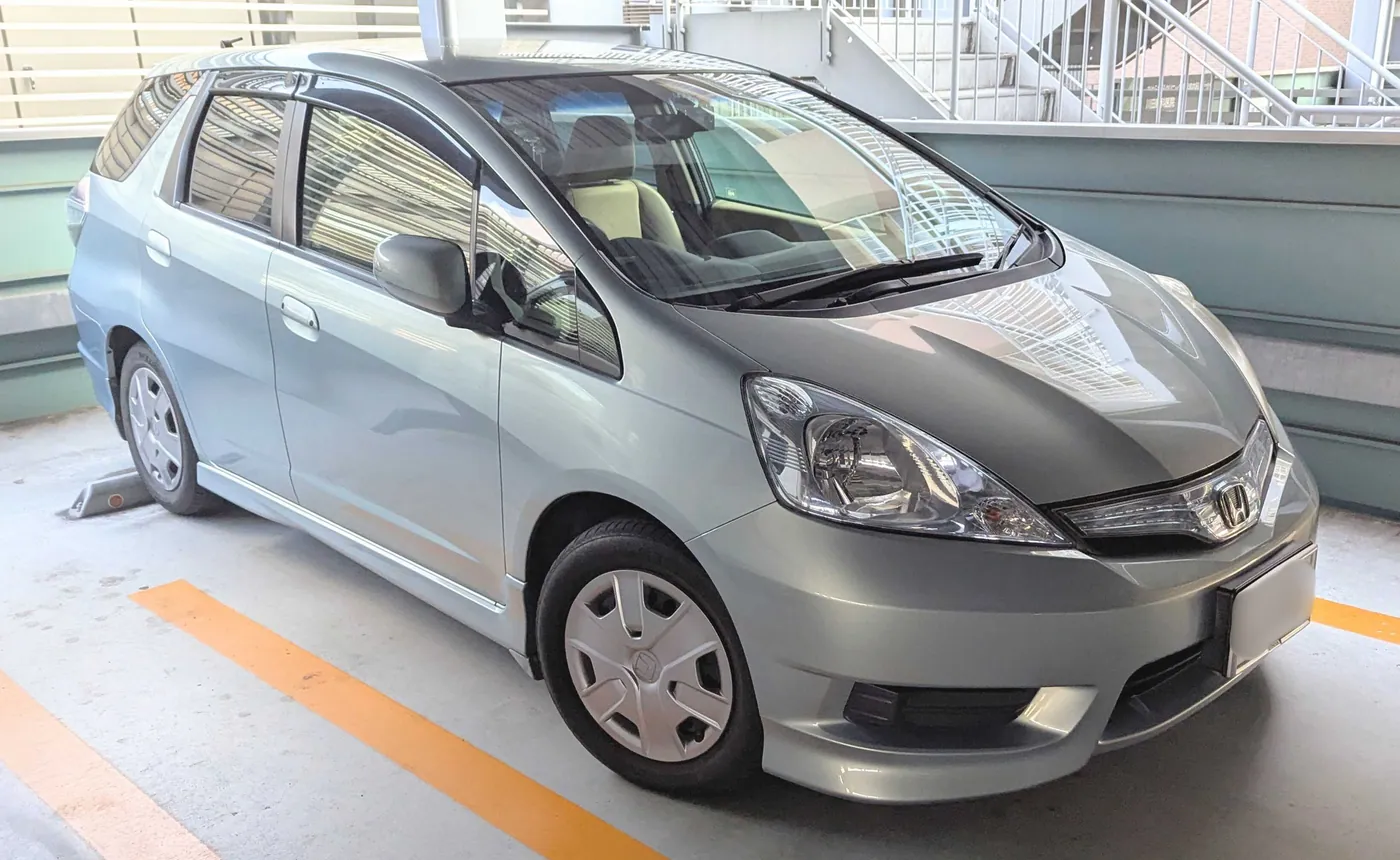
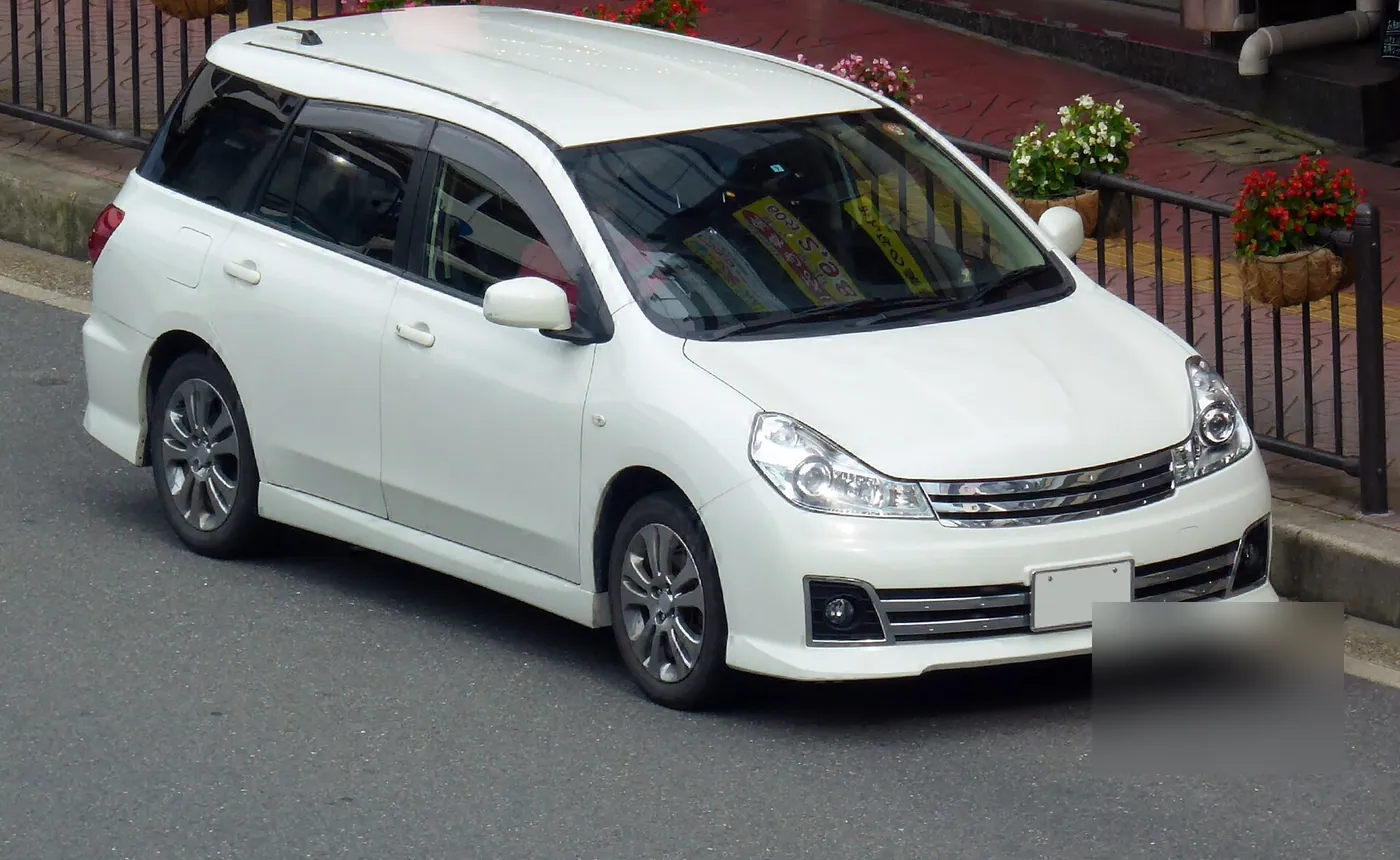
In short: In the three months to 19 September 2026, 1,559 Honda Fit Shuttle Hybrids sold at Japanese auctions at a median of €855, against 710 Nissan Wingroads at €660. The Nissan Wingroad is the cheaper buy by about €195 at auction, before shipping, VAT, VRT and fees. Our verdict is at the end of this article.
The compact estate was once a staple of Irish driveways: a car that could swallow a buggy, a dog bed and a week's shopping without taking up much room on the street. The format has faded from new-car showrooms, but in Japan it lived on longer, and two of its most practical examples are now familiar at Japanese auctions: the Honda Fit Shuttle Hybrid and the Nissan Wingroad.
They are both modest, sensible cars. The Honda adds a hybrid system and an unusually clever interior. The Nissan is plainer and older in its design, but it is available with a larger engine and four-wheel drive. For an Irish buyer who wants a small car with a big boot, the choice is not obvious.
What decides it is how you drive and where you live. Short town journeys favour one; wet hills and rough lanes favour the other.
The specs
| Honda Fit Shuttle Hybrid | Nissan Wingroad | |
|---|---|---|
| Generation most imported | GP2, 2011–2015 | 3rd gen (Y12), 2005–2018 |
| Engine | 1.3 petrol with IMA hybrid | 1.5 or 1.8 petrol |
| Gearbox | CVT | Automatic (CVT on most) |
| Drive | Front | Front, or 4WD |
| Seats | 5 | 5 |
| Body | Compact estate | Compact estate |
| Hybrid | Yes, mild parallel hybrid (IMA) | No |
| Import duty to Ireland | 0% possible (Japan-built, with proof of origin) | 0% possible (Japan-built, with proof of origin) |
Background
The Fit Shuttle was Honda's estate version of the second-generation Fit, known in Ireland as the Jazz. It was sold from 2011 to 2015, and the hybrid model, coded GP2, used Honda's Integrated Motor Assist system: a 1.3-litre petrol engine with a thin electric motor sandwiched between engine and gearbox, helping on acceleration and recovering energy under braking. It was replaced by the Honda Shuttle in 2015.
The Wingroad was Nissan's small estate from 1996 onwards. The third generation, coded Y12, was launched in 2005 and stayed in production until 2018, a very long run that means many examples are available at auction. It shares much of its engineering with the Nissan Tiida and Note of its era, using familiar 1.5 and 1.8-litre petrol engines.
How they drive
The Fit Shuttle Hybrid is light and easy to drive. The IMA system gives a little extra help when pulling away, and the engine shuts off when the car stops, which makes it quiet in traffic. It is not quick, and the CVT can make the engine sound strained under hard acceleration, but in normal driving it is smooth and relaxed. The ride is slightly firm, and the steering is light.
The Wingroad feels older but solid. The 1.5-litre engine is adequate and the 1.8 noticeably stronger, and both are refined enough at a cruise. The suspension is soft, which suits rough Irish roads, though the car leans in corners. Four-wheel-drive versions offer reassurance in poor weather but use more fuel.
Inside and practicality
Honda's packaging is the Fit Shuttle's great strength. The fuel tank sits under the front seats, which frees up space in the back, and the rear seats fold down low in a single movement to create a long, level floor. The boot is large for a car of this size, and many versions have a useful storage well beneath the floor. The cabin is airy, with good visibility.
The Wingroad's boot is also generous, with a wide opening and a flat floor when the seats are folded. The cabin is simple and durable, with plain plastics and practical storage. Rear seat space is comparable, and the seating position is a little lower.
Running costs and reliability
The Fit Shuttle Hybrid is the more economical car, especially in town, and it sits in a lower CO2 band. Its hybrid battery, a nickel-metal hydride pack, will be more than a decade old in most examples, and its health is the key question. Replacement or reconditioning is possible but adds cost.
The Wingroad uses more fuel but is mechanically simple. Its engines are well known and robust, and with timing chains rather than belts, long-term costs are low. The CVT should have had its fluid changed regularly, and any shudder or whine should be investigated.
What to check at a Japanese auction
For the Fit Shuttle Hybrid, the auction sheet may say little about the hybrid battery, so look for any recorded warning lights, ask for a battery health check where possible and favour lower-mileage cars. Check that the CVT engages smoothly, because Honda's hybrid CVTs of this period can develop judder. Look for wear on the seats and the folding mechanisms.
For the Wingroad, check for rust, especially on four-wheel-drive versions from snowy regions. Look for interior wear, as many were used as work cars or busy family cars. Check the CVT, suspension bushes and exhaust. Grade 4 cars with documented mileage are plentiful for both models, so there is no need to accept a lower grade.
The verdict
Buy the Fit Shuttle Hybrid if you want the most practical small estate with the lowest running costs, and you are prepared to check the hybrid battery carefully. Its clever interior makes it feel bigger than it is.
Buy the Wingroad if you need four-wheel drive or prefer a simpler, non-hybrid car with fewer long-term unknowns. It is less clever and less economical, but it is straightforward, robust and easy to own.
Frequently asked questions
Is the Fit Shuttle related to the Honda Jazz?
Yes. It is the estate version of the second-generation Fit, which was sold in Ireland as the Jazz.
Does the Fit Shuttle Hybrid come with four-wheel drive?
No, the hybrid is front-wheel drive. The Wingroad is available with four-wheel drive.
What is the main thing to check on a Fit Shuttle Hybrid?
The health of the hybrid battery, which will be more than a decade old in most cars, along with smooth CVT operation.
Keep reading
- Subaru Legacy Touring Wagon vs Subaru Outback: One Family, Two Ideas of Adventure
- Honda Life vs Daihatsu Mira: Two Plain Kei Hatchbacks That Asked Very Little of Their Owners
- Volkswagen Tiguan vs Audi Q5: The Sensible German SUV and the One That Wants to Impress
- Volkswagen Touran vs Volkswagen Sharan: Seven Seats, Two Very Different Ideas of a Family Car
- Subaru Impreza Sport vs Mazda Axela Sport: The Grip Specialist and the Driver's Hatchback
Photo credits
- Honda Fit Shuttle Hybrid: Photo: Kalmarle / Wikimedia Commons, CC BY-SA 4.0
- Nissan Wingroad: Photo: Tokumeigakarinoaoshima / Wikimedia Commons, CC BY-SA 4.0