
Volkswagen Touran vs Volkswagen Sharan: Seven Seats, Two Very Different Ideas of a Family Car
One is a tall Golf with an extra row. The other is a proper people carrier with sliding doors. Both were sold in Japan with the same 1.4 TSI engine, and both make sense for different families.
By the Japan to Ireland editors · · 4 min read
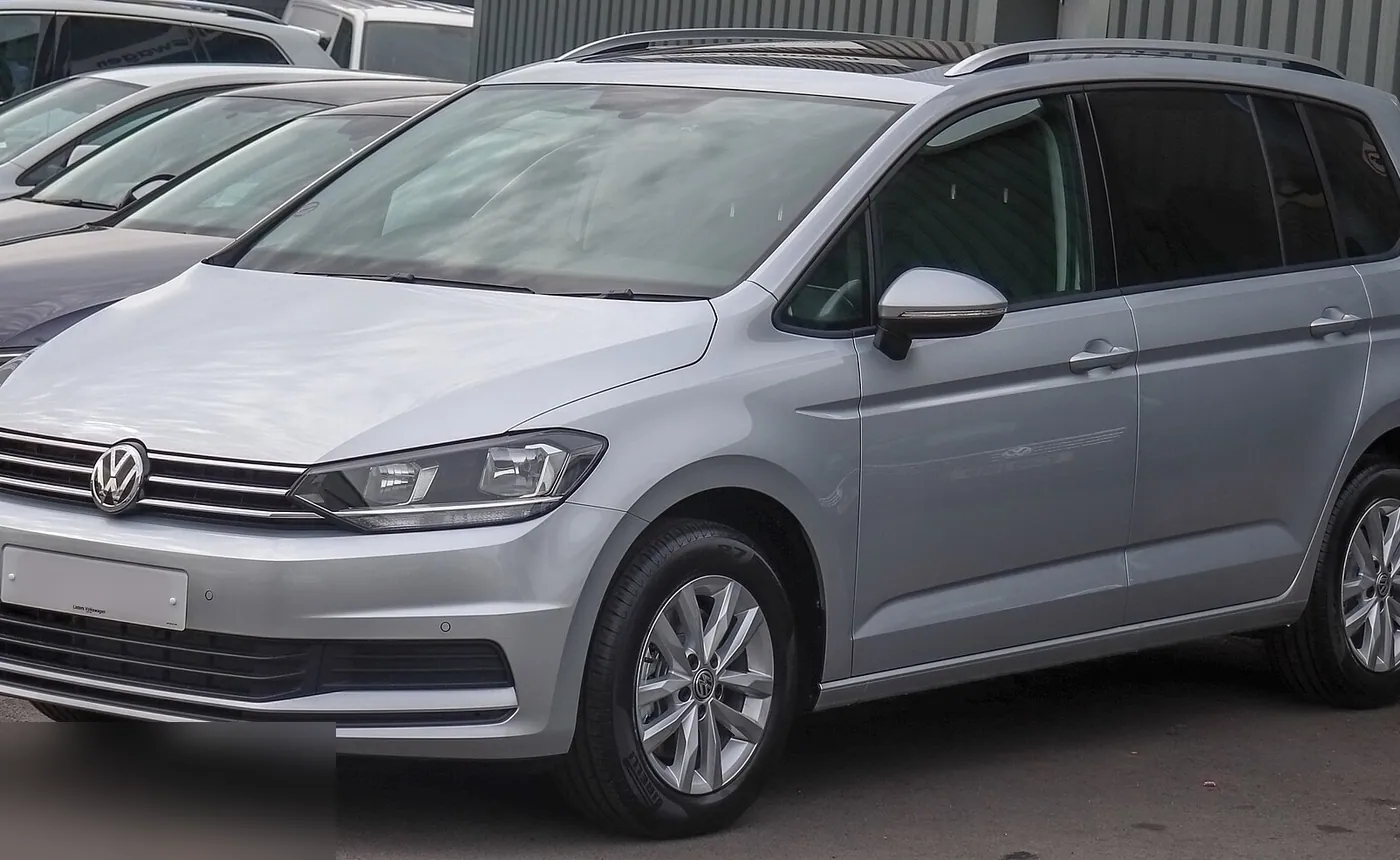
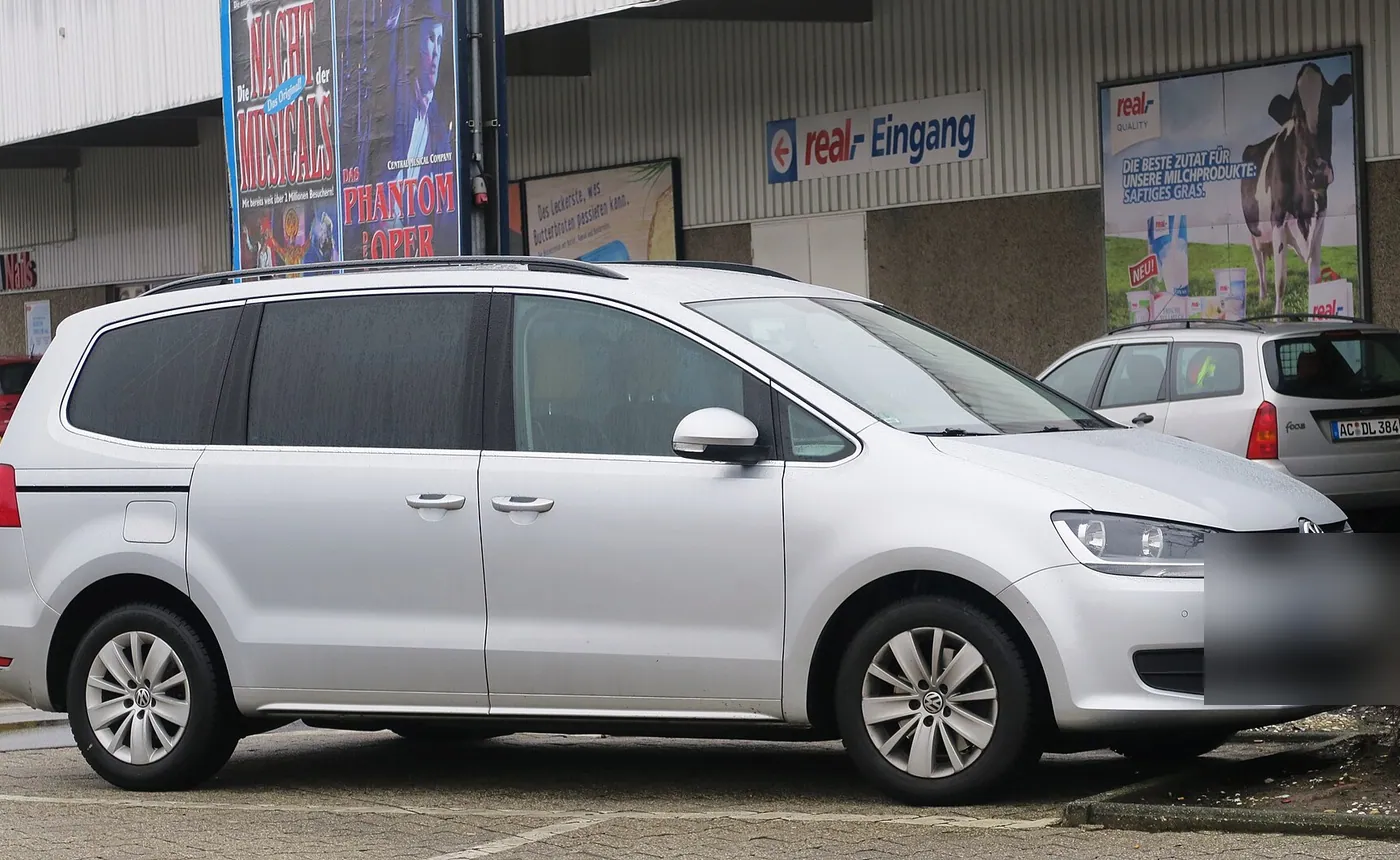
In short: In the three months to 19 September 2026, 605 Volkswagen Tourans sold at Japanese auctions at a median of €3,120, against 300 Volkswagen Sharans at €2,509. The Volkswagen Sharan is the cheaper buy by about €611 at auction, before shipping, VAT, VRT and fees. Our verdict is at the end of this article.
Volkswagen has built two answers to the seven-seat question for most of this century, and in Japan both were sold side by side. The Touran, badged Golf Touran in Japan, is a compact MPV on the same MQB underpinnings as the Golf. The Sharan is a full-size people carrier with sliding rear doors, the closest thing Volkswagen made to the Japanese minivans that fill Irish school car parks.
Both arrive from Japan in right-hand drive, usually with the 1.4 TSI petrol engine and a DSG gearbox, often with modest mileage. That shared mechanical base makes this an unusually clean comparison. The difference is size, and what size does to a family's week.
The specs
| Volkswagen Touran | Volkswagen Sharan | |
|---|---|---|
| Generation most imported | 2nd gen (5T), 2015 on | 2nd gen (7N), 2010 on |
| Japanese name | Golf Touran | Sharan |
| Engine (most common) | 1.4 TSI petrol | 1.4 TSI petrol |
| Power | 150 PS | 150 PS |
| Gearbox | DSG dual-clutch automatic | DSG dual-clutch automatic |
| Drive | Front | Front |
| Seats | 7 | 7 |
| Rear doors | Hinged | Sliding |
| Import duty to Ireland | 10% (not built in Japan) | 10% (not built in Japan) |
Where they came from
The second-generation Touran arrived in 2015 and was a big step on from its boxy predecessor. It is longer and lighter than the old car, and it borrows the Golf's cabin technology, safety systems and refinement. Japanese buyers also had access to a 2.0 TDI diesel from 2018, though the petrol is far more common at auction.
The Sharan in its second generation dates from 2010 and was built in Portugal alongside the SEAT Alhambra, its close twin. It is an older design than the Touran, and it shows in the dashboard, but its body is the more useful shape for a large family.
How they drive
The Touran drives like a tall Golf, which is meant as a compliment. The steering is accurate, the body leans little and the ride is settled on motorways and N roads. The 1.4 TSI is lively when the car is lightly loaded and still competent with seven on board.
The Sharan is heavier and feels it. The same engine has more work to do, and on a hill with a full load the gearbox will drop down and the engine will make itself heard. It is still comfortable and quiet at a cruise, and its long wheelbase gives a calm ride. It is simply a larger, slower car, and you drive it with that in mind.
Inside and practicality
Here the Sharan pulls clearly ahead. Sliding rear doors make loading children into car seats far easier in a tight car park, and they cannot be swung into the car next door. All three rows are more usable for adults, and with the third row up there is still a real boot. Fold the rear seats and the floor is long and flat enough for flat-pack furniture or a bike.
The Touran's third row is best for children. With all seven seats in use the boot is small, enough for a few school bags and little else. In five-seat mode, though, it has a big, square load space, and the cabin is more modern in its materials and screens. For a family that only uses the third row occasionally, that may be the more relevant measure.
Running costs and reliability
The Touran is the cheaper car to fuel, and its newer design gives it the better safety equipment. Both cars use petrol engines and dual-clutch gearboxes that respond well to regular servicing. DSG gearboxes should change gear cleanly and without judder from a standstill, and any hesitation is worth investigating before purchase.
The Sharan's sliding doors add complexity. The door runners, motors on powered versions and associated wiring should all be checked, because repairs are fiddly. Age matters too: most Sharans at auction are older than most Tourans, which affects rubber parts, bushes and batteries.
What to check at auction
On both cars, read the auction sheet for gearbox notes and any warning lights, and look for interior grade B or better, since seven-seat family cars wear their cabins hard. Check the condition of the third-row seats and their folding mechanisms.
On the Sharan, ask for a check that both sliding doors open and close fully, and look for inspector comments about door operation. Rust is rarely significant on Japanese-used cars, but snow-region cars should have their underside photographed. Prefer grade 4 cars with clear service records.
The verdict
Buy the Touran if your family is four or five, with the occasional extra passenger. It is newer, more economical, more pleasant to drive and easier to park, and its five-seat boot is excellent.
Buy the Sharan if you regularly fill seven seats or carry adults in the back row. Its sliding doors and larger cabin make daily life easier for a large family, and that matters more than its older dashboard.
Frequently asked questions
Is the Golf Touran the same as the Touran?
Yes. Volkswagen sold the Touran in Japan as the Golf Touran. It is the same car sold in Europe as the Touran.
Which has more room in the third row?
The Sharan, clearly. Its third row suits adults on shorter trips, while the Touran's is best for children.
Do both have automatic gearboxes?
Japanese-market cars almost always have the DSG dual-clutch automatic.
Keep reading
- Volkswagen Tiguan vs Audi Q5: The Sensible German SUV and the One That Wants to Impress
- Honda Fit Shuttle Hybrid vs Nissan Wingroad: Two Small Estates, One Hybrid Advantage
- Jeep Wrangler vs Toyota FJ Cruiser: Two Off-Road Icons, One American and One That Only Looks It
- Toyota Hilux Surf vs Toyota Hilux: The Old Family Off-Roader and the Modern Working Pickup
- Toyota SAI vs Lexus HS 250h: Twin Hybrid Saloons That Japan Kept to Itself
Photo credits
- Volkswagen Touran: Photo: Vauxford / Wikimedia Commons, CC BY-SA 4.0
- Volkswagen Sharan: Photo: Charles01 / Wikimedia Commons, CC BY-SA 4.0