
Volkswagen Tiguan vs Audi Q5: The Sensible German SUV and the One That Wants to Impress
Both come from the same group, the same engineers and many of the same parts bins. In Japan both are sold in right-hand drive, and the gap between them at auction is smaller than the badges suggest.
By the Japan to Ireland editors · · 4 min read
In short: In the three months to 19 September 2026, 604 Volkswagen Tiguans sold at Japanese auctions at a median of €8,646, against 367 Audi Q5s at €8,689. The Volkswagen Tiguan is the cheaper buy by about €43 at auction, before shipping, VAT, VRT and fees. Our verdict is at the end of this article.
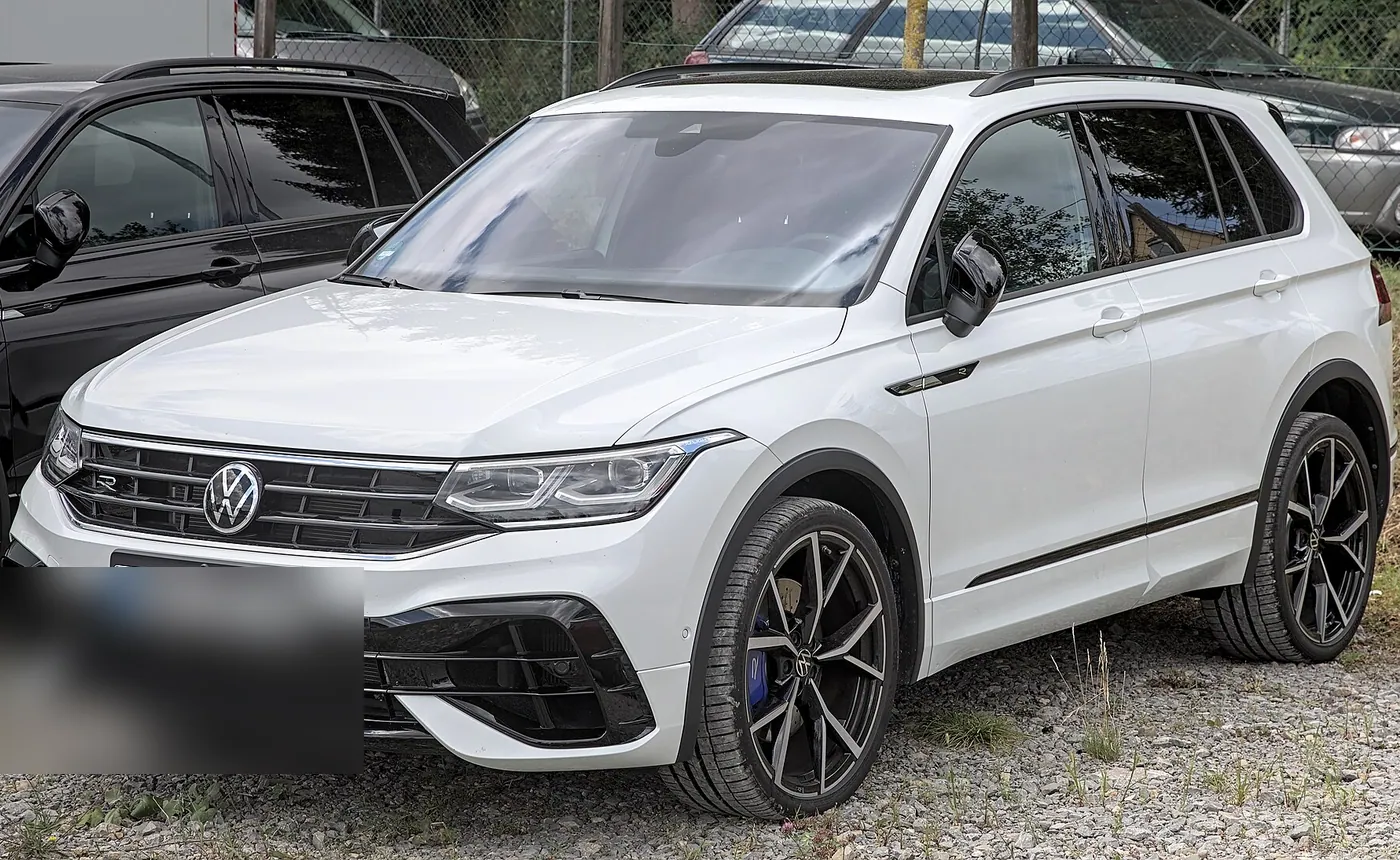
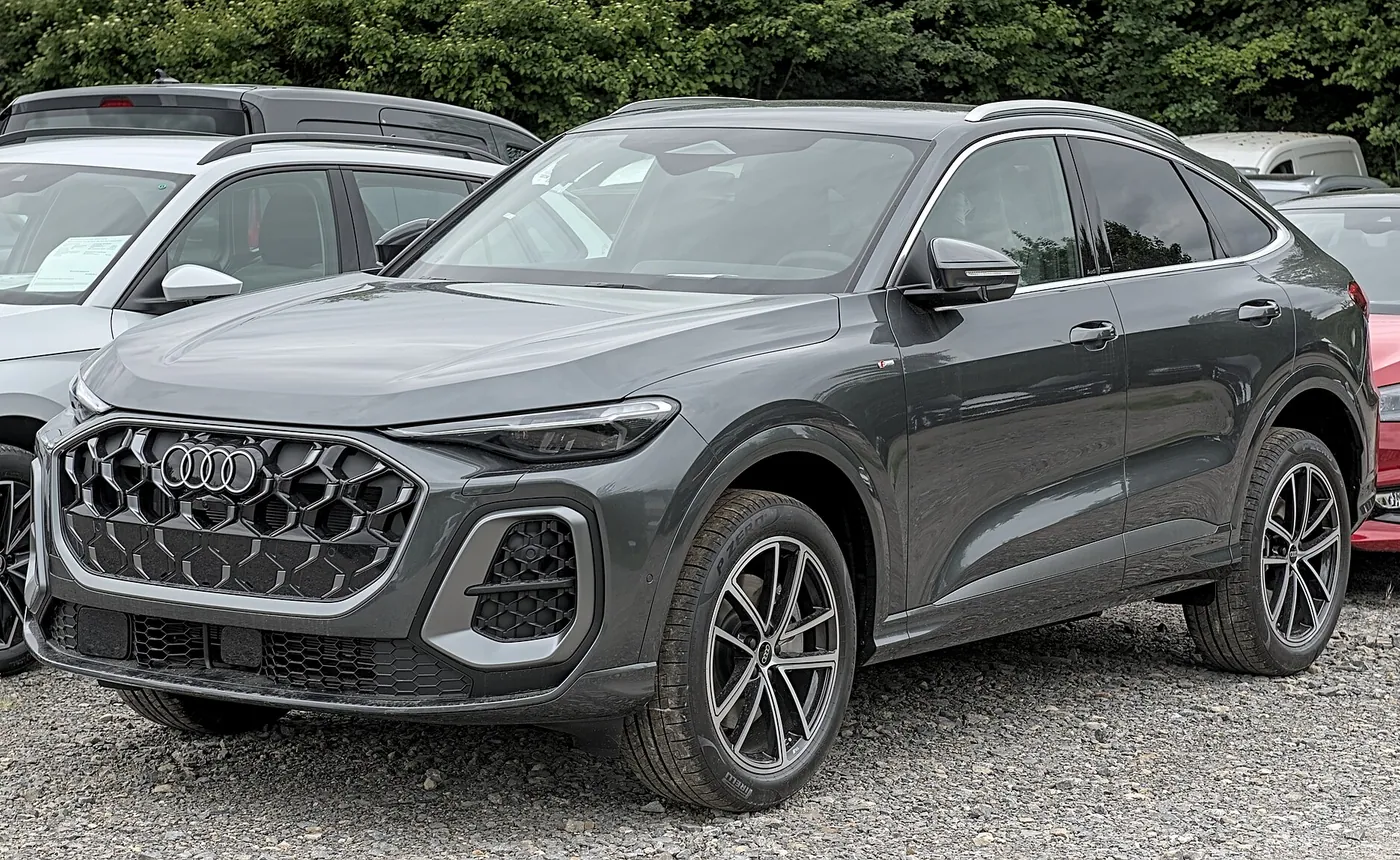
In a Japanese auction catalogue the two cars often sit a page apart. A white Tiguan with a roof rail and a modest set of alloys, a grey Q5 with a dark grille and a panoramic roof. They look like an older and younger sibling, and in a sense they are: both belong to the Volkswagen Group, both arrived in their second generations in Japan in 2017, and both were sold there in right-hand drive to buyers who wanted a European car without a European driving position.
Under the skin they are further apart than the family resemblance implies. The Tiguan sits on MQB, the transverse platform shared with the Golf and Passat. The Q5 uses MLB, a longitudinal layout built for larger Audis, with the engine running front to back and quattro all-wheel drive as standard on Japanese cars.
For an Irish buyer, the choice is less about prestige than about what kind of driving you do and how much car you need. One is a well-made family tool. The other is a mid-sized premium car that happens to sit higher.
The specs
| Volkswagen Tiguan | Audi Q5 | |
|---|---|---|
| Generation most imported | 2nd gen (AD1), Japanese sales from 2017 | 2nd gen (FY), Japanese sales from 2017 |
| Engines (Japan) | 1.4 or 1.5 TSI petrol, 2.0 TDI diesel | 2.0 TFSI petrol, 2.0 TDI diesel |
| Gearbox | DSG dual-clutch automatic | S tronic dual-clutch automatic |
| Drive | Front, or 4Motion AWD | quattro AWD |
| Seats | 5 | 5 |
| Length (approx.) | 4,500 mm | 4,680 mm |
| Platform | MQB (transverse engine) | MLB (longitudinal engine) |
| Import duty to Ireland | 10% (not built in Japan) | 10% (not built in Japan) |
Two different jobs
Volkswagen pitched the Tiguan at the heart of the market. In Japan the common versions are the 1.4 TSI petrol with front-wheel drive and, from 2018, the 2.0 TDI with 4Motion all-wheel drive. A facelift in 2020 brought a 1.5 TSI and a refreshed cabin.
Audi aimed the Q5 higher. Japanese buyers mostly chose the 2.0 TFSI petrol, with diesel versions arriving later. Equipment levels are generous, and many cars carry S line trim, larger wheels and the Virtual Cockpit digital display.
How they drive
The Tiguan is quiet, composed and easy. The steering is light, the ride is firm without being harsh, and the turning circle suits a town car park. The 1.4 TSI is adequate rather than eager once the car is full. The TDI has the torque for a loaded car on the N roads and is the better match for regular long runs.
The Q5 is the more substantial car on the road. It feels heavier and more planted, the cabin is better insulated, and the petrol engine is noticeably stronger. Quattro gives it real composure in the rain, which in Ireland is most days. On S line cars with big wheels and sports suspension, however, broken tarmac comes through with some force, so a car on smaller wheels makes more sense on rural roads.
Inside
The Tiguan is the more practical car for its size. The rear bench slides on most versions, the boot is square and deep, and the cabin is full of sensible storage. It feels well built, if plain.
The Q5 is roomier overall, particularly across the rear, and its materials are a clear step up: softer plastics, tighter joins, a heavier feel to every switch. The boot is generous but not dramatically bigger than the Tiguan's. You pay for the Audi in finish rather than space.
Running costs and reliability
Neither is a cheap car to run in the way a Japanese hybrid is. Fuel use is moderate for the Tiguan, higher for the petrol Q5, and both rely on dual-clutch gearboxes that need their fluid changed on schedule and dislike being crept in traffic. Servicing an Audi costs more, and parts for the larger car are dearer.
The petrol engines in both families have a known weakness in the plastic water pump and thermostat housing, which can weep coolant with age. Diesels that have spent their lives on short trips can have soot-laden particulate filters. None of this is a reason to avoid either car, but it rewards careful selection.
What to check at auction
Read the auction sheet for notes on warning lights, gearbox behaviour and any coolant leaks recorded by the inspector. Look for grade 4 or 4.5 cars with interior grade B or better, and treat a grade 3 European car with caution, since repairs cost more than on a Japanese equivalent.
Japanese owners tend to keep these cars clean and lightly used, and rust is rarely a concern, but check for kerbed wheels, worn tyres on the Q5's large rims and any notes about replaced windscreens, which on cars with driver assistance cameras need calibration. Confirm the mileage history, and prefer cars with a dealer service record.
The verdict
Buy the Tiguan if you need a comfortable, practical family SUV that is easy to live with and cheaper to buy and maintain. The TDI with 4Motion suits a rural driver with long commutes; the TSI suits a mostly urban one.
Buy the Q5 if you want something that feels genuinely premium every time you sit in it, with stronger performance and all-wheel drive as standard, and you accept higher running costs in return. Choose one on smaller wheels unless your roads are smooth.
Frequently asked questions
Are Japanese-market Tiguans and Q5s right-hand drive?
Yes. Both were sold new in Japan in right-hand drive, the same layout as Irish cars.
Which is more reliable?
Both are broadly dependable when serviced on time. The Tiguan is simpler and cheaper to repair, while the Q5 has more equipment that can go wrong.
Is all-wheel drive standard?
On the Q5 in Japan, yes. On the Tiguan it comes with the 2.0 TDI; the TSI petrol versions are usually front-wheel drive.
Keep reading
- Honda Fit Shuttle Hybrid vs Nissan Wingroad: Two Small Estates, One Hybrid Advantage
- Subaru Legacy Touring Wagon vs Subaru Outback: One Family, Two Ideas of Adventure
- Volkswagen Touran vs Volkswagen Sharan: Seven Seats, Two Very Different Ideas of a Family Car
- Jeep Wrangler vs Toyota FJ Cruiser: Two Off-Road Icons, One American and One That Only Looks It
- Land Cruiser Prado vs Mitsubishi Pajero: Two Legends, One Still in Its Prime
- Importing a Volkswagen Tiguan: prices and costs
- Importing a Audi Q5: prices and costs
Photo credits
- Volkswagen Tiguan: Photo: Alexander Migl / Wikimedia Commons, CC BY-SA 4.0
- Audi Q5: Photo: Alexander Migl / Wikimedia Commons, CC BY-SA 4.0