
Toyota Corolla Axio vs Honda Grace: Two Quiet Saloons for People Who Hate Fuss
Japan's small hybrid saloons were built for company fleets and careful retirees. That makes them unusually good used buys, and very different cars once you drive them.
By the Japan to Ireland editors · · 4 min read
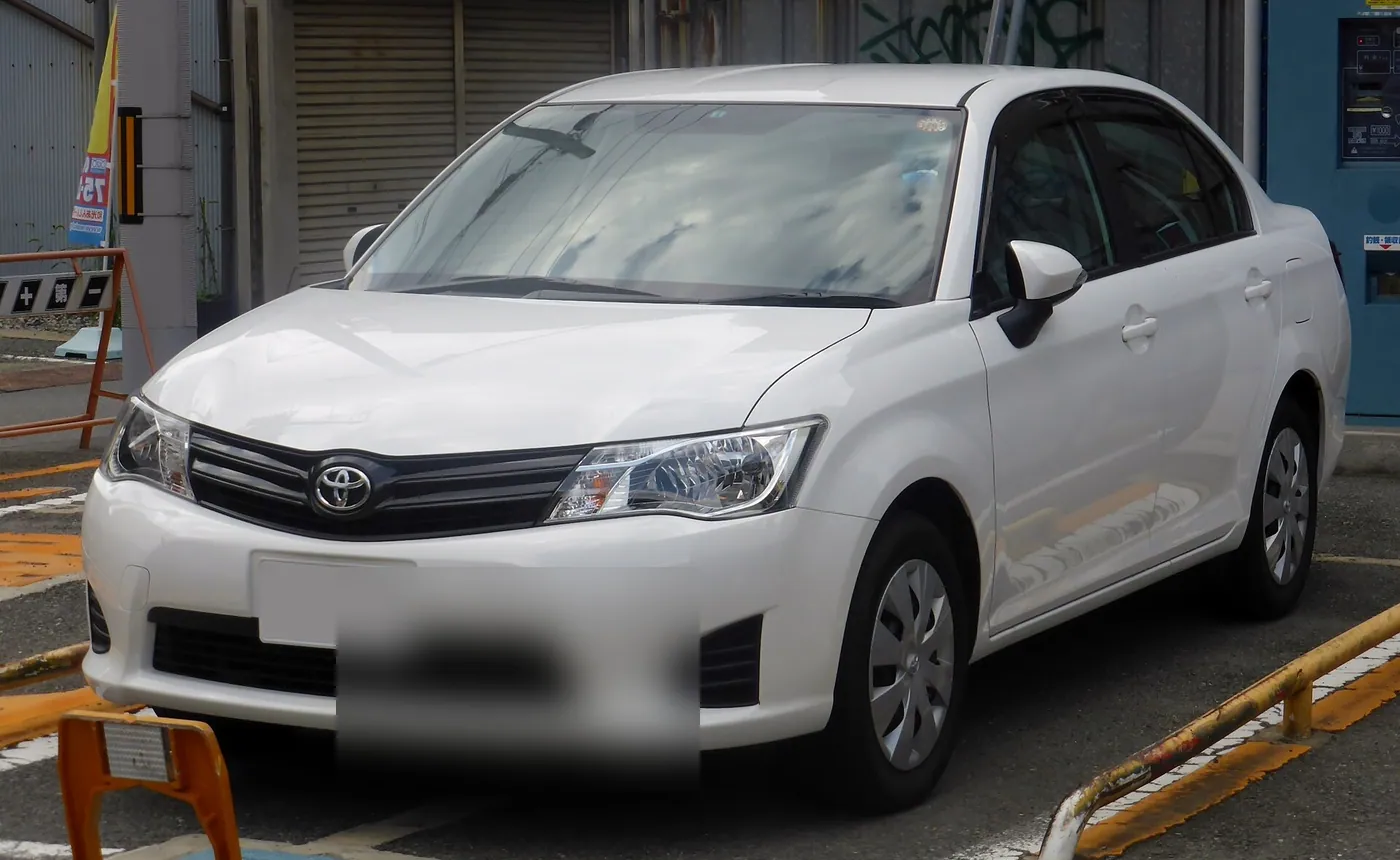
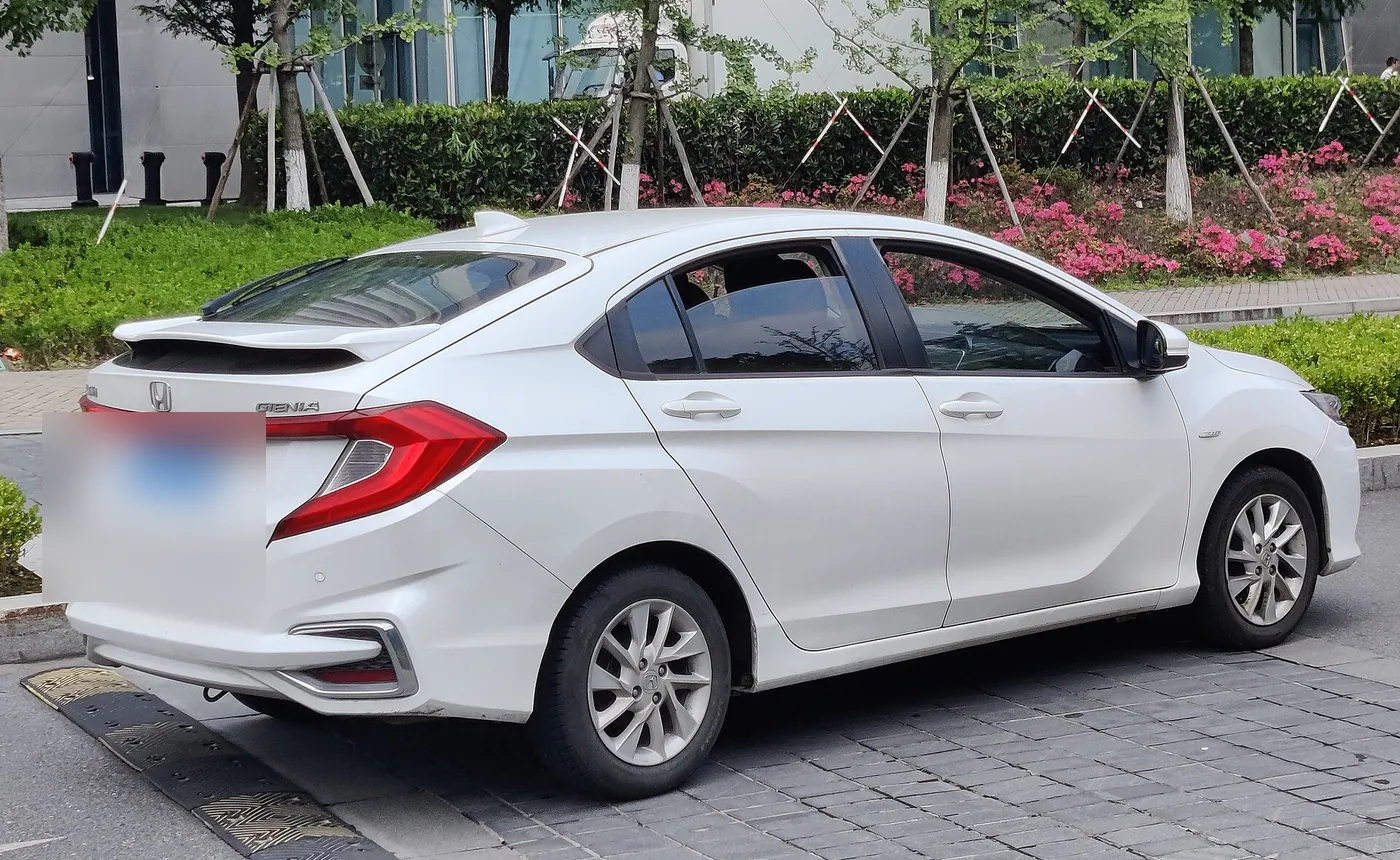
In short: In the three months to 19 September 2026, 4,818 Toyota Corolla Axios sold at Japanese auctions at a median of €3,186, against 863 Honda Graces at €2,397. The Honda Grace is the cheaper buy by about €789 at auction, before shipping, VAT, VRT and fees. Our verdict is at the end of this article.
The small four-door saloon has nearly vanished from Irish forecourts. Buyers moved to hatchbacks and then to crossovers, and the booted Corolla became a car you mostly see in taxi ranks. In Japan the format lingered far longer. Companies bought saloons for their sales staff, older drivers bought them because they looked respectable and fitted in a narrow garage, and both kinds of owner tended to service them by the book.
That is why the Toyota Corolla Axio and the Honda Grace turn up at Japanese auctions in such tidy condition. Both are compact saloons a little shorter than a Toyota Avensis, both were offered as hybrids, and both were built on the bones of a smaller car. The Axio is the eleventh-generation Corolla saloon sold in Japan from 2012, narrower than the Corolla Ireland got, so that it fitted Japanese tax and parking rules. The Grace, launched at the end of 2014, is essentially a Honda Fit with a longer wheelbase and a proper boot.
For an Irish buyer who wants a frugal, unpretentious car with real rear legroom and a sealed-off boot, these are two of the most sensible options in the whole market. They are not the same kind of sensible.
The specs
| Toyota Corolla Axio | Honda Grace | |
|---|---|---|
| Generation most imported | 11th gen Axio (E160), 2012 on | 1st gen Grace (GM4/GM5 hybrid, GM6/GM9 petrol), 2014–2020 |
| Engines | 1.3 and 1.5 petrol, 1.5 hybrid | 1.5 petrol, 1.5 i-DCD hybrid |
| Hybrid system output | 100 PS | 137 PS |
| Gearbox | CVT or e-CVT | CVT, or 7-speed dual-clutch on hybrids |
| Drive | Front, or 4WD on some petrol grades | Front, or 4WD |
| Seats | 5 | 5 |
| Body | 4-door saloon | 4-door saloon |
| Shares its basics with | Corolla Fielder estate | Honda Fit and City |
| Import duty to Ireland | 0% possible (Japan-built, with proof of origin) | 0% possible (Japan-built, with proof of origin) |
Two ideas of a hybrid
The Axio Hybrid uses the 1.5-litre Toyota system familiar from the Aqua and the earlier Prius family: a petrol engine, two motor-generators and a planetary gearset that does the job of a gearbox. It is smooth, quiet at town speeds and very hard to break. Petrol Axios, with 1.3 or 1.5-litre engines and a CVT, are even simpler.
Honda took a different route. The Grace Hybrid pairs a 1.5-litre engine with a single electric motor inside a seven-speed dual-clutch gearbox, a system Honda called i-DCD. It feels more like a conventional car, with real gearchanges you can sense, and it has noticeably more punch when you pull out to pass a tractor on an N-road. The earliest versions of this system in the Fit suffered software problems and recalls in Japan. By the time the Grace arrived most had been addressed, but the gearbox can still feel hesitant when creeping in traffic.
On the road
The Axio drives like the car it is: a light, upright saloon tuned for comfort and predictability. The steering is vague, the body leans in corners and the ride is soft enough that ruts in a rural road pass underneath without drama. Above 110 km/h on the M7 the hybrid's engine note rises and stays there.
The Grace is livelier. It sits a little lower, steers with more conviction and pulls harder from 60 to 100 km/h. The penalty is refinement at low speed, where the dual-clutch can jerk, and a firmer ride over broken surfaces. Neither car is exciting. The Honda is the one you would choose for a long cross-country drive.
Inside and in the boot
This is the Grace's strongest card. Because it uses Honda's centre-tank layout from the Fit, the rear floor is flat and the back seat is surprisingly generous, with legroom that embarrasses some larger saloons. The dashboard is more modern, with a touch-sensitive climate panel on higher grades.
The Axio's cabin is plainer, built from hard grey plastics that feel indestructible rather than pleasant. Rear space is fine for two adults, and the boot is a usable, square-sided box. Many Axios were fleet cars, so expect basic trim, steel wheels and the occasional bench-seat wear from a decade of salesmen's briefcases.
Running costs and reliability
Both sit in low CO2 bands, which keeps annual motor tax modest. Real-world economy is close: the Honda is more efficient on faster roads, the Toyota slightly better in stop-start town work.
Long term, the Toyota is the safer bet. Its hybrid system is shared with millions of cars, every Irish hybrid specialist knows it, and failures are rare. The Honda's system is reliable in later cars but less familiar to independent garages, and the dual-clutch gearbox is a more complicated piece of machinery than Toyota's e-CVT.
What to check at auction
For the Axio, check the auction sheet for evidence of fleet use: heavy wear to the driver's seat bolster, many small dents, or a high mileage for the year. Grade 4 and above is plentiful, so there is little reason to accept less. Hybrids from 2017 onward gained Toyota's Safety Sense package on most grades, which is worth having.
For the Grace, look for cars from the 2017 facelift, which added Honda Sensing safety equipment on many versions. Ask for any record of gearbox software updates, and be wary of a sheet that mentions warning lights. Four-wheel-drive Graces come from snowy prefectures and need a careful look underneath for corrosion on the subframes and brake lines.
The verdict
Buy the Corolla Axio if you want the least complicated car possible: a durable hybrid or petrol saloon that will do what it is asked for years with little attention, and that any mechanic in the country can fix.
Buy the Honda Grace if you carry adults in the back, drive more motorway than town and want a car that feels a little more modern and a little more willing. It is the better car to sit in. The Axio is the easier car to own.
Frequently asked questions
Is the Corolla Axio the same as the Irish Corolla saloon?
No. The E160 Axio is a narrower, Japan-specific saloon built to suit local size rules, and it shares its basics with the Corolla Fielder estate.
Is the Honda Grace hybrid gearbox reliable?
Later cars are generally sound, but the dual-clutch gearbox is more complex than Toyota's e-CVT and can feel jerky at low speed. A clean auction sheet with no warning-light notes matters.
Which has more rear legroom?
The Grace. Its fuel tank sits under the front seats, which frees up a flat rear floor and generous legroom.
Keep reading
- Subaru Forester vs Mitsubishi Outlander PHEV: Two Four-Wheel-Drive Answers to a Wet Country
- Honda N-WGN vs Daihatsu Mira Tocot: Two Kei Hatchbacks for People Who Simply Want to Get There
- Suzuki Swift vs Nissan March: The Featherweight and the Familiar Face
- Suzuki Jimny vs Mitsubishi Pajero Mini: Two Tiny Off-Roaders, One Real Climber
- Suzuki Jimny Sierra vs Suzuki Escudo: The Little Mountain Goat and the Sensible Vitara
- Importing a Toyota Corolla Axio: prices and costs
Photo credits
- Toyota Corolla Axio: Photo: Tokumeigakarinoaoshima / Wikimedia Commons, CC0
- Honda Grace: Photo: Zotyefan / Wikimedia Commons, CC BY-SA 4.0