
Mitsubishi Delica D:5 vs Mazda Biante: The People Carrier That Climbs and the One That Glides
One is an eight-seater with genuine four-wheel-drive ability and a cult following. The other is a bright, spacious family van that is happiest on tarmac. They suit very different Irish lives.
By the Japan to Ireland editors · · 4 min read
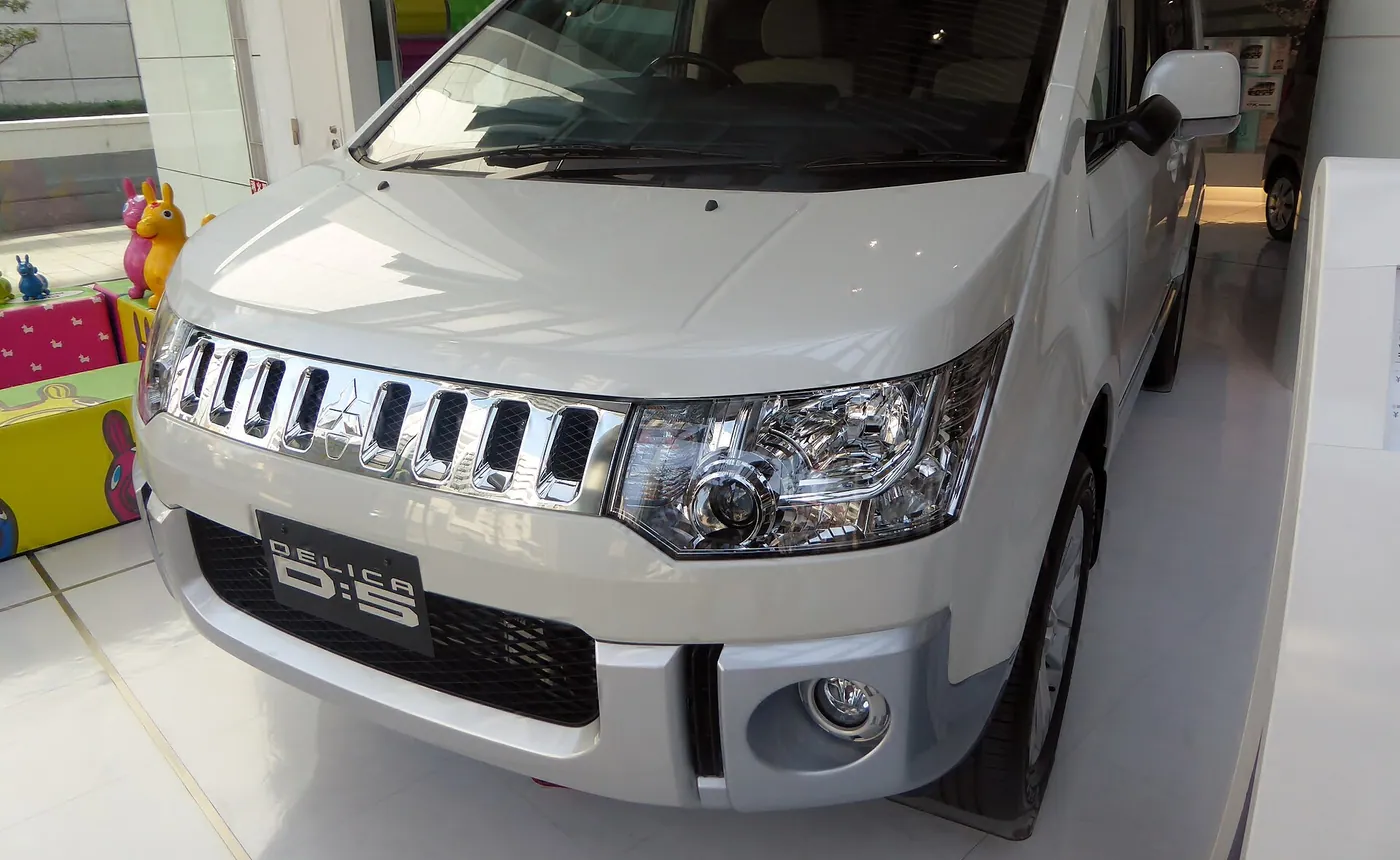
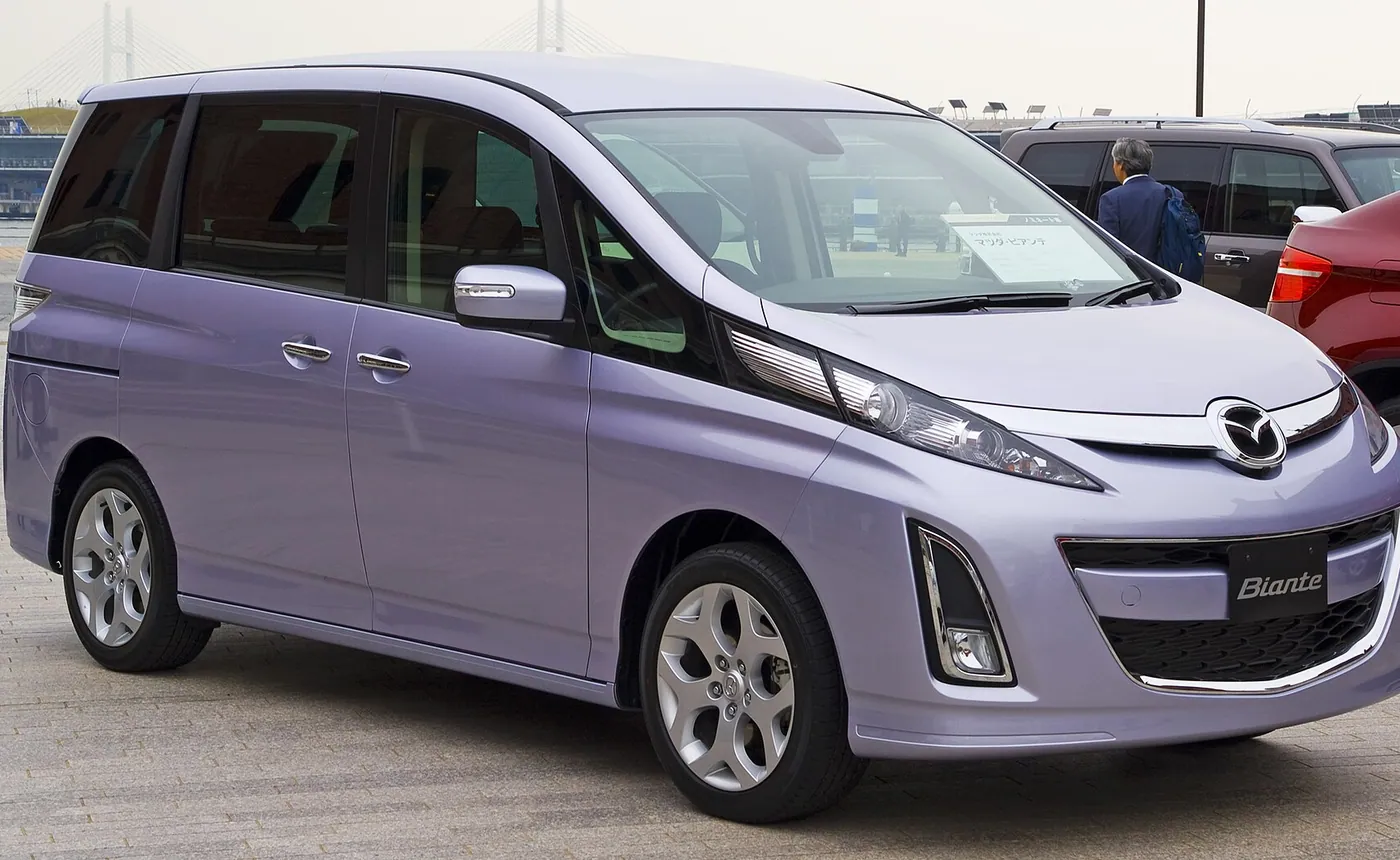
In short: In the three months to 19 September 2026, 3,275 Mitsubishi Delica D:5s sold at Japanese auctions at a median of €3,470, against 919 Mazda Biantes at €585. The Mazda Biante is the cheaper buy by about €2,885 at auction, before shipping, VAT, VRT and fees. Our verdict is at the end of this article.
In the Japanese mountains the Mitsubishi Delica is something close to a cult. For decades it has been the van of skiers, surfers, anglers and families who head for forest campsites rather than shopping centres. On a winter weekend in Nagano, the car parks at the ski resorts are thick with them, roof boxes on top and snow packed in the wheel arches.
The Delica D:5, launched in 2007, carried that tradition into the modern era: a full-size people carrier on a stiff body with real four-wheel drive and the ground clearance to use it. The Mazda Biante, launched a year later, took the opposite view. It is a light, airy family van built for suburbs and motorways, and it makes no pretence of leaving the tarmac.
For an Irish buyer the choice turns on geography. A family at the end of a rough lane in west Cork, towing a trailer to the beach, needs something different from a family in Lucan doing the school run on the N4.
The specs
| Mitsubishi Delica D:5 | Mazda Biante | |
|---|---|---|
| Generation most imported | CV, 2007 on | CC, 2008–2018 |
| Engine(s) | 2.4 petrol; 2.2 diesel from late 2012 | 2.0 petrol (2.3 on early cars) |
| Gearbox | CVT (petrol); automatic (diesel), 8-speed from 2019 | Automatic |
| Drive | 4WD on most cars | Front, or 4WD |
| Seats | 7 or 8 | 8 |
| Length | 4,730 mm; 4,800 mm from 2019 | 4,715 mm |
| Sliding rear doors | Both sides | Both sides |
| Defining trait | Ground clearance and selectable 4WD lock | Vast glass area and a light cabin |
| Import duty to Ireland | 0% possible (Japan-built, with proof of origin) | 0% possible (Japan-built, with proof of origin) |
Two kinds of eight-seater
The D:5 shares its basic platform and four-wheel-drive hardware with the Outlander of its time, but wraps them in a tall, boxy body with short overhangs. Early cars used a 2.4-litre petrol engine and a CVT. The 2.2-litre diesel arrived in late 2012 and quickly became the version to have, with strong low-down pulling power and a conventional automatic. A heavy facelift in 2019 brought the dramatic vertical grille, an eight-speed automatic, a redesigned dashboard and updated safety systems. The car has stayed in production since, which says something about how loyal its buyers are.
The Biante was built on the platform of the Mazda Premacy, stretched and widened into a full-size van. Petrol engines only were offered, with Mazda's more efficient Skyactiv-G 2.0 arriving in 2012. Production ended in 2018, when Mazda withdrew from people carriers altogether to concentrate on SUVs.
How they drive
The Delica is heavy and tall, and it does not hide either fact. The diesel pulls well and makes a confident tow car, and the four-wheel-drive system, with a lock mode for slippery ground, gives real assurance on wet grass, gravel and snow. On the road it rides comfortably but leans in bends, and its height makes it sensitive to strong crosswinds on exposed roads.
The Biante feels like a big car rather than a van. It is lighter and lower, steers accurately for its size and rides well on broken surfaces. The petrol engines are smooth and quiet at a cruise but need to be worked when the car is full, and overtaking on a single-carriageway road takes patience.
Inside and practicality
The Biante's cabin is its great strength. The glass area is enormous, the floor is flat, and the light makes it feel bigger than it is. The second-row seats slide and recline, and the third row is usable by adults on short trips.
The Delica's interior is built for muddy boots: hard-wearing fabrics, rubbery surfaces and plenty of hooks and storage. It seats seven or eight depending on version, and the third row tips up to the sides to open a long load bay. The floor sits higher, so small children need a hand getting in.
Running costs and reliability
The Delica diesel is reasonable on fuel for its size, though its weight wears tyres and brakes. The petrol Delica is thirsty, and its higher CO2 figure places it in a more expensive VRT and motor tax band. The Biante uses more fuel than a diesel but is mechanically simpler.
Both are robust. The Delica's diesel is strong but, like any modern diesel, its emissions equipment needs regular longer runs at speed to stay healthy. The Biante's engines are shared with other Mazdas and well understood.
What to check at auction
Many Delicas have lived outdoor lives, so look underneath with care. Ski-resort cars from snowy prefectures can show rust on the subframes, suspension arms and exhaust, and scrapes on the sills hint at off-road use. Check that both sliding doors operate smoothly, and on diesels look for any auction sheet note about warning lights or emissions faults.
For the Biante, check the sliding doors, the air conditioning and the wear on seats and carpets that family use brings. Two-wheel-drive cars from southern and central Japan are usually free of serious rust. Grade 4 cars are widely available for both.
The verdict
Buy the Delica D:5 diesel if you need four-wheel drive that works, plan to tow, or live where the road ends in gravel. Few people carriers can cross a wet field with eight aboard; this one can.
Buy the Biante if your life is lived on tarmac. It is lighter, brighter and more pleasant to drive day to day, and it gives a growing family a great deal of space for less money.
Frequently asked questions
Is the Delica D:5 a real off-roader?
It is not a dedicated off-roader, but its four-wheel-drive system and ground clearance let it handle tracks, fields and snow far better than other people carriers.
Does the Biante have a diesel engine?
No. It was sold with petrol engines only.
Which is better for camping?
The Delica, thanks to its four-wheel drive, ground clearance and rugged interior.
When did the Delica get its new front end?
A facelift in 2019 introduced the large vertical grille and an eight-speed automatic for the diesel.
Keep reading
- Toyota Probox vs Nissan AD Van: The Plain White Estates That Do Japan's Real Work
- Toyota Roomy vs Suzuki Solio: Two Tall Boxes That Carry More Than Their Size Allows
- Suzuki Hustler vs Daihatsu Taft: Two Tiny Crossovers That Dress for Adventure
- Toyota Crown vs Nissan Skyline: Japan's Two Grand Old Saloons, in Their Last Classic Form
- Lexus GS vs Nissan Fuga: Japan's Executive Saloons, Quietly Waiting at Auction
Photo credits
- Mitsubishi Delica D:5: Photo: Tokumeigakarinoaoshima / Wikimedia Commons, CC0
- Mazda Biante: Photo: Hatsukari715 / Wikimedia Commons, Public domain