
Suzuki Jimny vs Mitsubishi Pajero Mini: Two Tiny Off-Roaders, One Real Climber
Both are kei-class four-wheel drives small enough for a boreen and tough enough for a muddy gateway. Only one was built like a proper off-roader.
By the Japan to Ireland editors · · 4 min read
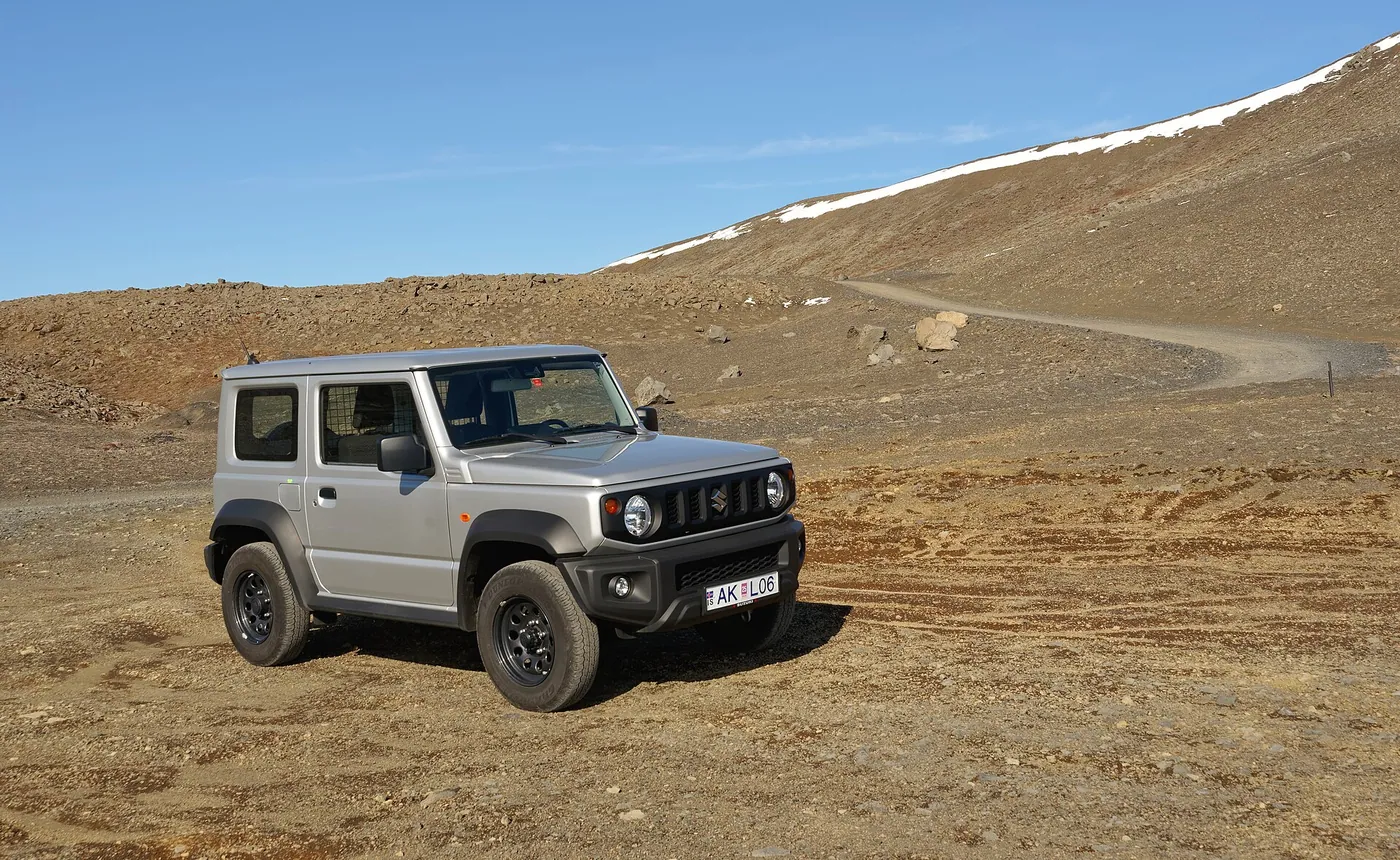
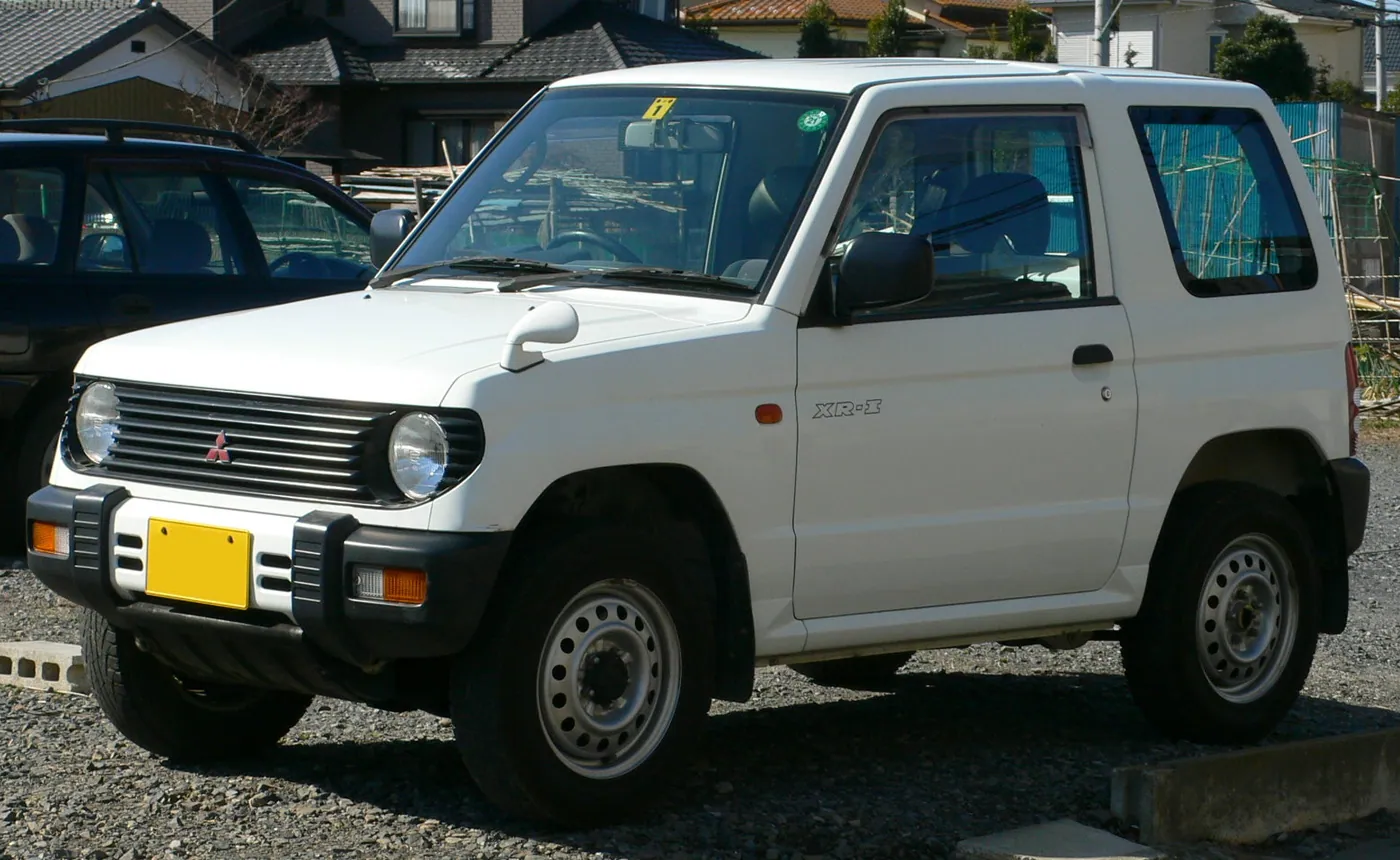
In short: In the three months to 19 September 2026, 4,457 Suzuki Jimnys sold at Japanese auctions at a median of €3,671, against 929 Mitsubishi Pajero Minis at €585. The Mitsubishi Pajero Mini is the cheaper buy by about €3,086 at auction, before shipping, VAT, VRT and fees. Our verdict is at the end of this article.
Japan's kei class was designed to put small, cheap cars on narrow roads. It also produced some of the most charming off-road vehicles ever made, tiny four-wheel drives with engines smaller than a carton of milk and enough ground clearance to cross a field.
The Suzuki Jimny is the famous one. The current JB64, launched in 2018, became a cult object almost overnight, with a square, purposeful body that recalls the older Jimnys and a long waiting list in Japan. Its predecessor, the JB23, ran for twenty years and is still everywhere at auction. The Mitsubishi Pajero Mini is less well known in Ireland. Built from 1998 to 2012, it shrank the look of the full-size Pajero into the kei-car box, and it sold strongly to Japanese buyers who wanted a rugged image with car-like manners.
To an Irish buyer looking at a photograph, they appear to be rivals. Underneath, they are quite different machines, and that difference matters a great deal on a wet hillside.
The specs
| Suzuki Jimny | Mitsubishi Pajero Mini | |
|---|---|---|
| Generation most imported | JB64 (2018 on), plus older JB23 (1998–2018) | H58A, 1998–2012 |
| Engine | 658 cc three-cylinder turbo | 659 cc four-cylinder, turbo on most |
| Power | 64 PS | 64 PS on turbo versions |
| Gearbox | 5-speed manual or 4-speed auto | 5-speed manual or automatic |
| Drive | Part-time 4WD with low range | Mostly 4WD, some 2WD |
| Construction | Ladder frame, rigid axles | Monocoque body |
| Seats | 4 | 4 |
| Length | 3,395 mm | 3,395 mm |
| Import duty to Ireland | 0% possible (Japan-built, with proof of origin) | 0% possible (Japan-built, with proof of origin) |
Built differently
The Jimny is a genuine off-roader. It has a separate ladder chassis, rigid axles front and rear, part-time four-wheel drive and a low-range transfer box. These are the same principles that underpin a Land Cruiser, scaled down. It can climb, crawl and articulate in a way that no small crossover can.
The Pajero Mini uses a monocoque body, like a normal car. That makes it lighter, quieter and more comfortable on the road, but it is a soft-roader by comparison. It will handle a gravel lane, a snowy hill or a farm track with ease. It is not designed for deep ruts or serious rock work.
On Irish roads
On tarmac, the tables turn. The JB64 Jimny is noisy at speed, rides with the bounce of a short-wheelbase vehicle on solid axles, and does not like crosswinds on an exposed stretch of the N59. Its kei engine works hard above 90 km/h. It is a car for back roads, not for daily motorway commuting.
The Pajero Mini is more relaxed. Its turbocharged four-cylinder is smoother than the Jimny's three, and its independent front suspension gives a more settled ride. It is still a tiny car with a tall body, and a long motorway run will feel like work, but it is the more comfortable of the two in daily use.
Inside and practicality
Both are four-seaters, and in both the rear seats are best kept for children or short trips. Boot space with the rear seats up is minimal, especially in the Jimny, which has barely room for a few shopping bags. Fold the seats and either car becomes a useful two-seater with a flat load area.
The JB64's cabin is neat and functional, with chunky controls designed for gloved hands. The Pajero Mini's interior feels its age: hard plastics, older switchgear and, on many cars, the faded fabrics of a vehicle that is now well over a decade old.
Running costs and reliability
Kei engines are small, but in a heavy, boxy four-wheel drive they are not always frugal. Expect economy closer to a normal small car than to a kei hatchback, especially with an automatic gearbox. Insurance is usually reasonable, though some insurers ask more questions about imported kei vehicles.
Both are mechanically simple. The Jimny's main enemy is rust, particularly on older JB23 cars, where the chassis rails, rear crossmember and body mounts can corrode badly. The Pajero Mini's age means rubber parts, bushes and turbo condition need attention, and parts are less familiar to Irish garages.
What to check at auction
For any Jimny, look underneath. Auction sheets will often note rust, and a JB23 from a snowy northern prefecture can be far worse than its body suggests. Check for lifted suspension, oversized tyres and modified exhausts, all popular in Japan, and all likely to complicate the NCT. A standard JB64 at grade 4 or above is the safest buy.
For the Pajero Mini, the sheet will show age-related wear, and the key is finding a car that has lived in a mild climate. Check the turbo for smoke, the sills and rear arches for rust and the four-wheel-drive system for correct engagement. Many were heavily accessorised; originality is a plus.
The verdict
Buy the Suzuki Jimny if you need a real off-roader in a small package: for a farm, a forestry track, a steep lane in winter or simply for the joy of a capable little machine. Choose a JB64 if your budget allows; it is better made and has newer safety kit.
Buy the Mitsubishi Pajero Mini if you want the look and the four-wheel-drive security for icy mornings, but spend most of your time on ordinary roads. It is softer, smoother and often cheaper, and for many drivers that is the more sensible compromise.
Frequently asked questions
Is the Pajero Mini a real off-roader?
It is capable on tracks and in snow, but it uses a car-like monocoque body rather than the Jimny's ladder frame and rigid axles.
Will a modified Jimny pass the NCT?
Heavy lifts, oversized tyres and loud exhausts can cause problems. A standard car is the safest import.
Which Jimny generation is best to import?
The JB64 from 2018 is newer and better equipped. Older JB23 cars are cheaper but need a careful rust inspection.
Keep reading
- Suzuki Swift vs Nissan March: The Featherweight and the Familiar Face
- Toyota Corolla Axio vs Honda Grace: Two Quiet Saloons for People Who Hate Fuss
- Toyota Estima vs Honda Elysion: The Big Family Carriers Japan Has Already Moved On From
- Land Cruiser Prado vs Mitsubishi Pajero: Two Legends, One Still in Its Prime
- Toyota Crown vs Nissan Skyline: Japan's Two Grand Old Saloons, in Their Last Classic Form
- Importing a Suzuki Jimny: prices and costs
Photo credits
- Suzuki Jimny: Photo: Jakub Hałun / Wikimedia Commons, CC BY-SA 4.0
- Mitsubishi Pajero Mini: Photo: Mytho88 / Wikimedia Commons, CC BY-SA 3.0