
Mitsuoka Viewt: The Japanese Micra Dressed as a Classic British Saloon
A small Toyama coachbuilder took the humble Nissan March and gave it the face of a 1960s British sports saloon. The Viewt has been charming and baffling people since 1993.
By the Japan to Ireland editors · · 4 min read
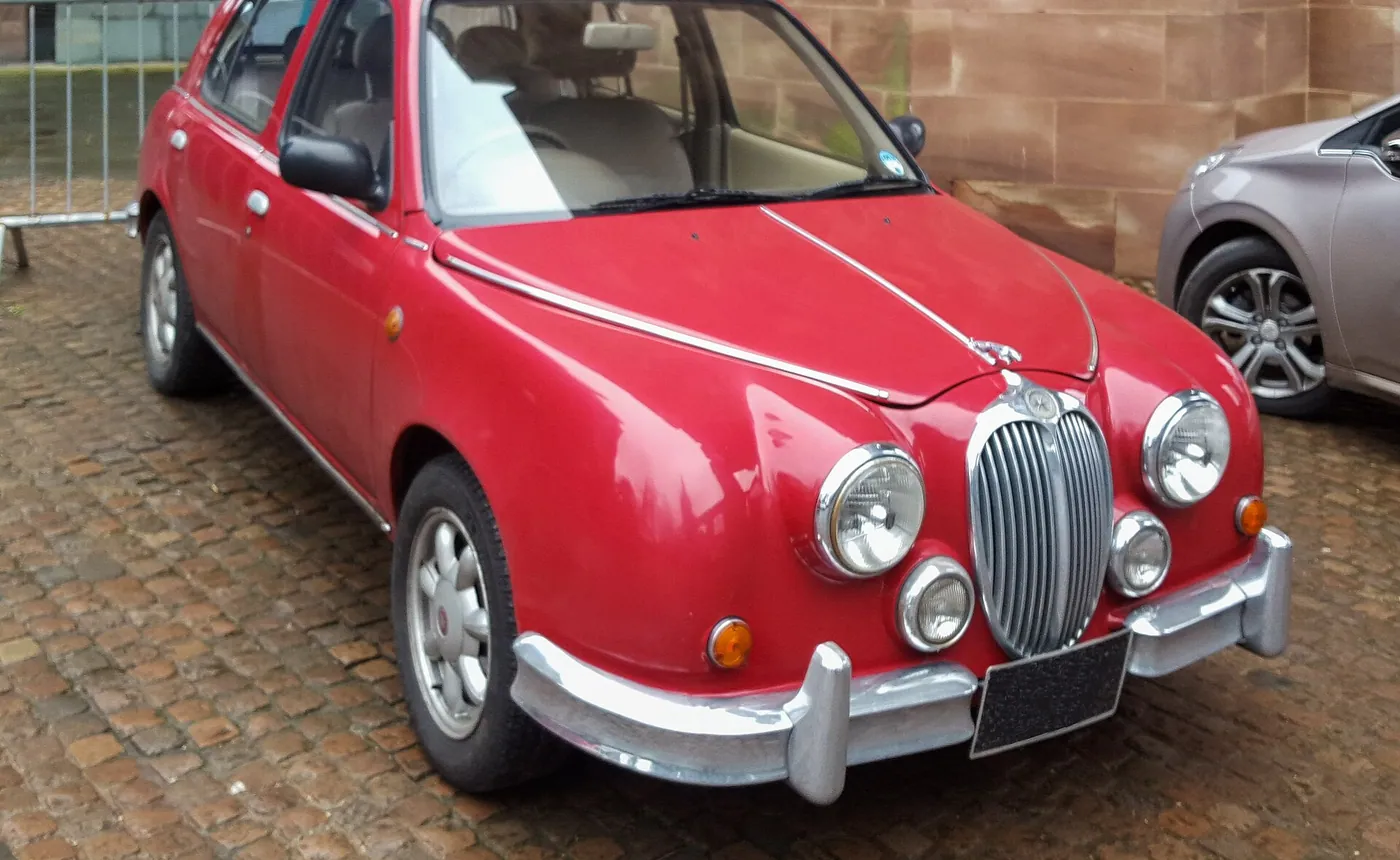
In the early 1990s a small company in Toyama, on Japan's west coast, did something that larger carmakers would never attempt. Mitsuoka Motor took the Nissan March, the car sold in Ireland as the Micra, and fitted it with a new front and rear in the style of a classic British sports saloon of the 1960s. The result, launched in 1993, was the Viewt.
It is a car that makes people smile, and it has been in production in different forms ever since.
The specs
| Years built | 1993–present |
|---|---|
| Base car | Nissan March (K11 for the first Viewt, later K12 and K13) |
| Engine | Small Nissan four-cylinder petrol on early cars |
| Gearbox | Manual, automatic or CVT depending on version |
| Drive | Front-wheel drive; 4WD on some later versions |
| Body styles | 4-door saloon; convertible and other variants |
| Builder | Mitsuoka Motor, Toyama |
Why Mitsuoka built it
Mitsuoka was founded by Susumu Mitsuoka in 1968, beginning as a car sales and repair business before moving into building its own cars. Its speciality became retro-styled cars based on mass-produced Japanese models, combining the look of mid-century European design with the reliability of a modern Japanese car.
The early 1990s in Japan saw a fashion for retro design, with several manufacturers offering nostalgic versions of their small cars. The Viewt took the idea further than most, with a full nose and tail designed to evoke the elegant saloons of 1960s Britain. It became Mitsuoka's best-known model and one of the most recognisable small cars in Japan.
Design and engineering
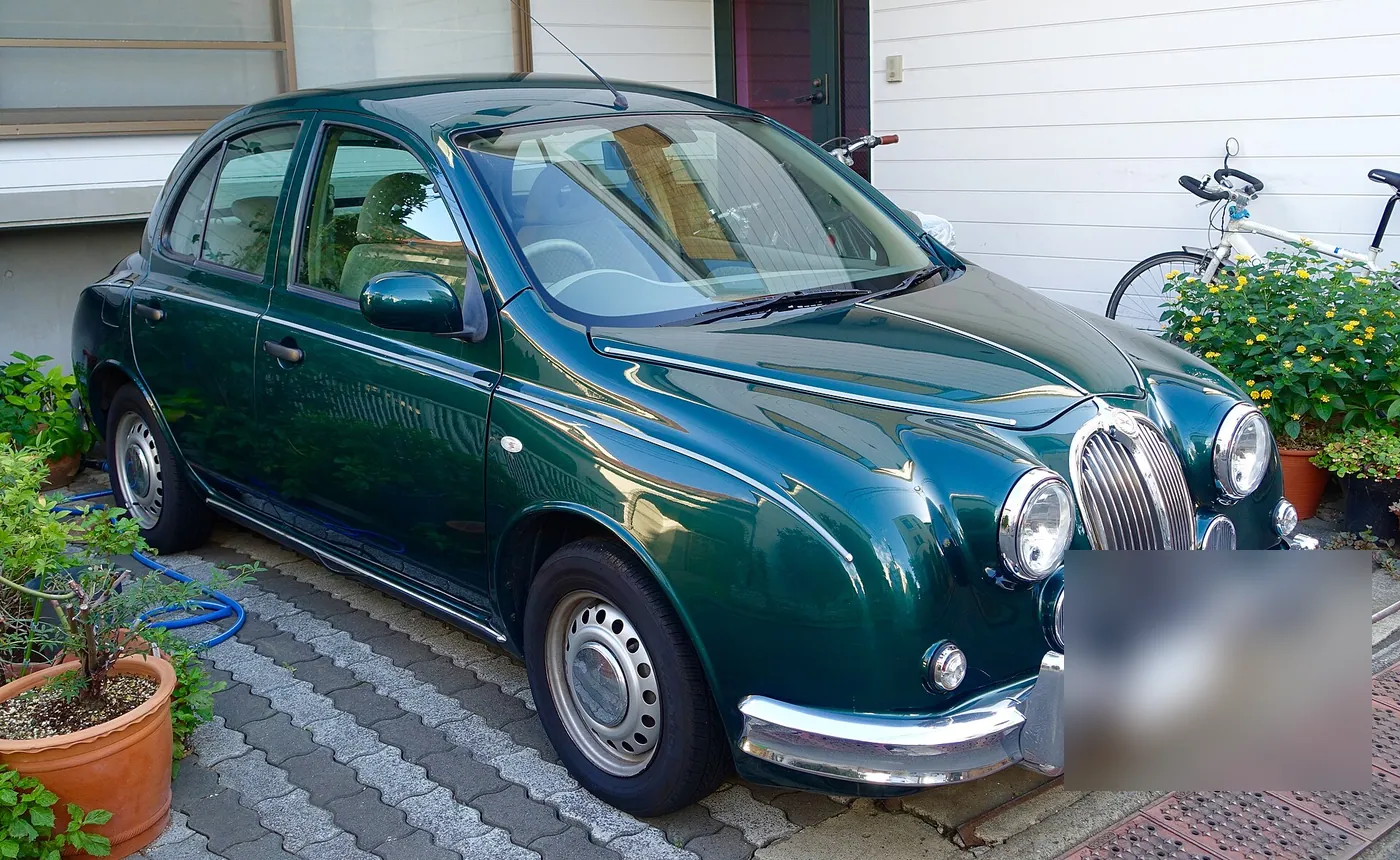
The Viewt keeps the passenger cell, doors and running gear of the March, but the front and rear are completely restyled. At the front there is a tall chrome grille, round headlamps and sculpted wings. At the back the March's hatchback is replaced by a short boot, turning the car into a small saloon. Inside, the dashboard and trim are often upgraded with wood and leather.
The first Viewt was based on the K11 March, using small Nissan four-cylinder petrol engines with manual, automatic or CVT gearboxes. Later Viewts followed the March through the K12 and K13 generations, and the company has continued to build new versions since. A convertible and other body variations have also been offered.
How it drives today
A Viewt drives exactly like the March underneath. That means light steering, a compact turning circle, an easy and forgiving nature, and modest performance. It is a pleasant town car and a relaxed rural runabout. The extra length of the boot makes it slightly longer than the hatchback, but it remains small and easy to park.
The ride is comfortable for a small car and the cabin is cosy. Performance is gentle, which suits the car's character. Nobody buys a Viewt to go fast. It is a car for a Sunday drive to a seaside village, or a wedding car with a difference.
On Irish roads the Viewt is easy company. It fits narrow streets in old market towns, slips into tight parking spaces and copes with potholed back roads as well as any small hatchback of its age. The long chrome nose needs a little care at kerbs and in car parks, because replacing it is far harder than replacing a Micra bumper.
Versions worth knowing
The K11-based Viewt of 1993 onwards is the original and the one most relevant to classic buyers. The K12-based car is newer, more refined and more modern inside. The K13 and later cars are newer still. Each generation has its own small styling details.
It is important to be clear about age. Only the earliest K11-based Viewts, built in the mid 1990s, are now approaching or reaching 30 years old. The later cars are decades away from vintage status, and should be judged as modern small cars with distinctive bodywork.
What to check when buying in Japan
The mechanical side is reassuring. The K11 March shared most of its engineering with the Micra sold new in Ireland, so engine, gearbox and suspension parts are widely available. That is a major advantage over many Japanese classics.
The body panels unique to the Viewt are a different matter. The grille, headlamp surrounds, bumpers, boot and the restyled front and rear wings can be hard and slow to source, so check them carefully for damage and poor repairs. Look for rust on the sills, floor, wheel arches and around the boot, where the restyled rear section joins the original body.
The CVT on early cars should be checked for slipping or noise. Make sure the chrome and interior trim are complete. Many Viewts are well kept, but mileage on older cars can still be uncertain, so look for records. Confirm the export certificate matches the chassis number.
Should you import one?
The Viewt suits a buyer who loves the look of a classic British saloon but wants the reliability and simplicity of a Japanese small car. It is ideal for wedding hire, promotional use, a gentle classic for weekends, or simply as a charming everyday car in town.
Only the oldest Viewts reach 30 years old, and cars over 30 years old can qualify for Ireland's vintage treatment; most examples on the market are younger and will be treated as ordinary used cars. Buy one with straight, complete bodywork, and enjoy the double-takes.
Frequently asked questions
What is the Mitsuoka Viewt based on?
The original Viewt is based on the K11 Nissan March, the car sold in Ireland as the Micra.
Is the Viewt hard to maintain in Ireland?
Mechanical parts are easy because they are shared with the Micra, but the unique body panels can be hard to find.
Does every Viewt qualify as a vintage car?
No. Only the oldest K11-based cars are reaching 30 years old; later Viewts are much younger.
Who makes the Viewt?
Mitsuoka Motor, a small car maker based in Toyama, Japan, founded by Susumu Mitsuoka in 1968.
More Japanese classics
- Daihatsu Rocky (F300): The Small, Tough Open-Top Off-Roader Europe Knew as the Feroza
- Daihatsu Charade GTti: The One-Litre Turbo Hatchback That Out-Engineered Bigger Rivals
- Mazda Bongo Friendee: The Pop-Top Japanese Van That Became Ireland's Favourite Small Camper
- All 90 Japanese classics you can import
Photo credits
- Photo: DeFacto / Wikimedia Commons, CC BY-SA 4.0
- Photo: Daderot / Wikimedia Commons, CC0