
Daihatsu Rocky (F300): The Small, Tough Open-Top Off-Roader Europe Knew as the Feroza
Built on a ladder frame with part-time four-wheel drive and a removable roof, the Rocky was a compact off-roader for the leisure boom of the late 1980s. It is still capable, and still charming.
By the Japan to Ireland editors · · 4 min read
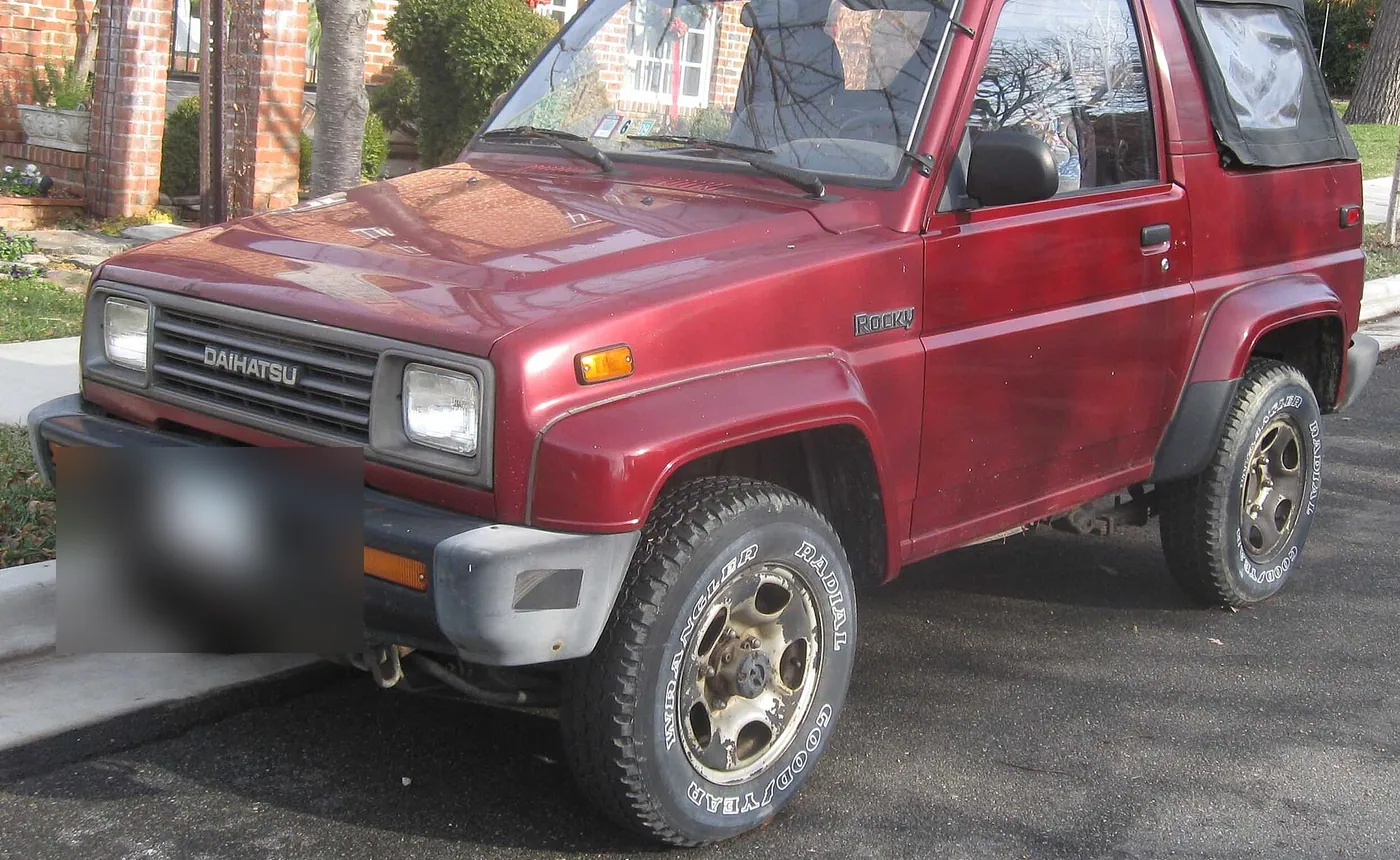
In the late 1980s Japan was rich, and its city dwellers were discovering the outdoors. Ski resorts were packed in winter, campsites and beaches in summer, and the four-wheel-drive vehicle became a symbol of a weekend lifestyle. Large off-roaders were expensive and thirsty. Smaller, simpler ones were in demand. In 1989 Daihatsu launched the Rocky, built on the F300 platform, a compact four-by-four with an open-air character and real off-road ability.
In Europe it was sold as the Feroza, and in Britain as the Sportrak. Japanese production of this generation ran until 1997.
The specs
| Years built | 1989–1997 in Japan |
|---|---|
| Engine | 1.6-litre HD-E 16-valve four-cylinder petrol |
| Power | Modest, suited to its light weight |
| Gearbox | 5-speed manual or automatic |
| Drive | Part-time four-wheel drive with low range |
| Body styles | 3-door with removable roof sections and hard or soft top |
| Export names | Feroza in Europe; Sportrak in the UK |
Why Daihatsu built it
Daihatsu already had experience with tough small four-wheel drives through its earlier models. The F300 was designed to fill a gap between kei off-roaders and full-size vehicles. It needed to be light and agile, cheap to run, and fun to drive with the roof off, while still capable of serious off-road work. The leisure vehicle market was growing quickly, and the Rocky was aimed squarely at it.
Design and engineering
The Rocky uses a separate ladder frame, with independent front suspension on torsion bars and a live rear axle on leaf springs. Four-wheel drive is part-time, with a two-speed transfer case for low range, and free-wheeling front hubs on many examples. It is a simple, proven layout chosen for strength and ease of repair.
The body is compact and upright, with short overhangs that help on steep ground. The roof is the clever part. Depending on the version, the Rocky came with a resin hardtop over the rear section and a removable panel above the front seats, or with a soft top, so the car could be opened up on a sunny day. The 1.6-litre HD-E engine, a sixteen-valve four-cylinder with fuel injection, gave enough power for a light vehicle, and was offered with either a five-speed manual or an automatic.
How it drives today
A good Rocky is light, nimble and cheerful. On the road it feels upright and bouncy, the steering is slow, and crosswinds will push it around at speed. Motorway cruising is possible but noisy, with the roof panels adding wind roar. In town and on rural roads it is easy to drive and park.
Off the road it is excellent for its size. With low range and good tyres it will climb steep, muddy tracks that defeat many larger vehicles, helped by its short wheelbase and light weight. On a dry summer day with the top off, along a coastal road in Donegal or Clare, it is great fun.
Versions worth knowing
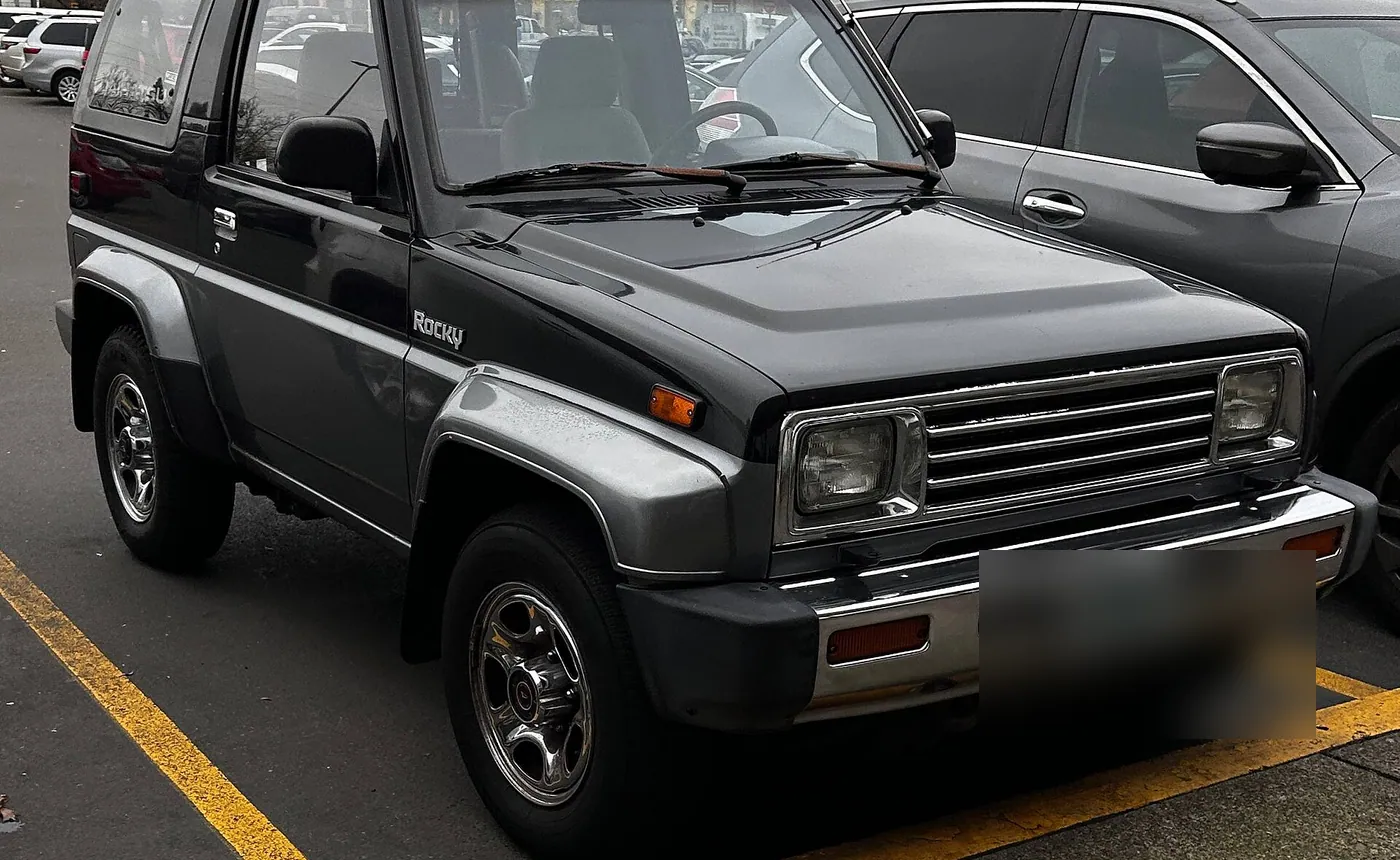
Japanese Rockys were offered with a range of trims, roof types and equipment. Manual cars are the most popular with enthusiasts, as they make the most of the modest engine and are simpler to maintain. Automatic versions suit relaxed use. Some Japanese versions came with extra equipment such as alloy wheels, special paint schemes and upgraded interiors. Check the roof type when buying, as it affects how the car can be used.
What to check when buying in Japan
The chassis is the first priority. Check the ladder frame closely, especially around the rear spring hangers and the crossmembers, for rust. Look at the floor, sills, wheel arches and the rear tailgate area. Cars from snowy regions where roads are salted can be badly corroded underneath.
Engage four-wheel drive and low range to make sure they work, and check the free-wheeling hubs lock and unlock properly. Listen for noise from the gearbox, transfer case and differentials. The engine should idle smoothly and not smoke.
Check the roof panels, seals and soft top for leaks and damage, as replacements can be hard to find. Many Rockys have been modified for off-road use with lift kits, larger tyres and aftermarket bumpers; decide whether you want that or a standard vehicle. Mileage on small off-roaders of this age can be uncertain, so judge condition carefully. Make sure the export certificate matches the chassis.
Parts support in Ireland is limited, as Daihatsu no longer sells new cars here, but many mechanical parts can be found through specialists, and the car's simple construction helps.
Should you import one?
The Rocky suits a buyer who wants a small, simple, capable four-by-four that is fun with the roof off and tough enough for real off-road work. It is ideal for beach trips, farm lanes and weekend adventures.
Early examples are now over 30 years old, and cars over 30 years old can qualify for Ireland's vintage treatment; later cars from the mid 1990s will reach that age over the next few years. Expect modest performance, a bouncy ride, and some patience with parts. The reward is a small classic off-roader with real character.
Frequently asked questions
Is the Daihatsu Rocky the same as the Feroza?
Yes. The F300 Rocky was sold in Europe as the Feroza and in the UK as the Sportrak.
Does the Rocky have proper four-wheel drive?
Yes. It has part-time four-wheel drive with a low-range transfer case and a ladder chassis.
Can you take the roof off?
Depending on the version, roof sections or a soft top can be removed for open-air driving.
Is every Rocky over 30 years old?
No. Early cars are, but those built in the mid 1990s have not yet reached 30 years.
More Japanese classics
- Daihatsu Charade GTti: The One-Litre Turbo Hatchback That Out-Engineered Bigger Rivals
- Mazda Familia GT-R: The Turbocharged Rally Hatchback That Arrived Just as the Stage Went Quiet
- Mitsuoka Viewt: The Japanese Micra Dressed as a Classic British Saloon
- Mazda Bongo Friendee: The Pop-Top Japanese Van That Became Ireland's Favourite Small Camper
- All 90 Japanese classics you can import
Photo credits
- Photo: IFCAR / Wikimedia Commons, Public domain
- Photo: ITakePhotosOfCars / Wikimedia Commons, CC0