
Toyota 2000GT: the hand-built coupe that told the world Japan could make a supercar
Built with Yamaha in tiny numbers between 1967 and 1970, the 2000GT is the rarest and most valuable Japanese classic of all. Here is the story, the engineering and what an Irish collector needs to know before chasing one.
By the Japan to Ireland editors · · 4 min read
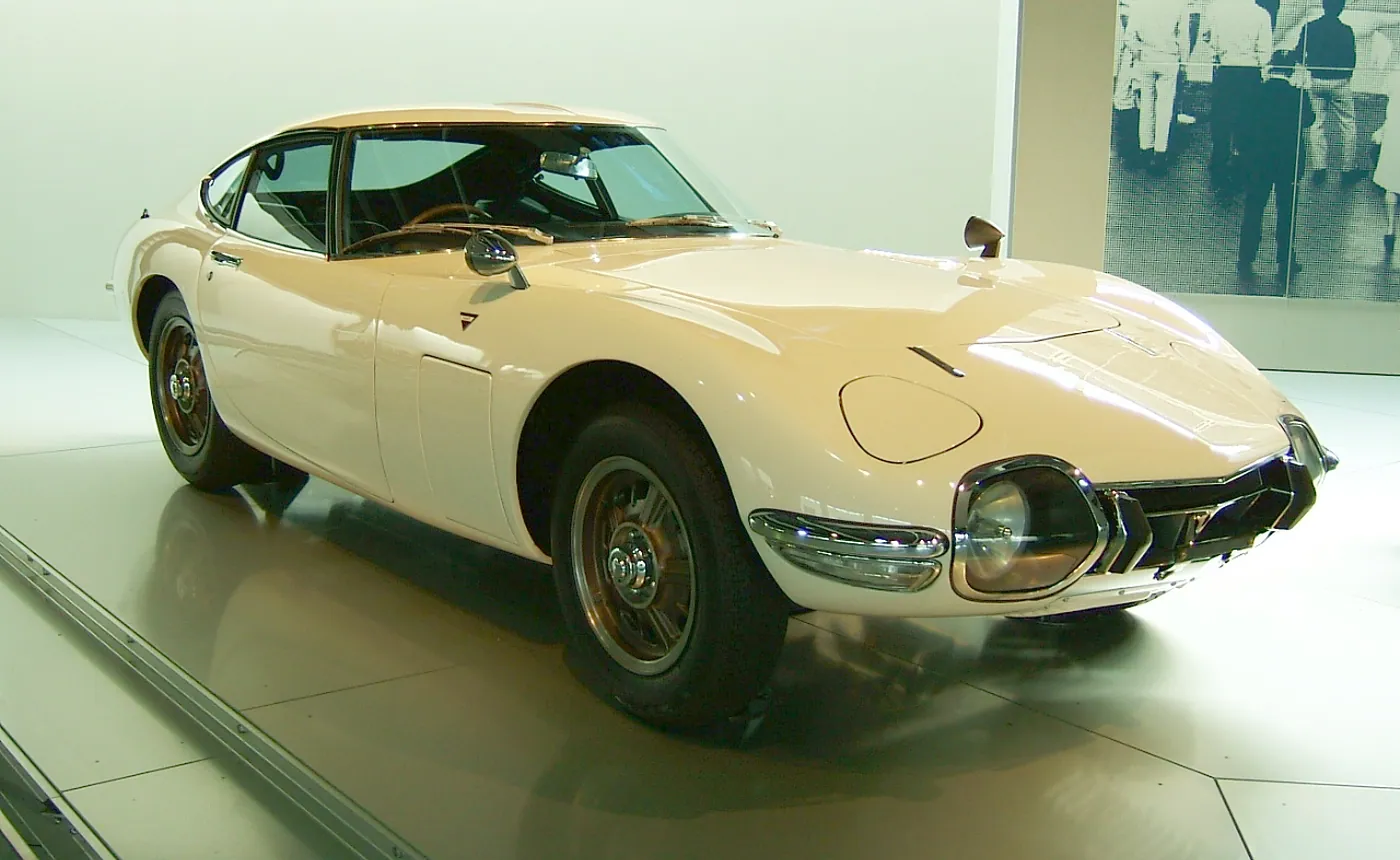
In the autumn of 1966, a white Toyota coupe circled the banked test track at Yatabe, north-east of Tokyo, for three days and nights. Drivers swapped in and out, the car stopped only for fuel, tyres and fresh crews, and when it was finished the 2000GT had set three world records and a string of international class records for speed over distance. It was not yet on sale. It did not need to be. The point had been made.
That point was larger than a car. In the mid-1960s Japan was hosting the Olympics, opening the Shinkansen and building motorways, but its car industry was still known abroad for small, sensible saloons. Toyota wanted a flagship that could stand next to a Jaguar E-Type or a Porsche 911 and not look out of place. The 2000GT, first shown at the 1965 Tokyo Motor Show, was that statement.
The specs
| Years built | 1967–1970 |
|---|---|
| Engine | 2.0-litre straight-six (3M), twin overhead camshafts |
| Power | 150 PS (Japanese gross rating) |
| Gearbox | Five-speed manual; a three-speed automatic was offered late in production |
| Drive | Rear-wheel drive |
| Body styles | Two-door fastback coupe |
| Built in partnership with | Yamaha |
| Production | Roughly 350 cars including prototypes |
A Toyota with a Yamaha heart
The project was a collaboration. Toyota supplied the overall concept and the base of the engine, a 2.0-litre straight-six borrowed from its Crown saloon. Yamaha, which had musical instruments and motorcycles in its blood, designed the twin-cam cylinder head, developed the chassis and built the cars at its plant in Iwata. The styling is credited to Toyota designer Satoru Nozaki, and it is the reason most people stop in their tracks: a long, low bonnet, a cabin set well back, a tail that tapers like a raindrop.
Underneath, the specification was ambitious for a Japanese car of the time. A steel backbone frame carried the body, there was independent suspension on all four corners using double wishbones, and four-wheel disc brakes were fitted as standard. The engine breathed through three twin-choke carburettors and drove the rear wheels through a five-speed manual gearbox and a limited-slip differential. The dashboard was finished in rosewood veneer, an echo of Yamaha's piano workshops.
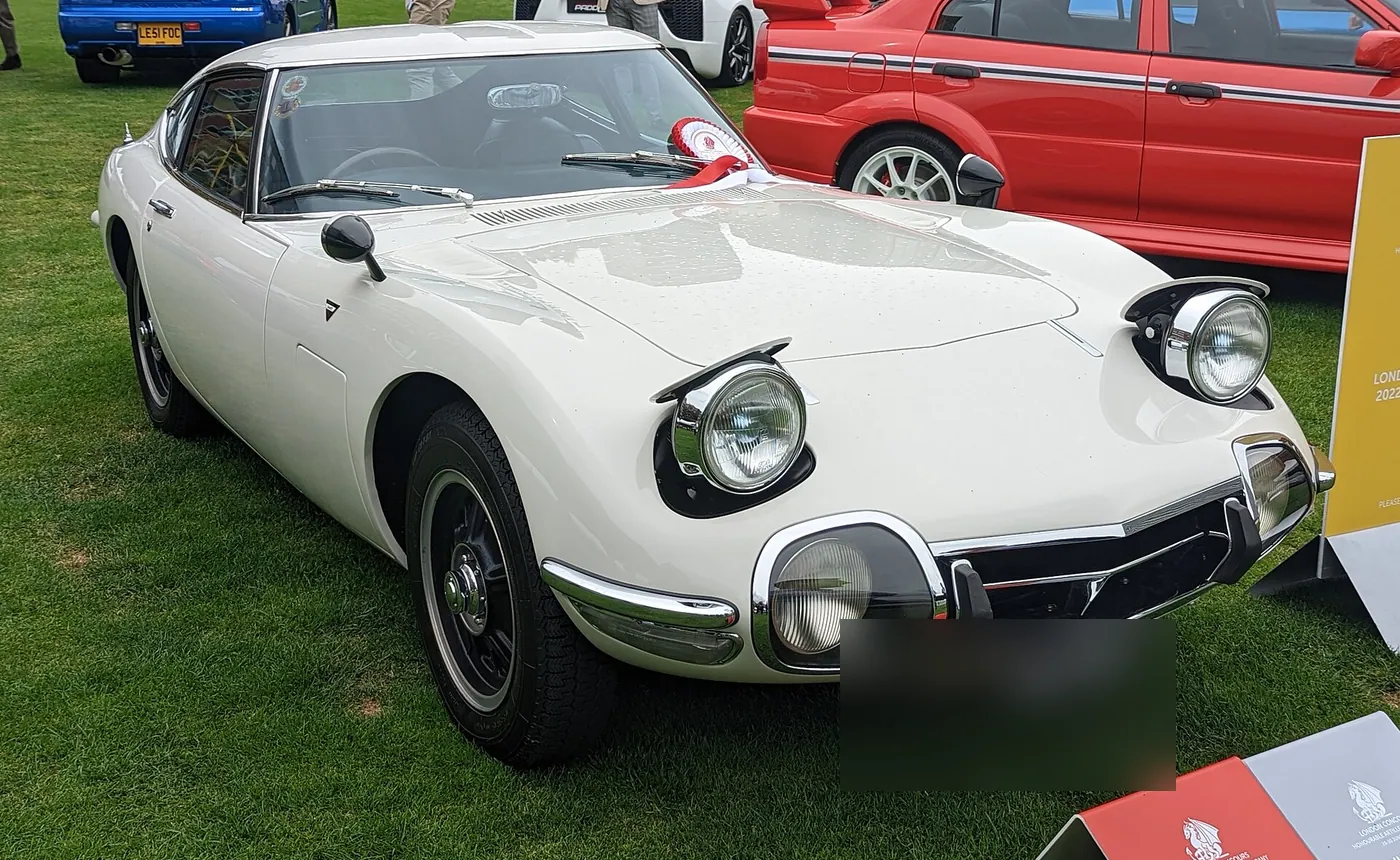
Small details tell you how carefully it was made. Service items such as the battery sit in compartments behind the front wheels, reached through hinged panels in the wings. The headlamps pop up, while the large fixed lamps in the nose do daytime work. Two open-topped cars were built specially for the 1967 James Bond film You Only Live Twice, which did no harm to its fame, but every road car was a fixed-roof coupe.
How it drives today
By modern standards the 2000GT is small and low, and the cabin is snug for anyone tall. The engine is smooth and sings at the top of its range rather than pulling hard from low revs. The steering is unassisted and talkative, the gearchange precise once warm, and the ride better than its sporting reputation suggests. It is not a fast car against a modern hot hatch, but it feels exquisitely put together, more like a mechanical watch than a muscle car.
On Irish roads the low ground clearance and the value of the car dictate how it is used. Owners tend to keep them for dry days, shows and careful runs on quiet N-roads rather than pothole-ridden boreens.
Versions worth knowing
Production falls into early and late cars. The late cars, from 1969, have a revised nose with smaller front lamps and a reworked interior, and could be ordered with air conditioning and an automatic gearbox. A small number were built with a 2.3-litre single-cam engine aimed at the American market. Total production was tiny, generally given as around 350 cars, prototypes included, and survivors are tracked closely by enthusiasts.
Buying one in Japan
This is not a car you find by chance at a weekday auction. When a genuine 2000GT changes hands it does so through specialist dealers and major collector sales, and the history file matters as much as the metal. Chassis and engine numbers should be checked against known records, and any car with a gap in its story deserves extra scrutiny.
Replicas exist, some of them very convincing, built on other chassis with fibreglass or hand-formed bodies. A specialist inspection in Japan is essential, ideally by someone who has seen many original cars. Rust can hide in the lower body panels and around the frame, and repairs on a hand-built body vary hugely in quality. Parts are scarce and many are remanufactured, so originality of trim, instruments and the wooden dash should be noted rather than assumed. Japanese registration papers and export certificates must line up exactly with the car you are buying.
Should you import one?
For almost everyone, the 2000GT is a car to admire at a concours, not to import. It is one of the most collectable Japanese cars ever made, and the buyers who pursue one are serious collectors with patience and specialist help.
If you are that buyer, Ireland is not a bad home for it. It is right-hand drive, as every Japanese-market car is, so it feels natural on our roads. Because every example is well over 30 years old, it can qualify for Ireland's vintage treatment, which changes how it is registered and taxed. Expect it to need dry storage, a specialist willing to work on it, and careful insurance arranged on an agreed-value basis.
Realistically, owning one is closer to looking after a work of art than running a car. That is exactly why people want them.
Frequently asked questions
How many Toyota 2000GTs were built?
Production is generally given as around 350 cars including prototypes, built between 1967 and 1970.
Who built the Toyota 2000GT?
Toyota developed it with Yamaha, which designed the twin-cam head, engineered much of the chassis and assembled the cars.
Are there replicas of the 2000GT?
Yes. Replicas exist, so chassis numbers, history and a specialist inspection are essential before buying.
Is the Toyota 2000GT right-hand drive?
Japanese-market cars are right-hand drive, which suits Irish roads.
More Japanese classics
Photo credits
- Photo: Unknown / Wikimedia Commons, CC BY-SA 3.0
- Photo: Calreyn88 / Wikimedia Commons, CC BY-SA 4.0