
Nissan Skyline GT-R Kenmeri: the 197-car GT-R that never got to race
Launched in 1973 and killed within months by tighter emissions rules and an oil shock, the Kenmeri GT-R is one of the rarest Nissans ever sold. The more common C110 Skyline is the realistic way in.
By the Japan to Ireland editors · · 4 min read
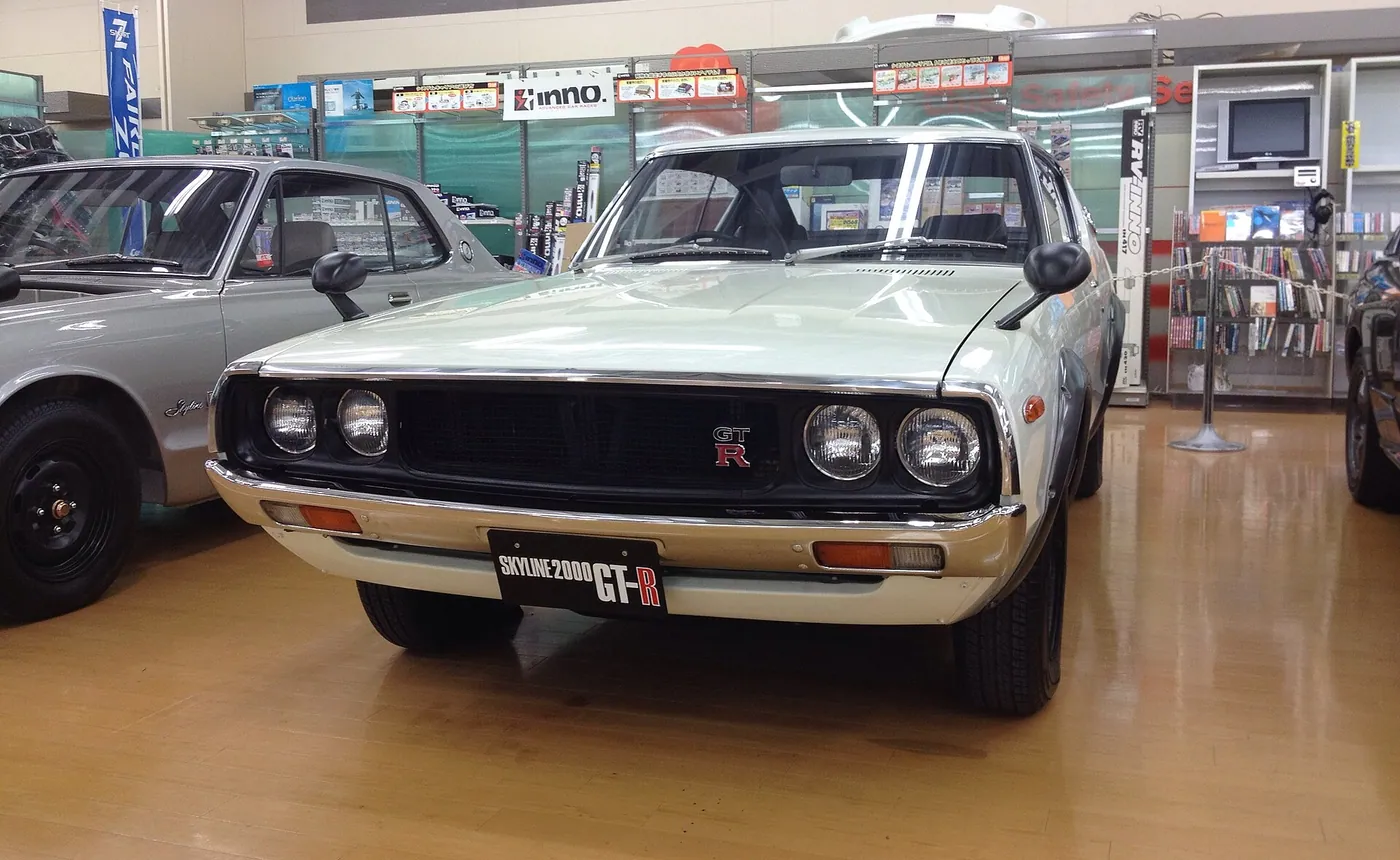
In the early 1970s, Japanese television viewers met a young couple called Ken and Mary. They drove a new Skyline through open countryside, under big skies, with a soft song on the soundtrack. The advertising campaign was so successful that the fourth-generation Skyline, the C110, has been known ever since as the Kenmeri, after the couple's names.
The ads sold romance and freedom. The GT-R version of that car, launched in January 1973, told a harder story about how quickly the world can change.
The specs
| Years built | 1973 |
|---|---|
| Engine | 2.0-litre straight-six (S20), twin overhead camshafts, 24 valves |
| Power | 160 PS (Japanese gross rating) |
| Gearbox | Five-speed manual |
| Drive | Rear-wheel drive |
| Body styles | Two-door hardtop |
| Production | 197 cars |
A GT-R born at the wrong moment
The Kenmeri GT-R, coded KPGC110, carried over the S20 engine from the Hakosuka: a 2.0-litre straight-six with twin overhead camshafts and four valves per cylinder, rated at 160 PS. Nissan had a race car version planned and shown. But Japan was introducing stricter exhaust emission controls, and the S20 in its existing form was not going to meet them. Later in 1973 the first oil crisis arrived, and the mood around high-performance cars soured almost overnight.
Production ended after only 197 cars. The Kenmeri GT-R never competed in a works racing programme. It would be sixteen years before Nissan used the GT-R name again, on the R32 in 1989.
Design and engineering
The C110 was larger and softer than the C10, styled in the American-influenced fastback idiom of the period. The hardtop has a long rear quarter, a strong crease along the flank and, at the back, four round tail lamps. Those round lamps became a Skyline signature that ran for decades.
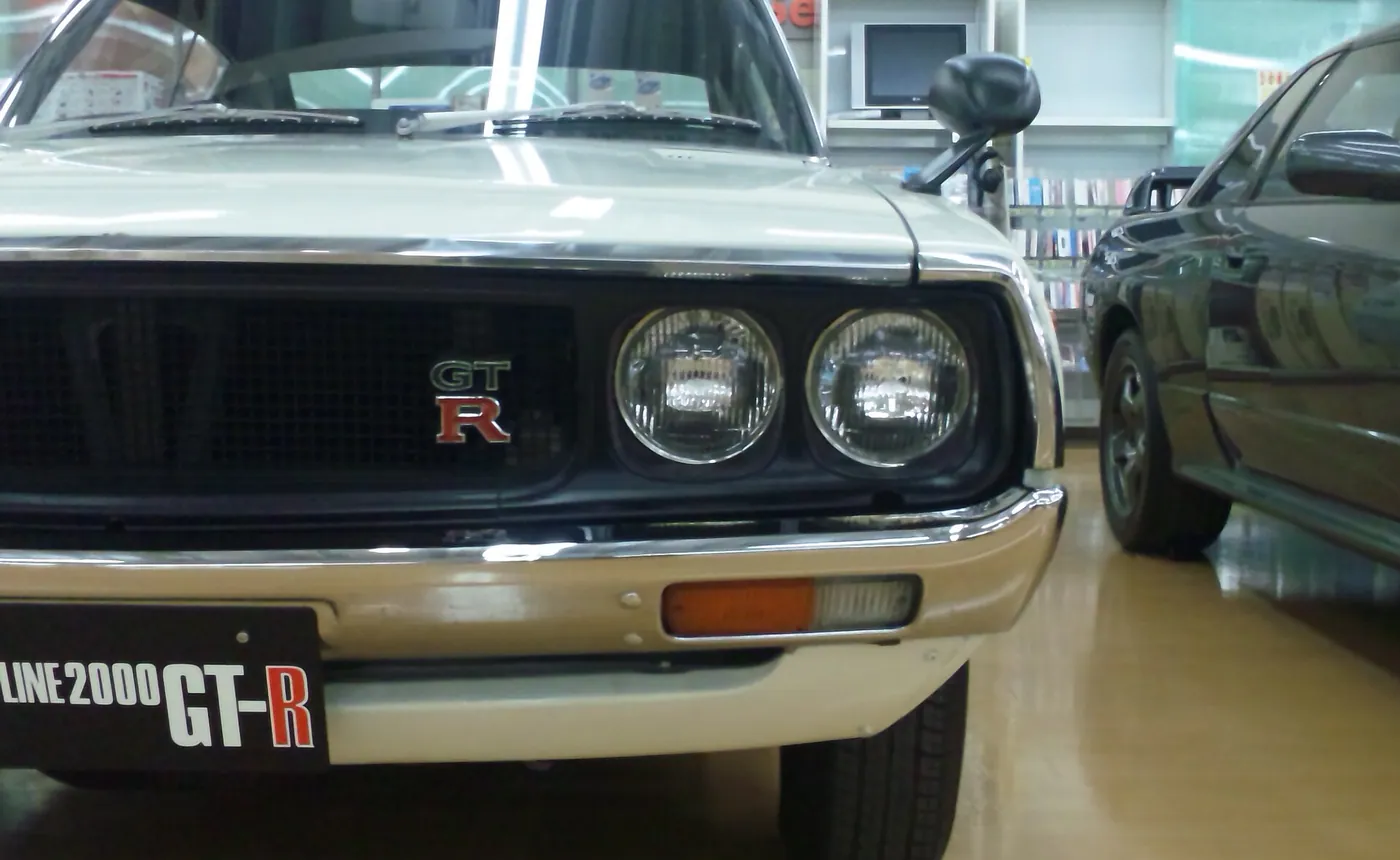
The GT-R added black plastic wheel arch extensions, a rear spoiler and a front grille of its own, along with GT-R badging. Underneath, it shared the basic layout of other Skylines: independent rear suspension by semi-trailing arms, rear-wheel drive and a five-speed manual gearbox. Four-wheel disc brakes set it apart from lesser versions.
How it drives today
Very few people have driven a real Kenmeri GT-R and fewer still have driven one hard. The S20 behaves as it does in the earlier car, eager at the top end and a little gruff low down. The bigger body makes the car feel more grand tourer than sports saloon. More practically, the ordinary C110 Skylines with single-cam L-series sixes drive like relaxed, torquey 1970s coupes: unassisted steering, a long-travel gearchange and a comfortable ride on rough roads.
Variants worth knowing
The C110 range was broad. There were four-cylinder and six-cylinder models, saloons, hardtops and estates, and the six-cylinder GT and GT-X hardtops are the cars that most closely capture the look. These are far more numerous than the GT-R and form the realistic market for Irish enthusiasts. A good GT-X hardtop is a handsome, characterful classic in its own right.
Buying one in Japan
With only 197 genuine GT-Rs, the honest rule is that almost every Kenmeri GT-R you see in an advert or at a meet is a tribute. Converting a GT or GT-X hardtop is straightforward cosmetically, and many have been done well. That is fine if it is sold as a tribute. Anyone offered a genuine GT-R needs to verify the chassis code on the plate and in the Japanese papers, the engine number, and the car's documented history through specialists who track these cars.
For the more attainable C110 hardtops, rust is the main enemy. Look closely at the sills, floors, rear arches, the lower edges of the front wings, the boot floor and the area around the rear screen. Vinyl-roofed cars can trap moisture underneath. Trim and body panels are harder to find than mechanical parts, because the L-series engines and gearboxes were used in many Nissans and are well supported.
Modified cars are common. Lowered suspension, wide wheels, carburettor swaps and engine transplants are all part of Japanese Skyline culture. Decide whether you want an original car or a tasteful period-style build, and price your expectations accordingly. Mileage on a car of this age should be treated as unverifiable unless backed by records.
Should you import one?
If your heart is set on a real Kenmeri GT-R, accept that it is a collector's hunt that may take years and will run through specialist channels, not ordinary auctions. For most Irish buyers, a well-preserved C110 GT or GT-X hardtop, perhaps styled as a tribute, is the sensible way to own this shape and still drive it.
It is right-hand drive, which helps on Irish roads, and every example is well over 30 years old, so it can qualify for Ireland's vintage treatment. Keep it garaged through the wet months, find a mechanic comfortable with carburettors and old Nissan sixes, and insure it on an agreed value. The reward is a car with real presence and a story that few classics can match.
Frequently asked questions
Why is it called the Kenmeri?
The name comes from Ken and Mary, the young couple in the Skyline's famous early-1970s advertising campaign.
How many Kenmeri GT-Rs were built?
197, all in 1973.
Did the Kenmeri GT-R race?
No. Emissions rules and the 1973 oil crisis ended production before a works racing programme began.
Is a C110 GT-X a good alternative?
Yes. The six-cylinder GT and GT-X hardtops share the look, are far more numerous and are well supported mechanically.
More Japanese classics
- Nissan Skyline GT-R Hakosuka: the boxy saloon that rewrote Japanese racing
- Toyota 2000GT: the hand-built coupe that told the world Japan could make a supercar
- Nissan Skyline R31 GTS-R: the forgotten homologation special that bridged two GT-Rs
- Nissan Skyline GT-R R32: how Godzilla won every race it entered and changed the rules
- Nissan Skyline GT-R R33: the bigger, calmer GT-R that proved itself at the Nürburgring
- All 90 Japanese classics you can import
Photo credits
- Photo: Iwao from Tokyo, Japan / Wikimedia Commons, CC BY 2.0
- Photo: Iwao from Tokyo, Japan / Wikimedia Commons, CC BY 2.0