
Honda S660 vs Daihatsu Copen: Two Tiny Roadsters, One Big Difference in Philosophy
Both are kei-class two-seaters with 64 PS and a roof you can take off. The Honda is a mid-engined sports car in miniature; the Daihatsu is a folding-hardtop cruiser.
By the Japan to Ireland editors · · 5 min read
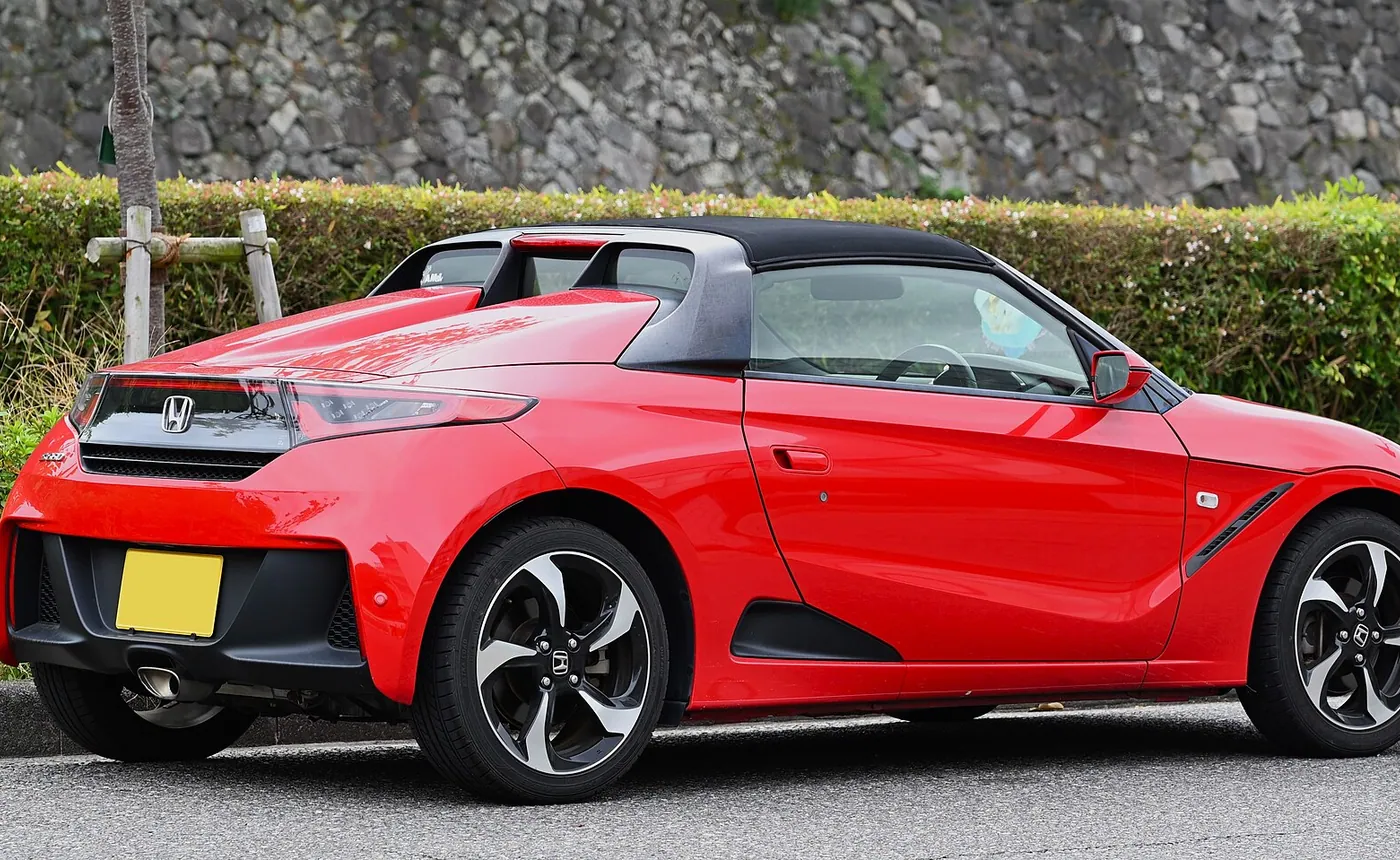
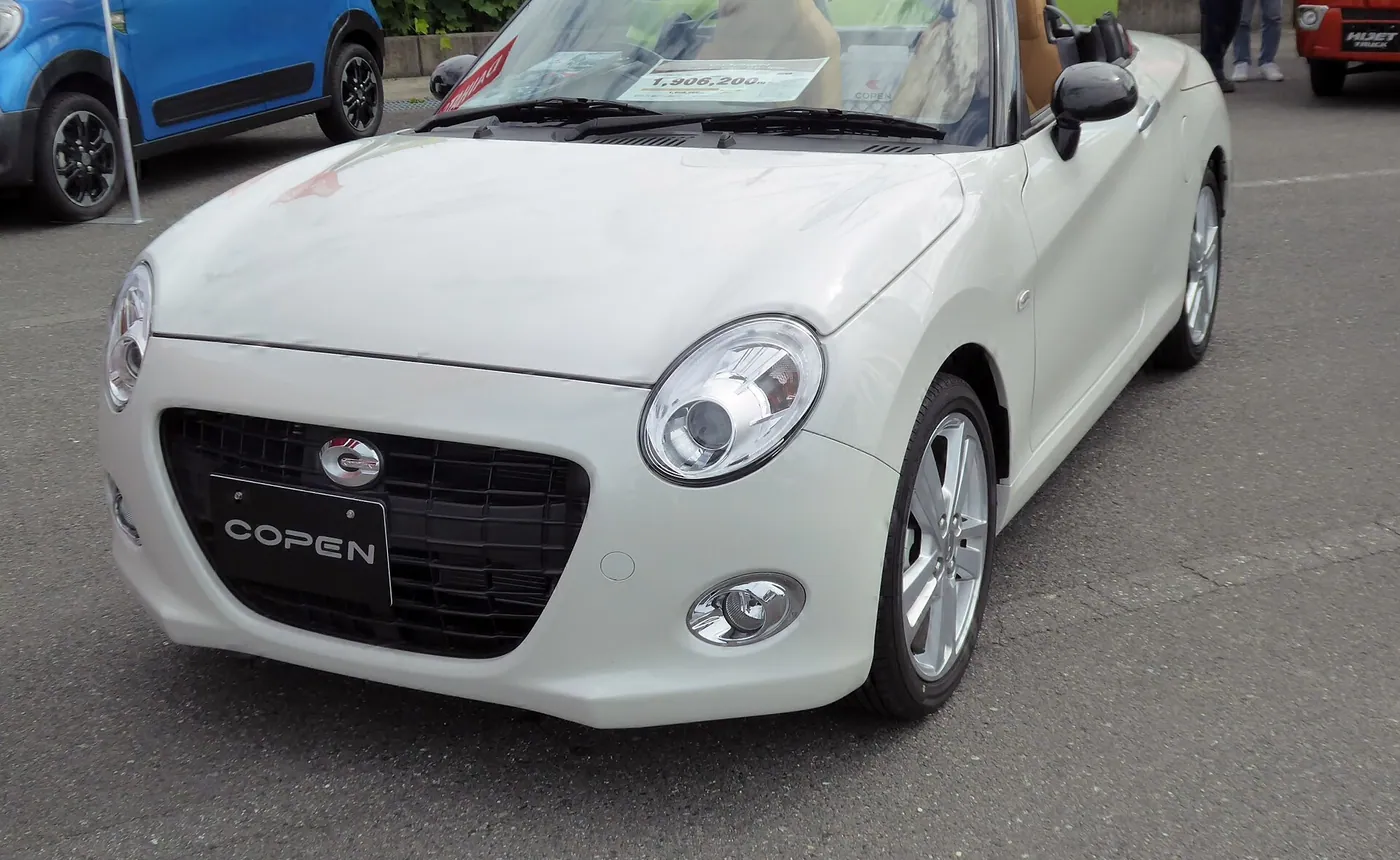
In short: In the three months to 19 September 2026, 177 Honda S660s sold at Japanese auctions at a median of €8,747, against 968 Daihatsu Copens at €2,369. The Daihatsu Copen is the cheaper buy by about €6,378 at auction, before shipping, VAT, VRT and fees. Our verdict is at the end of this article.
Japan's kei car rules are a box: a length of under 3.4 metres, an engine of no more than 660cc and an industry agreement that keeps power at 64 PS. Most manufacturers use that box to build tall, sensible city cars. Every so often, one of them decides to build a toy instead.
The Honda S660 and the Daihatsu Copen are the two modern kei roadsters that turn up in numbers at Japanese auctions. They share a footprint, a power output and a seat count, and on paper the differences look small. In the metal, and particularly on a wet Irish back road, they could hardly be more different.
For an Irish buyer, both make an unusual and appealing case. They are right-hand drive, small enough to park anywhere and cheap to fuel. But one is a serious little sports car with almost no room for luggage, and the other is a softer open-top runabout with a roof that folds at the touch of a button. Knowing which is which saves a lot of disappointment.
The specs
| Honda S660 | Daihatsu Copen | |
|---|---|---|
| Generation most imported | JW5, 2015–2022 | 2nd gen (LA400K), 2014 onward |
| Engine | 658cc turbo three-cylinder | 658cc turbo three-cylinder |
| Power | 64 PS (kei limit) | 64 PS (kei limit) |
| Gearbox | 6-speed manual or CVT | 5-speed manual or CVT |
| Drive | Mid-engine, rear-wheel drive | Front engine, front-wheel drive |
| Seats | 2 | 2 |
| Length | 3,395 mm | 3,395 mm |
| Roof | Removable fabric roll top | Electric folding hard top |
| Import duty to Ireland | 0% possible (Japan-built, with proof of origin) | 0% possible (Japan-built, with proof of origin) |
Where they came from
Honda built the S660 from 2015 to 2022 as a spiritual successor to the Beat of the early 1990s, another mid-engined kei sports car. The engine sits behind the seats and drives the rear wheels, the layout of a supercar compressed to the size of a garden shed.
The Copen is Daihatsu's long-running roadster. The first generation, from 2002 to 2012, had a small four-cylinder turbo and a rounded, bug-eyed shape. The second generation, coded LA400K and on sale since 2014, is the one most commonly found at auction now and the one this comparison means. It uses Daihatsu's three-cylinder turbo, drives the front wheels and is built around a stiff frame onto which resin body panels are fitted. That is why it has been offered in several distinct styles: the smooth Robe, the chunkier Xplay, the round-lamped Cero and, from 2019, a GR Sport version developed with Toyota.
How they drive
The S660 is the more serious machine. With the engine behind you, the steering is free of the weight that blunts most front-drive cars, and the car turns into corners with a directness that feels out of all proportion to its size. The six-speed manual is short and precise, and the little turbo engine revs eagerly. It is not fast in a straight line, but it feels fast, which on a narrow Irish road is more useful anyway. The ride is firm and the cabin is noisy at motorway speeds. This is a car for an empty road on a dry Sunday morning.
The Copen is calmer. It feels like a small, well-made convertible rather than a scaled-down racer. Front-wheel drive makes it predictable in the wet, the steering is lighter and the CVT versions are perfectly happy pottering through town. The manual is the more enjoyable choice and turns the car into a cheerful thing to hustle along. It is also the easier car to drive every day: quieter with the roof up, softer over potholes and far less demanding.
Inside and practicality
Neither is practical in any conventional sense, but there are degrees. The S660 has no real boot. Its roll-up fabric roof stows in a compartment at the front, and once it is in there, space for anything else is minimal. Cabin storage is sparse, and taller drivers may find the cockpit snug.
The Copen's folding hard top stows in the boot, so with the roof down luggage space shrinks to very little. With the roof up, though, there is room for a weekend bag or two. The electric roof also makes the Copen a genuine all-weather car, sealed up properly in a winter downpour. For year-round use in Ireland, that matters.
Running costs and reliability
Both cars are light, small-engined and frugal. Neither will cost much in fuel, and both sit in low CO2 bands. The engines are related to those in mainstream kei cars, Honda's N-series in the case of the S660 and Daihatsu's own range for the Copen, so the basic mechanical parts are not exotic in Japan, though many will need to come from there.
Insurance is the bigger question. Two-seat sports cars can attract higher premiums, especially for younger drivers, and some Irish insurers are cautious about Japanese imports. Get a quote before you bid.
What to check at a Japanese auction
Sports cars attract enthusiasts, and enthusiasts modify. On the S660, read the auction sheet for aftermarket exhausts, lowered suspension, non-standard wheels or tuning notes. A standard car is usually the better buy. Check for clutch wear on manuals, scrapes under the front bumper and signs of track use.
On the Copen, the roof mechanism is the main concern. A sheet that notes roof faults or water ingress should be treated with caution, and the boot floor and seals deserve a close look for damp. Both cars may have spent winters in snowy regions, so look for notes on underbody rust, though many of them lived sheltered lives as weekend cars. Grade 4 and above with low mileage is common enough that there is no reason to compromise.
The verdict
Buy the S660 if driving is the point. It is one of the most entertaining small cars of the past decade, with a balance and sharpness that much larger sports cars struggle to match. Accept that it is noisy, impractical and best kept as a second car, and find a manual one that has not been modified.
Buy the Copen if you want an open-top car you can use every day of the Irish year. It is more comfortable, more practical with the roof up and much more forgiving of bad weather. It is less of a thrill, but it is far easier to live with.
Frequently asked questions
Does the Honda S660 have a boot?
Not in any useful sense. The front compartment holds the removable roof, leaving very little room for luggage.
Which is better in Irish weather?
The Copen. Its electric folding hard top seals the cabin properly, and front-wheel drive is more forgiving on wet roads.
Are these cars modified often?
The S660 in particular attracts tuning. A standard car with a clean auction sheet is usually the safer buy.
Keep reading
- Toyota Allion vs Nissan Bluebird Sylphy: The Quiet Saloons Japan Kept for Itself
- Nissan Teana vs Toyota Premio: Two Quiet Japanese Saloons for Drivers Who Hate Fuss
- Honda N-One vs Suzuki Alto Lapin: Retro Kei Cars With Very Different Hearts
- Daihatsu Mira Cocoa vs Nissan Moco: Two Gentle Kei Cars Built for the School Run
- Toyota Hilux Surf vs Toyota Hilux: The Old Family Off-Roader and the Modern Working Pickup
- Importing a Daihatsu Copen: prices and costs
Photo credits
- Honda S660: Photo: TTTNIS / Wikimedia Commons, CC0
- Daihatsu Copen: Photo: Tokumeigakarinoaoshima / Wikimedia Commons, CC BY-SA 4.0