
Toyota Allion vs Nissan Bluebird Sylphy: The Quiet Saloons Japan Kept for Itself
Two sensible four-door saloons built for the Japanese home market, both easy to find at auction and both overlooked in Ireland. One is the safer bet; the other is the softer car.
By the Japan to Ireland editors · · 5 min read

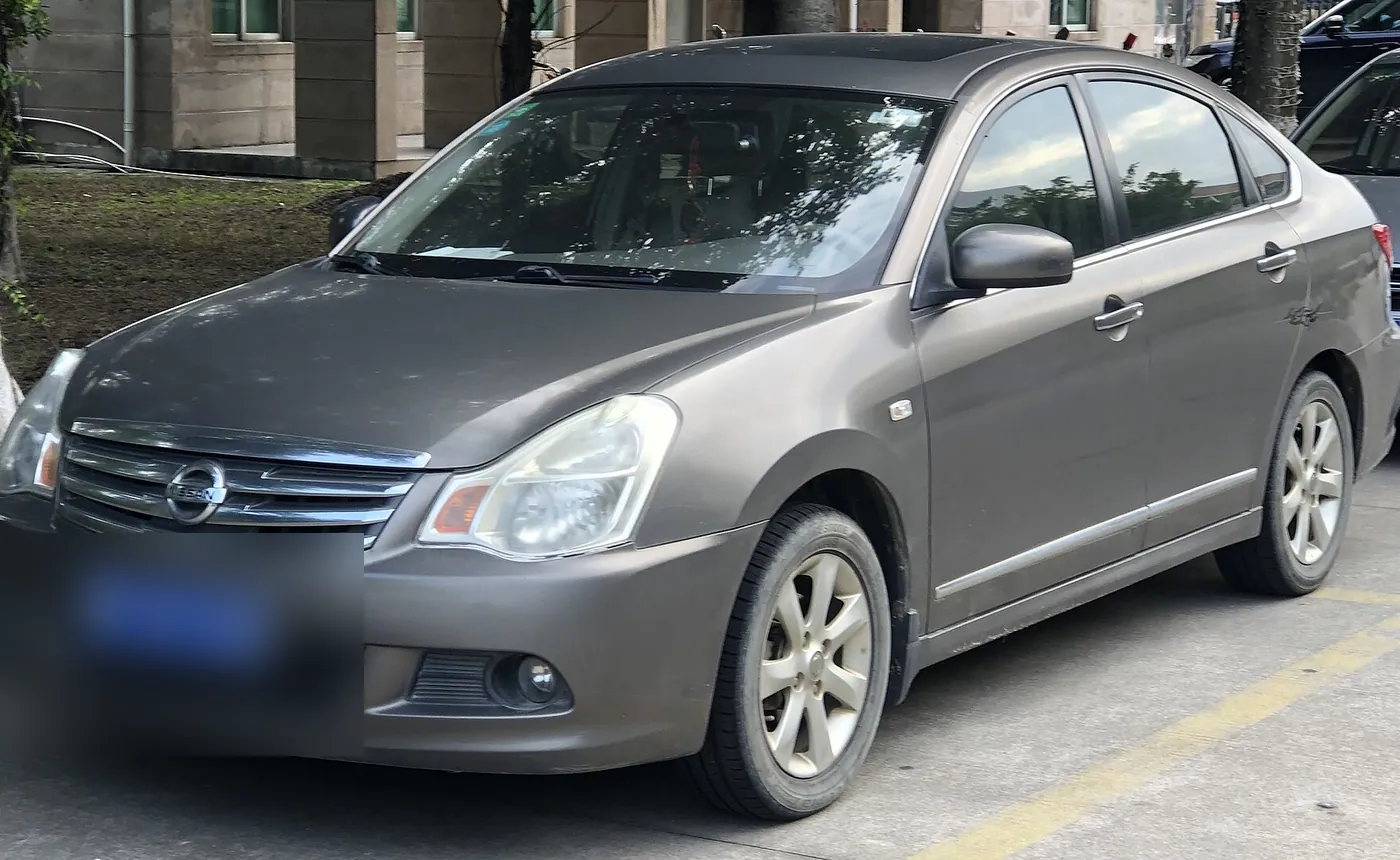
In short: In the three months to 19 September 2026, 1,918 Toyota Allions sold at Japanese auctions at a median of €3,390, against 481 Nissan Bluebird Sylphys at €688. The Nissan Bluebird Sylphy is the cheaper buy by about €2,701 at auction, before shipping, VAT, VRT and fees. Our verdict is at the end of this article.
Walk the saloon rows at a Japanese auction and you will find them parked side by side, as they once were on the forecourts of Nagoya and Osaka: a Toyota Allion in pearl white, a Nissan Bluebird Sylphy in champagne silver. Neither car was built to be noticed. Both were built to be owned for a long time by people who washed them on Sundays.
That is precisely why they deserve a look. The four-door family saloon has almost disappeared from Irish showrooms, pushed aside by crossovers, yet plenty of Irish drivers still want a car with a proper separate boot, an easy step-in height and nothing to prove. These two offer that, with the added comfort of Japanese domestic-market specification and, very often, low mileage for their age.
They are closer in purpose than in engineering. The Allion is pure Toyota, a conservative saloon designed around durability. The Bluebird Sylphy, despite its grand old name, is a softer, more upholstered car built on the same small-car platform as the Nissan Tiida. Choosing between them comes down to what you value more: the last word in dependability, or a gentler place to sit.
The specs
| Toyota Allion | Nissan Bluebird Sylphy | |
|---|---|---|
| Generation most imported | 2nd gen (T260), 2007–2021 | G11, 2005–2012 |
| Engines | 1.5, 1.8 or 2.0 petrol | 1.5 or 2.0 petrol |
| Gearbox | CVT | Automatic (CVT on most) |
| Drive | Front, or 4WD | Front (4WD versions exist) |
| Body | 4-door saloon | 4-door saloon |
| Seats | 5 | 5 |
| Sister car | Toyota Premio | Shares its platform with the Nissan Tiida |
| Import duty to Ireland | 0% possible (Japan-built, with proof of origin) | 0% possible (Japan-built, with proof of origin) |
Two old names, two different ideas
The Allion arrived in 2001 as a replacement for the Carina, while its twin, the Premio, took over from the Corona. The second-generation Allion, coded T260, is the one you will see at auction today. It went on sale in 2007 and stayed in production, with facelifts, until 2021, which means there is a wide spread of years and condition to choose from.
The Bluebird name goes back to 1959 in Nissan's history. By the time of the G11 Bluebird Sylphy, built from 2005 to 2012, it had been attached to a car that was more about comfort than heritage. When the next generation arrived, Nissan dropped "Bluebird" and called it simply the Sylphy. For an Irish buyer, the G11 is the car to look for: it is the version Japanese auctions see most often, and the one this comparison means.
How they drive
Neither car will entertain you, and neither tries. The Allion feels tight and well assembled. The 1.5-litre is adequate around town and on N-roads but strains when you ask it to join the M50 with a full load; the 1.8 is the sweet spot, and the 2.0 adds a little more urgency without much penalty. Steering is light and slightly vague, which suits the car. The ride is firmer than you might expect, a touch busy on broken tarmac, though never harsh.
The Sylphy goes the other way. Its suspension is softer, its seats are deeper and its whole manner is gentler. On a rutted country road it floats more and leans more through bends, but it is the more relaxing car on a long, steady motorway run. Its engines are smooth, and the CVT on most cars keeps revs low at a cruise. Some drivers find a Nissan CVT feels rubbery when pulling away; that is a matter of taste rather than a fault.
Inside and practicality
The Sylphy's cabin is the reason many people choose it. Nissan put real effort into the seats, which are wide and supportive, and into the rear legroom, which is generous for a car of this size. Many Japanese-spec cars have soft fabrics and a calm beige or grey interior that still looks tidy after more than a decade.
The Allion's interior is plainer and harder, built for wear rather than delight, but everything works and everything lasts. Its boot is a deep, regular shape that swallows suitcases and golf bags without fuss. Both cars will take four adults in comfort and a fifth for short trips.
Running costs and reliability
This is the Allion's strongest suit. Its 1.5 and 1.8 engines belong to Toyota families that are widely understood in Ireland, sharing parts and know-how with countless Corollas, Yarises and Auris models already on Irish roads. Servicing is straightforward and inexpensive at any competent independent garage.
The Sylphy is also a dependable car, and its 1.5, shared with the Nissan Note and Tiida of the same era, is well known. Its weak point, as with many Nissans of this period, is the CVT, which rewards regular fluid changes and punishes neglect. Neither car is heavy on fuel by saloon standards, and the smaller engines do best on CO2.
What to check at a Japanese auction
For the Allion, the auction sheet is usually encouraging. Many are grade 4 or 4.5 with modest mileage. Look for notes about bumper scrapes and parking dents, which are common on cars that spent their lives in tight urban car parks. Ask whether the CVT fluid has been changed on higher-mileage cars, and be wary of ex-fleet cars with patchy histories.
For the Sylphy, treat any sheet that mentions transmission noise or judder as a reason to walk away. Check the interior notes too, because light-coloured seat fabric shows stains and wear. On 4WD versions of either car, cars from snowy northern prefectures may carry underbody rust, and the sheet will sometimes say so. A front-wheel-drive car from central or southern Japan is the safer choice.
The verdict
Buy the Allion if you want a saloon you can forget about. It is the more robust car, the easier one to service in Ireland and the one most likely to cover big mileages without drama. The 1.8 is the version to target.
Buy the Bluebird Sylphy if comfort matters more than anything else and you drive gently. It is the nicer car to sit in, particularly in the back, and on long motorway runs it can feel like the bigger car. Choose one with a clean auction sheet and evidence of CVT care, and it will serve well.
Frequently asked questions
Is the Bluebird Sylphy the same as the Nissan Sylphy?
It is the earlier car. The G11 was the last to carry the Bluebird name; the next generation was sold simply as the Sylphy.
Which Allion engine is best for Irish roads?
The 1.8 is the best balance. The 1.5 is fine for town but feels stretched on motorways with a full car.
Which is more reliable?
Both are dependable, but the Allion has the edge, and its Toyota engines are very familiar to Irish garages. The Sylphy's CVT needs regular fluid changes.
Keep reading
- Nissan Teana vs Toyota Premio: Two Quiet Japanese Saloons for Drivers Who Hate Fuss
- Toyota Celsior vs Nissan Cima: Japan's V8 Executive Saloons, Twenty Years On
- Honda S660 vs Daihatsu Copen: Two Tiny Roadsters, One Big Difference in Philosophy
- Honda N-One vs Suzuki Alto Lapin: Retro Kei Cars With Very Different Hearts
- Suzuki Wagon R vs Daihatsu Move: The Original Tall Kei Cars, Still Slugging It Out
Photo credits
- Toyota Allion: Photo: Shadman Samee from Dhaka, Bangladesh / Wikimedia Commons, CC BY-SA 2.0
- Nissan Bluebird Sylphy: Photo: JamesYoung8167 / Wikimedia Commons, CC BY-SA 4.0