
Mercedes-Benz V-Class vs Toyota Hiace Wagon: The Executive Shuttle and the Workhorse With Windows
One is a luxury people carrier built from a van. The other is a van built to carry a crowd. Both come from Japan, both are huge, and only one suits a standard Irish car licence as sold.
By the Japan to Ireland editors · · 4 min read
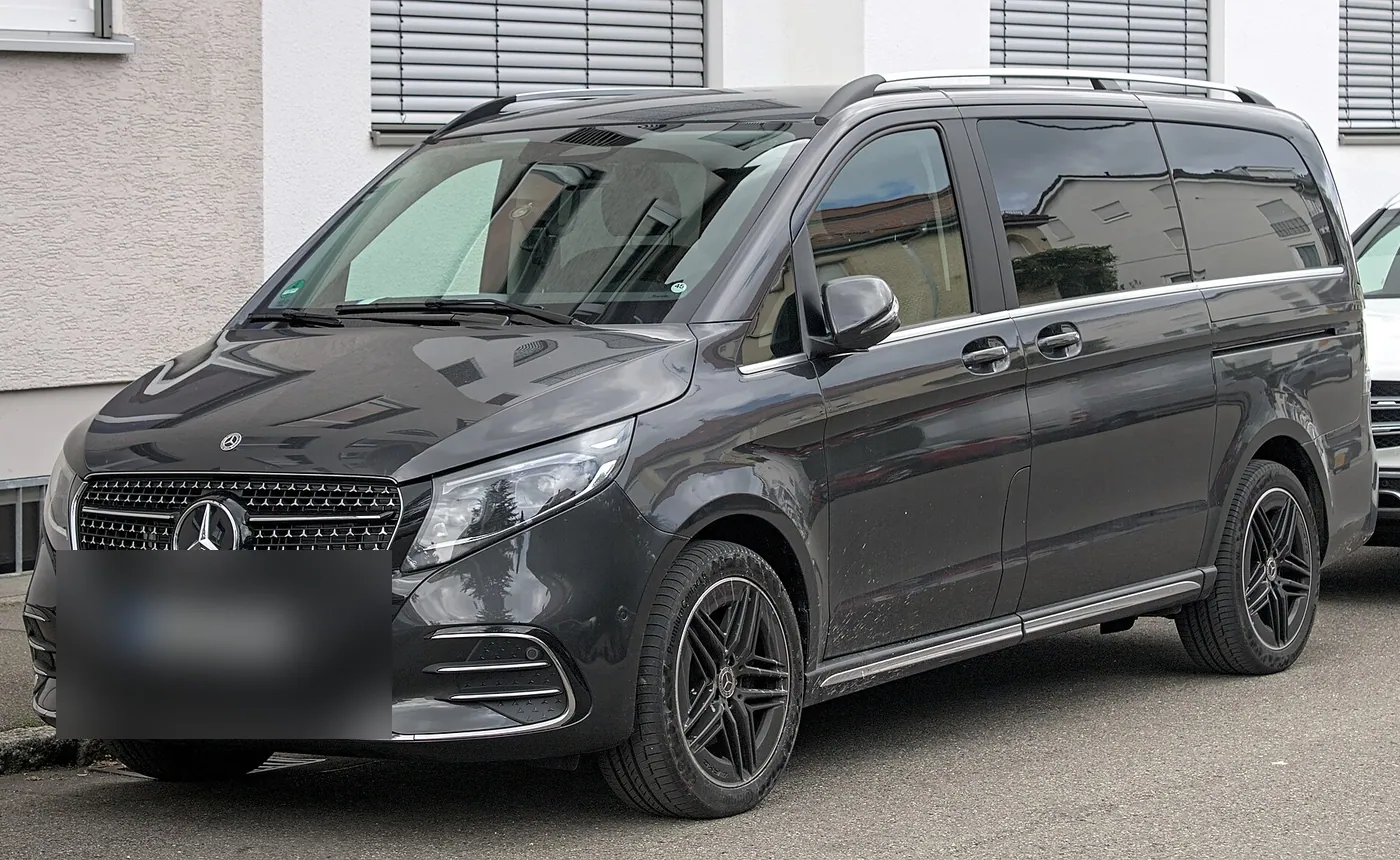
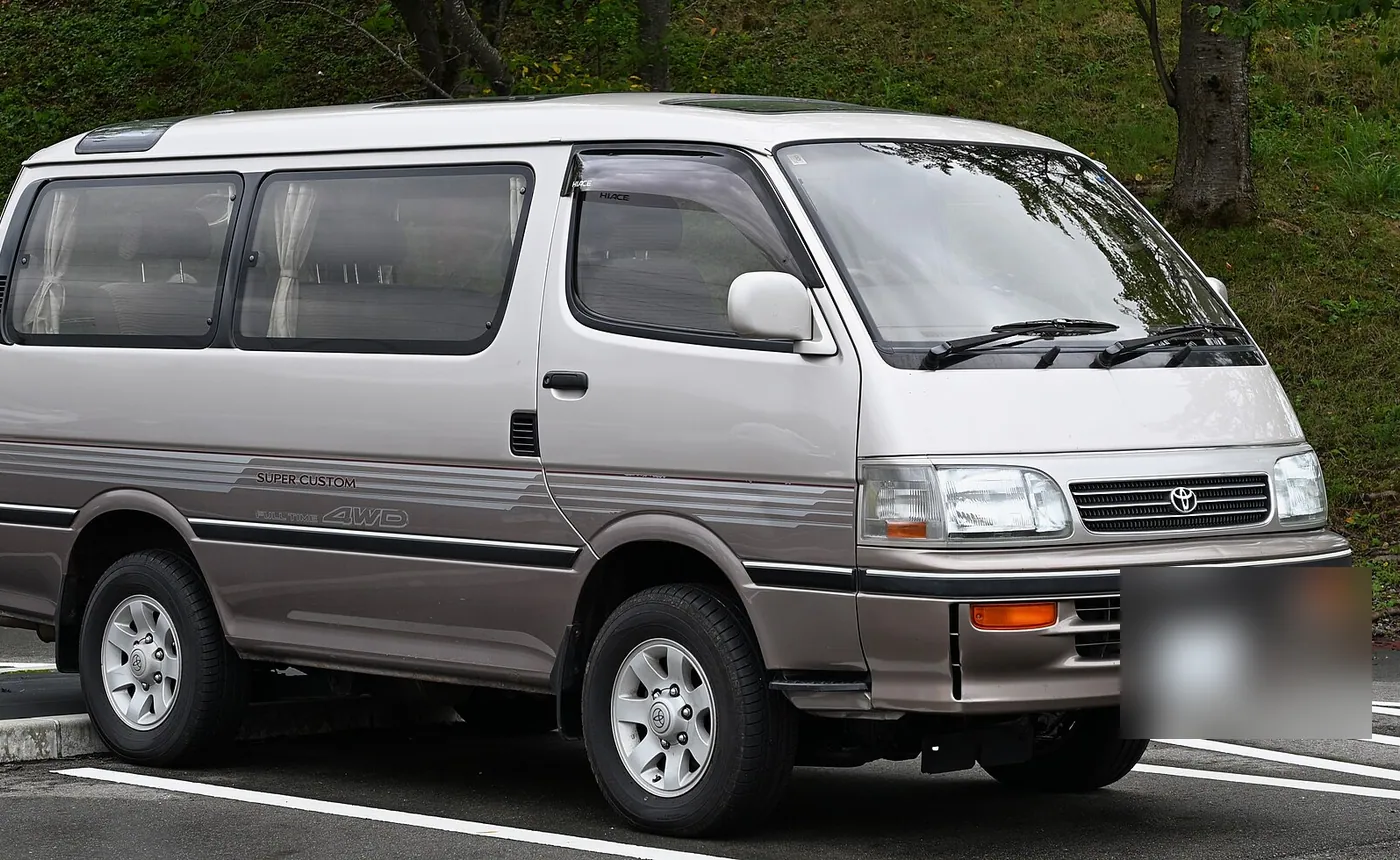
In short: In the three months to 19 September 2026, 191 Mercedes-Benz V-Classs sold at Japanese auctions at a median of €7,514, against 2,349 Toyota Hiace Wagons at €7,468. The Toyota Hiace Wagon is the cheaper buy by about €46 at auction, before shipping, VAT, VRT and fees. Our verdict is at the end of this article.
At the far end of the people-carrier spectrum, practicality starts to become a vehicle class of its own. The Mercedes-Benz V-Class and the Toyota Hiace Wagon are both built from vans, both are vast and both can carry far more people than any ordinary car. They come, however, from opposite traditions.
The V-Class is a luxury people carrier based on the Mercedes-Benz Vito van. It is the car of hotel transfers and airport shuttles across Europe, and in Japan it was bought by people who wanted the space of a van with the comfort and badge of a Mercedes.
The Hiace Wagon is the passenger version of the Toyota Hiace, one of the most widely used commercial vehicles in the world. In Japan it is a ten-seat carrier for schools, sports clubs, tour operators and very large families.
For an Irish buyer the choice is between luxury and sheer capacity. There is also an important licensing point, and it should be settled before anyone places a bid.
The specs
| Mercedes-Benz V-Class | Toyota Hiace Wagon | |
|---|---|---|
| Generation most imported | W447, 2014 on | H200, 2004 on |
| Engine | 2.1 or 2.0 diesel, 2.0 petrol | 2.7 petrol |
| Gearbox | 7-speed or 9-speed automatic | 4-speed or 6-speed automatic |
| Drive | Rear | Rear, or 4WD |
| Seats | 7 (most Japanese cars) | 10 |
| Body | Standard, long or extra-long | Wide body |
| Sliding doors | Yes | Yes |
| Import duty to Ireland | 10% (not built in Japan) | 0% possible (Japan-built, with proof of origin) |
Two approaches to carrying people
The V-Class found at Japanese auctions is the W447 generation, sold from 2014. Most Japanese cars have a diesel engine, rear-wheel drive and seven seats: two individual chairs in each of the first two rows and a bench at the back. Long and extra-long bodies add luggage space behind the third row, which matters on an airport run.
The Hiace Wagon is the H200 generation, which has been in production since 2004 and has been facelifted several times. Japanese Wagons use a 2.7-litre petrol engine, with rear-wheel drive or four-wheel drive, and seat ten people across four rows. Later cars gained a six-speed automatic in place of the old four-speed.
How they drive
The V-Class drives more like a large car than a van. The steering is light, the ride is comfortable and the diesel is quiet and reasonably economical at a cruise. On the motorway it is relaxed and stable. In a multi-storey car park or a narrow village street its length and width demand care.
The Hiace Wagon drives like the van it is. You sit high, almost above the front wheels, the steering is light and the turning circle is surprisingly tight. The petrol engine is smooth and willing but thirsty, and the ride is firm with only a driver on board. It is easy to place on the road, but nobody would mistake it for a car.
Inside and practicality
The V-Class has a properly luxurious interior on most Japanese grades, with leather seats, quality trim and plenty of equipment. The rear seats can be moved and rearranged, and on some versions they can face each other. Sliding doors on both sides make loading easy. It is a fine place to spend a long journey.
The Hiace Wagon is designed for capacity first. Its four rows of seats are functional, with hard-wearing fabric and a plain dashboard. With every seat in use, luggage space is limited.
The licensing point is this. A standard Irish category B licence covers vehicles with no more than eight passenger seats in addition to the driver. A ten-seat Hiace Wagon goes beyond that, so driving it as sold requires a D1 licence. A seven-seat V-Class sits comfortably within category B.
Running costs and reliability
The V-Class diesel is economical for a vehicle of its size, but servicing and parts carry Mercedes prices. The sliding doors and the many electronic systems should all be checked, because repairs to either are not cheap.
The Hiace Wagon's petrol engine uses more fuel, but the Hiace has a reputation for durability that few vehicles can match. Parts are inexpensive and widely available, and the mechanicals are simple enough for any competent garage.
What to check at auction
For the V-Class, read the auction sheet for notes on the sliding doors, electronic faults and warning lights. Aim for grade 4 or better with interior grade B or better, since vehicles used for transfers can show wear on seats and trim.
For the Hiace Wagon, look for signs of a hard commercial life: worn seats, damaged interior panels and high mileage. Check for rust on cars from snowy regions, and confirm the exact seating layout on the auction sheet.
The verdict
Buy the V-Class if you want a comfortable, refined people carrier for a large family or an executive transport business, with seven seats that a standard car licence covers. It is by far the more pleasant vehicle to travel in.
Buy the Hiace Wagon if you genuinely need to carry ten people and you hold, or will get, a D1 licence. It is simpler, tougher and cheaper to maintain, and it will likely outlast its owners' patience.
Frequently asked questions
Can I drive a 10-seat Hiace Wagon on a car licence in Ireland?
No. A category B licence covers up to eight passenger seats plus the driver, so a 10-seat vehicle needs a D1 licence.
Is the V-Class based on a van?
Yes. It shares its platform with the Mercedes-Benz Vito van.
Which is more reliable?
The Hiace Wagon has an outstanding reputation for durability and simple maintenance.
Keep reading
- Nissan GT-R vs Lexus LC: Japan's Two Flagship Performance Cars, and Two Ideas of Speed
- Mercedes-Benz GLC vs BMW X3: Comfort Against Agility in the German Mid-Size SUV Class
- Toyota Supra vs Nissan Fairlady Z: Two Old Names, Two Very Different Ideas of a Sports Car
- Suzuki Wagon R vs Daihatsu Move: The Original Tall Kei Cars, Still Slugging It Out
Photo credits
- Mercedes-Benz V-Class: Photo: Alexander-93 / Wikimedia Commons, CC BY-SA 4.0
- Toyota Hiace Wagon: Photo: TTTNIS / Wikimedia Commons, CC0