
Nissan Note e-Power vs Honda Fit: Two Clever Small Cars That Went Their Own Way
One drives like an electric car without a plug. The other hides a van-sized cargo area inside a supermini. Both are plentiful at Japanese auctions.
By the Japan to Ireland editors · · 4 min read
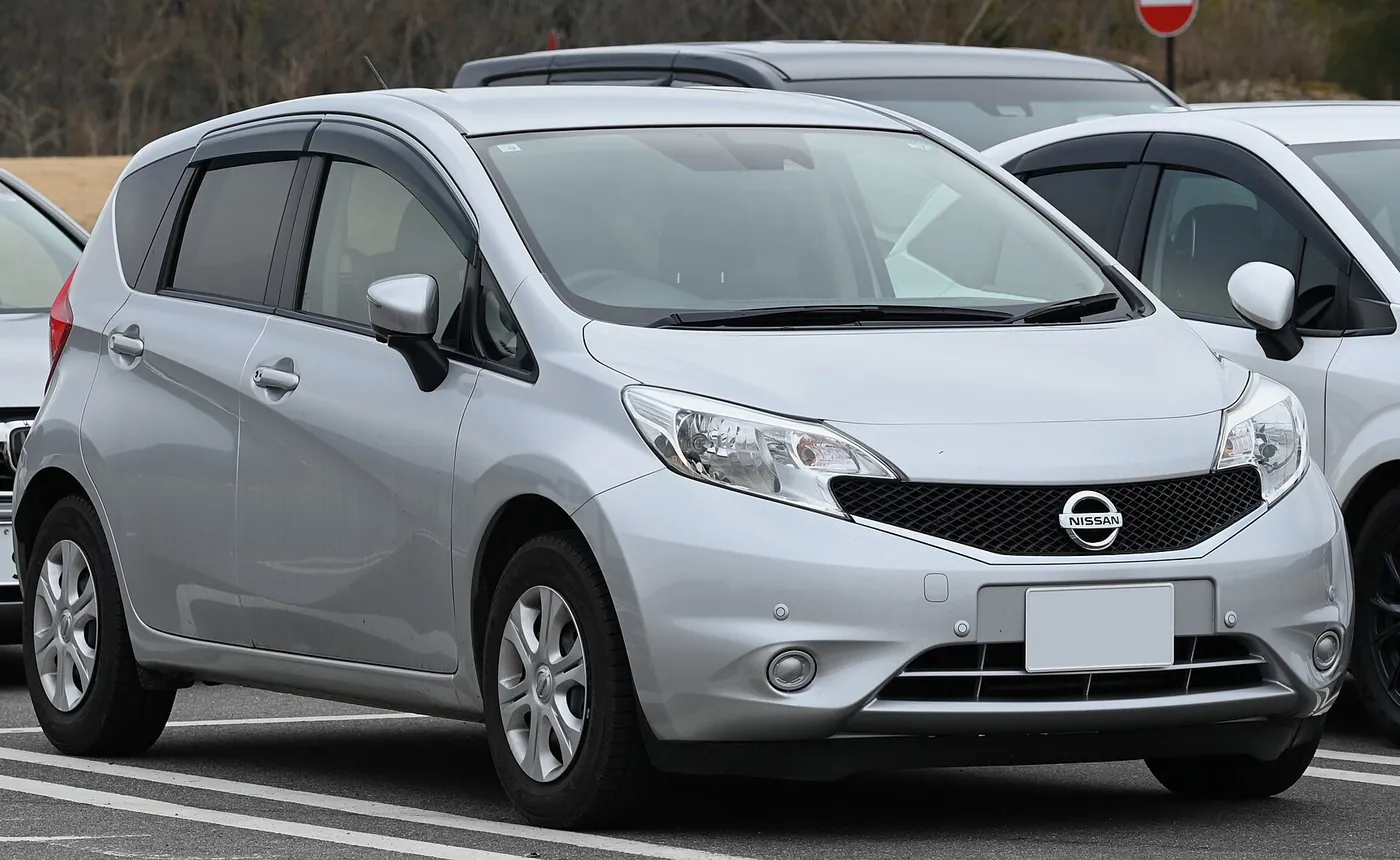
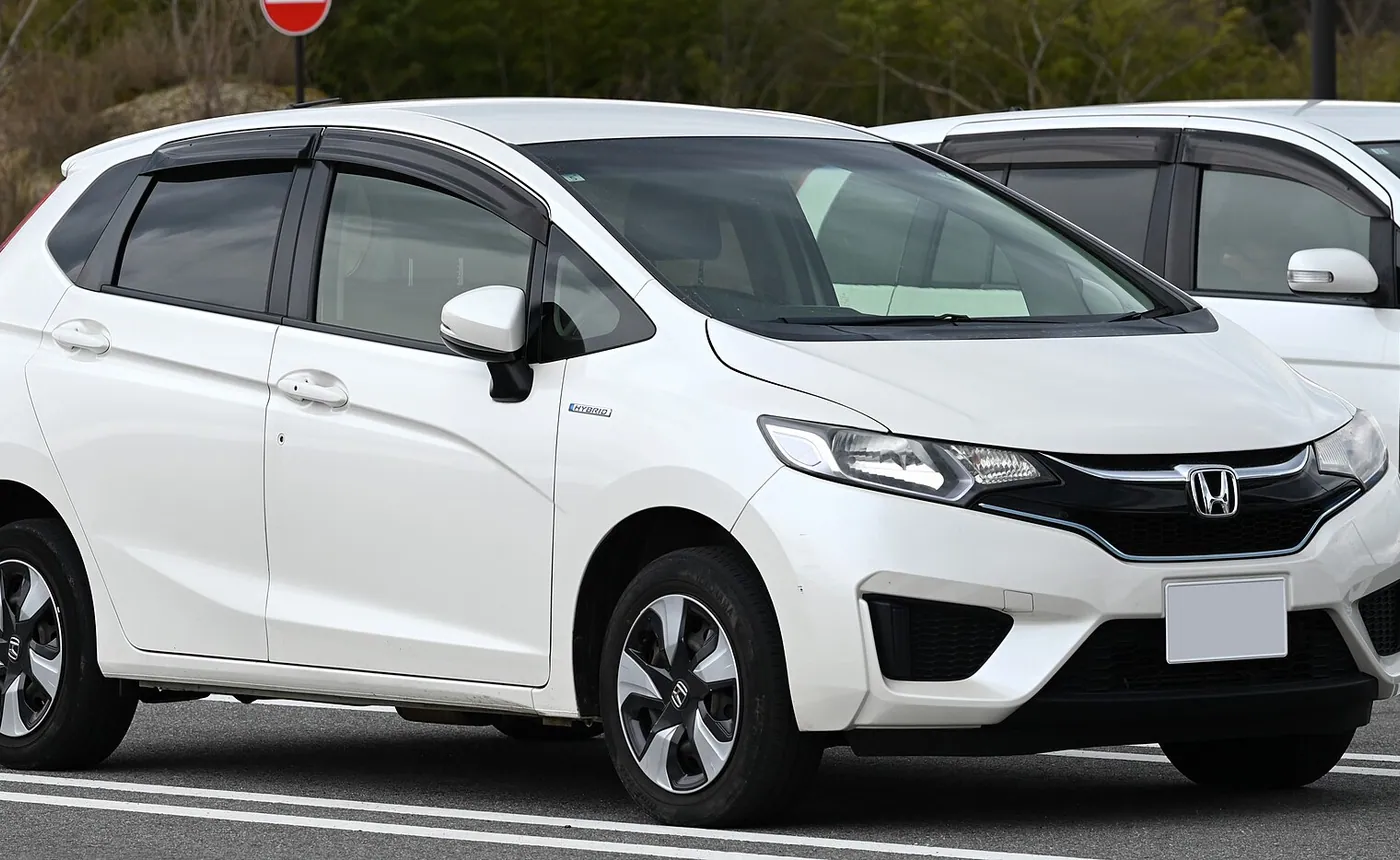
In short: In the three months to 19 September 2026, 18,088 Nissan Notes sold at Japanese auctions at a median of €1,738, against 15,719 Honda Fits at €1,199. The Honda Fit is the cheaper buy by about €539 at auction, before shipping, VAT, VRT and fees. Our verdict is at the end of this article.
In late 2016, a small Nissan hatchback did something no Nissan had done in about thirty years: it topped Japan's monthly sales charts. The reason was e-Power, an electric drivetrain fed by a petrol generator, and the Note was the first car to wear it.
The Honda Fit, sold in Ireland under the Jazz name, had been winning buyers for years with a different kind of cleverness. Its fuel tank sits under the front seats, which leaves room for rear seats that fold flat into the floor or flip their cushions up like cinema seats, opening a space tall enough to stand a potted plant or a bicycle with the front wheel off.
These are two of the most common small cars at Japanese auctions, and two of the most sensible. They are also built on very different ideas of what a small car should be.
The specs
| Nissan Note | Honda Fit | |
|---|---|---|
| Generation most imported | 2nd gen (E12), 2012–2020 | 3rd gen (GK/GP), 2013–2020 |
| Engines | 1.2 petrol; 1.2 e-Power | 1.3 and 1.5 petrol; 1.5 hybrid |
| e-Power / hybrid output | 109 PS electric motor | 137 PS combined (hybrid) |
| Gearbox | CVT or single-speed (e-Power) | CVT; 7-speed dual-clutch (hybrid) |
| Drive | Front | Front, or 4WD |
| Seats | 5 | 5 |
| Length | 4,100 mm | 3,955–4,045 mm |
| Party piece | One-pedal driving | Magic Seats fold and flip up |
| Import duty to Ireland | 0% possible (Japan-built, with proof of origin) | 0% possible (Japan-built, with proof of origin) |
Different starting points
The second-generation Note went on sale in Japan in 2012 as a plain, roomy hatchback with a 1.2-litre engine and a CVT. It was sold in Europe too, without the clever drivetrain. e-Power arrived in a 2016 update, using a 1.2 petrol engine purely as a generator and a motor of the kind Nissan developed for the Leaf to drive the front wheels.
The third-generation Fit launched in 2013 with a choice of petrol engines and a new hybrid system pairing a 1.5-litre engine with a seven-speed dual-clutch gearbox and a single electric motor. It was more ambitious than the Toyota hybrids it was chasing, and in its first year it was recalled several times for gearbox software faults. Cars from 2015 on, with the updates applied, have a much better record.
e-Power in daily life
The Note e-Power feels like an electric car because, from the driver's seat, it is one. The motor provides instant, silent shove away from the lights, and in its S and Eco modes the car slows firmly as you lift off the accelerator, so you can drive around town almost without touching the brake. The petrol engine starts and stops on its own schedule, which some drivers find odd at first.
On the motorway the system is less impressive. At a steady 110 km/h the engine runs more often and the economy advantage over a conventional small car narrows. It is a town car first.
The Fit's practical genius
The Fit's interior is still a marvel of packaging. The rear seats fold flat in one movement, the cushions flip up for tall loads and the boot itself is deep and square. For its size, little else at a Japanese auction carries more.
It is also the livelier car to drive, with sharper steering and a lighter feel. The trade is noise: the Fit transmits more road and engine sound, and on coarse Irish tarmac it can grow tiresome on a long run. The Note is the more relaxed car over distance, with a softer ride and a quieter cabin at urban speeds, though its rear seat and boot are ordinary next to the Honda's.
Running costs and reliability
Both are cheap to tax and fuel in Ireland. The Note e-Power and Fit Hybrid are the most frugal of the range, but the petrol Fit is close enough that many buyers take the simpler car and keep the difference.
The plain petrol Fit with a CVT is about as worry-free as a used car gets. The Note e-Power has proved robust; its small battery has a good record and the drivetrain has few moving parts. Petrol Notes with the conventional CVT are fine but less refined.
What to check at auction
For the Fit Hybrid, favour 2015 and later cars, and read the auction sheet for any note about the gearbox or warning lights. Low-speed jerkiness is a characteristic, but clunks or hesitation are not. For any Fit, check that the Magic Seats fold and lock properly, since a broken mechanism undoes the car's whole point.
For the Note e-Power, look for a clean record and listen to the engine running as a generator; it should be smooth and settle quickly. On both cars, grade 4 with an interior grade of B is easy to find. Check sills and rear arches on cars from snowy prefectures, and be wary of any small car with an unusually worn driver's seat for its mileage.
The verdict
If most of your driving is in town and you like the idea of an electric car without the charging, the Note e-Power is the more modern and more satisfying experience.
If you carry awkward things, from dogs to flat-pack furniture, the Fit is the cleverer car, and a well-kept petrol version is one of the safest used buys Japan has to offer.
Frequently asked questions
Do you need to charge a Nissan Note e-Power?
No. A petrol engine charges the battery. You only ever put petrol in it.
Is the Honda Fit the same as the Honda Jazz?
Yes. The Fit is the Japanese name for the car sold in Ireland and Europe as the Jazz.
Which is better for motorway driving?
The petrol or hybrid Fit is slightly more efficient at steady motorway speeds; the Note e-Power is happiest in town.
Which Fit Hybrid years should I look for?
Cars from 2015 onward, after the early gearbox software problems had been addressed.
Keep reading
- Nissan Serena vs Honda Step WGN Spada: The Family Van Showdown Japan Takes Seriously
- Honda N-Box vs Daihatsu Tanto: Inside Japan's Battle of the Tall Little Boxes
- Toyota Voxy vs Toyota Noah: Twins With Different Faces, and Why It Still Matters
- Suzuki Wagon R vs Daihatsu Move: The Original Tall Kei Cars, Still Slugging It Out
- Honda N-WGN vs Daihatsu Mira Tocot: Two Kei Hatchbacks for People Who Simply Want to Get There
- Importing a Nissan Note: prices and costs
- Importing a Honda Fit: prices and costs
Photo credits
- Nissan Note: Photo: TTTNIS / Wikimedia Commons, CC0
- Honda Fit: Photo: TTTNIS / Wikimedia Commons, CC0