
Nissan Serena vs Honda Step WGN Spada: The Family Van Showdown Japan Takes Seriously
Two boxy seven- and eight-seaters, two different ideas about hybrids, one clever assisted-driving system and one surprising tailgate.
By the Japan to Ireland editors · · 4 min read
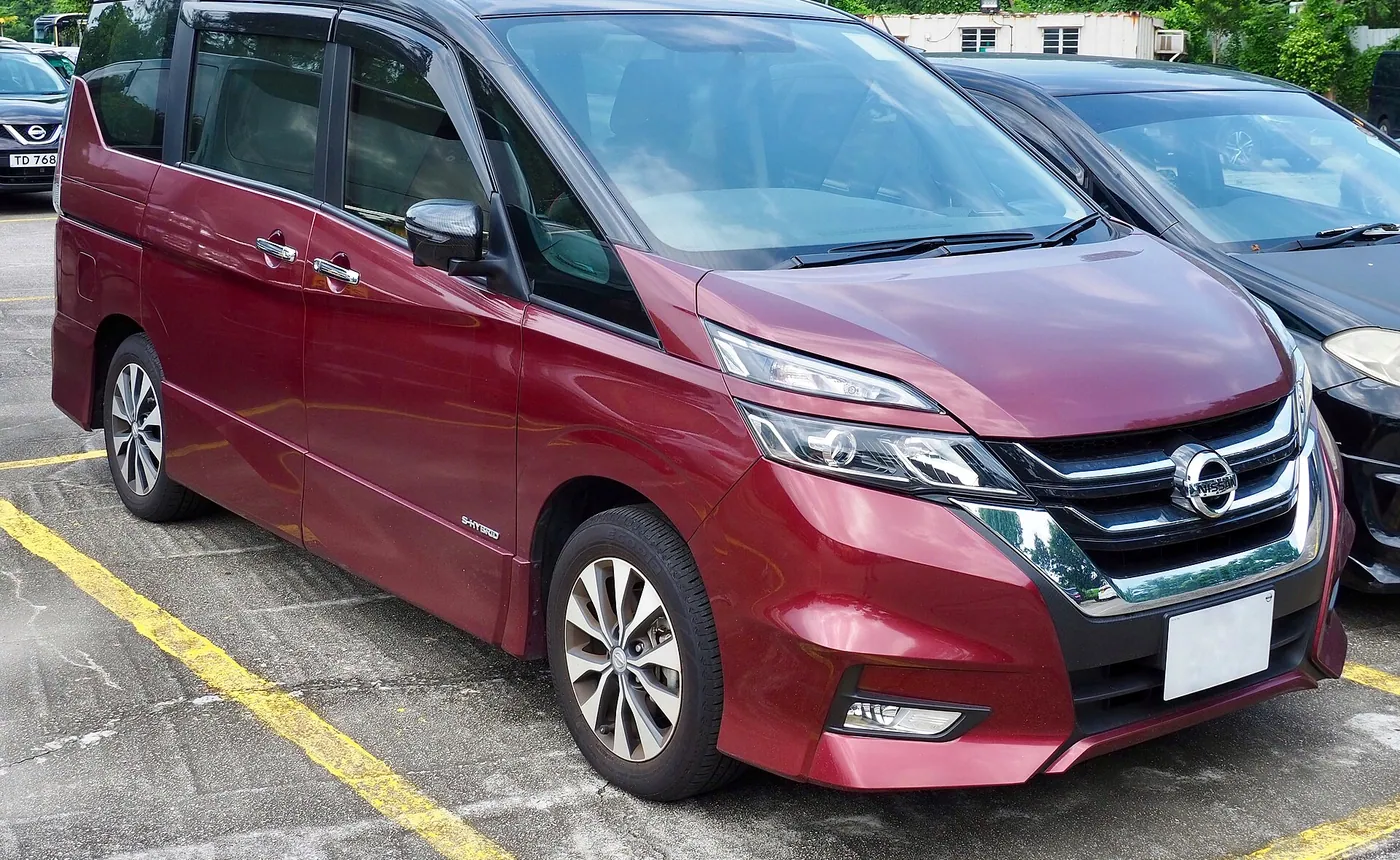
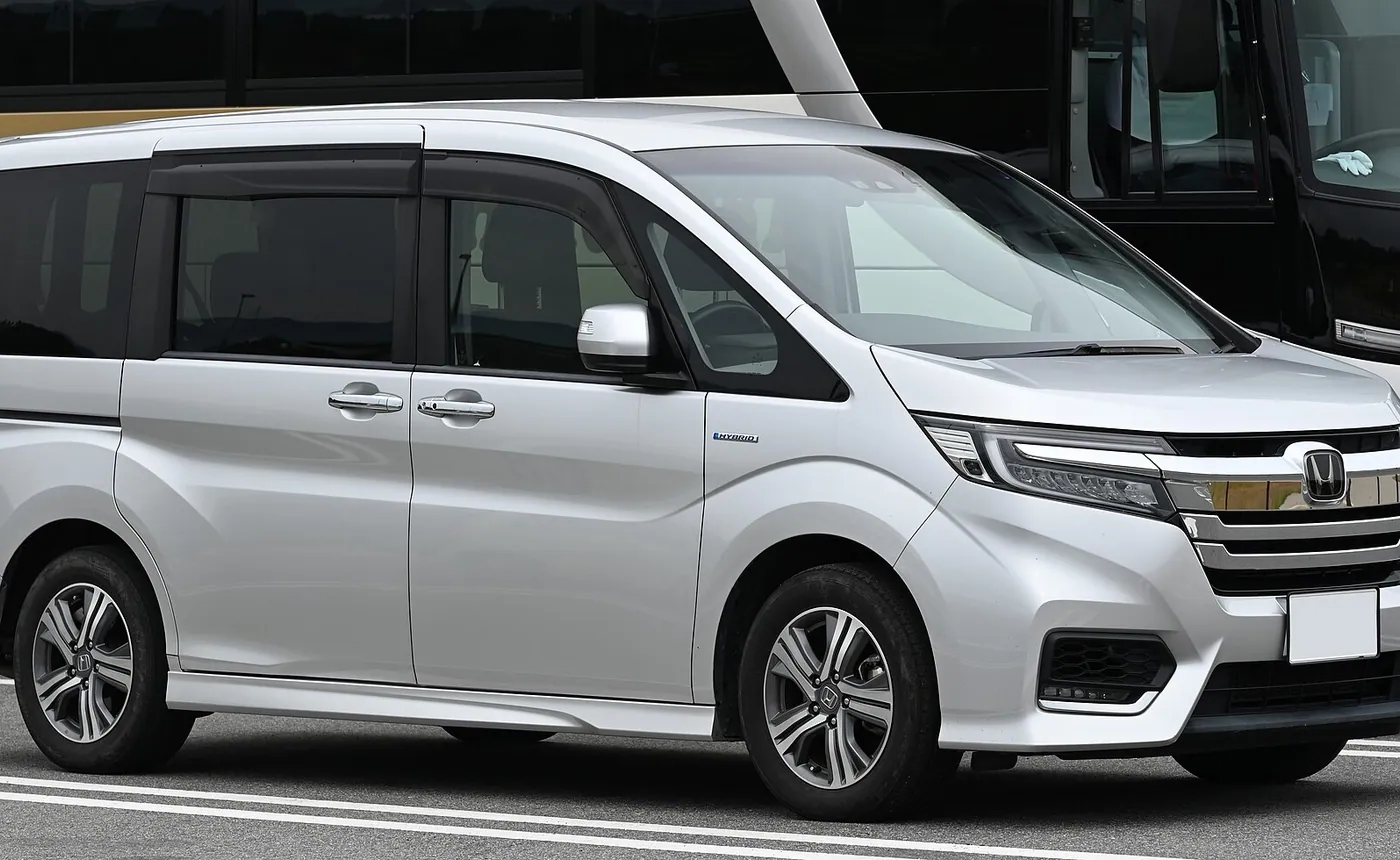
In short: In the three months to 19 September 2026, 18,782 Nissan Serenas sold at Japanese auctions at a median of €1,354, against 7,129 Honda Step WGN Spadas at €5,455. The Nissan Serena is the cheaper buy by about €4,101 at auction, before shipping, VAT, VRT and fees. Our verdict is at the end of this article.
Every weekend in Japan, a certain kind of family outing begins the same way: a boxy minivan pulling out of a suburban driveway, sliding doors gliding shut, three rows of seats filled with children, grandparents and a cool box. The Nissan Serena and Honda Step WGN are two of the vans most likely to be doing the driving.
In Ireland they have quietly become the family car of choice for people who have outgrown an estate and do not want a large SUV. They are roomier than a seven-seat SUV of the same length, easier to climb into, and far cheaper to buy as Japanese imports. Both are right-hand drive from the factory, so there is no awkward conversion and the sliding door opens onto the footpath, where it should.
The specs
| Nissan Serena | Honda Step WGN Spada | |
|---|---|---|
| Generation most imported | 5th gen (C27), 2016–2022 | 5th gen (RP), 2015–2022 |
| Engines | 2.0 petrol mild hybrid; 1.2 e-Power | 1.5 turbo petrol; 2.0 hybrid |
| Hybrid layout | e-Power: engine charges, motor drives | Mostly electric, engine can drive at speed |
| Seats | 7 or 8 | 7 or 8 |
| Gearbox | CVT or single-speed (e-Power) | CVT or e-CVT |
| Length | 4,690–4,770 mm | 4,690–4,760 mm |
| Sliding doors | Both sides, powered on most grades | Both sides, powered on most grades |
| Party piece | ProPilot assisted driving | Waku Waku split tailgate |
| Import duty to Ireland | 0% possible (Japan-built, with proof of origin) | 0% possible (Japan-built, with proof of origin) |
Two long careers
Both names have deep roots. The Serena first appeared in 1991 and the Step WGN in 1996, and for most of the three decades since they have fought over the same buyers with roughly the same box. The fifth-generation Step WGN arrived in 2015 with a small turbocharged engine, a brave move in a class used to large, lazy petrol units, and the Spada name marks the sportier-looking, better-equipped versions. A hybrid Spada followed in 2017.
The fifth-generation Serena launched in 2016 with a headline feature, ProPilot, and in 2018 it gained e-Power. Both vans were replaced in 2022, which means there are now plenty of well-kept examples coming through Japanese auctions at sensible ages.
Two kinds of hybrid
Nissan's e-Power system is an unusual idea. The petrol engine never drives the wheels; it runs as a generator, and an electric motor does all the driving. The result feels like an electric car around town, smooth and eager off the line, with the engine humming in the background when the battery needs topping up.
Honda's system on the Spada hybrid works similarly at low speeds but can clutch the engine directly to the wheels at a steady cruise, where that is more efficient. On the motorway, that gives it a small edge in refinement and economy.
The non-hybrid versions are worth considering too. The Step WGN's 1.5 turbo is punchy and economical for a van this size. The Serena's 2.0 petrol, with its small S-Hybrid assist, is older technology but proven and simple.
How they drive
Neither is a driver's car, and neither pretends to be. The Serena is soft and easy, with light steering that suits car parks and school gates. The Step WGN sits a touch lower and feels slightly tighter on a winding road, though both lean in bends and both are happiest at a steady, unhurried pace. With seven people aboard, the hybrids pull more willingly than the plain petrol cars.
ProPilot, offered on many Serenas, was one of the first systems in a family car to steer, brake and accelerate within a single motorway lane. It is not self-driving, and the driver must keep hands on the wheel, but on a long run down the M1 it takes a real edge off fatigue. Honda Sensing on the Step WGN offers adaptive cruise and lane keeping too, slightly less polished.
Inside and practicality
Both vans offer seven or eight seats, depending on whether the middle row has captain's chairs or a bench. The Serena's middle seats slide a long way, and on some versions the centre seat can move forward to sit between the front seats. The Step WGN's third row folds flat into the floor, which leaves a cavernous load space without seats hanging from the sides of the cabin.
Then there is Honda's party piece, the Waku Waku Gate. Part of the tailgate swings open sideways like a door, so you can reach into the boot in a tight parking space, or let a child climb into the third row from the back. It sounds like a gimmick until you use it in a crowded car park in the rain.
Reliability and auction checks
Both vans have solid records, and the hybrid systems have proved durable. As with every Japanese people carrier, the powered sliding doors are the first thing to check: listen for grinding and watch for hesitation. On the Step WGN, look at the Waku Waku Gate's hinges and seals, and read the auction sheet for any notes on rattles or water ingress at the rear.
On petrol Serenas, the CVT should feel smooth from rest. Family vans live hard lives inside, so take the interior grade seriously: a B is good, a C usually means stained seats and scuffed trim. Aim for grade 4 or better, and check the underside of any car from a snowy prefecture.
The verdict
For drivers who spend a lot of time on motorways, the Step WGN Spada hybrid is the more refined and economical van, and its clever tailgate is a genuine daily convenience.
For town-heavy driving, the Serena e-Power is the smoother, more electric-feeling experience, and ProPilot is a real asset for anyone who drives long distances with a car full of children. Either way, you are buying a van that does the family job better than most SUVs costing far more.
Frequently asked questions
Is the Nissan Serena e-Power a plug-in hybrid?
No. The petrol engine charges a small battery and never drives the wheels directly. You fill it with petrol like any other car.
How many seats does a Honda Step WGN have?
Seven or eight, depending on whether the middle row has two captain's chairs or a three-seat bench.
What is the Waku Waku Gate?
A section of the Step WGN's tailgate that opens sideways like a door, for access in tight spaces.
What should I check first at auction?
The powered sliding doors, then the interior grade. Family vans are often worn inside even when the mechanics are sound.
Keep reading
- Honda N-Box vs Daihatsu Tanto: Inside Japan's Battle of the Tall Little Boxes
- Toyota Aqua vs Toyota Yaris Hybrid: Toyota's Two Answers to the Same Small Question
- Nissan Note e-Power vs Honda Fit: Two Clever Small Cars That Went Their Own Way
- Toyota Voxy vs Toyota Noah: Twins With Different Faces, and Why It Still Matters
- Toyota Corolla Axio vs Honda Grace: Two Quiet Saloons for People Who Hate Fuss
- Importing a Nissan Serena: prices and costs
Photo credits
- Nissan Serena: Photo: User3204 / Wikimedia Commons, CC BY 4.0
- Honda Step WGN Spada: Photo: TTTNIS / Wikimedia Commons, CC0