
Mazda Familia GT-R: The Turbocharged Rally Hatchback That Arrived Just as the Stage Went Quiet
Mazda built the Familia GT-R to carry its four-wheel-drive rally programme into the 1990s. A 1.8-litre turbo, full-time 4WD and a compact hatchback body made it one of the most purposeful small cars of its day.
By the Japan to Ireland editors · · 4 min read
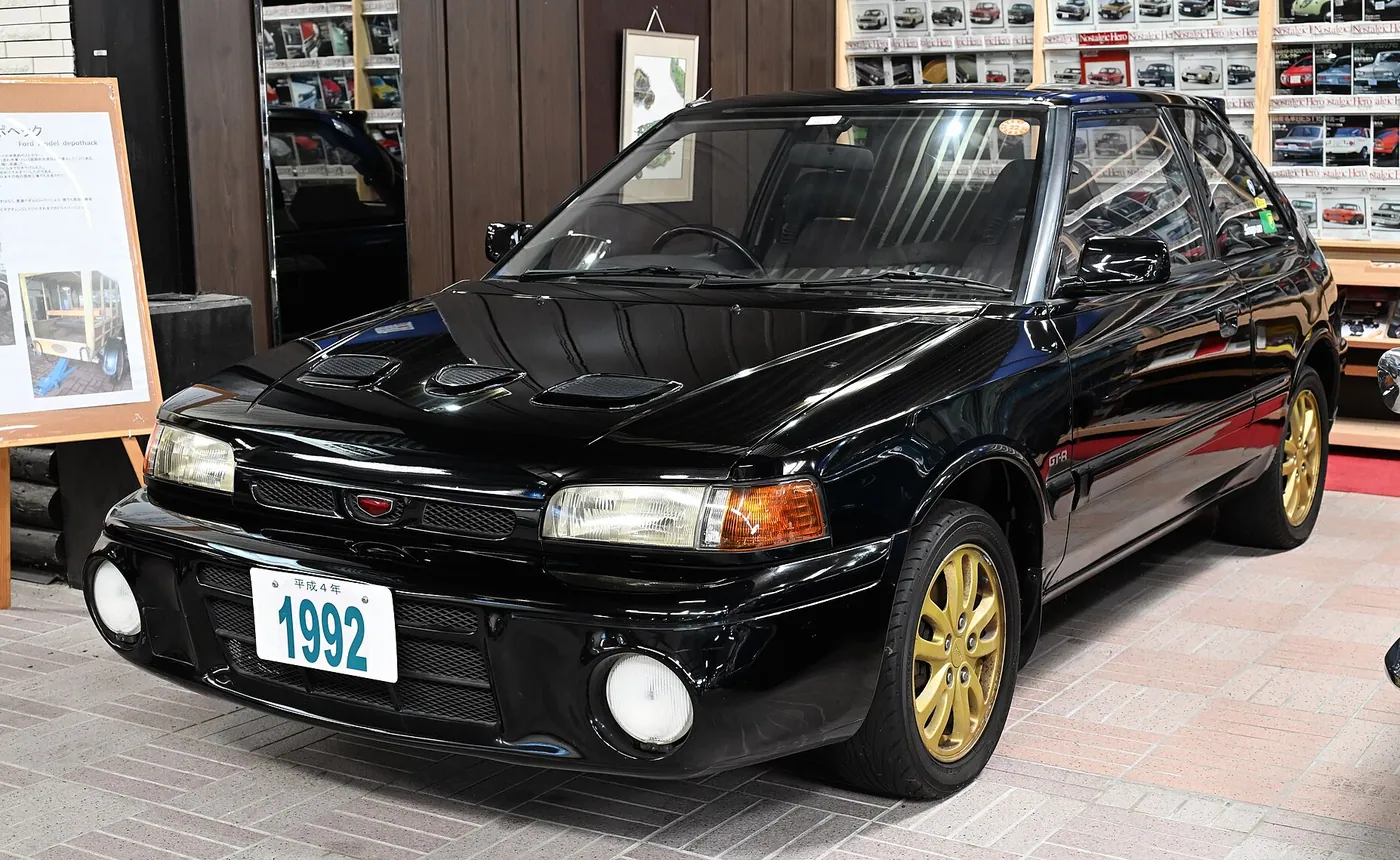
In February 1987 a Mazda 323 4WD won the Swedish Rally, driven by the Finnish world champion Timo Salonen across frozen forest roads. It was proof that a small Japanese hatchback with a turbocharged engine and four-wheel drive could beat the best in the world on the right event. For the next few years Mazda built road cars that carried that idea forward, and the Familia GT-R was the last and most serious of them.
The GT-R went on sale in Japan in 1992, based on the Familia of the BG generation, known in Europe as the 323. It was a homologation car, built to qualify the model for Group A competition, and it was produced only until 1994.
The specs
| Years built | 1992–1994 |
|---|---|
| Engine | 1.8-litre BP turbocharged four-cylinder petrol |
| Power | 210 PS |
| Gearbox | 5-speed manual |
| Drive | Full-time four-wheel drive |
| Body styles | 3-door hatchback |
| Export name | Mazda 323 GT-R |
| Rare variant | GT-Ae, a limited, lighter version |
Why Mazda built it
Japan's carmakers spent the late 1980s and early 1990s in an arms race of turbocharged four-wheel-drive saloons and hatchbacks, much of it driven by rallying. Toyota had the Celica GT-Four, Mitsubishi the Galant VR-4 and then the Lancer Evolution, Subaru the Legacy RS and soon the Impreza. Mazda's contribution was smaller and lighter than most.
The earlier Familia GT-X had carried the rally programme, and the GT-R was its successor with more power, a stronger drivetrain and better cooling. The timing was unlucky. The Japanese economy was turning down sharply, and the GT-R never had the long works rallying career its specification seemed to promise. Its reputation was made largely on the road and in national-level motorsport instead.
Design and engineering
The heart of the car is the BP, a 1.8-litre twin-cam four-cylinder with a turbocharger and a front-mounted intercooler, producing 210 PS. Power goes through a five-speed manual gearbox to all four wheels, with a centre differential splitting drive between the axles.
Visually, the GT-R is restrained compared to some rivals. It has flared front wings, vents in the bonnet to release heat from the engine bay, a deeper front bumper with openings for the intercooler and extra cooling, and modest skirts. To a casual eye it looks like a well-built small hatchback with a slightly aggressive stance. To anyone who knows, it is unmistakable.
How it drives today
A good Familia GT-R is quick, compact and very secure. The car is short and relatively light, so it feels agile in a way larger turbo saloons of the period do not. There is noticeable turbo lag at low revs, followed by a strong surge of power through the middle of the range. The four-wheel drive gives excellent traction on wet roads, which matters on an Irish winter morning.
Steering is direct, the ride is firm, and the cabin is plain and functional. Road and engine noise are high at motorway speeds. It is a car for a winding road in the west, or a day at a track or a rally event, more than a long motorway trip.
Versions worth knowing
The standard GT-R is the version usually found. Mazda also built a limited, lighter variant known as the GT-Ae, intended to make the car more competitive in motorsport, which is rare and sought after by collectors. In Europe the same car was offered as the 323 GT-R in small numbers. Japanese-market cars are right-hand drive, like Irish cars.
What to check when buying in Japan
Many GT-Rs have been driven hard, raced or rallied, and modification is the rule rather than the exception. Look for evidence of increased boost, aftermarket turbochargers, uprated intercoolers and changed engine management. A car close to original specification is now the more valuable choice for most buyers.
Check the turbocharger for smoke and shaft play, look for oil leaks, and test the engine carefully for misfires and overheating. Listen for whining or clunking from the gearbox, centre differential and rear differential, which can wear on cars that have been launched hard. Check for rust on the sills, the rear arches, the floor and around the rear hatch.
Parts for the GT-R are not plentiful. Some mechanical components are shared with other Familias and Mazda models, but the specific body parts, intercooler and cooling items are harder to find. Mileage on a car this old can be uncertain; use service records and the auction sheet together. Make sure the export paperwork and chassis number match.
Should you import one?
The Familia GT-R suits an enthusiast who wants a rare, focused and relatively compact rally homologation car, and who is willing to look after it carefully. In Ireland, where rallying has a long and passionate following, it will be appreciated by those who know what it is and ignored by those who do not, which many owners prefer.
Every GT-R is over 30 years old or close to it, and cars over 30 years old can qualify for Ireland's vintage treatment. Expect firm suspension, a busy engine, and a careful hunt for parts. The reward is a small car with a genuine competition pedigree and a very particular sense of purpose.
Frequently asked questions
How powerful is the Mazda Familia GT-R?
The 1.8-litre turbocharged BP engine produces 210 PS, sent to all four wheels through a five-speed manual.
What is the GT-Ae?
A limited, lighter version of the GT-R aimed at motorsport, which is rare and collectable.
Is the GT-R the same as the 323 GT-R?
Yes. The 323 GT-R was the European name for the same car.
Are most GT-Rs modified?
Many are. An example close to original specification is worth seeking out.
More Japanese classics
- Isuzu Bighorn: The Square-Shouldered Off-Roader Ireland Already Knows as the Trooper
- Isuzu Piazza: The Giugiaro Concept Car That Made It to the Showroom Almost Unchanged
- Daihatsu Charade GTti: The One-Litre Turbo Hatchback That Out-Engineered Bigger Rivals
- Daihatsu Rocky (F300): The Small, Tough Open-Top Off-Roader Europe Knew as the Feroza
- Mitsuoka Viewt: The Japanese Micra Dressed as a Classic British Saloon
- All 90 Japanese classics you can import
Photo credits
- Photo: TTTNIS / Wikimedia Commons, CC0