
Honda Beat: The Tiny Mid-Engined Roadster That Revs Like a Racing Motorbike
A kei car with its engine behind the seats, a soft top and an 8,100 rpm power peak, the Beat was one of the last cars launched in Soichiro Honda's lifetime.
By the Japan to Ireland editors · · 4 min read
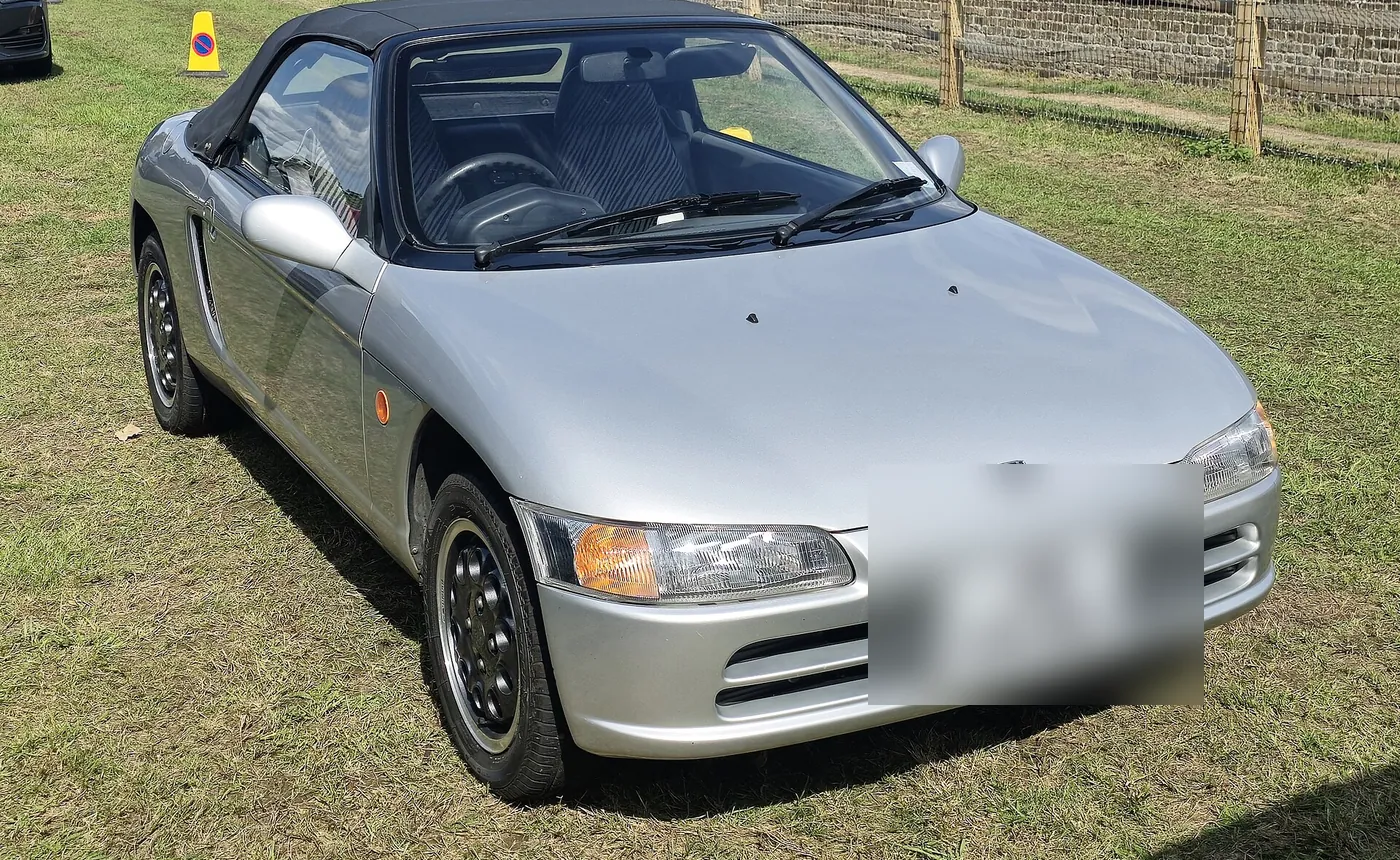
In May 1991, Honda launched a car so small that it fitted inside the strict dimensions of Japan's kei class, the category of tiny vehicles that earn lower taxes and easier parking rules. It had two seats, a fabric roof, and a three-cylinder engine mounted behind the driver. Three months later, Soichiro Honda, the company's founder, died at the age of 84. The Beat became known as the last new Honda launched while he was alive.
It is a fitting legacy. The Beat is impractical, noisy and slow in a straight line. It is also one of the most joyful small cars ever built.
The specs
| Years built | 1991–1996 |
|---|---|
| Engine | 656 cc E07A three-cylinder with individual throttle bodies (MTREC) |
| Power | 64 PS at 8,100 rpm, the kei-car limit |
| Gearbox | Five-speed manual |
| Drive | Mid-engine, rear-wheel drive |
| Body styles | Two-seat convertible |
| Wheels | 13-inch front, 14-inch rear |
Why it was built
Kei cars had long been about economy. By the start of the 1990s, rules allowed engines of up to 660 cc and makers had agreed a power ceiling of 64 PS. Within those limits, and with the bubble economy still lifting spending, Japanese companies began building kei sports cars. Suzuki had the Cappuccino, a front-engined roadster, and Mazda's Autozam brand had the gull-winged AZ-1. Honda's contribution was different from both: a mid-engined open car with a high-revving, naturally aspirated engine.
Without a turbocharger, Honda had to find its power at high revs. That decision shaped the car.
Design and engineering
The engine is the 656 cc E07A, a three-cylinder unit fed by individual throttle bodies for each cylinder in a system Honda called MTREC. It reaches its maximum 64 PS at 8,100 rpm, and the rev limiter sits higher still. There is no turbo, so response is immediate and the sound rises to a howl that has more in common with a motorbike than a car.
The engine sits transversely behind the seats and drives the rear wheels through a five-speed manual gearbox. The car has disc brakes on all four wheels, and Honda fitted larger wheels at the back than at the front, 14 inches against 13, to help balance the grip. The body is a monocoque with a manual soft top. Instruments are styled like a motorcycle's, and the original seat fabric uses a bold zebra-like pattern that fans of the car treasure.
How it drives today
The Beat is not fast. On a motorway, it feels small and busy, and keeping up with traffic requires keeping the engine spinning. On a quiet, twisty road, everything changes. The steering is light and precise, the car changes direction instantly, and the open cockpit makes modest speeds feel thrilling.
It rewards drivers who enjoy working a gearbox. The engine feels flat at low revs and comes alive above 6,000 rpm, and the gearchange is short and mechanical. On a Wicklow mountain road on a dry evening, it is a very happy car.
It is also very small. In Irish traffic, next to large SUVs and trucks, you sit low and feel exposed. It has none of the safety technology of a modern car, so drive it with that in mind.
Variants worth knowing
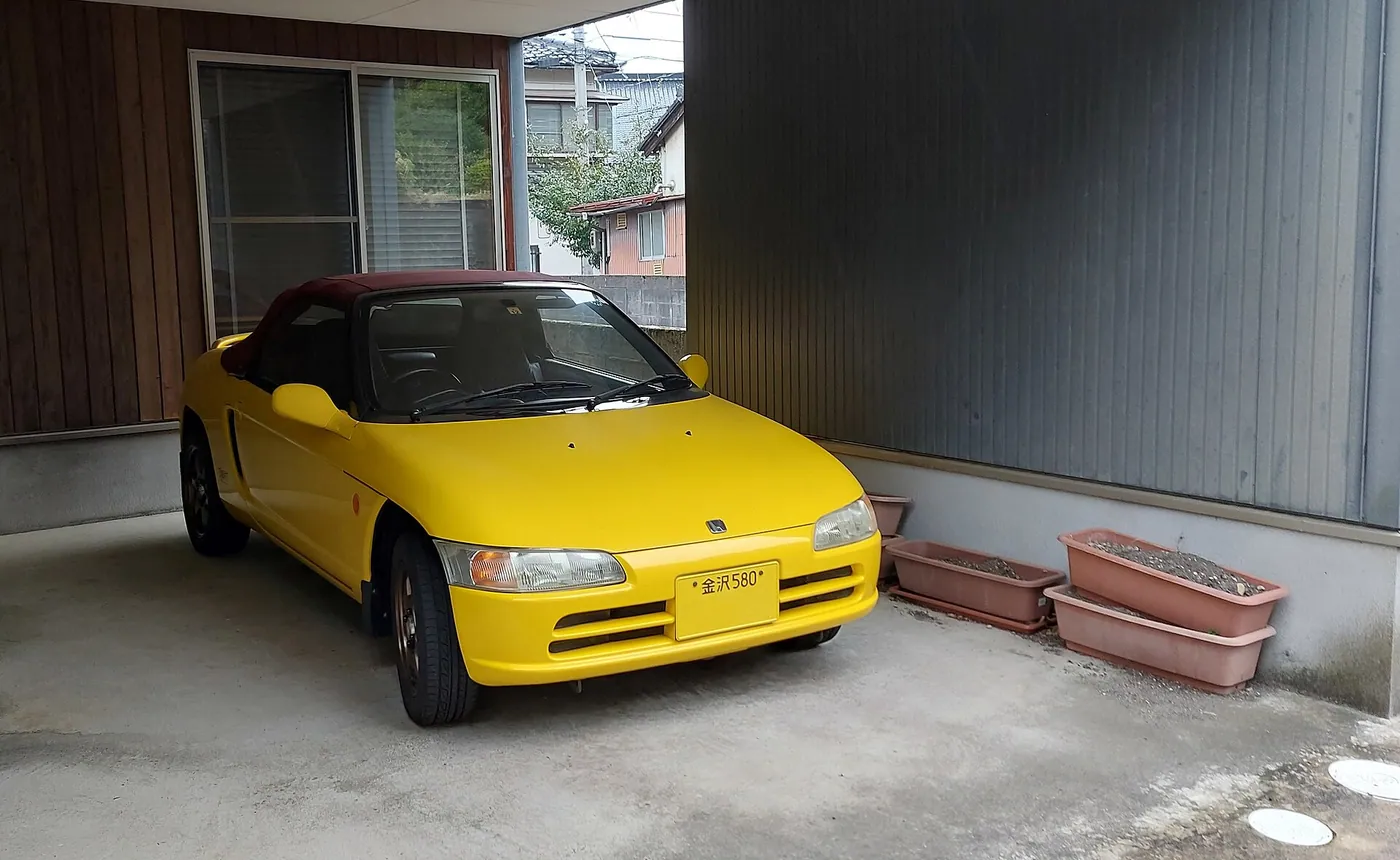
The Beat was sold in a single main specification, but Honda released a few special editions during the run, known as Version F, Version C and Version Z, each with distinctive colours and trim details. Standard colours such as the bright yellow and red are popular. Many owners have fitted aftermarket hard tops, wheels and exhausts.
What to check when buying in Japan
Rust is the biggest concern on a Beat. Look at the sills, the floor pans, the rear wheel arches, the area around the engine bay, and the bottom of the front panel. Water leaks through the roof and seals can soak carpets and rot floors from inside, so check under the mats and behind the seats.
The soft top often needs replacing. Seals harden with age and the rear window can crack or cloud. Engines are generally tough if serviced, but they live at high revs, so check for smoke, misfires and oil leaks. Honda has reissued a number of Beat parts in Japan, which helps owners, but some trim items remain hard to find.
Many Beats have been modified. A car with a sympathetic set of period parts can be fine, but a cut or heavily altered car may be difficult to put right. Theft and stripping for parts are not unknown with popular small Hondas, so check that the chassis number, plates and documents match, and be wary of a car with an unusually patchy history or replaced identification. Odometer readings on cars of this age should be backed by records.
Should you import one?
If you want a light, open-top car that delivers real driving pleasure without big power, the Beat is a wonderful choice. It is cheap to run, easy to park and right-hand drive, and it turns any short trip on a dry day into a small adventure.
It is not practical. Luggage space is tiny, the cabin is tight for tall drivers and it is noisy at speed. Cars over 30 years old can qualify for Ireland's vintage treatment, which applies to many Beats. Choose a car with a solid floor and sills over one with low mileage, protect it from Irish winters, and keep it for days when the roof can come down.
Frequently asked questions
What engine does the Honda Beat have?
A 656 cc naturally aspirated E07A three-cylinder with individual throttle bodies, making 64 PS at 8,100 rpm.
Is the Beat mid-engined?
Yes. The engine sits behind the seats and drives the rear wheels through a five-speed manual.
What should I check first?
Rust in the sills and floors, and water leaks through the hood and seals, which can rot the car from inside.
Is the Beat practical for daily use in Ireland?
It can be used, but it is small, noisy and has little luggage space, so most owners keep it for fine-weather driving.
More Japanese classics
- Honda NSX (NA1): The Aluminium Supercar That Made Ferrari Rethink Everything
- Toyota Land Cruiser Prado (J70): The Coil-Sprung Land Cruiser That Started the Prado Line
- Honda CR-X (EF8): The Wedge-Shaped Coupe That Brought VTEC to the Street
- Honda Civic SiR (EG6): The Hatchback That Made the B16A a Legend
- Honda Integra Type R (DC2): The Front-Wheel-Drive Car Many Rate the Best Ever Made
- All 90 Japanese classics you can import
Photo credits
- Photo: Calreyn88 / Wikimedia Commons, CC BY-SA 4.0
- Photo: MikaPr65 / Wikimedia Commons, CC BY-SA 4.0