
Honda CR-X (EF8): The Wedge-Shaped Coupe That Brought VTEC to the Street
With a 1.6 VTEC engine screaming past 7,000 rpm and a body made for slicing through traffic, the second-generation CR-X SiR is a defining Honda of the late 1980s.
By the Japan to Ireland editors · · 4 min read
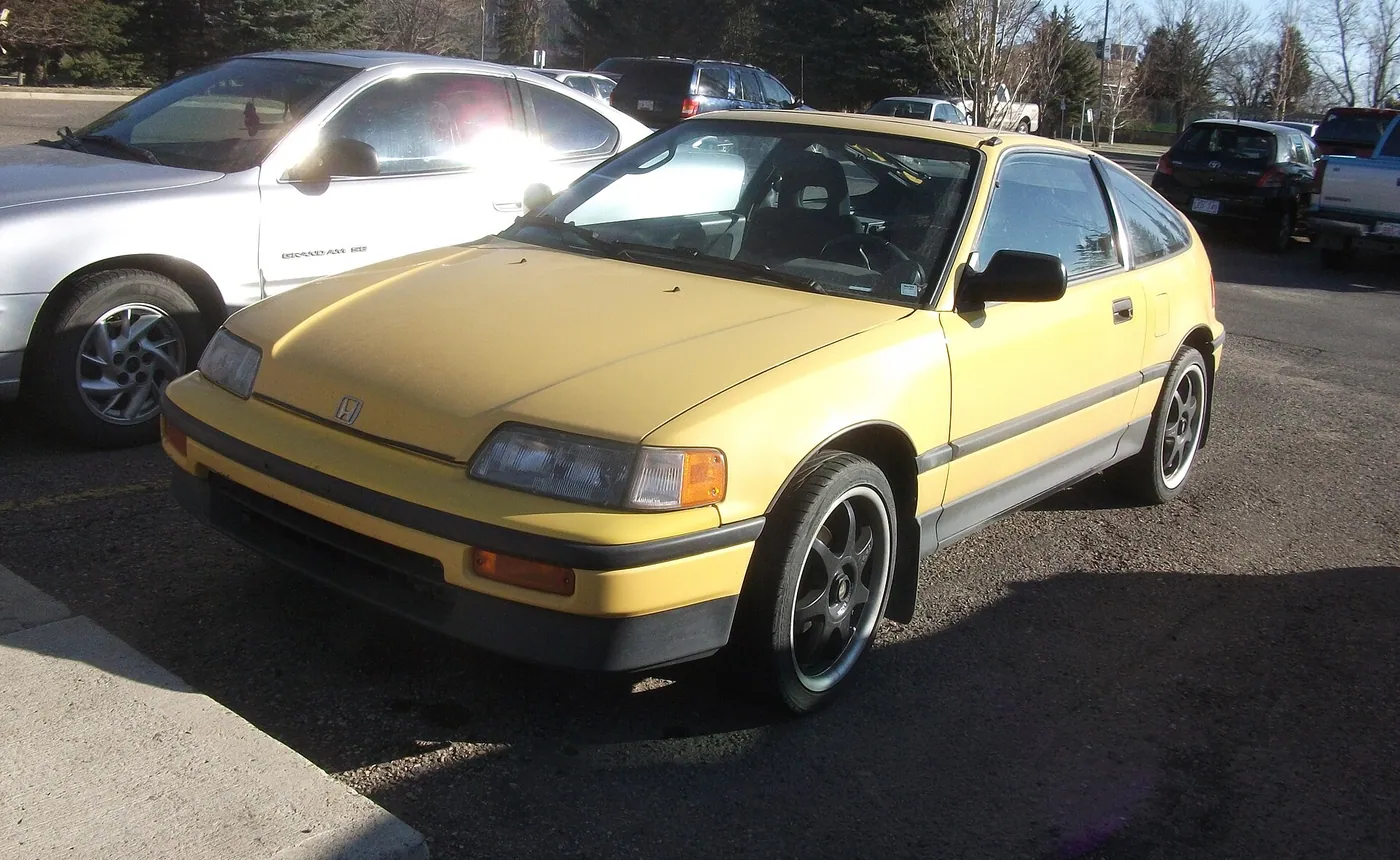
In 1989, Honda introduced a technology that would define its sporting cars for decades: VTEC, a system that let an engine switch between two sets of camshaft profiles. At low revs it behaved like a docile commuter engine. At high revs, a second, more aggressive profile took over and the engine changed character completely.
The first car to receive VTEC was the Integra. Later the same year, the second-generation CR-X gained the same 1.6-litre engine in SiR form, and the result was one of the most compelling small performance cars of its era.
The specs
| Years built | 1987–1991 |
|---|---|
| Engine | 1.6-litre B16A DOHC VTEC four-cylinder (SiR) |
| Power | 160 PS (SiR) |
| Gearbox | Five-speed manual |
| Drive | Front-wheel drive |
| Body styles | Three-door 2+2 hatchback coupe |
| Suspension | Double wishbones front and rear |
Why it was built
The original CR-X, launched in 1983, was a short, light coupe built on Civic mechanicals. It was cheap, efficient and fun, and it became a hit in Japan, Europe and America. When Honda launched the second-generation Civic family in 1987, it built a new CR-X alongside it with a sharper wedge profile, a longer wheelbase and a more sophisticated chassis.
At the time, Japanese car makers were competing hard for young buyers. Small sporty coupes and hot hatches were selling well, the economy was strong, and Honda's Formula One success gave its road cars real credibility. The CR-X was its sports car for the masses.
Design and engineering
The second-generation CR-X shared its floorpan and suspension with the Civic of the same era, which introduced double wishbones at both ends. That was unusual for a small front-wheel-drive car and gave the CR-X precise handling and a stable ride.
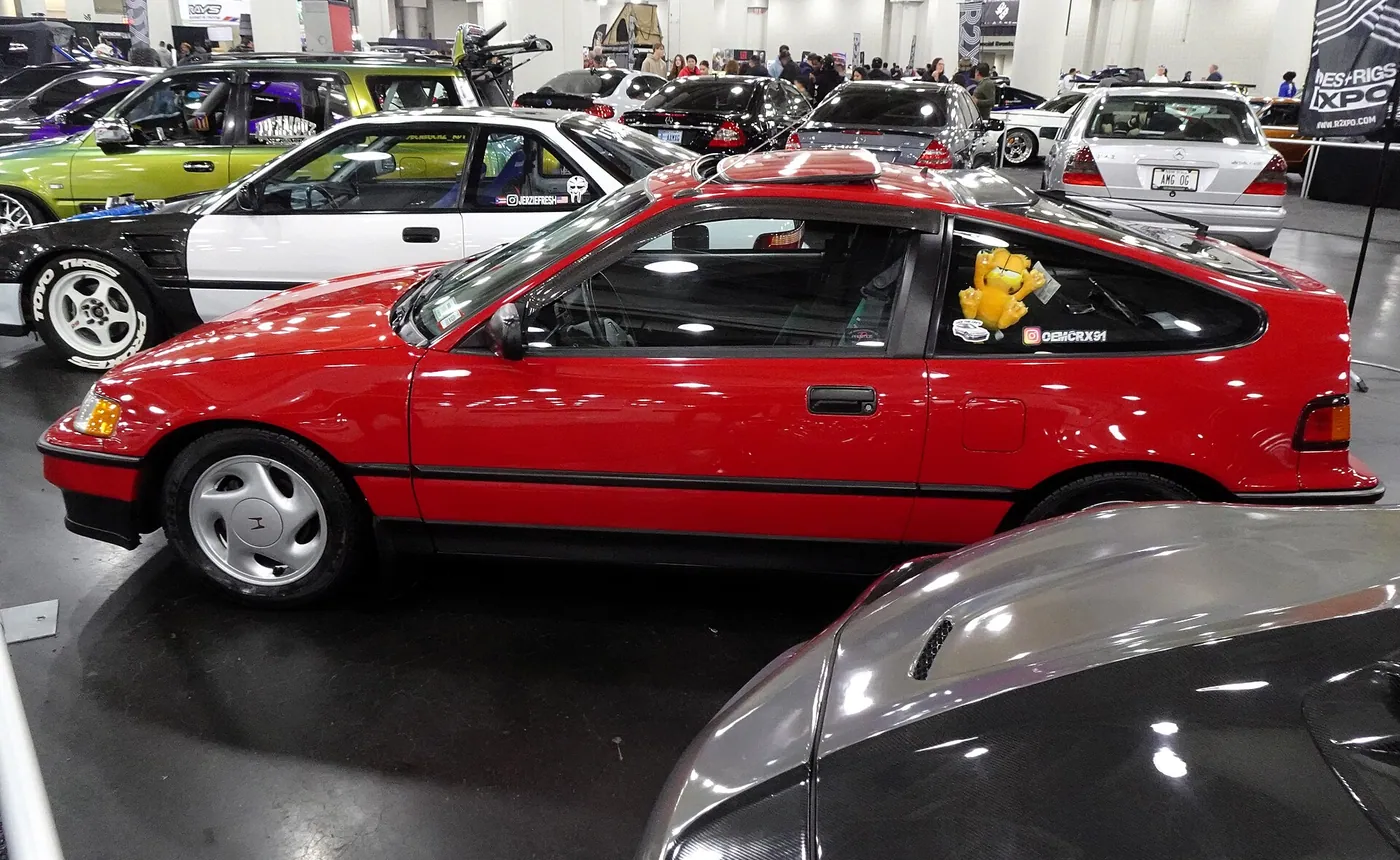
The body is low, with a steeply raked windscreen, a long roofline and a near-vertical glass panel at the back below the main hatch window. That extra glass helps rear visibility in a car with such a high tail. A glass roof panel was available on some versions.
Early Japanese sporting versions used a 1.6-litre twin-cam engine without VTEC. From 1989, the SiR received the B16A with VTEC, producing 160 PS and revving well beyond 7,000 rpm. Drive went through a five-speed manual gearbox.
How it drives today
The CR-X SiR feels light and eager. The steering is quick and full of feedback, the car turns in sharply, and the chassis is balanced well for a front-driven car. At low revs, the B16A is smooth and tractable, and once the second cam profile engages, the sound hardens and the car surges forward.
On Irish roads, it is happiest on twisting N-roads and back roads, where its size and agility make sense. The ride is firm, and potholes can be felt clearly. Motorway cruising is possible but noisy, and the low seating position puts you below the eye line of most modern traffic.
Variants worth knowing
The SiR with the B16A VTEC engine is the one collectors chase. Earlier Si models with the non-VTEC twin-cam are still lively and often cheaper. Lower trims with simpler engines are less desirable to enthusiasts but can be good, honest cars. Glass-roof versions are interesting but bring the risk of leaks and their own parts challenges. The CR-X del Sol, which followed in 1992, is a different kind of car with a removable roof panel.
What to check when buying in Japan
Rust is a major issue on these cars. Check the rear wheel arches, the sills, the floor, the area under the rear glass and around the tailgate, and the front strut tops. Water leaks from the glass roof and rear seals can cause corrosion that is not visible from outside.
The CR-X has always been popular with tuners, and many have been modified with engine swaps, lowered suspension, aftermarket wheels and stripped interiors. A car with a later Honda engine may be quick, but it is not original and documents must match the engine fitted. Check whether the B16A is the one the car left the factory with.
Sporting Hondas of this period were frequent theft targets in Japan, and some cars were stolen and stripped, then rebuilt. Look carefully at chassis numbers, labels and panels for signs of tampering or replacement. An auction sheet and export certificate that match the car are essential. Odometer readings should be supported by service records where possible.
Should you import one?
If you want a lively, light Honda that captures the late 1980s perfectly, the CR-X SiR is an excellent choice. It is right-hand drive, involving on the road and simple enough for a competent mechanic to look after.
Clean, original cars are becoming hard to find, and rust repairs can be serious. Insurance for a small performance import may take some shopping around. Cars over 30 years old can qualify for Ireland's vintage treatment, which covers every EF8. Buy a sound, original car rather than a heavily modified one, store it out of the rain, and keep it for days when the road ahead is empty.
Frequently asked questions
What engine does the CR-X EF8 have?
The SiR uses the 1.6-litre B16A DOHC VTEC engine producing 160 PS.
When did the CR-X get VTEC?
The SiR model with the B16A VTEC engine arrived in 1989, shortly after the Integra became the first car to use VTEC.
What is the rear glass panel for?
It sits below the main hatch window and improves rearward visibility past the high tail.
Is theft history a concern?
Yes. Sporting Hondas of this era were often stolen in Japan, so check chassis numbers and documents carefully.
More Japanese classics
- Honda Beat: The Tiny Mid-Engined Roadster That Revs Like a Racing Motorbike
- Honda NSX (NA1): The Aluminium Supercar That Made Ferrari Rethink Everything
- Honda Civic SiR (EG6): The Hatchback That Made the B16A a Legend
- Honda Integra Type R (DC2): The Front-Wheel-Drive Car Many Rate the Best Ever Made
- Honda Prelude (third generation): The Low, Sleek Coupe With Steering in the Back
- All 90 Japanese classics you can import
Photo credits
- Photo: dave_7 from Lethbridge, Canada / Wikimedia Commons, CC BY 2.0
- Photo: Charles from Port Chester, New York / Wikimedia Commons, CC BY 2.0