
Honda NSX (NA1): The Aluminium Supercar That Made Ferrari Rethink Everything
Honda built a mid-engined supercar you could drive every day, with an all-aluminium body and a VTEC V6. The first NSX still feels like a revelation.
By the Japan to Ireland editors · · 4 min read
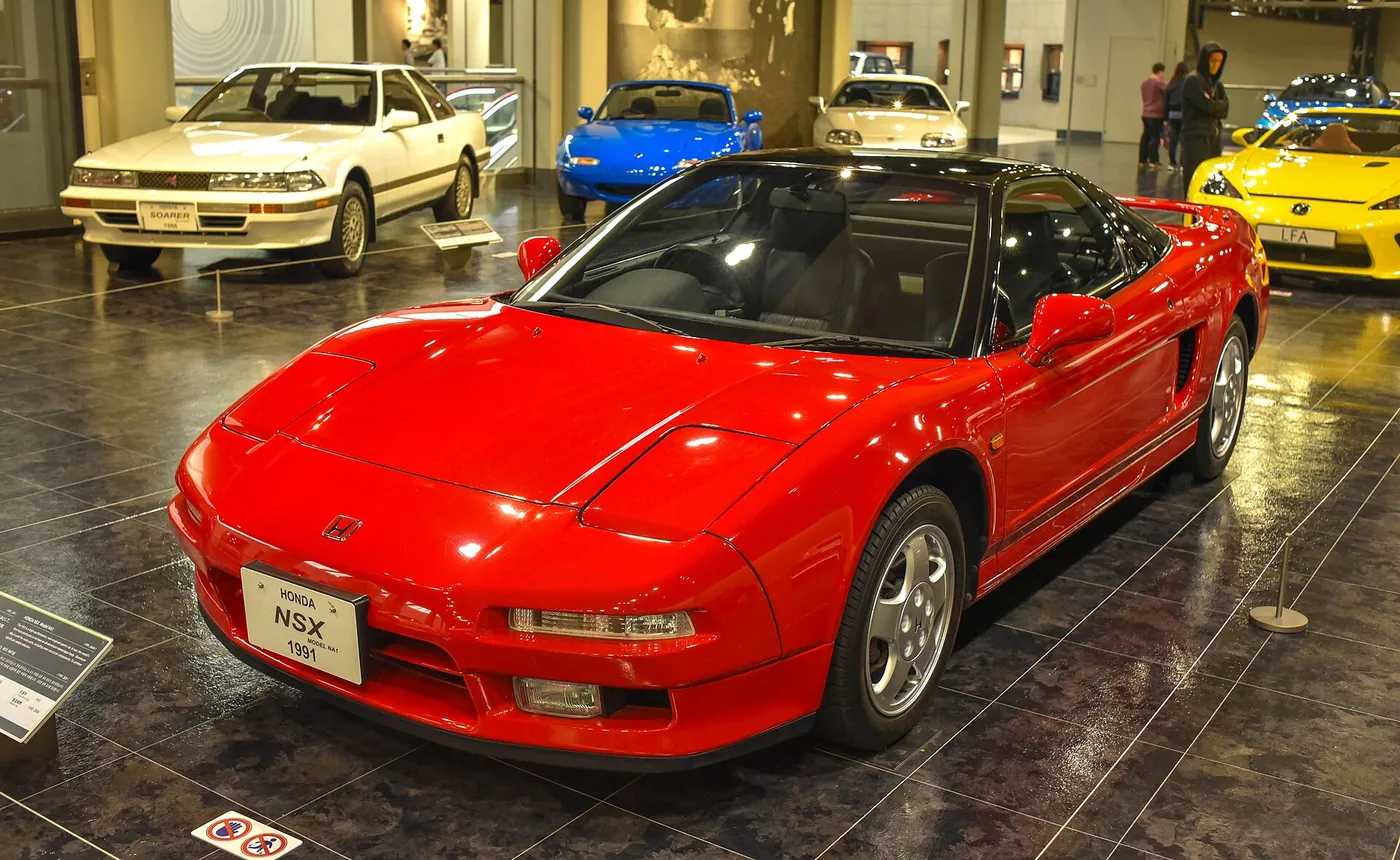
In 1989, Honda was the most successful engine maker in Formula One. Its turbocharged and then naturally aspirated engines had powered McLaren and Williams to championships, and its name carried weight in Europe in a way no Japanese brand had before. The company wanted a road car to match that reputation. In 1990 it delivered one: the NSX.
The NSX was a mid-engined supercar with an aluminium body, a high-revving V6 and the reliability of a Honda Civic. It started easily on a cold morning, did not overheat in traffic and could be driven to work. That was a challenge to the European supercar makers, who had long assumed that speed required compromise.
The specs
| Years built | 1990–1997 |
|---|---|
| Engine | 3.0-litre C30A V6, DOHC VTEC |
| Power | 280 PS (manual); slightly less with automatic |
| Gearbox | Five-speed manual or four-speed automatic |
| Drive | Mid-engine, rear-wheel drive |
| Body styles | Coupe; targa-top NSX-T from 1995 |
| Construction | All-aluminium monocoque body |
Why it was built
Honda began developing the car in the mid-1980s, with Shigeru Uehara leading the project. The aim was a sports car designed around the driver, with an excellent view out, a balanced chassis and a cabin that did not punish its occupants. Honda's Formula One work gave the project technical ambition and access to some of the best drivers in the world. Ayrton Senna, then driving McLaren-Honda cars, tested prototypes, and his feedback is widely credited with pushing Honda to stiffen the chassis further before production.
The NSX was built at a dedicated facility in Tochigi, where much of the assembly was done by hand. It was also sold in America under the Acura brand.
Design and engineering
The NSX was the first mass-produced car with an all-aluminium monocoque body. That made the structure light and stiff, though it also made the car expensive to build and complicated to repair. The suspension uses double wishbones at each corner, much of it in forged aluminium.
The engine is the C30A, a 3.0-litre V6 with four valves per cylinder and VTEC variable valve timing, mounted transversely behind the cabin. In manual form, it produced 280 PS, the maximum Japanese makers had agreed to advertise at the time. It revs freely to a high limit and pulls cleanly through the range.
The cabin is the other revelation. The canopy-style glasshouse and low scuttle give a forward view closer to a fighter cockpit than a typical supercar, and the controls are light and intuitive.
How it drives today
The NSX still feels unusually approachable. The steering is precise, the gearchange on manual cars is short and slick, and the engine builds power right up to the redline with a hard-edged sound. The chassis is beautifully balanced, but it is a mid-engined car with real performance and few electronic aids, so it demands respect in the wet. On Irish roads with standing water and uneven surfaces, a good NSX feels composed but never numb.
It is low and wide, so speed bumps and steep driveways need care. On a dry morning on a coastal road, though, few cars of its era are as rewarding.
Variants worth knowing
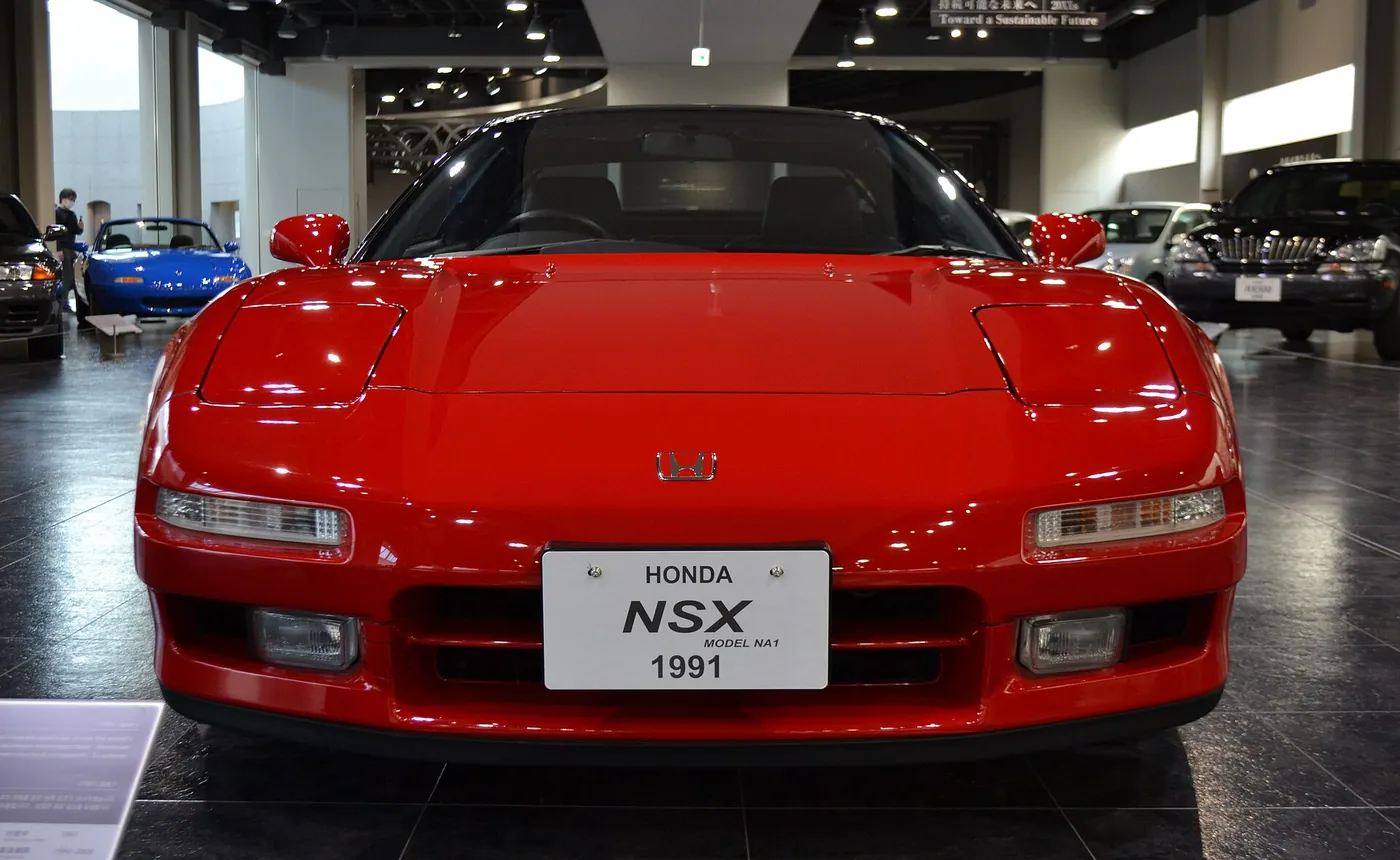
Early NA1 coupes with fixed-roof bodies and pop-up headlights are the purest form. From 1992, Honda built the NSX-R, a lightweight, stiffer, track-focused version for Japan that is rare and very collectable. In 1995, the targa-top NSX-T arrived, along with changes including a drive-by-wire throttle and an automatic with steering-wheel shift buttons. The NA2, with a 3.2-litre engine and six-speed manual, replaced the NA1 in 1997 and is a separate story.
What to check when buying in Japan
Aluminium bodies do not rust like steel, but they can corrode, and accident repairs are complex. Look carefully for poor repairs, mismatched paint, panel gaps and evidence of crash damage, which is expensive to put right. Specialist inspection is wise.
Known faults include early manual gearbox issues on some 1991 cars, leaking capacitors in engine and other control units, failing climate control displays and slow window regulators. Timing belts need regular replacement, and service records matter more on an NSX than on almost any other Japanese classic.
The NSX has also been a target for theft. Check the chassis number carefully against the export certificate and look for signs of tampering, replaced panels or missing identification. Modified cars are common; a car returned to standard is usually more desirable than one with major tuning. Mileage figures should be supported by documents.
Should you import one?
If you want a 1990s supercar that you can use without fear, the NSX is the best choice from Japan. It is right-hand drive, beautifully built and far more practical than its rivals. Japan has the widest choice of NA1 cars in the world.
Running costs are those of a serious sports car, and parts can be slow to arrive. Cars over 30 years old can qualify for Ireland's vintage treatment, which covers most NA1 models. Buy on condition and history, use a specialist, and expect a car that makes ordinary drives feel special.
Frequently asked questions
What engine does the NSX NA1 use?
The 3.0-litre C30A V6 with VTEC, making 280 PS in manual form and slightly less with the automatic.
Did Ayrton Senna help develop the NSX?
He tested prototypes while driving for McLaren-Honda, and his feedback is widely credited with prompting a stiffer chassis.
What is the NSX-R?
A lighter, stiffer, track-focused NA1 version built for Japan from 1992, now rare and highly sought after.
Is aluminium bodywork a problem?
It does not rust like steel, but crash repairs are complex and expensive, so look closely for damage history.
More Japanese classics
- Toyota Land Cruiser Prado (J70): The Coil-Sprung Land Cruiser That Started the Prado Line
- Toyota Mega Cruiser: The Military Truck Toyota Sold to Ordinary Japanese Buyers
- Honda Beat: The Tiny Mid-Engined Roadster That Revs Like a Racing Motorbike
- Honda CR-X (EF8): The Wedge-Shaped Coupe That Brought VTEC to the Street
- Honda Civic SiR (EG6): The Hatchback That Made the B16A a Legend
- All 90 Japanese classics you can import
Photo credits
- Photo: Coolalabright / Wikimedia Commons, CC BY 4.0
- Photo: 先従隗始 / Wikimedia Commons, CC0