
Toyota Mega Cruiser: The Military Truck Toyota Sold to Ordinary Japanese Buyers
Derived from a vehicle built for Japan's Ground Self-Defense Force, the Mega Cruiser is huge, rare and very hard to live with. That is the appeal.
By the Japan to Ireland editors · · 4 min read
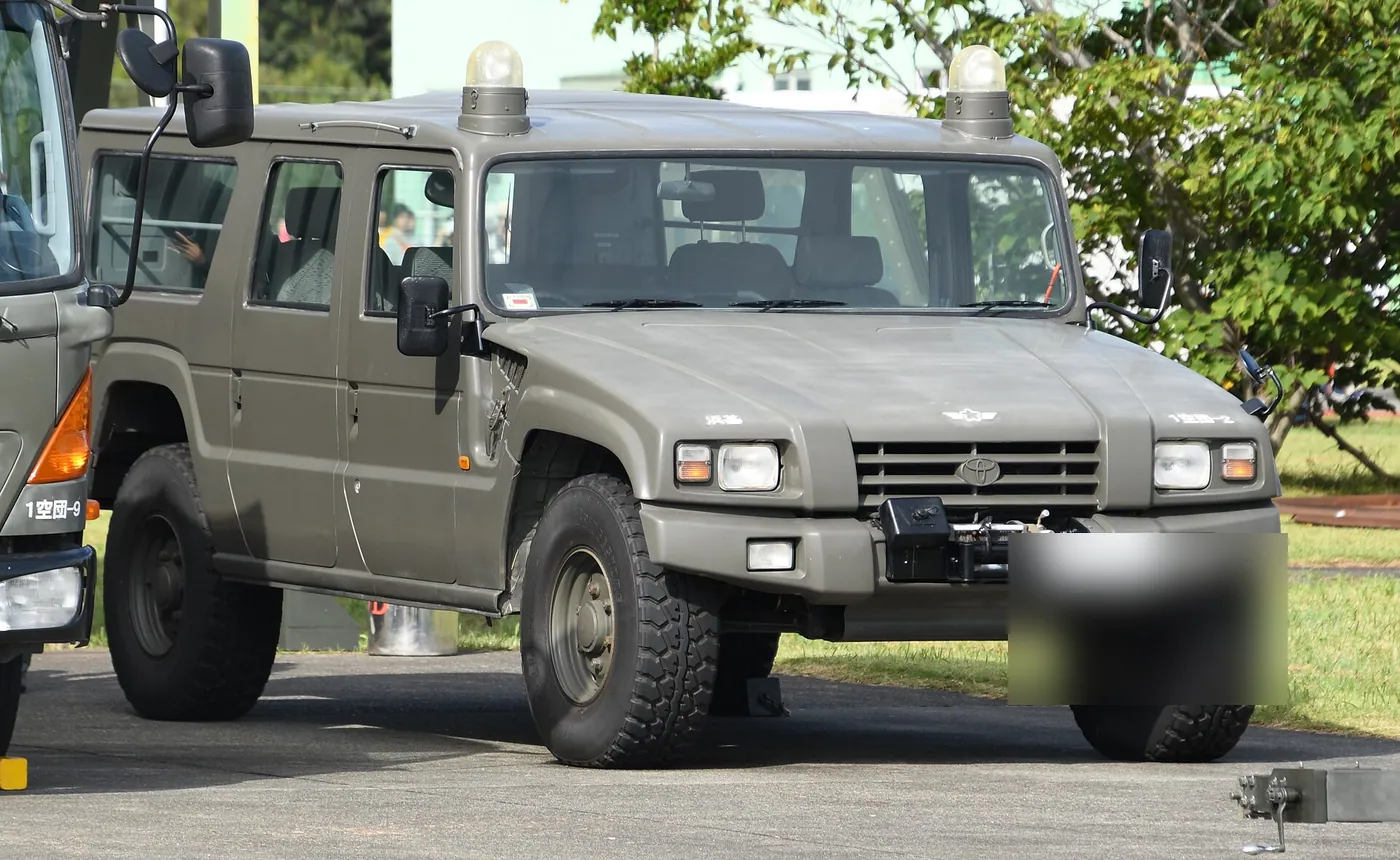
In the early 1990s, Japan's Ground Self-Defense Force wanted a new light utility vehicle, something in the role that the American Humvee filled for the United States Army. Toyota built it. And in the middle of the decade, in a move few car makers would attempt, it offered a civilian version to the public.
The Mega Cruiser went on sale in 1995. It was enormous by Japanese standards, wider than most roads were designed for, expensive and slow to build. It sold in very small numbers, mainly to government bodies, companies and a handful of private buyers who wanted the biggest, toughest Toyota money could buy. Today it is one of the rarest vehicles to wear the Land Cruiser family name.
The specs
| Years built | 1995–2001 |
|---|---|
| Engine | 4.1-litre 15B-FTE turbo diesel four-cylinder |
| Power | About 155 PS |
| Gearbox | Four-speed automatic |
| Drive | Full-time four-wheel drive |
| Body styles | Four-door wagon |
| Width | Over 2.1 metres |
| Distinctive feature | Four-wheel steering and portal-geared hubs |
Why it was built
The military vehicle came first. The civilian Mega Cruiser shared its basic layout and engineering, with a more comfortable cabin, more equipment and civilian lighting. Toyota did not expect volume. The car served as a demonstration of what the company could do and as a useful heavy vehicle for the few organisations and private buyers that needed one.
It is often compared with the civilian Hummer H1, and the comparison is fair in spirit. Both are wide, low-slung for their size, and built around the needs of soldiers rather than shoppers.
Design and engineering
Power comes from a 4.1-litre turbocharged diesel four-cylinder, the 15B-FTE, producing about 155 PS with a great deal of low-down torque. It drives all four wheels permanently through a four-speed automatic gearbox and a transfer case with a low range.
The engineering underneath is far more sophisticated than a normal off-roader. The suspension is independent, and the hubs use portal gearing, which raises the axles above the wheel centres for extra ground clearance. The Mega Cruiser also has four-wheel steering to help a vehicle of its size turn in tight spaces, and a central tyre inflation system that allows the driver to change tyre pressures from inside the cabin for soft ground.
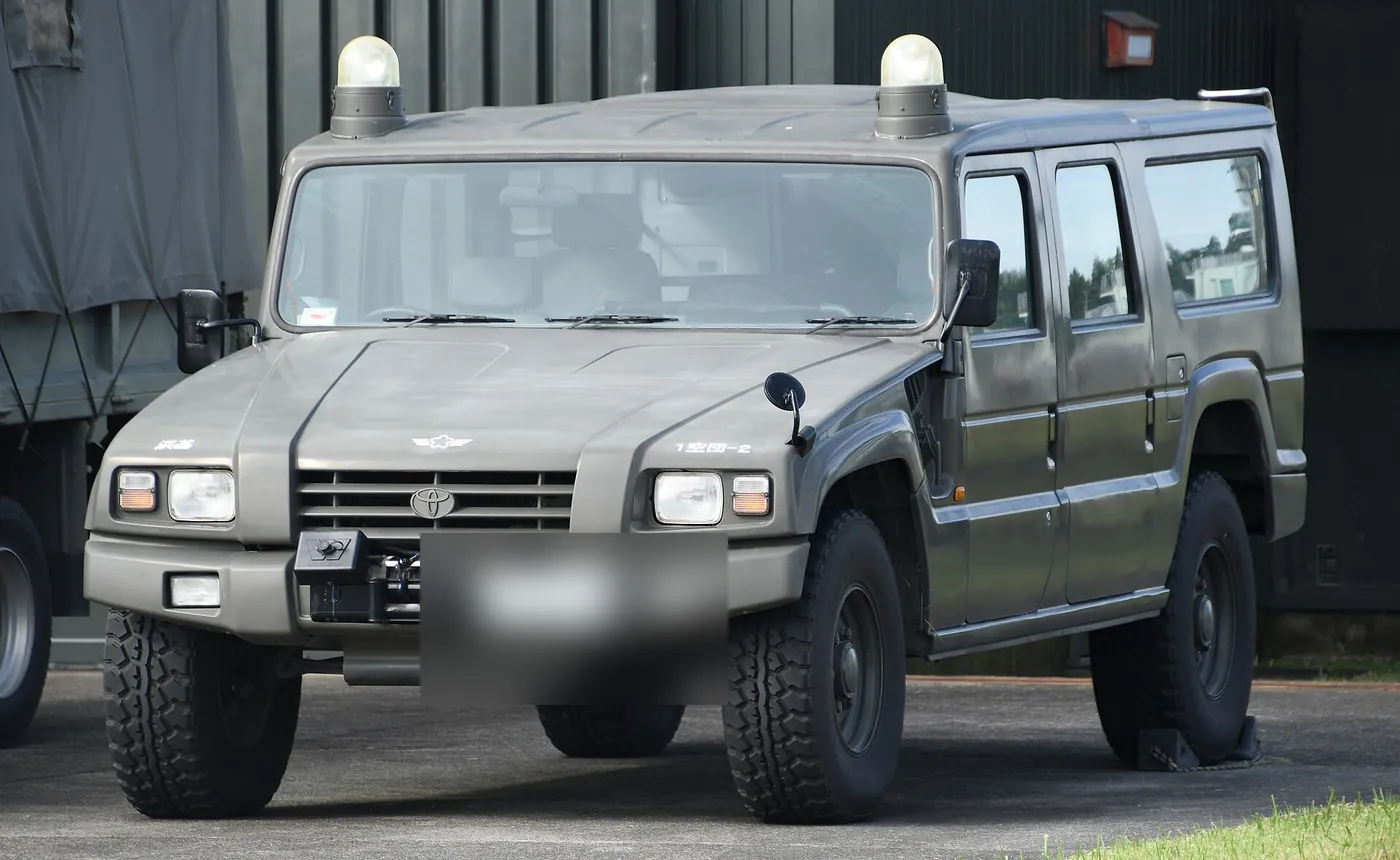
The body is slab-sided, the bonnet flat and long, and the width is the defining fact. At more than 2.1 metres across, it fills a lane in a way few road vehicles do. The cabin seats several adults but the interior is narrow relative to the body, because so much width goes to the drivetrain and wheels.
How it drives today
On a road, the Mega Cruiser is slow and deliberate. Acceleration is leisurely, the steering takes effort to get used to, and the size demands constant attention. The four-wheel steering helps in car parks, but there is no hiding from the bulk.
Off the road, it is in its element. Ground clearance, approach angles and traction are extraordinary, and the tyre inflation system makes soft sand, bog and deep mud less of a worry. On a farm, a forestry track or a beach, it makes sense in a way it never does on Grafton Street.
On Irish country roads with stone walls on both sides and hedges brushing both mirrors, the width is a real practical problem. Plan your routes.
Variants worth knowing
There is essentially one civilian Mega Cruiser model, with small differences in equipment between years and some vehicles fitted out for specific organisations. Ex-government and fire service vehicles turn up in Japan and may carry special bodywork, lighting or equipment. A standard passenger version is the most useful for private ownership.
What to check when buying in Japan
Because so few exist, the first check is history. Find out who owned the vehicle, how it was used and where it was kept. Ex-municipal vehicles can have low mileage but long periods of standing, which brings its own problems: seized brakes, perished seals and degraded rubber parts.
Inspect the chassis and underbody for rust, especially around the suspension mounts, and check the portal hubs for leaks. Test the four-wheel steering and the tyre inflation system, because both are complex and repairs need specialist parts. Many components are unique to this vehicle and can only be sourced through Toyota in Japan, sometimes slowly.
Tyres are large and specialised. Check their age as well as their tread. Make sure the export certificate matches the chassis number, and confirm the vehicle's registered dimensions, because its width affects how it is classified and insured.
Should you import one?
Only if you know exactly why you want one. The Mega Cruiser is a rolling piece of Japanese engineering history and an extraordinary off-road machine, and almost nobody in Ireland will have seen one. It is also difficult to park, slow on the motorway, thirsty, and unlike anything an NCT centre or local garage deals with every day.
For a collector with space, a genuine reason to go off road, and patience for parts, it is a unique object. Cars over 30 years old can qualify for Ireland's vintage treatment, which applies to the earliest examples. Talk to your insurer before you bid, measure your gate, and expect a long search for the right vehicle.
Frequently asked questions
What engine is in the Toyota Mega Cruiser?
A 4.1-litre 15B-FTE turbo diesel four-cylinder producing about 155 PS, with a four-speed automatic gearbox.
Is the Mega Cruiser related to a military vehicle?
Yes. It is the civilian version of a high-mobility vehicle Toyota built for Japan's Ground Self-Defense Force.
How wide is it?
More than 2.1 metres, which makes it a challenge on narrow Irish roads and in car parks.
Are parts available?
Many parts are unique to the Mega Cruiser and come from Toyota in Japan, so expect waits and plan maintenance ahead.
More Japanese classics
- Toyota Starlet GT Turbo (EP82): Bubble-Era Japan's Pocket Rocket With a Turbo Bulge
- Toyota Starlet (KP61): The Last Rear-Drive Starlet and Japan's Pocket Sports Car
- Toyota Land Cruiser Prado (J70): The Coil-Sprung Land Cruiser That Started the Prado Line
- Honda NSX (NA1): The Aluminium Supercar That Made Ferrari Rethink Everything
- Honda Beat: The Tiny Mid-Engined Roadster That Revs Like a Racing Motorbike
- All 90 Japanese classics you can import
Photo credits
- Photo: Hunini / Wikimedia Commons, CC BY-SA 4.0
- Photo: Hunini / Wikimedia Commons, CC BY-SA 4.0