
Mitsubishi Galant VR-4: the sober saloon that carried Mitsubishi into world rallying
Before the Lancer Evolution, there was the Galant VR-4: a turbocharged, four-wheel-drive family saloon that won world rallies and laid the foundations for everything that followed.
By the Japan to Ireland editors · · 4 min read
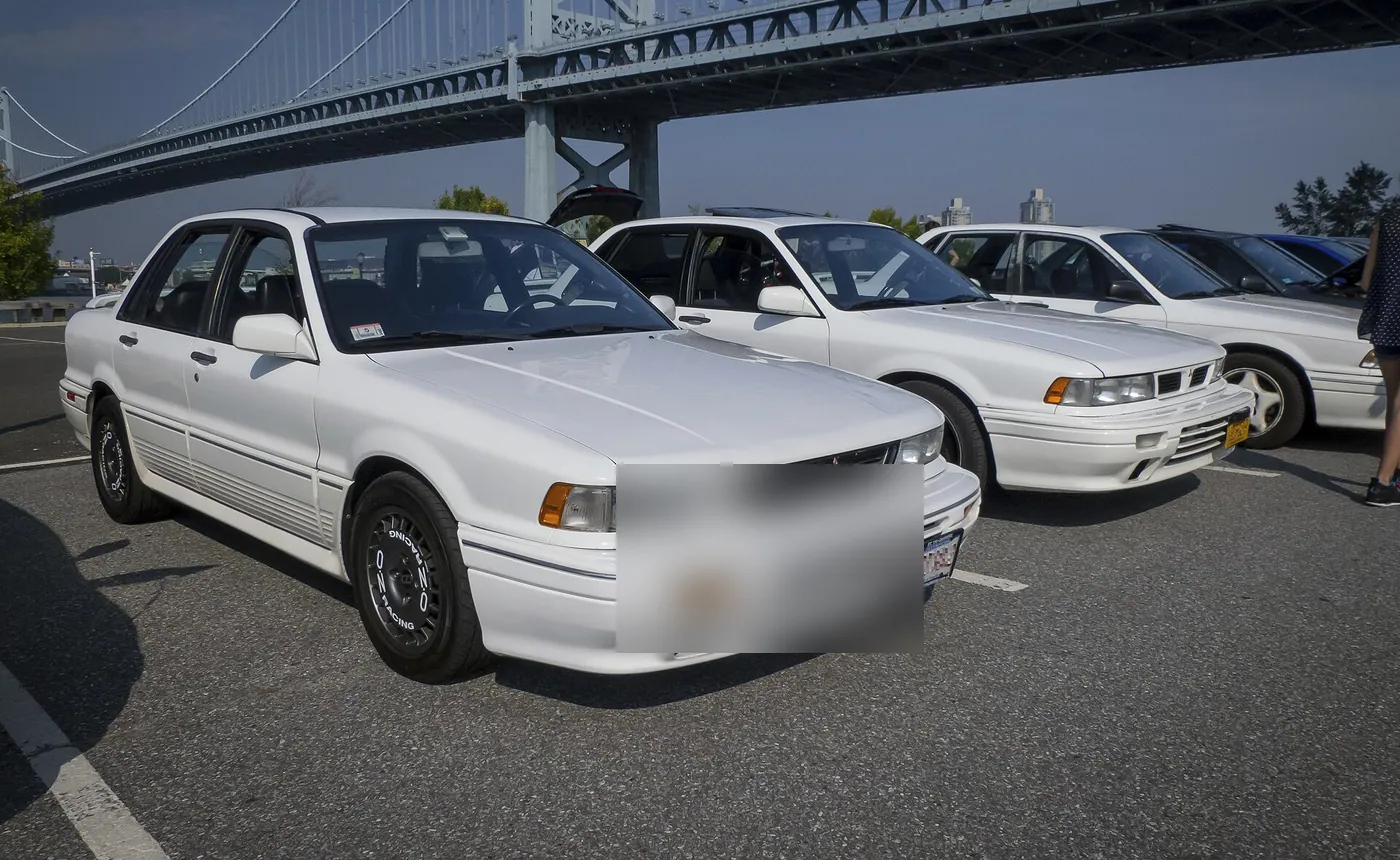
The sixth-generation Mitsubishi Galant arrived in Japan in 1987, at a time when Japanese manufacturers were starting to believe they could beat Europe at its own game. It was a smart, well-proportioned saloon with a crisp profile, and it was named Japan's Car of the Year. Inside the range, however, was something unusual: the VR-4, a family saloon with a turbocharged engine, four-wheel drive and four-wheel steering.
Mitsubishi built the VR-4 to go rallying. The Group B era of extreme rally cars had ended in 1986, and the World Rally Championship moved to Group A, which required cars to be based on production models. Four-wheel drive and turbocharging had become essential for success. Mitsubishi needed a car that combined both in a road-going package it could homologate, and the Galant VR-4 was the answer.
The specs
| Years built | 1987–1992 |
|---|---|
| Engine | 2.0 litre turbocharged four-cylinder (4G63) |
| Power | 205 to 240 PS depending on year |
| Gearbox | Five-speed manual or automatic |
| Drive | Full-time four-wheel drive |
| Body styles | Four-door saloon |
| Chassis code | E39A |
The engineering
At the heart of the VR-4 was the 4G63, a 2.0 litre twin-cam turbocharged four-cylinder engine. That engine would go on to power the Lancer Evolution through many generations, making the Galant its first great showcase. Early cars produced about 205 PS, with later versions rising to around 240 PS.
The drivetrain sent power to all four wheels through a full-time system with a viscous centre differential. Four-wheel steering added stability at speed and agility at low speed. The suspension was fully independent. Despite all this technology, the car looked like a sober executive saloon, with only discreet badges and wider tyres hinting at what it could do.
Rally success
The Galant VR-4 competed in the World Rally Championship from 1988 to the early 1990s. It won several events, including the 1989 1000 Lakes Rally in Finland with Mikael Ericsson and the 1989 RAC Rally in Britain with Pentti Airikkala. Kenneth Eriksson also won with the car in the early 1990s. These victories put Mitsubishi on the world rally map and led directly to the development of the smaller, lighter Lancer Evolution, which replaced the Galant in competition.
How it drives now
On the road, the Galant VR-4 feels like a comfortable, solid saloon until the turbo comes in. There is noticeable lag at low revs, followed by a strong push of power. Four-wheel drive gives excellent traction on wet Irish roads, and the four-wheel steering makes it feel stable on fast curves. The car is heavier and softer than a Lancer Evolution, so it feels more like a grand touring saloon than a rally weapon.
Inside, the cabin is typical of late-1980s Japan: square, logical and well-built, with comfortable seats and plenty of space for four adults. It works as a family car or a long-distance cruiser, with the bonus of serious performance.
Variants worth knowing
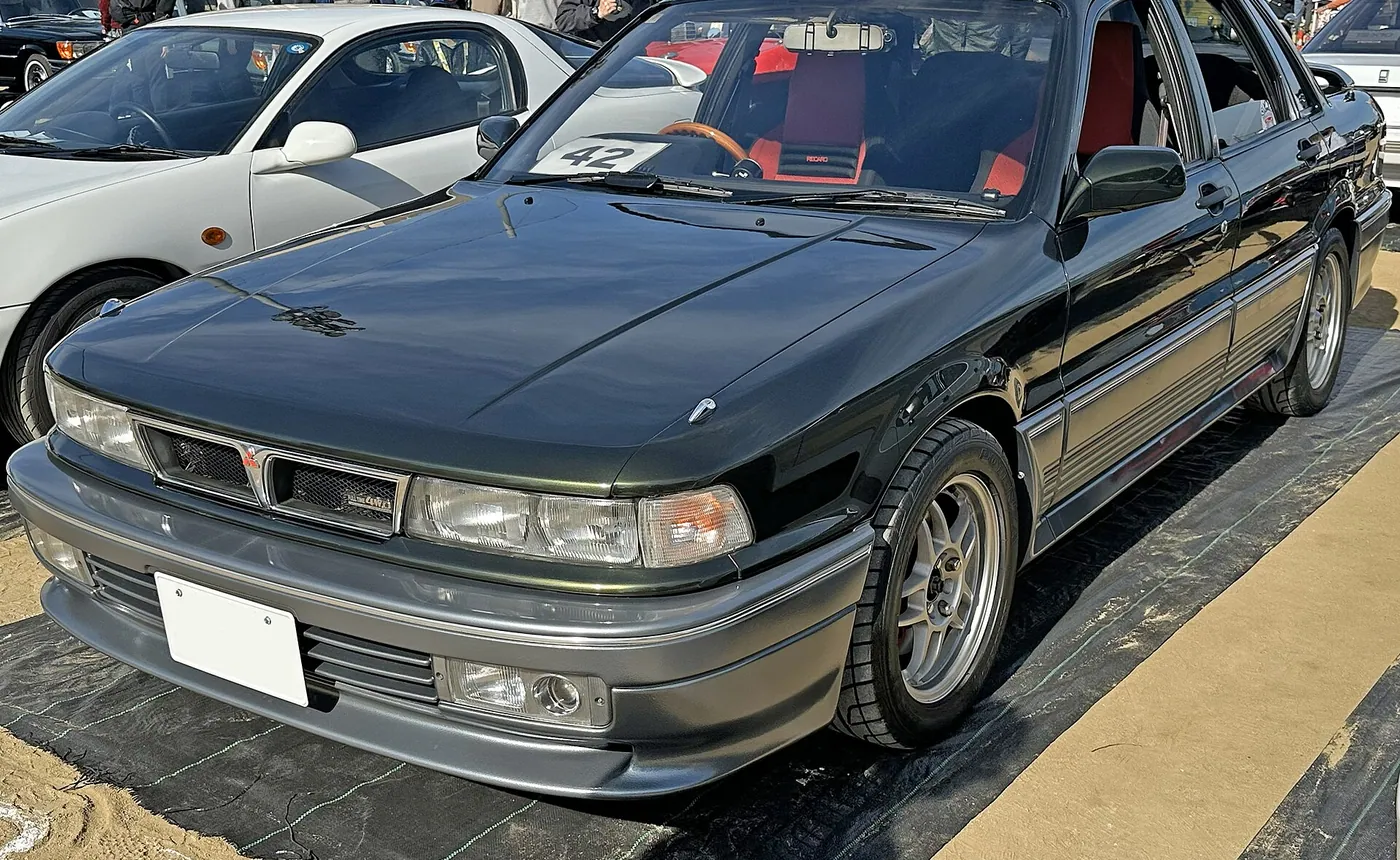
Early VR-4s with lower power are simpler, while later models offer more performance and refinements. Some special versions were made for homologation or as lighter, competition-oriented models. Manual cars are the most desirable; automatic versions were offered in Japan but have less appeal to enthusiasts. The European market also had a hatchback version of the Galant, but the VR-4 saloon is the iconic version.
Buying one in Japan
The Galant VR-4 is now well over 30 years old, so rust and wear are the main concerns. Check the rear wheel arches, sills, boot floor and areas around the rear suspension mounts. Examine the underside for corrosion and accident damage. Cars from snowy regions are at greater risk.
Mechanically, the 4G63 engine is strong but needs regular maintenance. Check for oil leaks, blue smoke, turbo noise and good boost. Ask about timing belt and balance shaft belt changes. The four-wheel-drive system should operate without binding or noise, and the four-wheel steering should be checked for leaks and correct function. Many cars have been modified with bigger turbos, exhausts and suspension. A standard car will be easier to maintain, insure and pass through the NCT.
Parts can be a challenge. Engine components are widely available because of the 4G63's long life, but body panels, trim and four-wheel-steering parts are harder to find. Mileage on older cars can be difficult to verify, so condition and records matter more than the number on the odometer. Make sure the export documents match the chassis number and that the car is a genuine VR-4 rather than a lesser Galant.
Should you import one?
The Galant VR-4 suits someone who appreciates rally history but wants a car that is comfortable and practical. It is a rare sight in Ireland, and it offers a combination of performance, space and four-wheel-drive grip that works well on Irish roads. It is a car for a driver who wants something that looks discreet but drives with real purpose.
Expect to spend time and effort keeping one in good order. Parts may need to come from Japan, and a mechanic familiar with older Mitsubishis is valuable. Because the Galant VR-4 is now over 30 years old, it can qualify for Ireland's vintage treatment. Buy a solid, original car, and you will own the saloon that gave Mitsubishi its first taste of world rally glory.
Frequently asked questions
Is the Galant VR-4 related to the Lancer Evolution?
Yes. The Evolution used the same 4G63 turbo engine and four-wheel-drive layout in a smaller, lighter body.
Did the Galant VR-4 win world rallies?
Yes, including the 1989 1000 Lakes Rally and the 1989 RAC Rally.
Does it have four-wheel steering?
Yes. Four-wheel steering was part of the VR-4 specification.
Is it eligible for Ireland's vintage treatment?
Cars over 30 years old can qualify, and every Galant VR-4 of this generation is now past that age.
More Japanese classics
- Mitsubishi Lancer Evolution I to III: the first rally specials that started a dynasty
- Mitsubishi GTO: the technology-packed grand tourer Japan built at the top of the boom
- Subaru 360: the tiny ladybird that put post-war Japan on wheels
- Subaru Impreza WRX STi (GC8): the blue-and-gold era's road-going hero
- Subaru Legacy RS (BC5): the record-breaking saloon that started Subaru's rally story
- All 90 Japanese classics you can import
Photo credits
- Photo: RAVDesigns / Wikimedia Commons, CC BY-SA 2.0
- Photo: Tokumeigakarinoaoshima / Wikimedia Commons, CC0