
Subaru 360: the tiny ladybird that put post-war Japan on wheels
Built by an aircraft company turned car maker, the Subaru 360 was one of the first cars ordinary Japanese families could afford, and it remains one of the most endearing classics ever built in Japan.
By the Japan to Ireland editors · · 4 min read
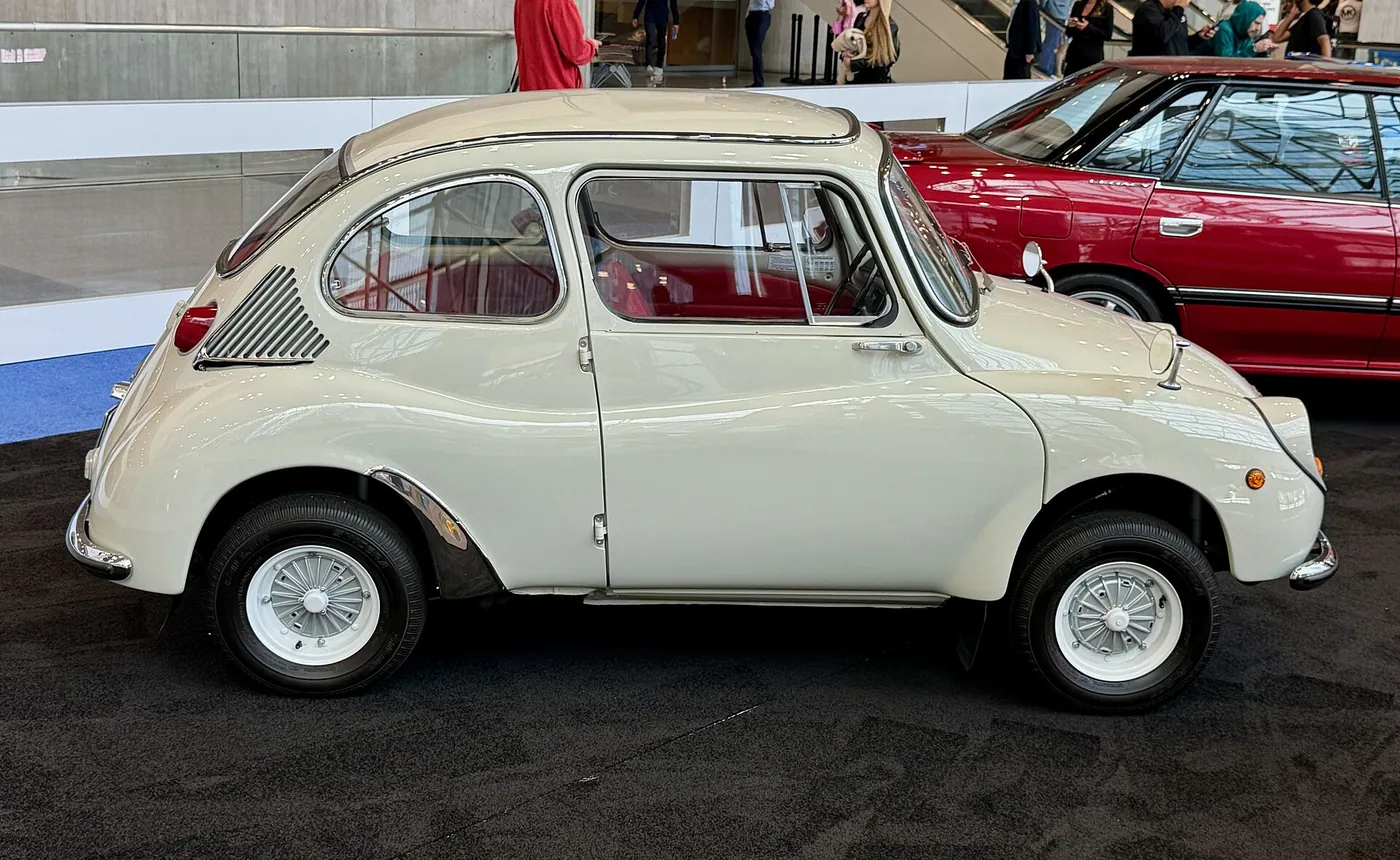
Picture a Japanese city in 1958. The war had ended only 13 years earlier, many families still travelled by bicycle, scooter or crowded train, and a private car was a luxury for the few. That year a tiny, rounded two-door appeared, with a rear engine, small wheels and a roof that seemed to sit on top of it like a shell. It was the Subaru 360, and it would put Japanese families on the road.
The car came from Fuji Heavy Industries, a company formed from the remains of Nakajima Aircraft, which had built military aircraft before and during the war. After the war, aircraft manufacturing was halted, and its engineers turned their skills to scooters, buses and eventually cars. Japan's government had encouraged the idea of a small "people's car" for the masses. The kei car class, with strict limits on engine size and dimensions, offered tax and licensing advantages. To qualify, the Subaru 360 had to be tiny, with an engine of just 360 cc.
The specs
| Years built | 1958–1971 |
|---|---|
| Engine | 356 cc air-cooled two-stroke twin, mounted at the rear |
| Power | Around 16 PS at launch; more in later versions such as the Young SS |
| Gearbox | Manual (three-speed at launch) |
| Drive | Rear-wheel drive |
| Body styles | Two-door saloon, convertible, estate (Custom), commercial |
| Nickname | Tentōmushi (ladybird) |
Aircraft thinking
The design team, led by engineer Shinroku Momose, approached the problem with aircraft-style engineering. They used a monocoque body to save weight, and a lightweight roof made of fibreglass-reinforced plastic. Every component was designed with lightness in mind. The result was a car that weighed only a little over 380 kg.
The engine was a 356 cc air-cooled, two-stroke, two-cylinder unit mounted at the back, driving the rear wheels. It produced about 16 PS at launch. The suspension was fully independent with torsion bars, giving a surprisingly comfortable ride on the poor Japanese roads of the time. Rear-hinged doors made it easier to get in and out. Despite its size, the car could seat four adults, if not comfortably.
The shape earned the nickname "Tentōmushi", meaning ladybird. It became a symbol of Japan's growing prosperity in the late 1950s and 1960s.
A taste of America
In 1968 entrepreneur Malcolm Bricklin began importing the Subaru 360 into the United States. Its small size and modest power made it unsuited to American motorways, and it received poor reviews, including a "Not Acceptable" rating from Consumer Reports. The car did not sell well there, but it marked the beginning of Subaru's presence in the American market.
How it drives today
Driving a Subaru 360 today is an experience unlike any modern car. You sit close to the door and close to the front, with the engine buzzing behind you. Acceleration is very slow, and the car needs careful planning in modern traffic. Steering is light and direct, and the ride is soft. On quiet Irish country roads or at classic car events, it feels charming and lively. It is not a car for the motorway.
Variants worth knowing
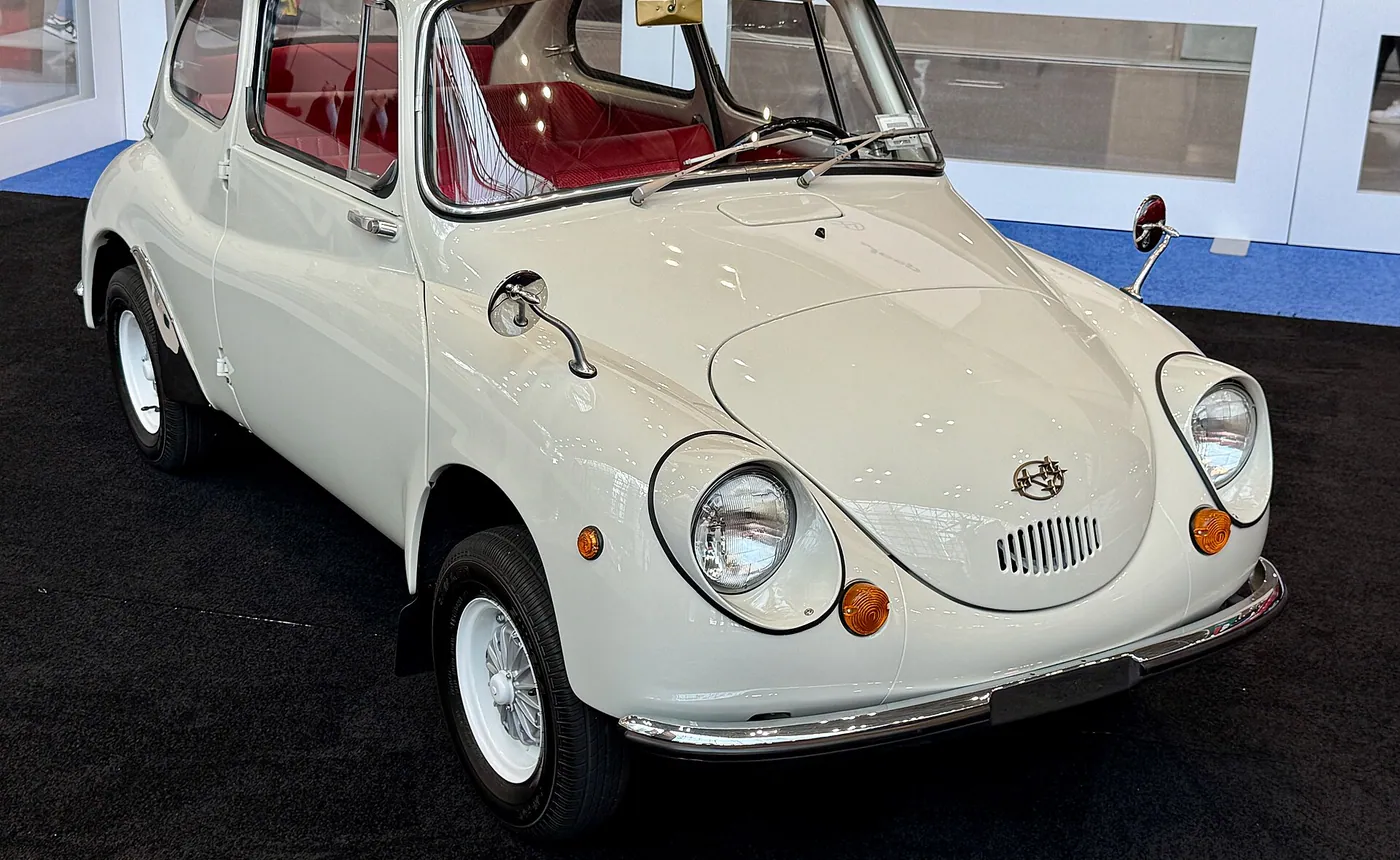
The standard saloon is the most common. A convertible version with a fabric roof was also offered. The Custom was a small estate car with a practical rear load area. The Young S and Young SS of 1968 were sportier versions with more power, twin carburettors on the SS, and sporting trim. Commercial versions were also made. All are rare outside Japan.
Buying one in Japan
Any Subaru 360 will be over 50 years old, so condition is everything. Rust is the biggest issue, affecting the floor, sills, wheel arches, door bottoms and the structure around the front and rear suspension. The fibreglass roof does not rust but can crack or become brittle. Check every panel carefully, as repairs can be expensive.
The two-stroke engine needs oil mixed with the fuel or supplied by an oil injection system, depending on the model. Check for smoke, poor starting and low compression. Parts can be hard to find, though some specialists in Japan support the car. Many cars have been restored, some to a high standard and some with shortcuts. Look for evidence of proper repair work rather than fresh paint.
Originality is important. Some cars have been fitted with parts from other models or upgraded with modern components. Mileage on cars this old means little; look at records and the quality of restoration instead. Make sure the paperwork and chassis number match.
Should you import one?
The Subaru 360 suits a collector who wants a small, unique and historically significant car. It is a fine choice for classic shows, local runs and summer drives on quiet roads. It is not a car for daily commuting or motorway driving.
Owning one in Ireland means accepting slow progress and planning for parts to come from Japan. Insurance through a classic or vintage policy is usually the best option. Every Subaru 360 is over 30 years old, so they can qualify for Ireland's vintage treatment. Buy the best example you can find, and you will own a car that tells the story of Japan's post-war recovery in a shape that makes everyone smile.
Frequently asked questions
Why is it called the ladybird?
Its round shape earned the Japanese nickname Tentōmushi, which means ladybird.
How big is the engine?
It has a 356 cc air-cooled two-stroke twin mounted at the rear.
Can it be used on Irish motorways?
It is very slow, so it suits quiet country roads and classic events rather than motorways.
Who designed it?
Engineer Shinroku Momose led the design team at Fuji Heavy Industries.
More Japanese classics
- Mitsubishi Galant VR-4: the sober saloon that carried Mitsubishi into world rallying
- Mitsubishi Lancer Evolution I to III: the first rally specials that started a dynasty
- Subaru Impreza WRX STi (GC8): the blue-and-gold era's road-going hero
- Subaru Legacy RS (BC5): the record-breaking saloon that started Subaru's rally story
- Subaru Alcyone SVX: The Glass-Canopy Grand Tourer Japan Built at the Height of Its Confidence
- All 90 Japanese classics you can import
Photo credits
- Photo: This picture has been taken by Oleg Yunakov. Contact e-mail: yunakovgmail.com. Image can be used in accordance with the / Wikimedia Commons, CC BY-SA 4.0
- Photo: This picture has been taken by Oleg Yunakov. Contact e-mail: yunakovgmail.com. Image can be used in accordance with the / Wikimedia Commons, CC BY-SA 4.0