
Mitsubishi GTO: the technology-packed grand tourer Japan built at the top of the boom
Twin turbochargers, four-wheel drive, four-wheel steering and moving aerodynamics: the GTO was Mitsubishi's statement of what a Japanese supercar could be at the start of the 1990s.
By the Japan to Ireland editors · · 4 min read
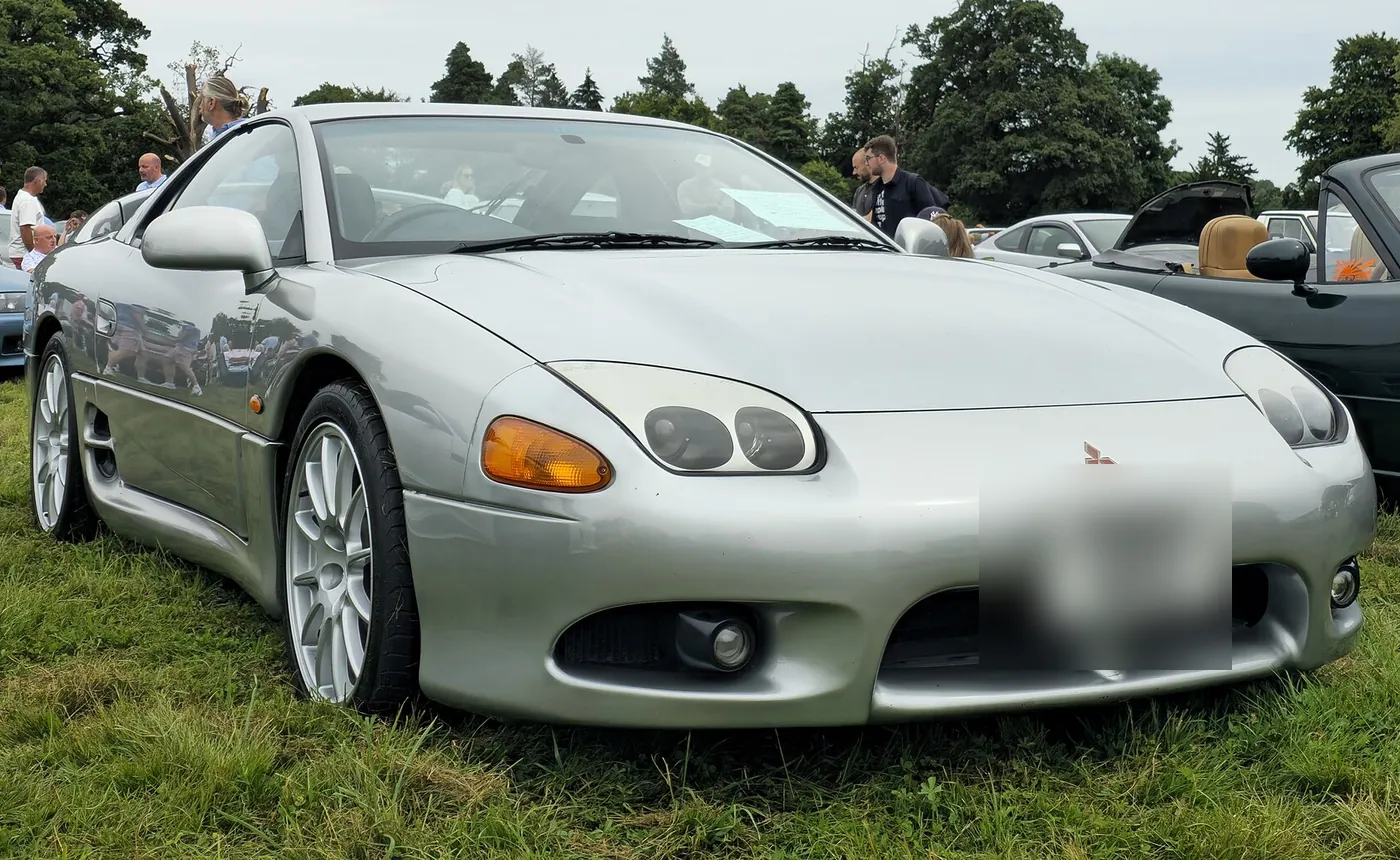
In 1990, when the GTO went on sale in Japan, the country's car makers were competing to build the most advanced machines on earth. Nissan had the Skyline GT-R, Honda was preparing the NSX and Mazda had its RX-7. Mitsubishi answered with a car that took a different approach: rather than being the lightest or the sharpest, the GTO would be the most technologically complete. It is a vivid snapshot of a moment when Japan felt there was nothing it could not engineer.
It is easy to forget how much confidence lay behind a car like this. Japanese companies were flush with money, engineering departments were large and well funded, and management was willing to approve features that would never pass a cost review today. The GTO was conceived in that climate, and every one of its systems tells you so.
The name came from the Galant GTO coupé of the 1970s. Outside Japan the car became the Mitsubishi 3000GT, and Chrysler sold a version as the Dodge Stealth in America. In Japan it was always the GTO.
The specs
| Years built | 1990–2000 |
|---|---|
| Engine | 3.0 litre V6 petrol, naturally aspirated or twin-turbo |
| Power | Up to 280 PS (twin-turbo) |
| Gearbox | Five- or six-speed manual, four-speed automatic |
| Drive | Full-time four-wheel drive |
| Body styles | Two-door coupé |
| Export names | Mitsubishi 3000GT, Dodge Stealth |
Engineering everything
The heart of the top model was a 3.0 litre V6 with twin turbochargers and intercoolers, producing 280 PS, the agreed ceiling for Japanese cars at the time. A non-turbo V6 was also offered. The engine sat transversely, driving all four wheels through a full-time system with a viscous centre coupling.
Then came the gadgets. Four-wheel steering helped stability. Electronically controlled suspension could change damper settings. Active aerodynamics on early twin-turbo cars raised the rear spoiler and lowered a front lip at speed. An active exhaust offered a quieter and louder setting. The result was a car that weighed far more than its rivals but felt planted and secure.
The styling was long, low and wide, with pop-up headlights on early cars and a curvy glass rear. In the mid-1990s a facelift replaced the pop-ups with fixed projector lamps, and twin-turbo models gained a six-speed manual gearbox. Later updates changed the bumpers, wheels and rear wing.
How it drives now
The GTO feels big and heavy by sports-car standards, more grand tourer than scalpel. The twin-turbo engine pulls hard once the boost arrives, and the four-wheel drive gives tremendous traction on wet Irish roads. On a fast N-road or a motorway it feels stable, comfortable and quick. On tight country lanes its width and weight make it work harder. Steering is precise but heavy at low speed. Brakes are strong when in good order but need regular care.
The naturally aspirated versions are calmer and more affordable to run, while still offering the dramatic shape. Automatics make the car a relaxed cruiser.
What surprises people today is the cabin. The dashboard wraps around the driver like an aircraft cockpit, with the centre console angled towards the driving seat and a bank of switches for the various systems. The front seats are supportive, the rear seats are suitable only for children or bags, and the hatchback opens onto a shallow but usable boot. It is a car built for two people and a long road.
The versions worth knowing
The early twin-turbo with pop-up lamps and active aerodynamics is the most technologically interesting. Later twin-turbos with the six-speed gearbox and fixed headlights are arguably the best to drive. The MR was a lighter, more focused twin-turbo model with some of the heavier equipment removed. Non-turbo cars are simpler and often in better shape because they were driven more gently.
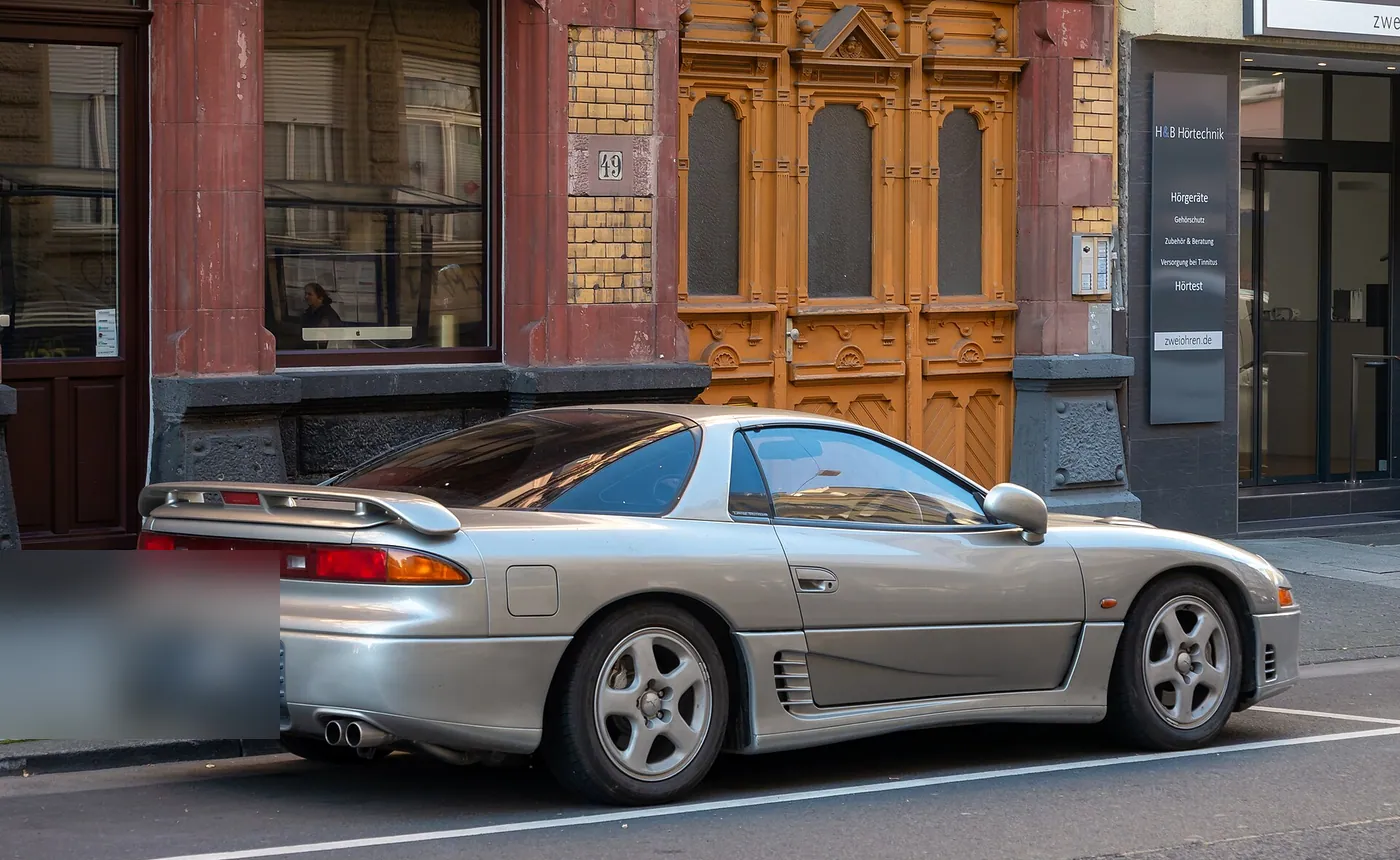
Buying one in Japan
The GTO is a complex car, and complexity is the main risk. Check the twin turbochargers for smoke or oil leaks, and the cam belt history, which is a labour-intensive job on the transverse V6. Listen for lifter tick and check for oil leaks around the rear bank, which is hard to reach. The transfer case and rear differential can suffer if fluids have been neglected. Check that the four-wheel steering, suspension modes, active aero and exhaust systems all work.
Rust is less serious than on many older Japanese cars, but inspect the sills, the rear wheel arches, the tailgate edges and the subframes underneath. Many GTOs have been modified with bigger turbos, exhausts, coilovers and aftermarket wheels. A modified car is not always a bad one, but an original car is easier to insure and to pass through the NCT. Low-mileage claims on a car this old deserve investigation, with service records and inspection reports. Confirm that the chassis number and export documents match.
Should you import one?
The GTO suits an enthusiast who wants an early 1990s Japanese performance car with real presence, high technology and four-wheel-drive security. It makes a superb long-distance tourer on Irish motorways and a fine weekend car on dry coastal roads. Running costs will be higher than for simpler classics, and a specialist mechanic who understands the car's systems is valuable.
Parts are reasonably available because the 3000GT and Stealth were sold widely, though some electronic components and trim can take time to source. The oldest GTOs are now over 30 years old and can qualify for Ireland's vintage treatment. Buy the most complete, original car you can find, and the GTO will remind you just how ambitious Japanese engineering became at the start of the 1990s.
Frequently asked questions
Is the GTO the same as the 3000GT?
Yes. The Mitsubishi 3000GT and Dodge Stealth are export versions of the Japanese GTO.
How powerful is the twin-turbo?
The twin-turbo V6 produced 280 PS, the Japanese industry ceiling at the time.
What are the main buying risks?
Turbocharger health, cam belt history, the transfer case and the electronic systems such as four-wheel steering and active aero.
Is it a good car for Irish weather?
Yes. Full-time four-wheel drive gives excellent traction on wet roads.
More Japanese classics
- Mitsubishi Delica Star Wagon (L300): the four-wheel-drive van that went everywhere
- Mitsubishi Pajero (second generation): the Dakar king that became Japan's family 4x4
- Mitsubishi Lancer Evolution I to III: the first rally specials that started a dynasty
- Mitsubishi Galant VR-4: the sober saloon that carried Mitsubishi into world rallying
- Subaru 360: the tiny ladybird that put post-war Japan on wheels
- All 90 Japanese classics you can import
Photo credits
- Photo: Calreyn88 / Wikimedia Commons, CC BY-SA 4.0
- Photo: Matti Blume / Wikimedia Commons, CC BY-SA 4.0