
Subaru Legacy RS (BC5): the record-breaking saloon that started Subaru's rally story
The first Legacy RS set a world speed endurance record before it went on sale, then gave Subaru its first world rally victory. It is a quietly significant Japanese classic.
By the Japan to Ireland editors · · 4 min read
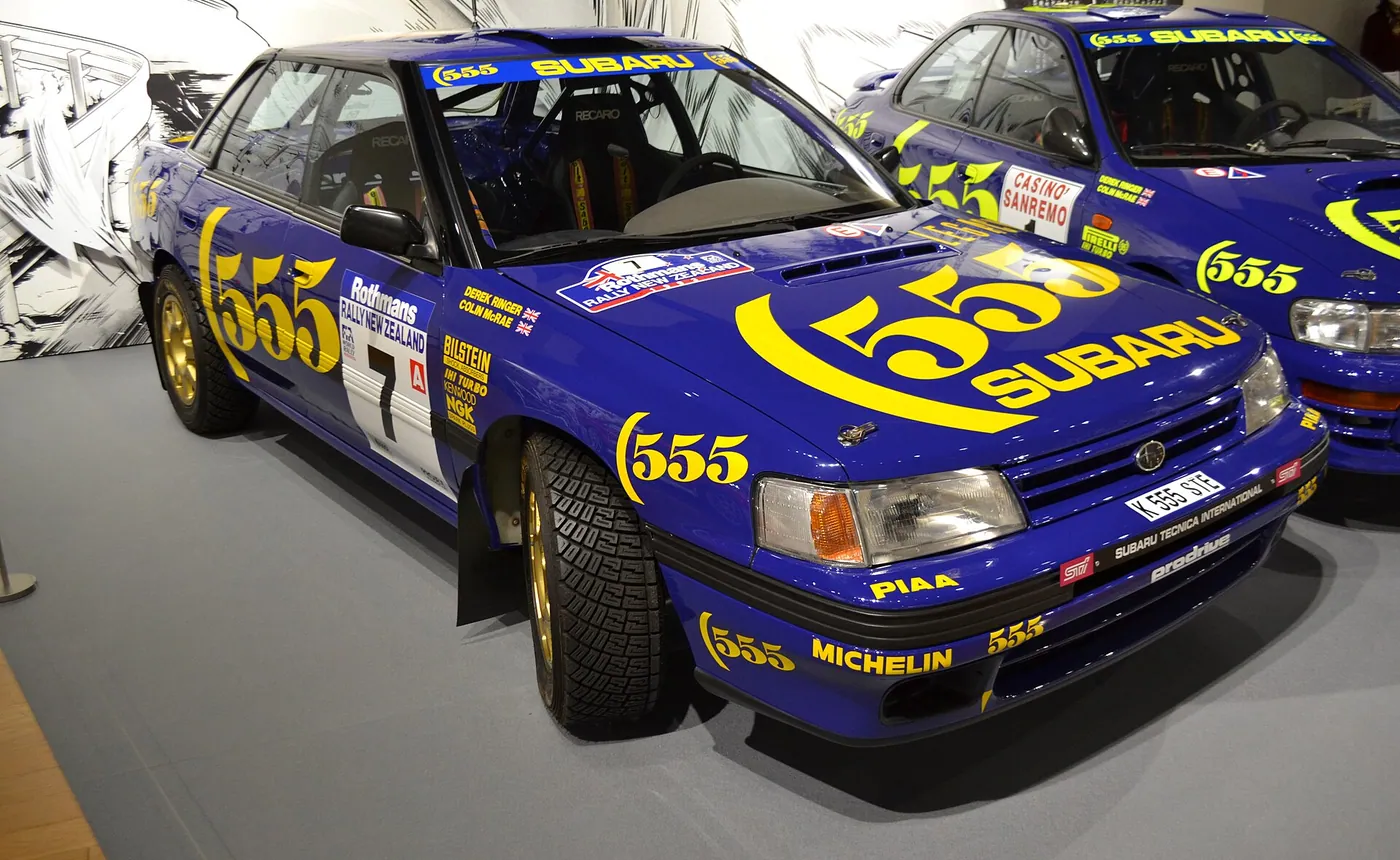
In January 1989, at a test track in the Arizona desert, a team of Subaru Legacy saloons ran for nearly 19 days without stopping, except for fuel and driver changes. When they were finished, they had covered 100,000 km at an average speed of more than 223 km/h, setting a world record for endurance. The cars had not yet gone on sale. The Legacy was announcing itself to the world before most people had seen one.
Subaru needed the Legacy to change how people thought about the company. In the 1980s, Subaru was known for practical four-wheel-drive cars that were tough but unexciting. The Legacy was designed to compete with mid-sized saloons from Toyota, Nissan and Honda, and to show that Subaru could build a modern, capable and fast car. The RS was the top model and the basis for Subaru's new rally programme.
The specs
| Years built | 1989–1993 |
|---|---|
| Engine | 2.0 litre turbocharged flat-four (EJ20) |
| Power | Around 220 PS |
| Gearbox | Five-speed manual |
| Drive | Full-time four-wheel drive |
| Body styles | Four-door saloon |
| Record | 100,000 km world endurance record, Arizona, 1989 |
The engineering
The Legacy RS was powered by a new 2.0 litre turbocharged flat-four engine, the EJ20. The horizontally opposed layout gave a low centre of gravity and good balance. In RS form it produced about 220 PS, sent through a five-speed manual gearbox to a full-time four-wheel-drive system.
The body was a four-door saloon with clean, simple lines. Underneath, the suspension was fully independent with struts at both ends. The RS came with firmer suspension, larger brakes and sporty interior details. A Touring Wagon version, called the GT, offered similar performance with more practicality, but the RS saloon was the purest version.
Rally beginnings
Subaru's partnership with Prodrive began in 1990, and the Legacy RS became its first World Rally Championship car. Drivers including Markku Alén and Colin McRae raced it. In 1993 McRae won Rally New Zealand in a Legacy, giving Subaru its first World Rally Championship victory. Later that year, the Impreza took over as Subaru's rally car, but the Legacy had laid the foundation.
How it drives today
On the road, the Legacy RS feels like a well-balanced saloon with a strong turbocharged engine. There is some lag before the boost arrives, then a steady pull. The four-wheel drive gives confident traction on wet Irish roads, and the chassis is stable and predictable. It is comfortable enough for long journeys and spacious enough for a family, while still being engaging to drive.
The cabin is functional and well built, with supportive seats and clear instruments. It feels solid and practical, more like a capable saloon than a raw sports car.
That is the point of the BC5. It is the quieter ancestor of the Impreza, with more room in the back, a bigger boot and a calmer ride. For an Irish owner who wants turbocharged four-wheel-drive performance without the boy-racer image that sometimes follows a later Impreza, it offers a more discreet route into the same engineering family. Few people will recognise it, and those who do usually know their rally history well.
Variants worth knowing
The RS saloon is the main performance model. Lighter, more competition-focused versions were offered in Japan. The GT Touring Wagon combined turbo power with estate practicality. Facelifted models from the early 1990s brought styling updates and minor changes. Original RS models are now rare, as many were modified or used in motorsport.
Buying one in Japan
The Legacy RS is now over 30 years old. Check for rust in the rear wheel arches, sills, boot floor and around the suspension mounts. Inspect the underside carefully, especially on cars from snowy regions.
The EJ20 engine should be checked for smoke, oil leaks and head gasket problems. Ask about timing belt changes, which are critical. The gearbox and differentials should be quiet, and the clutch should not slip. Listen for worn suspension bushes and wheel bearings.
Many Legacy RS cars have been modified with aftermarket turbos, exhausts and suspension. Some have been used in rallies or at track days. A standard car is easier to maintain, insure and pass through the NCT. Mileage on older cars can be difficult to verify, so focus on condition and records. Make sure the chassis number and paperwork match.
Should you import one?
The Legacy RS suits an enthusiast who wants a practical, comfortable saloon with a strong turbocharged engine, four-wheel drive and real rally history. It works well on Irish roads, especially in wet weather, and can be used as a daily car or a weekend classic.
Parts for the EJ20 engine and many drivetrain components are widely available, but body panels and RS-specific trim can be harder to find. Expect to spend time maintaining it. Because it is over 30 years old, it can qualify for Ireland's vintage treatment. Buy a solid, original example, and you will own the car that set Subaru on the road to its World Rally Championship success.
Frequently asked questions
What record did the Legacy set?
In 1989 it covered 100,000 km in Arizona at an average of more than 223 km/h, a world endurance record.
Did the Legacy win world rallies?
Yes. Colin McRae won Rally New Zealand in 1993, Subaru's first World Rally Championship victory.
What engine does it use?
A 2.0 litre turbocharged flat-four, the EJ20, producing about 220 PS in RS form.
Is it eligible for Ireland's vintage treatment?
Cars over 30 years old can qualify, and the BC5 Legacy RS is now past that age.
More Japanese classics
- Subaru Impreza WRX STi (GC8): the blue-and-gold era's road-going hero
- Subaru 360: the tiny ladybird that put post-war Japan on wheels
- Subaru Alcyone SVX: The Glass-Canopy Grand Tourer Japan Built at the Height of Its Confidence
- Subaru Sambar (classic): The Rear-Engined Kei Truck That Carried Japan's Small Businesses
- Isuzu 117 Coupe: Giugiaro's Early Masterpiece and Japan's Most Elegant 1970s Coupe
- All 90 Japanese classics you can import
Photo credits
- Photo: 先従隗始 / Wikimedia Commons, CC0