
Subaru Alcyone SVX: The Glass-Canopy Grand Tourer Japan Built at the Height of Its Confidence
Styled by Giugiaro's Italdesign and powered by a 3.3-litre flat-six, the SVX was Subaru's most ambitious car of the bubble years. It remains one of the strangest and most handsome Japanese coupes ever made.
By the Japan to Ireland editors · · 5 min read
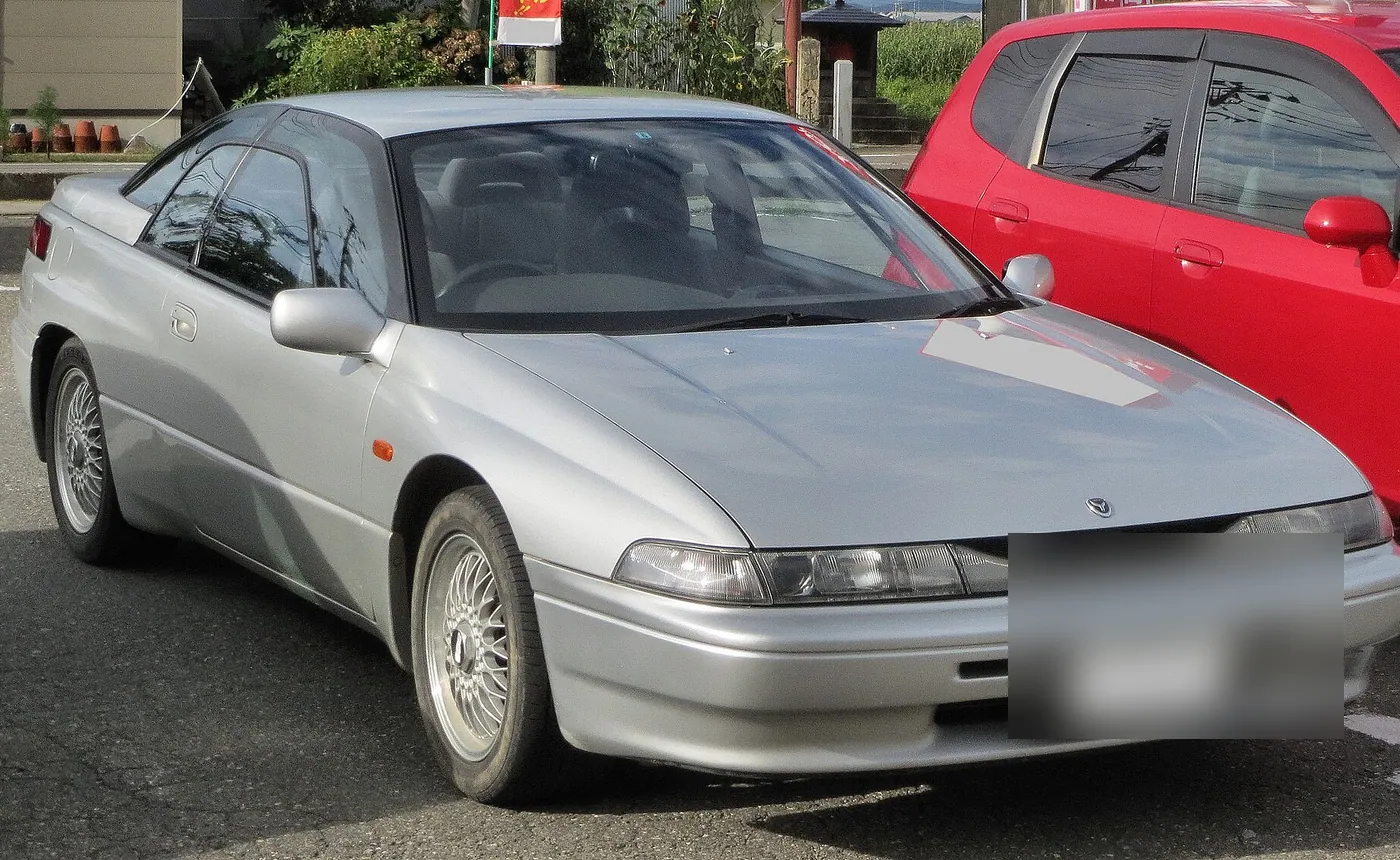
At the Tokyo Motor Show in 1989, Subaru showed a concept car with a glass roof that wrapped down the sides like the cockpit of a light aircraft. Japan was at the peak of its economic boom. Land in central Tokyo was valued at sums that defied reason, banks lent freely, and carmakers of every size were reaching upwards. Subaru, a company best known for practical four-wheel-drive estates and kei cars, decided it would build a grand tourer.
The production car, the Alcyone SVX, went on sale in 1991. It arrived just as the bubble burst. That timing shaped everything that followed: the SVX was conceived in a period of almost unlimited ambition and sold in a period of sudden caution, which helps explain why only about 25,000 were built before production ended in 1996.
The specs
| Years built | 1991–1996 |
|---|---|
| Engine | 3.3-litre EG33 flat-six petrol |
| Power | 240 PS (Japanese specification) |
| Gearbox | 4-speed automatic only |
| Drive | Full-time four-wheel drive |
| Body styles | 2-door coupe |
| Styling | Italdesign, under Giorgetto Giugiaro |
| Signature feature | Window-within-a-window side glass |
Why Subaru built it
The SVX replaced the earlier Alcyone, a wedge-shaped coupe known elsewhere as the XT. Subaru wanted something more serious: a car that could cross a continent at speed in comfort, carrying two adults and their luggage, with the security of four-wheel drive. It was meant to show that Subaru could compete with the established makers of luxury coupes.
The name carried over in Japan. Alcyone is the brightest star in the Pleiades cluster, the group of stars that appears in the Subaru badge. Export markets simply called it the SVX.
Design and engineering
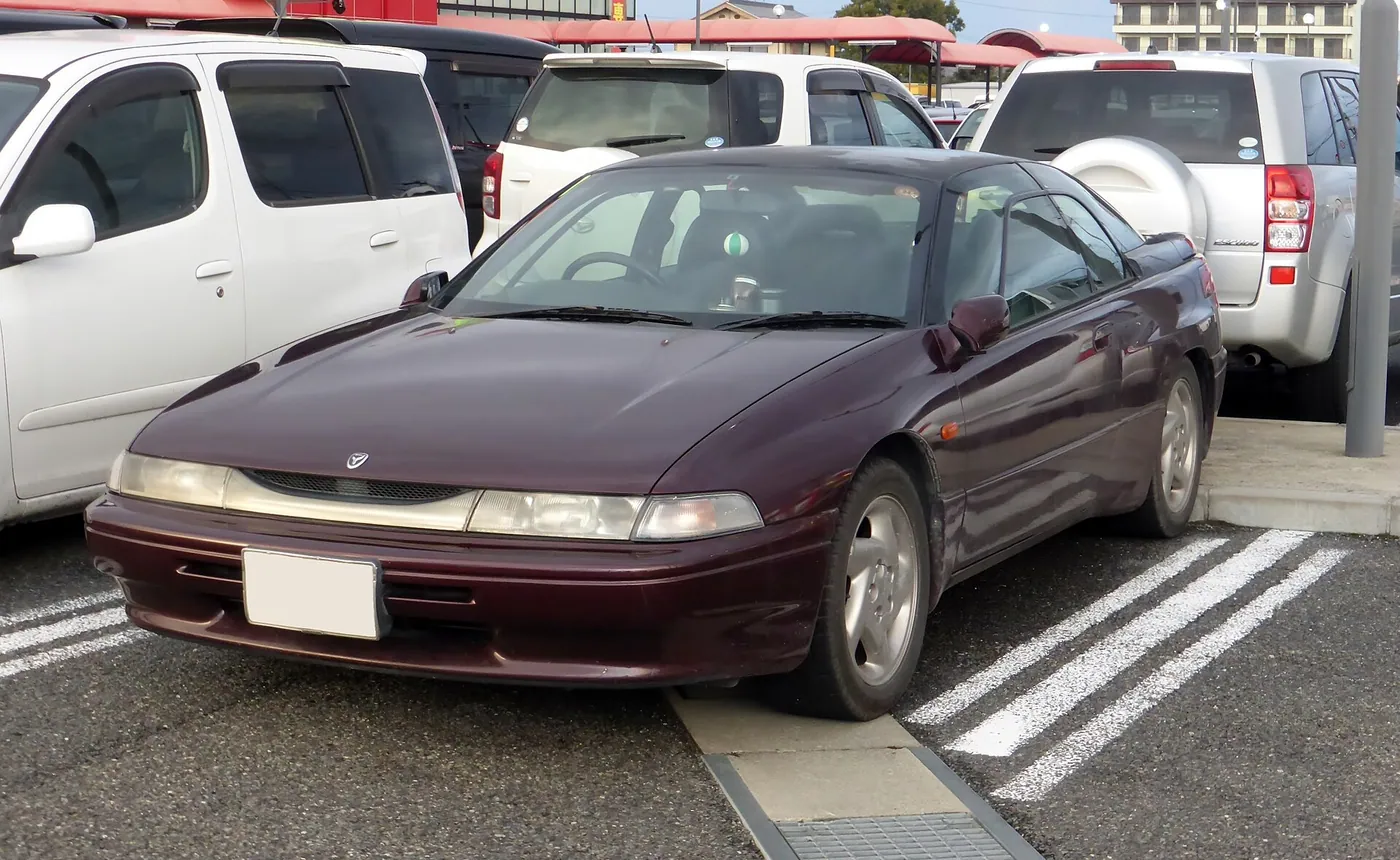
The body was styled by Italdesign under Giorgetto Giugiaro, and it is the glass that people remember. Each side window is divided: a small lower pane opens, while the upper section stays fixed and curves into the roof. From the side the effect is a single unbroken canopy. It looks extraordinary in a car park even now, more than three decades on.
Underneath, the SVX was built on a stretched version of the Legacy platform. The engine was the EG33, a 3.3-litre flat-six with twin overhead camshafts per bank, essentially the Legacy's four-cylinder boxer layout extended by two cylinders. In Japanese specification it produced 240 PS. It was smooth, deep-voiced and keen to rev, and the low boxer layout let the bonnet sit low.
Every SVX had full-time four-wheel drive and a four-speed automatic gearbox. There was no manual. That gearbox is the car's best-known weakness, and it is the reason many SVXs disappeared from the roads earlier than they should have.
How it drives today
An SVX in good order is a calm, fast, composed car. It feels heavy in a reassuring way, and the four-wheel drive gives it a planted, almost unflappable quality on a wet road. The flat-six pulls cleanly from low speeds and sounds best in the middle of its range. Steering is weighty by modern standards, the ride is firm but not harsh, and the cabin is quiet at motorway speeds.
It is not a sports car in the way a lightweight two-seater is. It is a long-distance car, and on a run down the M7 or across the midlands on the N-roads it makes a good deal of sense. Fuel consumption is that of a large six-cylinder petrol car from the early 1990s, so it is a car for enjoyment rather than commuting.
Versions worth knowing
Japanese-market cars were offered in several trims, including the Version L and Version E, with later revisions bringing the S4 designation in the final years. Equipment levels differed, and details of the four-wheel-drive system varied between markets and trims, so it pays to check exactly what a particular car has rather than assume. Japanese cars are right-hand drive, which suits Irish roads well, and they were generally well specified with climate control and leather on the upper trims.
What to check when buying in Japan
The automatic gearbox comes first. Look for any record of a rebuild or replacement, and treat slipping, flare between gears or harsh engagement as serious. Many owners in Japan have already dealt with this, and a car with documented gearbox work is often the better buy.
Rust is less of a problem than on many Japanese cars of the era, but check the rear arches, sills and the area around the rear subframe. The side glass seals and the electric window mechanisms deserve attention, because the unusual window design means replacement parts are not shared with any other car. Body panels and glass are the hardest parts to find. Mechanical parts for the EG33 are more manageable, as the engine was also used in the Legacy in some markets.
Check that the car is original. Some SVXs have had engine swaps, lowered suspension or aftermarket wheels. Mileage on a car of this age should be supported by service records and the auction sheet, and the Japanese export certificate should match the chassis number on the car.
Should you import one?
The SVX suits a buyer who wants something unusual and genuinely beautiful, with real-world capability in Irish weather. It is a car to cherish, take out on dry and wet days alike, and park where people will see it. It is not a cheap car to keep: the gearbox, glass and body parts call for patience and some budget for specialist help.
Every SVX is now over 30 years old or close to it, and cars over 30 years old can qualify for Ireland's vintage treatment. Buy the best example you can find, with the gearbox history in writing, and it will repay the effort with a sense of occasion few Japanese cars can match.
Frequently asked questions
Does the Subaru SVX have a manual gearbox?
No. Every SVX was built with a four-speed automatic, and its condition is the single most important thing to check.
Who designed the SVX?
The body was styled by Italdesign under Giorgetto Giugiaro, including the distinctive divided side glass.
Is the SVX four-wheel drive?
Yes. All SVXs had full-time four-wheel drive, which makes them very secure on wet Irish roads.
Are parts hard to find?
Engine and running gear parts are manageable, but body panels, glass and window parts are scarce and can take time to source.
More Japanese classics
- Subaru Legacy RS (BC5): the record-breaking saloon that started Subaru's rally story
- Subaru Impreza WRX STi (GC8): the blue-and-gold era's road-going hero
- Subaru Sambar (classic): The Rear-Engined Kei Truck That Carried Japan's Small Businesses
- Isuzu 117 Coupe: Giugiaro's Early Masterpiece and Japan's Most Elegant 1970s Coupe
- Isuzu Piazza: The Giugiaro Concept Car That Made It to the Showroom Almost Unchanged
- All 90 Japanese classics you can import
Photo credits
- Photo: DY5W-sport / Wikimedia Commons, CC BY-SA 3.0
- Photo: Tokumeigakarinoaoshima / Wikimedia Commons, CC0