
Isuzu Piazza: The Giugiaro Concept Car That Made It to the Showroom Almost Unchanged
Shown as the Asso di Fiori concept in 1979 and sold from 1981, the Piazza kept its designer's vision with rare fidelity. Later versions with Irmscher and Lotus tuning added real ability to the looks.
By the Japan to Ireland editors · · 4 min read
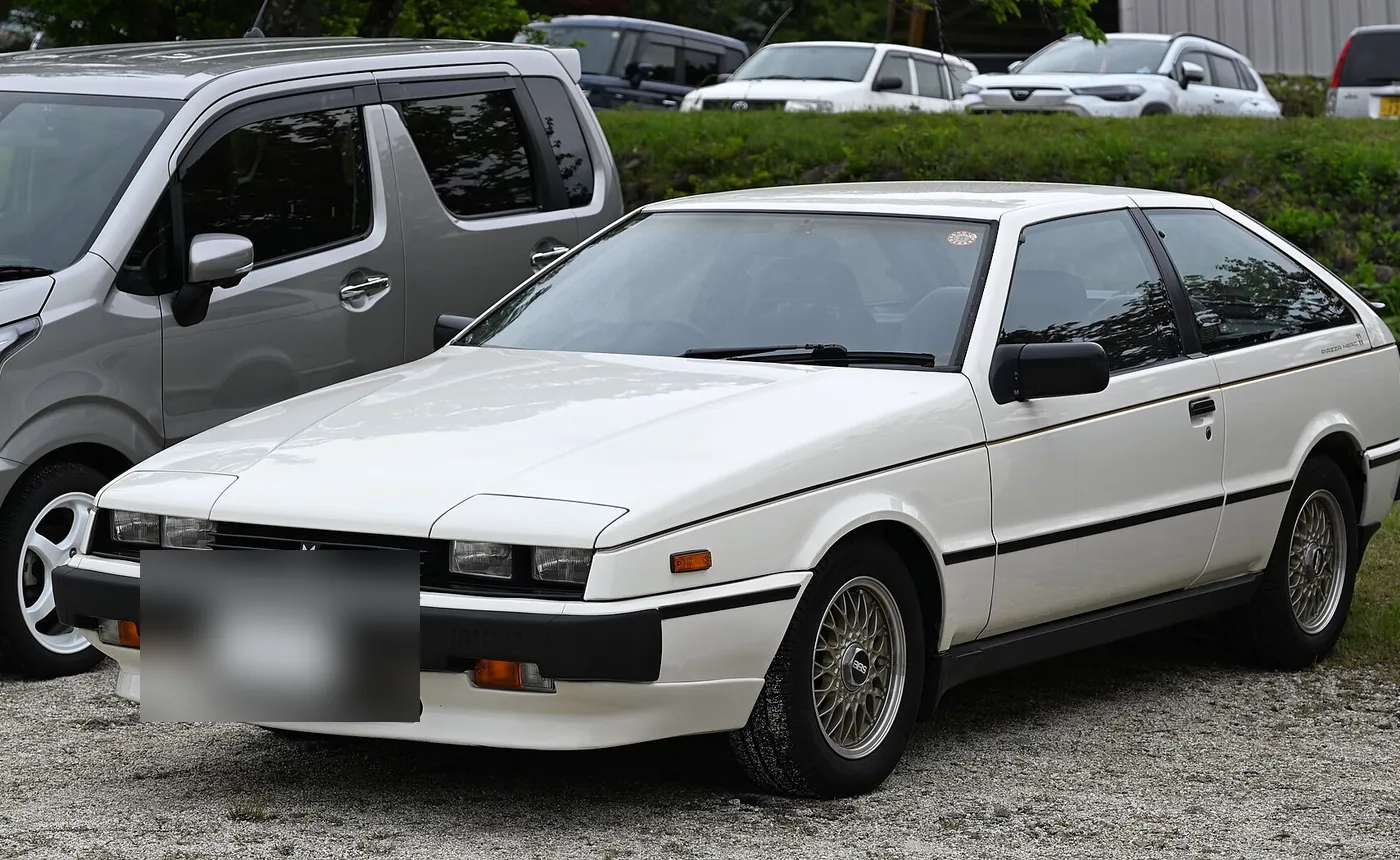
Concept cars rarely survive the journey to production. Engineers raise the roof, accountants widen the panel gaps and the stylist's original drawing fades into something ordinary. The Isuzu Piazza is one of the exceptions. In 1979 Giorgetto Giugiaro's Italdesign showed a sharp, wedge-like coupe called the Asso di Fiori, the ace of clubs, at the Geneva Motor Show. Two years later Isuzu put it on sale, looking very nearly the same.
The Piazza was Isuzu's second collaboration with Giugiaro, following the 117 Coupe, which he had designed at Ghia in the 1960s. It replaced that car as the company's flagship coupe and stayed in production in its original form until 1991.
The specs
| Years built | 1981–1991 (first generation) |
|---|---|
| Engine | 2.0-litre four-cylinder petrol, twin-cam or single-cam; 2.0-litre turbo from 1984 |
| Power | Varied by engine; turbo the most powerful |
| Gearbox | 5-speed manual or automatic |
| Drive | Rear-wheel drive |
| Body styles | 3-door hatchback coupe |
| Styling | Italdesign, under Giorgetto Giugiaro |
| Export names | Impulse in North America; Piazza in the UK and Europe |
Why Isuzu built it
By the early 1980s Japan's car industry had grown into a global force, and design was becoming a selling point in its own right. Isuzu was small next to Toyota or Nissan, and it was closely tied to General Motors. It needed a car that could carry its name in showrooms. Returning to the designer of the 117 was an obvious move.
The Piazza was built on rear-wheel-drive mechanicals related to the Isuzu Gemini, giving it a conventional and robust layout beneath its futuristic skin.
Design and engineering
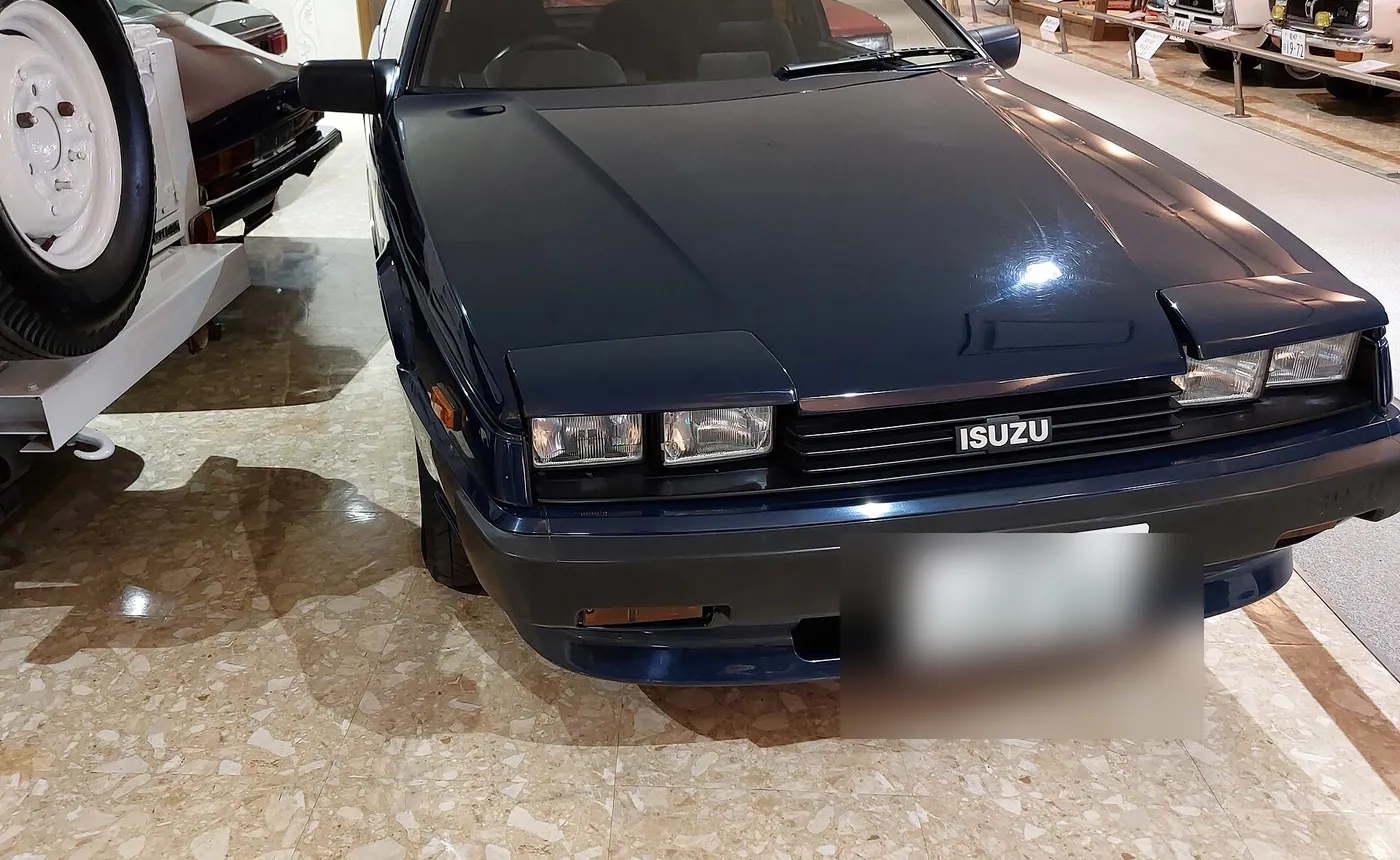
The body is a crisp three-door hatchback with flush glass, a low nose and semi-concealed headlamps under hinged covers that lift when the lights are switched on. It still looks modern from some angles. Inside, the most famous feature is the pair of control pods mounted either side of the steering wheel, so the driver can reach the lights, wipers and other switches without letting go of the wheel. It was an idea Giugiaro had explored in concept cars, and the Piazza put it into production.
The first engines were 2.0-litre four-cylinders, available as a twin-cam and a single-cam. From 1984 a 2.0-litre turbocharged engine was added, and it became the version most enthusiasts want. Gearboxes were a five-speed manual or an automatic.
How it drives today
A good Piazza is a pleasant, well-balanced rear-wheel-drive coupe. The early cars were criticised for soft suspension that did not match their sporting looks, and that is the reason the later tuned versions exist. Driven today, a turbo Piazza feels lively, with a noticeable surge as the boost builds, while the naturally aspirated twin-cam is smoother and more linear.
Ride comfort is good, and the cabin is airy thanks to the large glass area. Visibility to the rear is limited by the shallow back window. Expect an early 1980s experience: unassisted or lightly assisted steering on some cars, modest brakes, and a need for care in the wet with the turbo engine.
On Irish roads the Piazza works best as a weekend car. The hatchback opens onto a usable boot, the rear seats will take children or shopping, and the rear-wheel-drive balance is enjoyable on a dry, quiet back road. Winter salt and constant rain are not its friends, so a garage and a dry storage plan make a real difference to how long the bodywork lasts.
Versions worth knowing
The German tuner Irmscher worked on suspension and styling for a Piazza Irmscher version, which sharpened the handling. In the late 1980s Isuzu, then connected with Lotus through General Motors, launched the Piazza Handling by Lotus, with suspension tuned by Lotus engineers. These are the most desirable versions for drivers. There was also the Piazza Nero, sold through a separate Japanese dealer network.
Note that the later Piazza from 1991 is a different, front-wheel-drive car based on other mechanicals. This article covers the first generation only.
What to check when buying in Japan
Check for rust in the sills, the rear arches, the bottom of the hatch and around the windscreen. The headlamp covers and their mechanisms should work properly, as should the satellite switch pods, since those parts are specific to the car and hard to replace. Electrical faults in the dashboard are worth looking for.
Turbo cars should be checked for smoke, boost leaks and signs of overheating. Many Piazzas have been modified over the years with aftermarket wheels, exhausts and boost controllers; an original car is now worth seeking. Mileage should be backed by records where possible, and the auction sheet and export paperwork must match the car.
Parts support is mostly through Japanese specialists and owners' groups. Mechanical items related to other Isuzus are easier than body and interior parts.
Should you import one?
The Piazza suits a buyer who values design history and wants a usable, practical 1980s coupe with a hatchback and room for luggage. In Ireland it is unusual enough to start conversations at every petrol station. A Handling by Lotus or Irmscher car is the most rewarding to drive.
Every first-generation Piazza is over 30 years old, and cars over 30 years old can qualify for Ireland's vintage treatment. Expect to look after the electrics and the bodywork, and to source some parts from Japan.
Frequently asked questions
Was the Piazza really based on a concept car?
Yes. It closely follows the Asso di Fiori concept shown by Italdesign at the 1979 Geneva Motor Show.
What is the Piazza Handling by Lotus?
A late 1980s version with suspension tuned by Lotus, and the most sought after by drivers.
Is the Piazza rear-wheel drive?
The first generation, built from 1981 to 1991, is rear-wheel drive. The later car is front-wheel drive.
What are the satellite pods?
Control pods either side of the steering wheel holding the main switches, a signature Giugiaro idea.
More Japanese classics
- Isuzu 117 Coupe: Giugiaro's Early Masterpiece and Japan's Most Elegant 1970s Coupe
- Subaru Sambar (classic): The Rear-Engined Kei Truck That Carried Japan's Small Businesses
- Isuzu Bighorn: The Square-Shouldered Off-Roader Ireland Already Knows as the Trooper
- Mazda Familia GT-R: The Turbocharged Rally Hatchback That Arrived Just as the Stage Went Quiet
- Daihatsu Charade GTti: The One-Litre Turbo Hatchback That Out-Engineered Bigger Rivals
- All 90 Japanese classics you can import
Photo credits
- Photo: TTTNIS / Wikimedia Commons, CC0
- Photo: MikaPr65 / Wikimedia Commons, CC BY-SA 4.0