
Subaru Sambar (classic): The Rear-Engined Kei Truck That Carried Japan's Small Businesses
For decades the Sambar was the van and pickup of rice farmers, delivery drivers and shopkeepers. Its rear engine and independent suspension made it unusual among kei commercials, and it still has a devoted following.
By the Japan to Ireland editors · · 4 min read
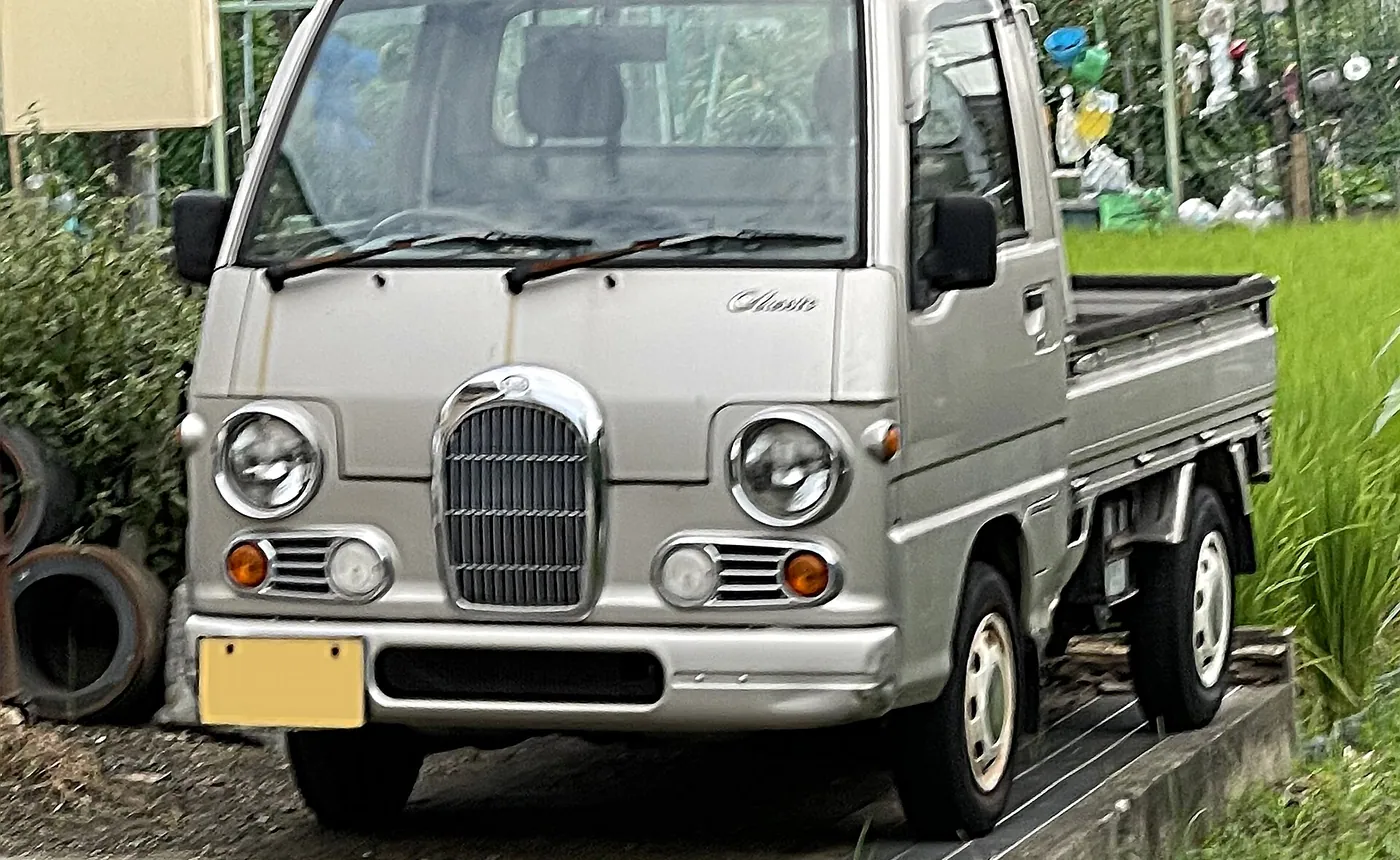
In the narrow lanes of rural Japan, between rice paddies and farmhouses, the kei truck is everywhere. Most are white, most carry a load of something, and for decades a large share of them wore a Subaru badge. The Sambar arrived in 1961, when Japan was still rebuilding and the small motor vehicle was becoming the backbone of its rural and small-town economy.
Subaru had launched the tiny Subaru 360 car a few years earlier. The Sambar took the same basic idea, a rear-mounted engine in a small, light body, and turned it into a working vehicle. It was built to fit the kei class, Japan's category for very small vehicles with tax and parking advantages, and it grew as the rules allowed: 360 cc at first, then 550 cc from the mid 1970s, then 660 cc from 1990.
The specs
| Years built | 1961–1998 (classic generations covered here) |
|---|---|
| Engine | Rear-mounted; 356 cc two-stroke twin at launch, 660 cc four-cylinder EN07 from 1990 |
| Power | Modest, within kei class limits |
| Gearbox | Manual; automatic and CVT on some later versions |
| Drive | Rear-wheel drive; part-time and selectable 4WD on later models |
| Body styles | Pickup truck, panel van, passenger van |
| Distinctive layout | Rear engine with four-wheel independent suspension |
Why it mattered
Japan in the early 1960s was on the verge of its great growth decades. Small farms needed something to carry produce, tools and feed. Shopkeepers needed a delivery vehicle that would fit down a lane barely wider than a cart. The Sambar did both. Its cab-forward layout put the driver over the front wheels, which gave a large load bed for such a small footprint.
The Sambar became part of the furniture of working Japan. A version built specially for the Akabou delivery cooperative was produced for many years, and the Sambar earned a reputation for durability that its owners defended fiercely.
Design and engineering
What made the Sambar different from most of its rivals was the rear engine. Many kei trucks put the engine under the seats, driving the rear wheels. The Sambar mounted it at the very back, behind the rear axle line, which placed weight over the driven wheels and gave good traction when the bed was empty. It also meant less engine noise and heat in the cab.
The Sambar also used four-wheel independent suspension, unusual for a commercial vehicle of its size, and this gave it a more settled ride than many rivals on rough farm tracks. The early engines were air-cooled two-stroke twins. Later came water-cooled four-stroke engines, and from 1990 the EN07, a 658 cc four-cylinder, which was smoother and quieter than the three-cylinder engines most competitors used. A supercharged version was offered in later years.
How it drives today
A classic Sambar is slow and honest. It is light, the steering is direct, and the view out of the flat windscreen is commanding for something so small. The four-cylinder cars of the 1990s are notably refined for a kei truck, and they will keep up with town traffic comfortably. Motorway driving is possible but not relaxing: these are vehicles for back roads, farm work, markets and festivals.
On an Irish boreen, a Sambar makes a surprising amount of sense. It is narrow, it turns tightly, and with four-wheel drive it will cross a wet field with ease. There is little metal in front of the driver, though: safety standards are of their era, and it should be driven accordingly.
Versions worth knowing
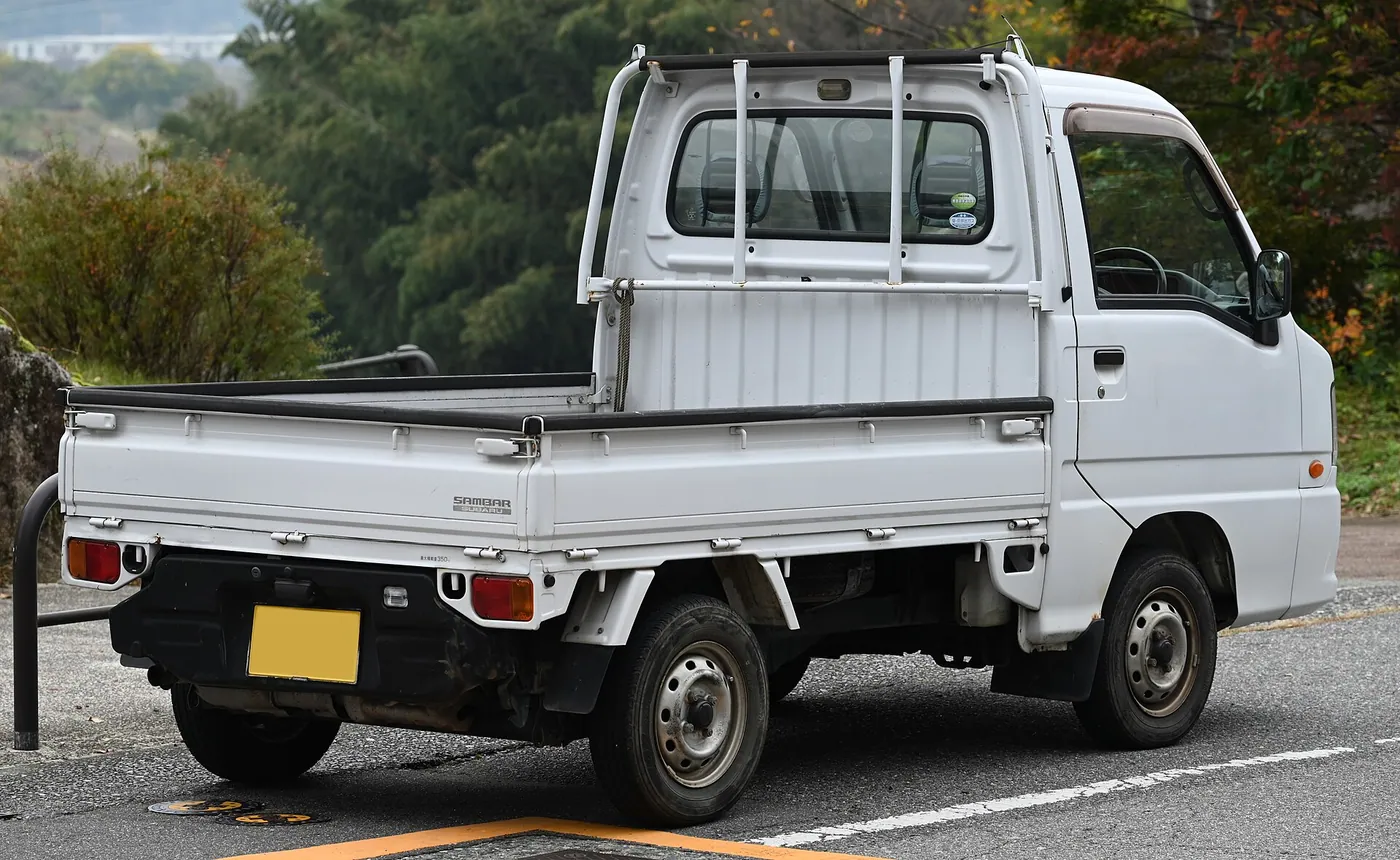
The pickup truck and panel van are the most common. Passenger versions were sold as the Sambar Try and, later, the Sambar Dias. In the 1990s Subaru offered the Sambar Dias Classic, a retro-styled van with a chrome grille and round headlamps that has become a favourite with collectors and small business owners who want something characterful for promotional use.
Later trucks offered selectable four-wheel drive, and some had a dump bed or other specialist bodies. Look for the versions with four-cylinder engines if smoothness matters to you.
What to check when buying in Japan
Rust is the main enemy. Check the floor of the load bed, the bed sides, the cab corners, the door bottoms and the chassis rails. Kei trucks often lived hard lives on farms, and many were parked outdoors near the sea or in snowy regions where roads are salted. A clean auction sheet with a good grade is worth paying attention to.
Mechanical parts are reasonably available in Japan, but Ireland has no dealer support for the classic Sambar, so plan to source parts from Japan. Many kei trucks have been modified for off-road use with lift kits and large tyres; decide whether you want that or an original truck. Mileage on old kei trucks is frequently unclear, as odometers were replaced or rolled over, so judge the vehicle on condition. Make sure the export paperwork matches the chassis.
Should you import one?
A classic Sambar suits a small farm, a market trader, a café that wants a memorable delivery vehicle, or anyone who loves the simplicity of a working Japanese truck. It is cheap to run, easy to fix, and draws attention wherever it goes.
The oldest examples are well over 30 years old, and cars over 30 years old can qualify for Ireland's vintage treatment; the last cars of the 1990s are not quite there yet. Buy for condition over age, keep it out of the salt where you can, and it will work for you.
Frequently asked questions
Where is the engine in a classic Sambar?
At the back, behind the rear axle line, which was unusual among kei trucks and helps traction when the bed is empty.
Is a Sambar suitable for Irish motorways?
It can cope, but it is happiest on local roads, farm tracks and in town.
What is the Sambar Dias Classic?
A retro-styled 1990s Sambar van with round headlamps and a chrome grille, popular with collectors and businesses.
Are all classic Sambars over 30 years old?
No. The oldest examples are, but the last cars of the late 1990s have not yet reached 30 years.
More Japanese classics
- Subaru Alcyone SVX: The Glass-Canopy Grand Tourer Japan Built at the Height of Its Confidence
- Subaru Legacy RS (BC5): the record-breaking saloon that started Subaru's rally story
- Isuzu 117 Coupe: Giugiaro's Early Masterpiece and Japan's Most Elegant 1970s Coupe
- Isuzu Piazza: The Giugiaro Concept Car That Made It to the Showroom Almost Unchanged
- Isuzu Bighorn: The Square-Shouldered Off-Roader Ireland Already Knows as the Trooper
- All 90 Japanese classics you can import
Photo credits
- Photo: Tokumeigakarinoaoshima / Wikimedia Commons, CC BY-SA 4.0
- Photo: TTTNIS / Wikimedia Commons, CC0